Quick Verdict: The 2010 Ford Escape Hybrid at a Glance
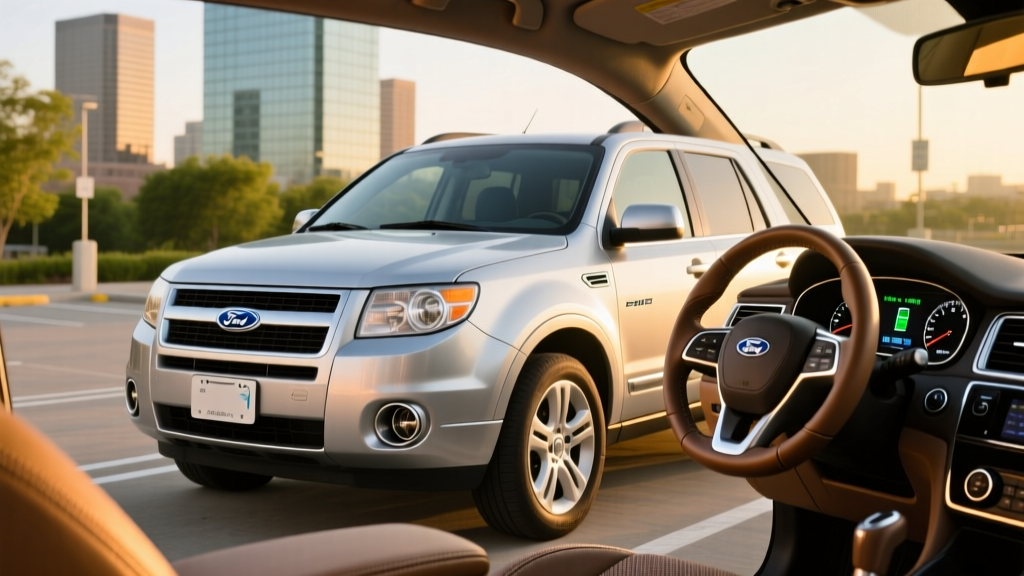
If you're searching for a 2010 Ford SUV hybrid, you're looking at the second-generation Ford Escape Hybrid — one of the earliest mainstream hybrid SUVs sold in the United States. Built on Ford's global C1 platform and powered by a 2.5-liter Atkinson-cycle four-cylinder paired with an electric motor and a nickel-metal hydride (NiMH) battery pack, the 2010 Escape Hybrid delivered class-leading fuel economy for its era. In 2026, it remains a budget-friendly used-SUV option for buyers who want hybrid efficiency without plug-in complexity, though its age demands careful battery-health scrutiny.
EPA Combined: 32 MPG (FWD) / 29 MPG (AWD)
Powertrain: 2.5L I4 + electric motor, 177 hp combined
Battery: 1.8 kWh NiMH (self-charging HEV — no plug)
Original MSRP: ~$30,570 (base FWD)
2026 Used Market: ~$4,500–$8,000 depending on mileage and condition
EPA Fuel Economy and Real-World MPG
| Drivetrain | City | Highway | Combined |
|---|---|---|---|
| FWD | 34 MPG | 31 MPG | 32 MPG |
| AWD (4WD) | 30 MPG | 27 MPG | 29 MPG |
Source: U.S. EPA / fueleconomy.gov
Real-World MPG: What Owners Actually Report
Like most conventional hybrids (HEVs), the Escape Hybrid tends to exceed its EPA city estimate in stop-and-go driving, where regenerative braking and electric-only low-speed operation maximize efficiency. Owner-reported data on Fuelly and similar platforms clusters around 30–35 MPG combined for FWD models in mixed suburban driving. Highway-heavy commutes at 75+ MPH tend to pull economy down toward 27–29 MPG, since the electric motor provides less benefit at sustained high speed and the boxy SUV shape creates aerodynamic drag.
In cold weather (below 30°F), expect a 5–10% MPG reduction. The engine runs more frequently to provide cabin heat and warm up the catalytic converter, reducing the time the vehicle spends in electric-only mode.
HEV vs. PHEV: Understanding What the 2010 Escape Hybrid Is (and Isn't)
A common source of confusion among used-car shoppers is whether the 2010 Escape Hybrid needs to be plugged in. It does not. This is a conventional hybrid (HEV), meaning the battery recharges exclusively through regenerative braking and the gasoline engine. There is no charging port, no plug, and no electric-only range to speak of beyond low-speed creep (roughly 1–2 miles at under 25 MPH under ideal conditions).
| Feature | HEV (e.g., Escape Hybrid) | PHEV (e.g., Escape PHEV / RAV4 Prime) | BEV (e.g., Mustang Mach-E) |
|---|---|---|---|
| Plugs in? | No | Yes | Yes |
| Electric-only range | ~0–2 mi (low speed) | 25–42 mi (modern PHEVs) | 230–320+ mi |
| Gas engine? | Yes | Yes | No |
| Home charging needed? | No | Recommended (Level 2) | Essential |
| Federal tax credit (new)? | No | Up to $7,500 (§30D) | Up to $7,500 (§30D) |
| Best for | No plug access, budget buyers | Short commutes + road trips | Home charging, max savings |
Ford did not offer a plug-in hybrid version of the Escape in 2010. The Escape Plug-in Hybrid didn't arrive until the 2013 model year (as the C-Max Energi/Fusion Energi era began). If you need plug-in electric range, you'll need to look at newer PHEV SUVs such as the Toyota RAV4 Prime, Hyundai Tucson PHEV, or Ford's own Escape PHEV (2020+).
Powertrain and Performance Specs
| Specification | Value |
|---|---|
| Engine | 2.5L Atkinson-cycle I4 |
| Engine horsepower | 156 hp @ 6,000 rpm |
| Electric motor | Permanent-magnet AC synchronous |
| Combined system output | 177 hp |
| Transmission | eCVT (planetary gearset) |
| Battery type | NiMH (nickel-metal hydride) |
| Battery capacity | ~1.8 kWh (gross) |
| Drivetrain options | FWD or AWD (eCVT-driven rear axle) |
| 0–60 MPH (est.) | ~9.5–10.5 seconds |
| Towing capacity | 1,000 lbs (not recommended for heavy towing) |
The 2010 Escape Hybrid uses Ford's iteration of the Toyota-licensed planetary eCVT — the same fundamental architecture found in the Toyota Prius and Highlander Hybrid of that era. This is not a belt-and-cone CVT; it's a gearset-based power-split device with no traditional shifting, which contributes to its reputation for smoothness and durability. The AWD model uses a second electric motor on the rear axle rather than a mechanical driveshaft, providing on-demand all-wheel drive without the parasitic losses of a conventional AWD system.
Battery Health, Warranty, and Replacement Cost
Ford warranted the 2010 Escape Hybrid's NiMH battery for 8 years / 100,000 miles (10 years / 150,000 miles in California Air Resources Board states). As of 2026, all original factory battery warranties have expired — even for CARB-state vehicles. Any battery coverage now depends on aftermarket warranty or extended-service contracts purchased separately.
How Long Does the NiMH Battery Last?
NiMH hybrid batteries from this era typically last 120,000–180,000 miles before significant degradation forces replacement, though many units fail earlier if the vehicle sits unused for extended periods. The 2010 Escape Hybrid is now 16 years old, and most surviving examples are on their second battery pack or will need one soon.
Warning signs of a degraded hybrid battery include:
- Noticeable drop in MPG (3–5+ MPG below baseline)
- Frequent engine running even at low speeds and light loads
- Rapid state-of-charge swings on the dashboard display
- Check Engine light with hybrid battery DTC codes (P0A80, P0A7F, etc.)
Battery Replacement Cost
Replacement options for the 2010 Escape Hybrid battery in 2026:
- OEM new battery (Ford dealer): $3,000–$4,500 including labor — often uneconomical given the vehicle's residual value.
- Aftermarket/remanufactured battery: $1,500–$2,500 from suppliers such as Green Bean Battery or Dorman, typically with a 3–5 year warranty.
- Used/salvage battery: $500–$1,000, but carries significant risk given the age of donor vehicles.
For a vehicle worth $4,500–$8,000, the remanufactured battery route offers the best value proposition. Budget at least $2,000 for a battery replacement when evaluating any 2010 Escape Hybrid listing.
Pricing, Tax Credits, and Ownership Economics
Used Market Pricing (2026)
The 2010 Ford Escape Hybrid trades between roughly $4,500 and $8,000 on the used market, depending on mileage, condition, drivetrain (FWD vs. AWD), and whether the hybrid battery has been replaced. Low-mileage examples with a documented new battery command the top of that range.
Tax Credit Eligibility
The 2010 Escape Hybrid does not qualify for the federal §30D new-vehicle tax credit (which applies only to new PHEVs and BEVs meeting current battery-sourcing and MSRP requirements). It also does not qualify for the used-EV credit (§25E), which covers only used BEVs and PHEVs — not conventional hybrids.
Some states offer their own incentives for hybrid vehicles, but most state-level programs have shifted focus to plug-in vehicles. Check your state's energy office or DMV for any remaining hybrid purchase rebates.
Annual Fuel Cost
At 32 MPG combined and 12,000 miles per year, the FWD Escape Hybrid consumes approximately 375 gallons annually. At $3.40/gallon (2026 national average), that's roughly $1,275 per year in fuel. Compare this to the non-hybrid 2010 Escape (23 MPG combined), which would cost approximately $1,774 annually — a savings of about $500/year with the hybrid.
Reliability and Common Issues
The 2010 Escape Hybrid's powertrain is generally robust. The eCVT has no belts, clutches, or torque converter to wear out, and the Atkinson-cycle engine operates under less thermal stress than a conventional engine. NHTSA records show no systemic powertrain recalls specific to the hybrid system.
Common issues to inspect before purchase:
- Hybrid battery degradation (see above — the #1 cost risk)
- Brake actuator / regenerative braking system: The electrohydraulic brake system can develop faults; replacement of the brake actuator assembly runs $1,200–$1,800.
- Electric power steering (EPS): Some 2008–2012 Escape models experienced EPS motor failures; check for steering-assist warning lights.
- Exhaust manifold cracks: A known issue on the 2.5L I4 that can trigger check-engine codes.
- Rust: Inspect rocker panels, wheel arches, and the undercarriage, especially on vehicles from salt-belt states.
Who Should Buy the 2010 Ford Escape Hybrid?
- You want a cheap, fuel-efficient used SUV without needing a plug
- Your budget is under $8,000
- You drive mostly city/suburban miles (where hybrid efficiency shines)
- You don't have access to home or workplace charging
- You want simple, proven hybrid tech with a large service network
- You want electric-only driving range (look at a PHEV or BEV)
- You need modern safety tech (blind-spot monitoring, AEB, lane-keep)
- You want Apple CarPlay / Android Auto or a modern infotainment system
- You plan to keep the vehicle 10+ years (age-related repairs will accumulate)
- You tow frequently (1,000-lb limit is very restrictive)
For buyers with home charging access and a higher budget, a newer PHEV like the Ford Escape PHEV (2020+, ~37 miles electric-only range) or a used BEV such as the Chevrolet Bolt EUV offers dramatically lower operating costs and modern safety features. The 2010 Escape Hybrid makes the most sense as a no-plug, budget-conscious commuter SUV.
Frequently Asked Questions
How many MPG does the 2010 Ford Escape Hybrid get?
The EPA rates the FWD model at 34 city / 31 highway / 32 combined MPG. The AWD version is rated at 30 city / 27 highway / 29 combined. Real-world owners typically report 30–35 MPG combined in mixed driving, with city-heavy routes often exceeding the EPA estimate thanks to regenerative braking.
Does the 2010 Ford Escape Hybrid need to be plugged in?
No. This is a conventional hybrid (HEV), not a plug-in hybrid. The battery charges through regenerative braking and the gasoline engine. There is no charging port on the vehicle.
How far can it go on electric only?
Effectively zero meaningful miles. The NiMH battery can propel the Escape Hybrid at very low speeds (under ~25 MPH) for roughly 1–2 miles in ideal conditions, but the gasoline engine starts automatically when acceleration or speed demand increases. This is not a vehicle that provides usable electric-only commuting range.
Is the 2010 Escape Hybrid reliable, and what does battery replacement cost?
The powertrain is generally reliable, with the eCVT being particularly durable. The main risk is the aging NiMH battery — replacement costs $1,500–$2,500 for a remanufactured unit or $3,000–$4,500 at a Ford dealer. Budget for this expense when purchasing. Other watch items include the brake actuator and electric power steering system.
Does the 2010 Ford Escape Hybrid qualify for any tax credit?
No. The federal §30D new-vehicle credit and the §25E used-EV credit both exclude conventional hybrids. Only plug-in hybrids (PHEVs) and battery-electric vehicles (BEVs) qualify. Some states may have offered hybrid incentives historically, but most have been discontinued or redirected to plug-in vehicles.
Hybrid vs. PHEV vs. EV — which should I choose?
If you cannot charge at home and want a simple, affordable used SUV, the conventional hybrid (HEV) like the 2010 Escape Hybrid works well. If you have home charging and a larger budget, a PHEV gives you 25–42 miles of electric-only commuting with a gas engine for road trips. A full BEV offers the lowest operating cost but requires reliable charging access. Your charging situation and budget should drive the decision.
Sources: fueleconomy.gov (EPA), NHTSA, IRS §30D Clean Vehicle Credits