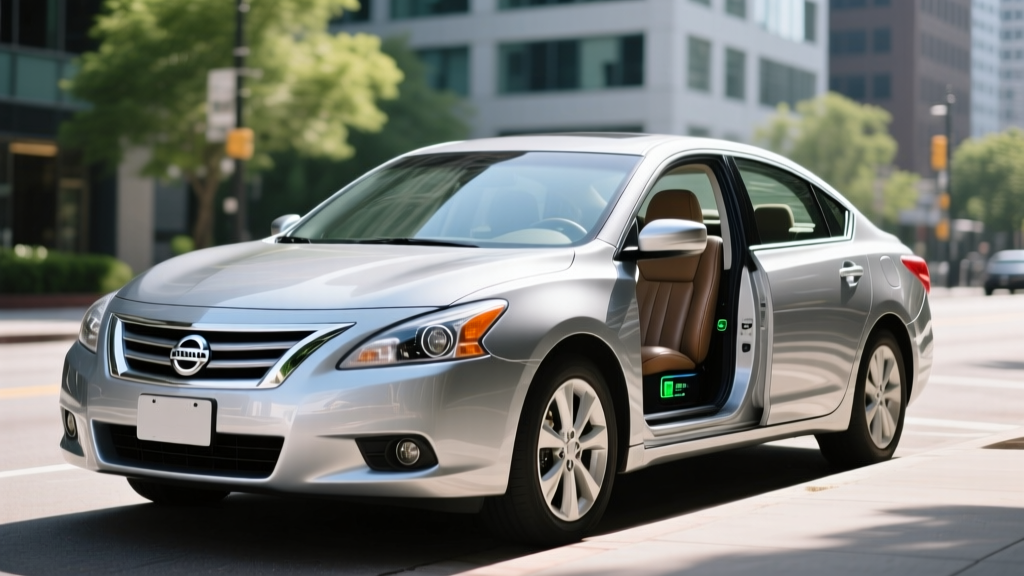
The 2009 Nissan Altima Hybrid sedan occupies a curious spot in automotive history. Built using Toyota's licensed Hybrid Synergy Drive technology rather than a Nissan-developed system, it delivered class-leading fuel economy in the midsize sedan segment at a time when the Toyota Camry Hybrid was its only real rival. Now, well over a decade later, buyers shopping the used market want to know: does this first-generation hybrid still make financial sense? We break down the real-world MPG, battery longevity expectations, replacement costs, and whether the 2009 Altima Hybrid is a smart budget-commuter pick or a depreciating liability.
Quick Verdict: Who Is the 2009 Altima Hybrid For?
If you need a reliable, fuel-efficient daily commuter for under $6,000 and can verify the hybrid battery's state of health, the 2009 Nissan Altima Hybrid sedan remains a pragmatic choice. Its Toyota-sourced powertrain has proven durable, and 35 MPG combined still holds up against many modern non-hybrid sedans. However, buyers should budget for a potential hybrid battery replacement and understand this is a conventional hybrid (HEV)—not a plug-in—so there is no electric-only driving range and no federal tax credit applies to a used purchase.
HEV vs PHEV: What the 2009 Altima Hybrid Actually Is
Before evaluating this car, it's critical to understand the distinction between hybrid types:
Conventional Hybrid (HEV) — 2009 Altima Hybrid
- No plug-in charging required; the battery recharges via regenerative braking and the gas engine
- No electric-only driving range (the electric motor assists the engine but cannot propel the car alone at meaningful speeds for any distance)
- Small battery: approximately 1.3 kWh (nickel-metal hydride, NiMH)
- No federal tax credit available on the used market
Plug-In Hybrid (PHEV) — Not This Car
- Requires plug-in charging (Level 1 or Level 2 AC)
- Offers 20–50 miles of electric-only range depending on model
- Larger battery: typically 10–25 kWh (lithium-ion)
- May qualify for federal §30D tax credit when purchased new (income and sourcing rules apply)
The 2009 Nissan Altima Hybrid is a conventional HEV. You fuel it with gasoline, and the hybrid system handles the rest. There is no charging port, no EV mode button, and no scenario where you need to find a public charger.
Fuel Economy: EPA Ratings and Real-World MPG
The headline number for the 2009 Altima Hybrid was its fuel efficiency—significantly better than the standard 4-cylinder Altima and competitive with the Camry Hybrid of the same era.
| Metric | EPA Rating | Real-World Expectation |
|---|---|---|
| City MPG | 35 MPG | 33–37 MPG (hybrids often exceed EPA city) |
| Highway MPG | 33 MPG | 30–34 MPG (hybrid advantage diminishes at steady speed) |
| Combined MPG | 34 MPG | 32–35 MPG |
According to fueleconomy.gov, the 2009 Altima Hybrid is rated at 35 city / 33 highway / 34 combined MPG. Note: some sources cite 35 combined—this discrepancy comes from Nissan's marketing materials rounding up; the official EPA combined figure is 34 MPG.
Real-world note: Conventional hybrids tend to deliver their best efficiency in stop-and-go city driving, where regenerative braking recovers energy and the electric motor does more of the work. On the highway, the gasoline engine carries the load, so the advantage over a conventional sedan narrows. Owners in warm climates with moderate traffic routinely report 35–37 MPG in mixed driving. Cold-weather operation (below 40°F) can drop efficiency by 3–5 MPG due to longer engine warm-up cycles and reduced battery efficiency.
Powertrain and Performance Specs
Nissan licensed Toyota's Hybrid Synergy Drive (the same planetary-gear e-CVT system used in the Camry Hybrid and Prius of that era) and paired it with Nissan's own 2.5-liter QR25DE inline-four engine.
| Specification | 2009 Nissan Altima Hybrid |
|---|---|
| Engine | 2.5L inline-4 (QR25DE), 158 hp |
| Electric Motor | AC synchronous, 30 kW (40 hp) |
| Combined System Output | 198 hp (net) |
| Transmission | e-CVT (planetary gearset, no fixed gears) |
| Battery Type | Nickel-Metal Hydride (NiMH) |
| Battery Capacity | ~1.3 kWh (gross) |
| Drivetrain | Front-wheel drive |
| 0–60 mph | ~7.5 seconds (estimated) |
| Curb Weight | ~3,470 lbs |
The 198 combined horsepower made the Altima Hybrid one of the quicker midsize hybrids of its day—faster than the contemporaneous Camry Hybrid (187 hp combined). The e-CVT delivers seamless acceleration without gear shifts, though some drivers find the engine drone under hard acceleration (a characteristic of the planetary-gear system holding the engine at a fixed RPM).
Battery Longevity, Warranty, and Replacement Cost
This is the single most important question for any used-hybrid buyer. The 2009 Altima Hybrid's NiMH battery pack is now 17 years old, and its remaining lifespan depends heavily on prior ownership conditions.
Original Battery Warranty
Nissan covered the hybrid battery for 8 years / 100,000 miles (10 years / 150,000 miles in CARB states including California, New York, Massachusetts, and others that adopted California emissions standards). As of 2026, all factory warranty coverage has expired for every 2009 model.
Real-World Battery Lifespan Data
The Toyota-sourced hybrid system has proven remarkably durable. NiMH batteries in similar-era Camry Hybrids and Priuses routinely reach 150,000–200,000 miles before significant degradation. However, "significant degradation" in a conventional hybrid doesn't mean the car stops running—it means reduced fuel economy and less electric-motor assist. The car remains drivable even with a weakened battery.
Factors that accelerate degradation:
- Extreme heat (Arizona, Texas summers) — NiMH chemistry is heat-sensitive
- Prolonged storage at very low or very high state of charge
- Very high mileage with heavy stop-and-go use
Battery Replacement Costs
| Option | Estimated Cost (2026) | Notes |
|---|---|---|
| New OEM Nissan battery | $2,500–$3,500 (parts + labor) | Available through Nissan dealers; may have limited stock for discontinued models |
| Refurbished/remanufactured pack | $1,200–$2,000 (parts + labor) | Third-party suppliers; typically 1–3 year warranty |
| Individual module replacement | $500–$1,000 | Only failed modules replaced; requires a technician experienced with NiMH packs |
| Used salvage pack | $400–$800 (parts + labor) | Risky—unknown remaining life; typically no warranty |
For a car with a 2026 market value of roughly $4,000–$6,500, a full OEM battery replacement can consume 40–70% of the vehicle's value. A refurbished pack at $1,500 is usually the more rational choice if the battery needs service.
How to Check Battery Health Before Buying
Request a hybrid battery diagnostic from a qualified technician. Key metrics:
- Internal resistance delta: Measures variance between individual modules. A delta above 0.20 ohms indicates imbalance and likely near-term failure.
- State of Health (SoH): Expressed as a percentage of original capacity. Above 70% is generally acceptable for a used purchase.
- Voltage under load: Significant voltage sag during acceleration indicates weakened modules.
Pricing and Tax Credit Eligibility
As of early 2026, the 2009 Nissan Altima Hybrid sedan trades in the used market at approximately:
- Private party (fair condition, high miles): $3,500–$4,500
- Private party (good condition, ~100k miles): $4,500–$6,000
- Dealer retail: $5,500–$7,000
Federal Tax Credit Status
The 2009 Altima Hybrid does not qualify for the federal §30D clean vehicle tax credit. That credit applies only to new plug-in electric vehicles (BEVs and PHEVs) meeting battery sourcing, MSRP, and buyer income requirements per current IRS rules. Conventional hybrids (HEVs) have never qualified for §30D. When new, some buyers may have claimed the now-expired Alternative Motor Vehicle Credit (which offered up to $2,350 for certain hybrids purchased before 2011), but that credit is long since closed.
Some states offer their own incentives for used hybrid or EV purchases—check your state's department of revenue or energy office for current programs.
Reliability and Common Issues
The 2009 Altima Hybrid benefits from the proven durability of Toyota's hybrid system, but the surrounding Nissan-built vehicle has its own track record to consider.
Hybrid System Reliability: Strong
The e-CVT transmission (planetary gearset) has no clutches, bands, or torque converter to wear out—it is one of the most reliable transmission designs ever mass-produced. The electric motor and inverter are similarly robust. According to NHTSA complaint databases, hybrid-system-specific failures on this model are uncommon relative to the number of units sold.
Non-Hybrid Issues to Watch
- CVT (non-hybrid trims): Not applicable here—the hybrid uses the Toyota e-CVT, not Nissan's problematic Jatco belt-drive CVT found in non-hybrid Altimas of this era.
- Steering column lock failure: A known issue on 2007–2012 Altimas that can prevent the car from starting. Nissan issued a service campaign for some model years.
- AC compressor: Electric AC compressor (required for hybrid operation) can fail at high mileage; replacement runs $800–$1,200.
- 12V auxiliary battery: Like all hybrids, a dead 12V battery can prevent the car from starting even if the hybrid battery is fine. Keep the 12V battery in good condition.
Pros
- 34 MPG combined still competitive with modern non-hybrid sedans
- Toyota-sourced hybrid system with proven long-term durability
- e-CVT is virtually bulletproof (no Nissan Jatco CVT issues)
- 198 hp combined provides confident acceleration for the class
- Low purchase price on the used market
- No plug-in charging required—zero infrastructure dependency
Cons
- Hybrid battery is 17 years old—replacement likely needed if not already done
- No federal tax credit or incentive eligibility
- NiMH battery less efficient in extreme heat
- Limited cargo space vs. non-hybrid Altima (battery pack intrudes into trunk)
- Dated interior technology and safety features by 2026 standards
- No DC fast charging (not applicable—HEV has no plug)
Altima Hybrid vs. Modern Alternatives: What Else Could You Buy?
At the $5,000–$7,000 price point, buyers have several electrified options worth considering:
| Vehicle | Type | EPA Combined | Approx. Used Price (2026) | Key Advantage |
|---|---|---|---|---|
| 2009 Nissan Altima Hybrid | HEV | 34 MPG | $4,500–$6,000 | Proven Toyota hybrid system, strong acceleration |
| 2010–2011 Toyota Camry Hybrid | HEV | 33 MPG | $5,000–$7,000 | Same hybrid system, broader parts availability |
| 2012–2014 Toyota Prius v | HEV | 42 MPG | $6,000–$9,000 | Higher MPG, more cargo space |
| 2017–2019 Hyundai Ioniq Hybrid | HEV | 58 MPG | $10,000–$14,000 | Modern efficiency, newer safety tech |
| 2018–2020 Toyota Prius Prime | PHEV | 54 MPG + 25 mi EV | $14,000–$18,000 | Plug-in capability, potential tax credit (used EV credit up to $4,000) |
If your budget stretches to $10,000+, a newer Ioniq Hybrid or a used PHEV like the Prius Prime offers significantly better fuel economy and more modern safety features. But at sub-$6,000, the 2009 Altima Hybrid is one of the most efficient sedans available.
Who Should Buy This Hybrid vs. a Full EV or Gas Car?
Choose the 2009 Altima Hybrid If:
- Your budget is under $6,000 and you need maximum fuel efficiency at that price
- You commute in stop-and-go city traffic where hybrid efficiency shines
- You lack access to home or workplace charging (making a BEV or PHEV impractical)
- You want a proven hybrid system without the complexity of a plug-in vehicle
Choose a Full EV (BEV) Instead If:
- You have reliable home Level 2 charging access
- Your daily commute is under 250 miles round-trip
- You want to eliminate gasoline costs entirely and reduce maintenance (no oil changes, no spark plugs)
- You qualify for the federal used-EV tax credit (up to $4,000, 30% of sale price, income limits apply per IRS guidelines)
Choose a Conventional Gas Car Instead If:
- You drive primarily highway miles (where the hybrid advantage is smaller)
- You want the lowest possible upfront cost and aren't concerned about a 3–5 MPG difference
- You plan to keep the car fewer than 2 years (the hybrid premium may not pay back in fuel savings)
Frequently Asked Questions
How many MPG does the 2009 Nissan Altima Hybrid get?
The EPA rates the 2009 Altima Hybrid at 35 city / 33 highway / 34 combined MPG. In real-world mixed driving, expect 32–35 MPG, with city-heavy commutes sometimes yielding 36–37 MPG. Cold weather and aggressive driving reduce these figures.
Does the 2009 Altima Hybrid have any electric-only range?
No. This is a conventional hybrid (HEV), not a plug-in hybrid. The electric motor assists the gasoline engine during acceleration and low-speed maneuvers, but it cannot propel the car on electricity alone for any meaningful distance. There is no plug, no charging port, and no EV mode.
Is the 2009 Nissan Altima Hybrid reliable?
The hybrid powertrain (sourced from Toyota) is highly reliable, with the e-CVT and electric motor rarely failing. The Nissan-built chassis, interior, and electronics are average for the era. The primary reliability concern at this age is hybrid battery degradation—a replacement may be necessary if the original pack has not been serviced.
What does a replacement hybrid battery cost for the 2009 Altima Hybrid?
A refurbished NiMH battery pack costs approximately $1,200–$2,000 installed. A new OEM pack from Nissan runs $2,500–$3,500. Individual module repair is possible for $500–$1,000 but requires a specialist. Given the car's market value of $4,000–$6,500, a refurbished pack is the most cost-effective option.
Does the 2009 Altima Hybrid qualify for any tax credit in 2026?
No. The federal §30D new clean vehicle credit applies only to new plug-in vehicles (BEVs and PHEVs). Conventional hybrids do not qualify. The used clean vehicle credit (up to $4,000) also applies only to used BEVs and PHEVs, not HEVs. No federal tax incentive is available for purchasing a used 2009 Altima Hybrid.
How does the Altima Hybrid compare to the Camry Hybrid of the same year?
Both use essentially the same Toyota hybrid system. The Altima Hybrid produces slightly more combined horsepower (198 vs. 187) and has a sportier chassis tune. The Camry Hybrid has marginally better parts availability due to higher sales volume. Fuel economy is nearly identical (34 combined for the Altima, 33–34 for the Camry depending on configuration).
Can I still get parts for the 2009 Altima Hybrid?
Mechanical and body parts for the non-hybrid Altima are widely available (the platform shared many components with other Nissan models). Hybrid-specific parts—the battery pack, inverter, and electric AC compressor—are available through Nissan dealers and third-party hybrid specialists, though some components may require longer lead times due to lower production volume.