Quick Verdict: The 2008 Prius Still Delivers Where It Counts
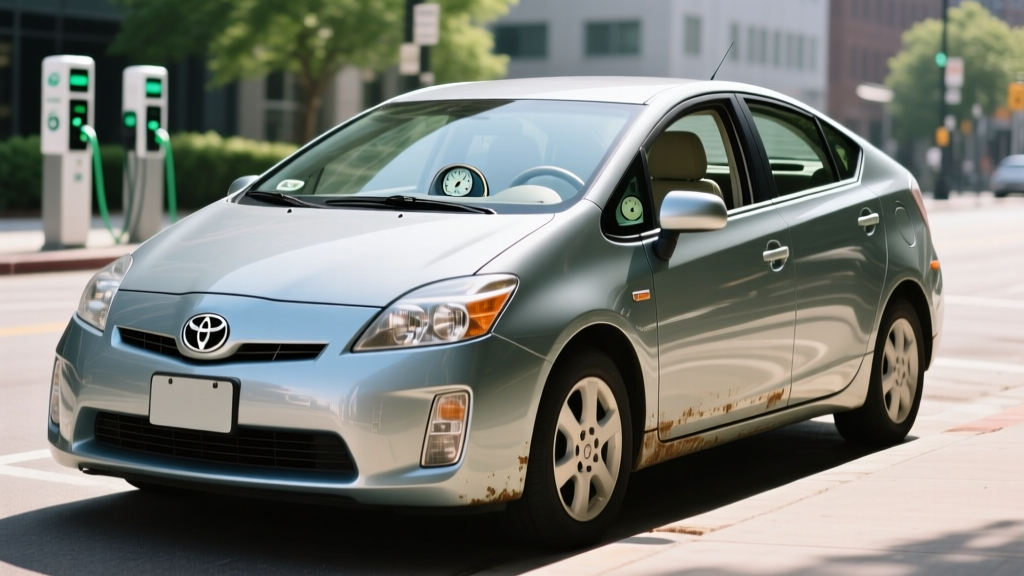
The 2008 Toyota Prius is a conventional hybrid electric vehicle (HEV) — not a plug-in — and it remains one of the most fuel-efficient used cars you can buy in 2026. With an EPA-rated 46 MPG combined, a proven 1.5-liter four-cylinder paired with Toyota's Hybrid Synergy Drive, and a track record of reaching 250,000+ miles with basic maintenance, the second-generation Prius (XW20) is a pragmatic commuter for budget-conscious drivers. The catch? The nickel-metal hydride (NiMH) traction battery is now 18 years old on original units, and replacement is the single biggest ownership variable you need to budget for.
| Specification | Value |
|---|---|
| Powertrain | 1.5L 4-cyl + electric motor (HEV) |
| Combined Horsepower | 110 hp (net system output) |
| EPA Fuel Economy | 48 city / 45 highway / 46 combined MPG |
| Fuel Tank | 11.9 gallons |
| Total Range (est.) | ~547 miles |
| 0-60 mph | ~10.4 seconds |
| Traction Battery | 1.3 kWh NiMH (sealed, non-plug-in) |
| Drivetrain | FWD, eCVT (planetary gearset) |
| Cargo Volume | 14.4 cu ft (rear seats up) |
| Original MSRP (2008) | $21,500 – $24,500 |
| Used Price Range (2026) | $3,500 – $7,500 (private party) |
HEV vs PHEV: What the 2008 Prius Actually Is
Before evaluating this car, it's critical to understand where it sits in the electrification spectrum. The 2008 Prius is a conventional hybrid (HEV). It has no plug, no electric-only driving range beyond about 1 mile at very low speeds, and it never needs to be connected to a charger. The small 1.3 kWh NiMH battery recharges exclusively through regenerative braking and the gasoline engine.
| Feature | 2008 Prius (HEV) | Prius Prime (PHEV, current gen) | Full EV (e.g., Tesla Model 3) |
|---|---|---|---|
| Plug-in Charging | No | Yes (Level 1/2) | |
| Electric-Only Range | ~1 mi (low speed only) | 44 mi (2026 EPA) | 272–363 mi (EPA) |
| Fuel / Energy Source | Gasoline only | Gasoline + electricity | Electricity only |
| Battery Chemistry | NiMH | Lithium-ion | NMC or LFP |
| Battery Capacity | 1.3 kWh | 13.6 kWh | 60–82 kWh |
| Federal Tax Credit (new) | None | Up to $7,500 (§30D) | Up to $7,500 (§30D) |
Toyota did not introduce a plug-in Prius variant until the 2012 Prius Plug-in, which later evolved into the Prius Prime. If you're looking for electric-only commuting, the 2008 model cannot do it — you'll need a newer PHEV or a full BEV.
Fuel Economy: EPA Ratings vs Real-World MPG
The EPA rates the 2008 Prius at 48 MPG city, 45 MPG highway, and 46 MPG combined. These numbers held up remarkably well in independent testing and owner surveys over the vehicle's lifespan.
| Condition | MPG | Notes |
|---|---|---|
| EPA City | 48 | Hybrids excel in stop-and-go; regen recaptures energy |
| EPA Highway | 45 | Slightly lower than city — aero drag and less regen opportunity |
| EPA Combined | 46 | 55% city / 45% highway weighted average |
| Real-World Owner Avg | 44–48 | Per Fuelly.com aggregated data across thousands of fill-ups |
| Cold Weather (below 30°F) | 38–42 | Engine runs more often for cabin heat; battery less efficient |
| High-Altitude / Mountainous | 40–44 | Thinner air reduces ICE efficiency; regen helps on descents |
The Prius's hybrid system is uniquely advantaged in city driving. The electric motor handles low-speed acceleration — the most fuel-wasteful phase for conventional cars — while regenerative braking converts deceleration into battery charge. On the highway, the 1.5L Atkinson-cycle engine runs more continuously, which is why highway MPG is actually 3 MPG lower than city. This is the opposite of gas-only cars and is a hallmark of conventional hybrids.
Real-world expectation: Most owners report 44–48 MPG in mixed driving. Short trips in cold weather can drop that to the high 30s because the engine must run to generate cabin heat — the 2008 Prius has no electric resistance heater or heat pump. If your commute is primarily highway at 75+ mph, expect 42–44 MPG due to aerodynamic drag on the tall hatchback body.
Powertrain and Performance
The 2008 Prius uses Toyota's second-generation Hybrid Synergy Drive (HSD), a power-split system built around a planetary gearset that blends the gasoline engine and electric motor through what Toyota calls an eCVT. This is not a belt-and-cone CVT — it's a gear-based continuously variable transmission with no friction bands to wear out, which is a key reason for its durability.
- Gasoline engine: 1.5L inline-4, Atkinson cycle, 76 hp / 82 lb-ft torque
- Electric motor (MG2): 50 kW (67 hp) / 295 lb-ft torque
- Net system output: 110 hp (engine and motor peak outputs don't coincide)
- 0-60 mph: Approximately 10.4 seconds
- Top speed: Electronically limited to ~103 mph
The 110 hp system output is modest by 2026 standards, and the 10.4-second 0-60 time reflects that. The Prius is not a performance car — it's a fuel-efficiency tool. The electric motor's 295 lb-ft of torque is available from near-zero RPM, which gives it surprisingly punchy off-the-line acceleration in city traffic. Highway passing requires planning; the engine drones noticeably under hard acceleration as the eCVT holds it at peak power RPM.
Battery Health, Warranty, and Replacement Cost
2008 Prius Traction Battery Warranty (Original)
Original coverage: 8 years / 100,000 miles (10 years / 150,000 miles in CARB states including CA, NY, MA, and others adopting California emissions standards).
Status in 2026: All original factory battery warranties have expired. You are responsible for any battery replacement cost.
The 2008 Prius uses a 1.3 kWh nickel-metal hydride (NiMH) battery pack consisting of 28 modules. NiMH chemistry is less energy-dense than modern lithium-ion but is remarkably tolerant of the shallow charge-discharge cycles that hybrids impose. Toyota's battery management system keeps the pack between roughly 40% and 80% state of charge, avoiding the deep cycles that accelerate degradation.
How long do these batteries last? Data from owner communities and Consumer Reports indicates original NiMH packs commonly reach 150,000–200,000 miles before capacity loss becomes noticeable (reduced fuel economy, more frequent engine cycling). Many have exceeded 250,000 miles, though with degraded electric-assist performance.
Replacement options and costs in 2026:
| Option | Cost Range | Notes |
|---|---|---|
| New OEM Toyota battery | $2,000 – $2,500 (installed) | Available through dealers; 12-month warranty |
| Refurbished/reconditioned pack | $800 – $1,500 (installed) | Failed modules replaced with tested used cells; 1–3 year warranty typical |
| Individual module replacement | $200 – $500 (parts + DIY or shop labor) | Only viable if 1–3 modules are weak; requires voltage-matching knowledge |
| Aftermarket new-gen NiMH pack | $1,500 – $2,000 (installed) | Third-party suppliers; warranty varies |
If you're buying a 2008 Prius in 2026, the battery's condition is the single most important inspection item. Ask for a traction battery health check — a Toyota dealer or hybrid specialist can read the individual module voltages and internal resistance via Techstream diagnostic software. Voltage spread greater than 0.2V between modules indicates imbalance and likely near-term failure. Budget $1,500–$2,500 for a replacement if the pack is original and shows signs of decline.
Reliability, Maintenance, and Common Issues
The 2008 Prius consistently ranks among the most reliable vehicles Toyota has ever produced. The power-split eCVT has no clutch packs, torque converter, or friction bands — the components that fail in conventional automatic transmissions. The gasoline engine is under-stressed (76 hp from 1.5L) and runs the Atkinson cycle, which reduces thermal load.
Known issues to watch for:
- Combination meter (dashboard) failure: A well-documented issue where the instrument cluster display goes dark. Toyota issued a service campaign (not a formal recall). Repair or replacement runs $200–$500 at independent shops.
- Water pump (engine coolant): The mechanical water pump can fail around 100,000–120,000 miles. Replacement is ~$300–$400.
- Inverter coolant pump: The electric pump circulating coolant through the inverter can fail silently. Check for fluid turbulence in the inverter coolant reservoir when the car is in READY mode — if the fluid is still, the pump has failed. Replacement: ~$200–$350.
- Brake actuator: The electro-hydraulic brake system (which blends regenerative and friction braking) can develop issues at high mileage. A failing actuator triggers multiple dashboard warning lights. Dealer replacement: $1,500–$2,000.
- 12V auxiliary battery: Located in the rear cargo area, this small AGM battery powers electronics and must be replaced every 4–5 years. A dead 12V battery will prevent the car from starting even if the traction battery is fully charged. Replacement: ~$180–$250 for a Group 12V AGM.
With routine maintenance (oil changes every 5,000 miles using 5W-30, coolant flushes, transaxle fluid drain-and-fill every 60,000 miles), the 2008 Prius is one of the lowest-cost vehicles to keep running. NHTSA records show relatively few complaints for the model year compared to its sales volume.
Tax Credits and Incentives in 2026
The 2008 Prius does not qualify for any federal tax credit as a new vehicle purchase — it hasn't been sold new since 2009. As a used vehicle, it also does not qualify for the federal used-EV credit (IRC §25E, which provides up to $4,000 for used BEVs and PHEVs) because conventional HEVs are excluded from both §30D and §25E. Only plug-in vehicles with a minimum battery capacity and external charging capability are eligible.
Some states and municipalities offer registration discounts, HOV lane access, or emissions-test exemptions for hybrids, but these programs vary by jurisdiction and many have sunsetted for older vehicles. Check your state's DMV and environmental agency for current provisions.
Pros
- 46 MPG combined EPA — still competitive with 2026 hybrids
- Extremely low maintenance costs; no timing belt, no conventional transmission
- Proven 200,000+ mile durability with basic care
- Large hatchback cargo area (14.4 cu ft, 50+ cu ft with seats folded)
- Low used-car entry price ($3,500–$7,500 in 2026)
- Strong parts availability and independent hybrid-shop support network
Cons
- Traction battery replacement risk ($1,500–$2,500) on original packs
- No plug-in capability; no electric-only driving
- Modest 110 hp / 10.4-second 0-60 — underpowered for highway merging
- No modern ADAS (no automatic emergency braking, lane-keep, or adaptive cruise)
- Cold-weather MPG drops to 38–42 (no heat pump or electric cabin heater)
- Known issues: combination meter, inverter coolant pump, brake actuator at high miles
Who Should Buy the 2008 Prius — And Who Should Look Elsewhere
Choose the 2008 Prius if:
- You need maximum MPG on a sub-$7,500 budget and can't install a home charger
- Your commute is primarily city/suburban stop-and-go where the hybrid system shines
- You want a proven, low-maintenance daily driver and can budget for a potential battery replacement
- You don't need modern safety tech (AEB, lane-keep) or infotainment (CarPlay/Android Auto)
Look at a newer PHEV or BEV if:
- You have home charging access and want electric-only commuting (consider a used 2019+ Prius Prime or a used Chevy Bolt)
- You want federal or state tax credits (available only on qualifying new or used PHEVs/BEVs)
- You need modern driver-assist features — Toyota Safety Sense became standard on the Prius starting with the 2017 model year
- You drive more than 15,000 highway miles annually — a newer BEV like the Tesla Model 3 or Hyundai Ioniq 6 will have lower per-mile energy costs
The 2008 Prius occupies a specific niche in 2026: it's the cheapest way to access 45+ MPG fuel economy without any lifestyle adjustment — no charging, no plug-in routine, no range planning. If your budget is tight and you lack home charging infrastructure, no current BEV or PHEV can match its total-cost-of-ownership simplicity. But if you can spend $15,000–$25,000, a used Prius Prime (PHEV) gives you 25–44 miles of electric-only range plus hybrid efficiency when the battery is depleted, and it may still qualify for the federal used clean-vehicle credit under §25E.
Frequently Asked Questions
How many MPG does the 2008 Toyota Prius hybrid get?
The EPA rates it at 48 city / 45 highway / 46 combined MPG. Real-world owners average 44–48 MPG in mixed driving, with cold-weather trips dropping to 38–42 MPG due to increased engine run time for cabin heating.
Is the 2008 Prius a plug-in hybrid?
No. The 2008 Prius is a conventional hybrid (HEV). It has no plug and cannot be charged externally. The 1.3 kWh NiMH battery recharges only through regenerative braking and the gasoline engine. Toyota's first plug-in Prius arrived in 2012.
How much does it cost to replace the hybrid battery in a 2008 Prius?
In 2026, expect $2,000–$2,500 for a new OEM battery installed at a dealer, $800–$1,500 for a refurbished pack from a hybrid specialist, or $200–$500 for individual module replacement if only a few cells have failed.
Is the 2008 Prius reliable at high mileage?
Yes. The power-split eCVT and under-stressed Atkinson-cycle engine are exceptionally durable. The main high-mileage risks are the traction battery, brake actuator ($1,500–$2,000), inverter coolant pump, and combination meter. With proactive maintenance, 200,000+ miles is common.
Does the 2008 Prius qualify for any tax credit?
No. The 2008 Prius is a conventional hybrid (HEV), and federal tax credits (§30D for new, §25E for used) apply only to plug-in electric vehicles (PHEVs and BEVs). Some states may offer minor registration or inspection benefits for hybrids, but these vary by jurisdiction.
Hybrid vs PHEV vs EV — which should I choose?
If you lack home charging and want maximum fuel economy with zero routine change, an HEV like the 2008 Prius works. If you have a garage outlet and a short commute, a PHEV (like a used Prius Prime) gives you electric-only daily driving plus hybrid road-trip range. If you can install a Level 2 home charger and want the lowest per-mile cost, a full BEV eliminates gasoline entirely — but at a higher upfront price.