Quick Verdict: The 2008 Tahoe Hybrid in 2026
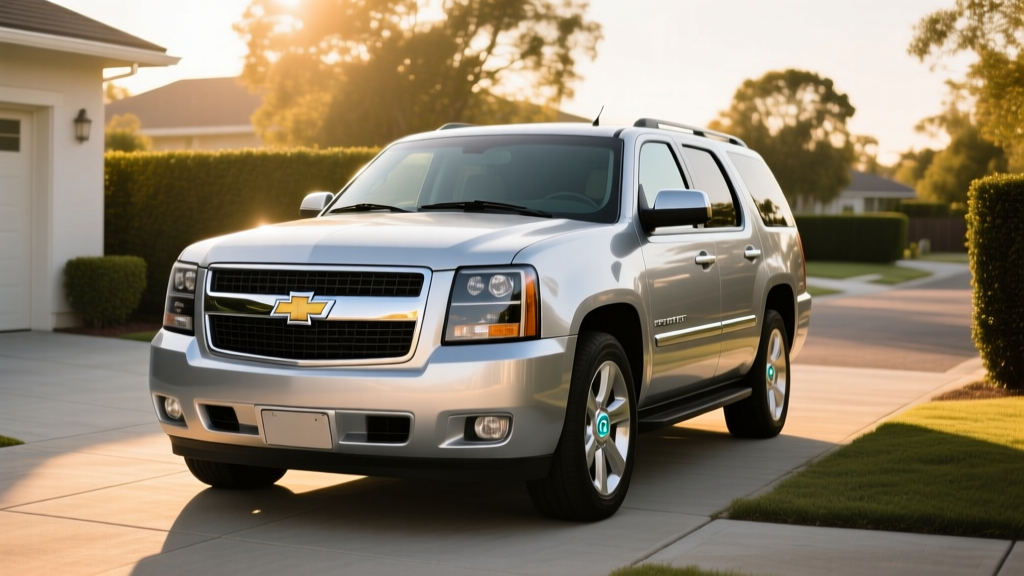
The 2008 Chevrolet Tahoe Hybrid was GM's bold experiment: a full-size, three-row SUV that used a two-mode hybrid powertrain to squeeze 21 MPG combined out of a 6,000-pound vehicle. Nearly two decades later, it remains one of the most capable used hybrid SUVs on the market — and a fascinating case study in early hybrid engineering. But with a 17-year-old nickel-metal hydride (NiMH) battery pack and discontinued production, buying one in 2026 requires careful consideration of battery health, replacement costs, and whether a modern PHEV or full EV better serves your needs.
This guide covers everything a prospective buyer or current owner needs to know: exact EPA fuel economy, real-world MPG data, the hybrid powertrain specs, battery warranty and replacement economics, and how the 2008 Tahoe Hybrid stacks up against today's electrified SUVs.
HEV vs PHEV: What the 2008 Tahoe Hybrid Actually Is
Conventional Hybrid (HEV): The 2008 Tahoe Hybrid is a self-charging conventional hybrid. It does not plug in. The 1.8 kWh NiMH battery recharges through regenerative braking and the gasoline engine. You fuel it exactly like a regular Tahoe — at a gas station.
Plug-in Hybrid (PHEV): A PHEV has a larger battery (typically 15–30 kWh), an electric-only driving range of 25–50 miles, and requires plugging into a wall outlet or charger to realize its full efficiency benefit. The 2008 Tahoe Hybrid is not a PHEV and has zero electric-only range at highway speeds.
This distinction matters because some used listings mislabel the Tahoe Hybrid as a "plug-in." It isn't. GM didn't offer a plug-in Tahoe until far later, and the current-generation Tahoe still doesn't have a PHEV variant in the U.S. market as of 2026.
Fuel Economy: EPA MPG and Real-World Numbers
| Metric | 2008 Tahoe Hybrid (2WD) | 2008 Tahoe Hybrid (4WD) | 2008 Tahoe Gas (5.3L V8, 2WD) |
|---|---|---|---|
| City MPG | 21 | 20 | 14 |
| Highway MPG | 22 | 20 | 20 |
| Combined MPG | 21 | 20 | 16 |
Source: EPA / fueleconomy.gov
Real-World MPG Reality Check: Owners on Fuelly and hybrid forums consistently report 18–20 MPG combined in mixed driving for the 4WD model, with city-heavy routes occasionally hitting 22–23 MPG thanks to the hybrid system's low-speed electric assist. Highway cruising at 75+ MPH often drops to 17–18 MPG — the aerodynamic penalty of a boxy full-size SUV is unavoidable, hybrid or not. Expect the 2WD model to average 19–21 MPG in everyday use. These figures represent vehicles with 150,000+ miles, so battery degradation may slightly reduce efficiency versus when new.
The hybrid's biggest advantage over the gas Tahoe is in city driving, where the 21 MPG city rating demolishes the gas model's 14 MPG — a 50% improvement. Highway gains are modest (22 vs 20 MPG) because the electric motors contribute less at sustained high speeds.
Powertrain Specs: Engine, Motors, and Horsepower
| Specification | Detail |
|---|---|
| Engine | 6.0L Vortec V8 (VVT, Atkinson-cycle capable) |
| Engine Power | 332 hp @ 5,200 rpm |
| Electric Motors | Two 60 kW motors (inside transmission) |
| Combined System Output | 379 hp |
| Transmission | Two-mode hybrid CVT (electrically variable) |
| Battery Pack | 1.8 kWh NiMH (nickel-metal hydride), 300V |
| Drivetrain | RWD (2WD) or AWD (4WD) |
| Towing Capacity | 5,800 lbs (2WD) / 5,600 lbs (4WD) |
| 0–60 MPH | ~7.8 seconds (estimated) |
| Curb Weight | ~5,900 lbs |
The two-mode hybrid system was co-developed with BMW and Chrysler (the "Global Hybrid Cooperation"). Mode 1 operates at low speeds, where the electric motors can move the Tahoe on electric power alone up to roughly 25 MPH under light throttle — this is what enables the strong city MPG. Mode 2 engages under heavy load or highway speeds, blending V8 and electric power through the planetary gearset transmission. Both modes support regenerative braking, which captures kinetic energy during deceleration to recharge the NiMH pack.
The 1.8 kWh battery pack is tiny by modern standards — a 2026 Toyota RAV4 Prime PHEV packs 18.1 kWh — but it's only meant to buffer energy, not store it for plug-in driving. The pack is located under the second-row seat and is sealed, requiring no maintenance.
Hybrid Battery Lifespan, Warranty, and Replacement Cost
Original Warranty: GM warranted the 2008 Tahoe Hybrid's battery pack and hybrid-specific components for 8 years / 100,000 miles (whichever came first). In states that adopted California's stricter emissions standards (CARB states), coverage extended to 10 years / 150,000 miles.
Current Status (2026): All factory warranties have expired. Any battery failure is now an out-of-pocket expense for the owner.
How Long Does the Battery Last?
NiMH batteries in GM's two-mode hybrid system have proven reasonably durable. Many 2008–2013 Tahoe and Yukon Hybrids have reached 180,000–250,000 miles on the original battery pack. However, at 17+ years old, even low-mileage examples face age-related degradation. NiMH cells lose capacity over time regardless of use, and heat accelerates the process.
Common failure signs include:
- Noticeable MPG drop (falling to 15–16 MPG combined)
- Frequent engine running at stops (reduced electric idle assist)
- "Check Hybrid System" or "Service Hybrid System" warning on the dash
- Reduced regenerative braking feel
Battery Replacement Cost
| Option | Cost Range | Notes |
|---|---|---|
| OEM new battery (GM dealer) | $3,500–$5,500 | Discontinued or limited availability; may require dealer special order |
| Remanufactured battery | $2,000–$3,500 | Available from hybrid specialists like Green Tech Automotive or Bumblebee Batteries |
| Used/salvage battery | $500–$1,500 | High risk — unknown remaining life; typically no warranty beyond 30–90 days |
| Individual cell reconditioning | $800–$1,800 | Hybrid specialty shops can replace failed cells; labor-intensive |
The most practical route in 2026 is a remanufactured pack from a hybrid specialist. Factor in $300–$600 for installation labor at an independent shop familiar with GM hybrids. A dealer installation will push total cost toward the upper end of the range.
Reliability and Common Issues Beyond the Battery
The 6.0L Vortec V8 (LFA engine code) is a proven, durable engine shared with GM trucks and SUVs of the era. The hybrid-specific components — the two-mode transmission, power electronics, and 300V wiring — add complexity, but failure rates have been moderate rather than catastrophic. Key reliability considerations:
- Hybrid transmission: The electrically variable transmission (EVT) is generally robust. Some high-mileage units develop bearing noise or solenoid issues. Rebuild cost: $3,000–$5,000.
- Power inverter module: Converts DC battery power to AC for the motors. Failures are uncommon but costly ($1,500–$2,500 replacement).
- Electric power steering: The Tahoe Hybrid uses electric-assist steering (no belt-driven pump). Rack failures have been reported; replacement runs $800–$1,200.
- Standard Tahoe issues: All the usual GMT900-platform concerns apply — wheel bearings, suspension components, HVAC blend doors, and the Active Fuel Management (AFM) lifter issues on the V8.
Overall, a well-maintained 2008 Tahoe Hybrid with a healthy battery is no less reliable than its gas counterpart, but repair costs for hybrid-specific parts are higher and require specialized knowledge. Not every independent mechanic is comfortable working on a 300V hybrid system.
Pricing in 2026 and Tax Credit Eligibility
The 2008 Tahoe Hybrid originally carried an MSRP of approximately $50,485 (2WD) to $53,285 (4WD) — a significant premium over the gas Tahoe. In 2026, used examples trade in a wide range depending on mileage, condition, and battery health:
| Condition / Mileage | Approximate Price Range |
|---|---|
| Under 100k miles, excellent, healthy battery | $8,000–$12,000 |
| 100k–160k miles, good condition | $5,000–$8,000 |
| 160k+ miles or needs battery replacement | $2,500–$5,000 |
Federal Tax Credit Status
The 2008 Tahoe Hybrid does not qualify for any current federal tax credit. The IRS §30D Clean Vehicle Credit applies only to new and qualifying used plug-in electric vehicles (BEVs and PHEVs), not conventional hybrids. The used-EV credit (§25E) requires the vehicle to be a plug-in EV or fuel cell vehicle. The original $2,200 federal tax credit available at the time of the Tahoe Hybrid's launch expired long ago.
Some states offer rebates or HOV lane access for hybrids, but most have shifted incentives toward plug-in vehicles. Check your state's current programs at AFDC's state law database.
Who Should Buy the 2008 Tahoe Hybrid vs. Alternatives
Pros
- Significantly better city MPG than gas Tahoe (21 vs 14)
- Full three-row seating and 5,800-lb towing capability
- No plug-in required — fuel it like any gas vehicle
- Proven V8 engine with widely available parts
- Low purchase price on the used market
Cons
- 17+ year-old hybrid battery nearing or past end of life
- No electric-only driving range to speak of
- No federal or state tax credit eligibility
- Hybrid-specific repairs require specialized shops
- Highway MPG barely beats the gas model
- Outdated infotainment and safety tech by 2026 standards
Decision Framework
Choose the 2008 Tahoe Hybrid if: You need a cheap, large, three-row SUV for city-heavy driving; you can verify battery health before purchase (or budget $2,500–$3,500 for a remanufactured pack); and you don't want to deal with plug-in charging.
Choose a modern PHEV (e.g., Toyota Grand Highlander Hybrid, Chrysler Pacifica PHEV) if: You want electric-only range for school runs and commutes, modern safety tech, a fresh warranty, and available federal tax credits (up to $7,500 for qualifying new PHEVs under §30D rules — subject to MSRP, income, and battery-sourcing requirements; see IRS §30D guidelines).
Choose a full EV (e.g., Rivian R1S, Kia EV9) if: You have home Level 2 charging access, want zero tailpipe emissions, prefer minimal maintenance (no oil changes, no hybrid transmission), and are ready for a higher purchase price offset by lower fueling and maintenance costs.
Choose a conventional gas Tahoe if: You mostly drive highway miles (where the hybrid advantage shrinks), want simpler mechanics, and prefer a lower upfront cost with no battery-replacement risk.
Frequently Asked Questions
How many MPG does the 2008 Tahoe Hybrid get?
The EPA rates the 2WD model at 21 city / 22 highway / 21 combined MPG, and the 4WD at 20/20/20. Real-world owners typically see 18–21 MPG combined depending on driving mix and battery health. City driving yields the best results thanks to the hybrid system's electric assist at low speeds.
Does the 2008 Tahoe Hybrid need to be plugged in?
No. It is a conventional hybrid (HEV), not a plug-in hybrid (PHEV). The battery charges through regenerative braking and the gasoline engine. You refuel it at a gas station like any other vehicle.
How far can the 2008 Tahoe Hybrid drive on electric power alone?
Under very light throttle at speeds below roughly 25 MPH, the Tahoe Hybrid can creep short distances (a few hundred yards) on electric power. It has no meaningful electric-only range and is not designed for plug-in EV-style driving. This is fundamentally different from a PHEV, which can cover 25–50 miles on electricity alone.
Is the 2008 Tahoe Hybrid reliable?
The 6.0L V8 and GMT900 platform are generally durable. The hybrid system adds complexity but has not shown widespread catastrophic failure patterns. The biggest risk in 2026 is the age of the NiMH battery pack — budget for a remanufactured replacement ($2,000–$3,500) if the original pack hasn't been replaced. Hybrid-specific repairs require a shop experienced with GM's two-mode system.
What does a replacement hybrid battery cost?
A remanufactured NiMH battery pack costs $2,000–$3,500 plus $300–$600 in labor. OEM new packs from GM are largely discontinued or hard to source. Used salvage packs are cheaper ($500–$1,500) but carry significant risk given their age.
Does the 2008 Tahoe Hybrid qualify for any tax credit?
No. The federal §30D Clean Vehicle Credit and the §25E used-EV credit apply only to plug-in electric vehicles (BEVs and PHEVs), not conventional hybrids. The original federal incentive available at purchase expired long ago. No current federal or most state incentives apply to this vehicle.
Hybrid vs PHEV vs EV — which is right for me?
A conventional hybrid (HEV) like the Tahoe Hybrid is best if you want better MPG with zero behavior change — no plugging in, no range planning. A PHEV is ideal if you have home charging and a short commute (under 40 miles), letting you drive mostly on electricity with a gas engine for longer trips. A full EV (BEV) suits drivers with reliable home charging, access to DC fast charging for road trips, and a desire for minimal maintenance and zero tailpipe emissions. Your choice depends on charging access, commute distance, budget, and how much upfront cost you'll trade for long-term fuel savings.