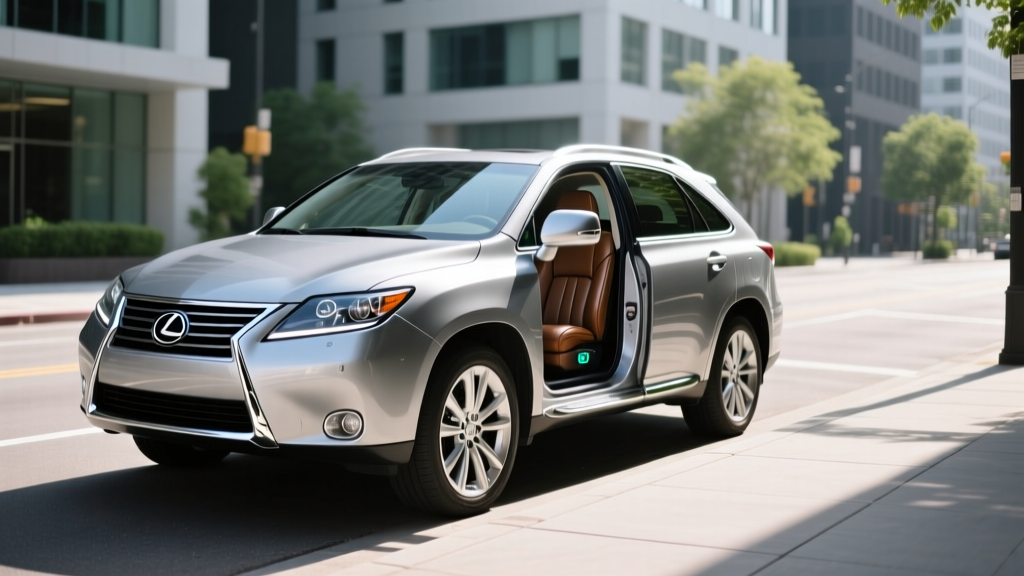
The 2008 Lexus RX 400h: A Pioneer Hybrid SUV Evaluated for 2026 Buyers
The 2008 Lexus RX 400h was one of the first luxury hybrid SUVs to reach mainstream American driveways, pairing a 3.3-liter V6 with Toyota's Hybrid Synergy Drive system. Nearly two decades later, it remains a fixture on the used market, often listed between $5,000 and $9,000 depending on mileage and condition. For buyers considering a budget-friendly hybrid SUV, the RX 400h offers a compelling mix of Lexus refinement and proven hybrid efficiency — but its age demands careful scrutiny of battery health, maintenance history, and real-world operating costs.
This guide breaks down everything a 2026 used-car buyer needs to know: EPA fuel economy versus real-world MPG, the hybrid powertrain specs, battery longevity and replacement costs, and whether this first-generation RX hybrid still makes sense versus newer hybrids, plug-in hybrids, or full EVs.
2008 Lexus RX 400h — Key Specifications
| Specification | Value |
|---|---|
| Powertrain | 3.3L V6 + 2 electric motors (AWD) |
| Combined Horsepower | 270 hp (net system output) |
| EPA Fuel Economy | 26 city / 28 highway / 26 combined MPG |
| Drivetrain | Electronic AWD (e-four) |
| Hybrid Battery | ~6.5 kWh NiMH (sealed, not plug-in) |
| 0-60 mph | ~7.3 seconds |
| Cargo Volume | 38.3 cu ft (rear seats up) / 76.1 cu ft (folded) |
| Curb Weight | ~4,510 lbs |
| Original MSRP (2008) | $48,630 (base) |
| 2026 Used Price Range | $5,000 – $9,500 |
Fuel Economy: EPA Ratings vs Real-World MPG
The EPA rated the 2008 Lexus RX 400h at 26 MPG city, 28 MPG highway, and 26 MPG combined per fueleconomy.gov. These numbers were impressive for a 4,500-pound luxury SUV in 2008, when the conventional gas V6 RX 350 managed just 19 city / 24 highway.
2008 Lexus RX 400h — EPA Fuel Economy Breakdown
| Driving Condition | EPA Rating | Real-World Expectation (2026) |
|---|---|---|
| City | 26 MPG | 25–28 MPG (hybrids often exceed EPA in stop-and-go) |
| Highway | 28 MPG | 24–27 MPG (sustained 70+ mph reduces regen benefit) |
| Combined | 26 MPG | 24–27 MPG depending on climate and driving mix |
| Cold Weather (below 32°F) | Not rated | 21–24 MPG (engine runs more for cabin heat) |
Real-world MPG for the RX 400h tends to track closely with EPA estimates in mixed driving, and some owners report slightly better city numbers thanks to the hybrid system's regenerative braking and electric-only low-speed operation. However, a vehicle approaching 18 years old may see degraded fuel economy if the hybrid battery has lost capacity, the engine hasn't been maintained, or tire pressure and alignment are neglected. Expect roughly 24–27 MPG combined in typical use, with city driving yielding the best results — a hallmark of Toyota's hybrid system, which leverages electric motor torque at low speeds where gas engines are least efficient.
Hybrid Powertrain: How the RX 400h System Works
The RX 400h uses Toyota's second-generation Hybrid Synergy Drive, combining a 208-horsepower 3.3-liter 3MZ-FE V6 engine with two electric motor-generators (MG1 and MG2) routed through a planetary gearset acting as a continuously variable transmission (eCVT). The system's net output is rated at 270 horsepower.
A third electric motor powers the rear axle on demand — Lexus calls this "e-four" — providing electronic all-wheel drive without a mechanical driveshaft. The rear motor engages during acceleration, slippery conditions, or when the system detects front-wheel slip, then disconnects during steady cruising to minimize drag.
The high-voltage nickel-metal hydride (NiMH) battery pack stores approximately 6.5 kWh of energy. Unlike a plug-in hybrid (PHEV) or battery electric vehicle (BEV), this battery charges exclusively through regenerative braking and the gas engine. There is no plug, no charging port, and no electric-only driving range to manage. The system automatically handles all energy management — the driver simply drives.
HEV vs PHEV: Understanding the RX 400h's Place
| Feature | 2008 RX 400h (HEV) | Modern PHEV (e.g., 2026 RAV4 Prime) | Full EV (e.g., 2026 Tesla Model Y) |
|---|---|---|---|
| Plug-in Charging | No — self-charging | Yes — 120V or 240V | Yes — Level 2 or DC fast |
| Electric-Only Range | ~1 mile at very low speed | 35–42 miles EPA | 280–330 miles EPA |
| Battery Size | ~6.5 kWh NiMH | ~18.1 kWh lithium-ion | ~75 kWh lithium-ion |
| Gas Engine | 3.3L V6 | 2.5L I-4 | None |
| Fueling | Gasoline only | Gasoline + electricity | Electricity only |
| Federal Tax Credit (New) | None (expired) | Up to $7,500 (§30D) | Up to $7,500 (§30D) |
The RX 400h is a conventional hybrid (HEV). It cannot be plugged in, has no meaningful electric-only range, and operates as a gasoline vehicle augmented by electric assist. This is a critical distinction: some shoppers confuse older "hybrid" badges with modern plug-in hybrids that offer 30+ miles of electric driving. The RX 400h offers zero plug-in capability.
Battery Health, Lifespan, and Replacement Costs
The single biggest concern for any used hybrid buyer is the high-voltage battery. The RX 400h's NiMH pack was engineered for longevity, and many examples have surpassed 200,000 miles on the original battery. However, at nearly 18 years old, most surviving RX 400h units are either on a replacement battery or showing measurable capacity loss.
Original Hybrid Battery Warranty
Lexus originally warranted the RX 400h hybrid battery for 8 years / 100,000 miles (10 years / 150,000 miles in California and states adopting CARB emissions standards). As of 2026, all original warranty coverage has expired for every 2008 model-year vehicle. Any battery failure is the owner's responsibility.
Hybrid battery replacement costs in 2026:
- OEM new battery (Lexus dealer): $3,500 – $5,000 installed
- Remanufactured battery (specialist shops): $1,800 – $3,000 installed
- Used/salvage battery: $800 – $1,500 (risky — unknown remaining life)
- Individual cell/module replacement: $500 – $1,200 (if only a few cells have failed)
NiMH batteries degrade gradually rather than failing catastrophically. Symptoms of a weakening hybrid battery include reduced fuel economy (the engine runs more often to compensate), the battery charge indicator fluctuating rapidly, reduced regenerative braking, and a dashboard warning light. A pre-purchase hybrid battery diagnostic — available at any Toyota/Lexus dealer or independent hybrid specialist — can measure module voltage spread and internal resistance to assess remaining life. This test is essential before purchasing any 2008 RX 400h.
Reliability and Long-Term Ownership Costs
The 2008 RX 400h benefits from Lexus's reputation for build quality and the proven durability of Toyota's hybrid system. The 3MZ-FE V6 engine is under-stressed in this application (the electric motors handle much of the low-speed load), which contributes to long engine life. Common issues reported by owners and tracked by NHTSA include:
- Inverter coolant pump failure: A known issue that can lead to inverter overheating. Lexus issued a recall (and extended warranty coverage) for the hybrid inverter coolant pump on certain model years. Verify recall completion.
- Brake actuator assembly: The electronically controlled brake system can develop faults, with replacement costing $1,500–$2,500.
- Power steering (electric): Occasional failures of the electric power steering rack — $1,200–$1,800 to replace.
- Standard aging items: Suspension bushings, struts, water pump, and timing belt (due at ~90,000 miles) should be verified for maintenance.
On the positive side, the eCVT transmission has no traditional clutch packs, bands, or torque converter to wear out — it's among the most reliable transmissions ever built. Brake pad life is extended significantly by regenerative braking; many owners report 80,000+ miles on original brake pads.
Pros
- Proven, durable hybrid system with 200K+ mile potential
- 26 MPG combined in a luxury AWD SUV — still competitive
- Lexus ride quality, quiet cabin, and strong build
- Low purchase price ($5K–$9K) for a luxury SUV
- eCVT reliability — virtually bulletproof
- Regenerative braking extends brake pad life
Cons
- Hybrid battery replacement ($2K–$5K) likely needed if original
- No plug-in capability — purely gas-fueled with hybrid assist
- Dated interior technology (no modern infotainment, no CarPlay/Android Auto)
- Higher insurance and repair costs vs non-luxury hybrids
- No eligibility for federal EV or PHEV tax credits
- NiMH battery less efficient than modern lithium-ion systems
Tax Credits and Incentives: What Applies in 2026?
The 2008 Lexus RX 400h does not qualify for the federal §30D new clean vehicle tax credit. That credit applies only to new vehicle purchases and has specific MSRP caps, buyer income limits, and battery-sourcing requirements per IRS guidelines. The RX 400h's original hybrid tax credit (up to $2,200 under the Energy Policy Act of 2005) was fully phased out for Toyota/Lexus vehicles by 2007 due to the manufacturer sales cap.
For used-vehicle buyers, the §25E previously owned clean vehicle credit (up to $4,000 or 30% of sale price, whichever is lower) applies only to plug-in electric vehicles and fuel cell vehicles — not conventional hybrids. The RX 400h, as a non-plug-in HEV, does not qualify.
Bottom line: there are no federal tax credits or incentives available for purchasing a 2008 RX 400h in 2026. Some states may offer minimal registration-fee reductions for hybrid vehicles, but these are rare and typically small. Check your state's DMV or energy office for any local provisions.
Who Should Buy the 2008 RX 400h — and Who Shouldn't
Decision Framework: Is the RX 400h Right for You?
Choose the 2008 Lexus RX 400h if:
- You want a low-cost luxury SUV with better fuel economy than a gas-only equivalent
- You lack access to plug-in charging (apartment, no garage outlet) — making a PHEV or EV impractical
- You prioritize proven reliability and are willing to budget $2,000–$3,500 for a potential hybrid battery replacement
- You drive mostly city or suburban routes where hybrid efficiency shines
- You want AWD capability without the fuel penalty of a conventional AWD SUV
Look elsewhere if:
- You want electric-only driving — consider a used PHEV (e.g., 2018+ Chrysler Pacifica Hybrid, 2019+ Toyota RAV4 Prime) or a full EV
- You want modern safety tech (automatic emergency braking, lane-keeping, blind-spot monitoring) — the 2008 RX predates these features
- You want the lowest possible operating cost — a modern EV charged at home will cost 50–70% less per mile than the RX 400h on gasoline
- You're concerned about potential $3,000–$5,000 hybrid battery replacement costs within the next few years
For budget-conscious buyers who need AWD and can't plug in, the RX 400h remains a rational choice. Its fuel savings over the gas RX 350 (roughly 6–7 MPG better combined) translate to approximately $400–$600 per year in fuel savings at 12,000 miles driven annually and $3.50/gallon gasoline — meaningful, but not transformative. Over five years, that's $2,000–$3,000 in fuel savings, which may or may not offset a battery replacement.
Frequently Asked Questions
How many MPG does the 2008 Lexus RX 400h hybrid get?
The EPA rates the 2008 RX 400h at 26 city / 28 highway / 26 combined MPG. Real-world driving typically yields 24–27 MPG combined, with city driving sometimes exceeding the EPA estimate thanks to regenerative braking and electric assist at low speeds. Cold weather and aggressive highway driving can drop this to 21–24 MPG.
Is the 2008 Lexus RX 400h a plug-in hybrid?
No. The RX 400h is a conventional hybrid (HEV), not a plug-in hybrid (PHEV). It has no charging port and cannot be plugged in. The hybrid battery charges solely through regenerative braking and the gasoline engine. It has no meaningful electric-only driving range — perhaps a mile or less at very low speeds in ideal conditions.
How much does it cost to replace the hybrid battery?
In 2026, a replacement hybrid battery for the RX 400h costs $3,500–$5,000 for a new OEM unit at a Lexus dealer, or $1,800–$3,000 for a remanufactured battery from a hybrid specialist. Individual module replacement can cost $500–$1,200 if only a few cells have failed. The original 8-year/100,000-mile battery warranty has expired on all 2008 models.
Does the 2008 RX 400h qualify for any tax credit?
No. The original federal hybrid tax credit for the RX 400h was phased out in 2007 after Toyota reached the manufacturer sales cap. In 2026, neither the §30D new vehicle credit nor the §25E used vehicle credit applies, as both require a plug-in electric vehicle. The RX 400h is a conventional hybrid with no plug-in capability.
Is the 2008 Lexus RX 400h reliable?
Yes, with caveats. The hybrid powertrain (engine, eCVT, motors) is among the most reliable Toyota/Lexus has ever built. The main risk is the aging NiMH hybrid battery, which may need replacement at $2,000–$5,000. Other known issues include the inverter coolant pump (check for recall completion), brake actuator, and electric power steering. A pre-purchase inspection focusing on hybrid battery health is essential.
How does the RX 400h compare to a modern hybrid or EV?
A 2026 Toyota RAV4 Hybrid achieves 39–41 MPG combined — roughly 50% better than the RX 400h — and includes modern safety technology. A RAV4 Prime PHEV offers 42 miles of electric-only range plus 38 MPG hybrid. A full EV like the Tesla Model Y delivers 3–4 miles per kWh (equivalent to ~120 MPGe) with zero tailpipe emissions. However, these newer vehicles cost $30,000–$50,000+, while the RX 400h can be had for under $10,000. The trade-off is efficiency and technology versus upfront cost.
Can I still get parts and service for the 2008 RX 400h?
Yes. Toyota/Lexus continues to support the RX 400h with OEM parts, and the hybrid system shares components with the Toyota Highlander Hybrid and other models from the same era. Independent hybrid specialists and Toyota-certified dealerships can service the high-voltage system. Standard maintenance parts are widely available.
The 2008 Lexus RX 400h occupies a specific niche in 2026: an affordable, proven, luxury hybrid SUV for buyers who can't or don't want to plug in. Its fuel economy advantage over the gas RX 350 is real but modest by today's standards, and the looming battery replacement cost is the primary financial risk. Approach with a hybrid battery diagnostic in hand, budget for eventual replacement, and the RX 400h can deliver reliable, refined transportation at a fraction of the cost of a new electrified SUV.