Quick Verdict: The Original Ford Hybrid Still Has Legs
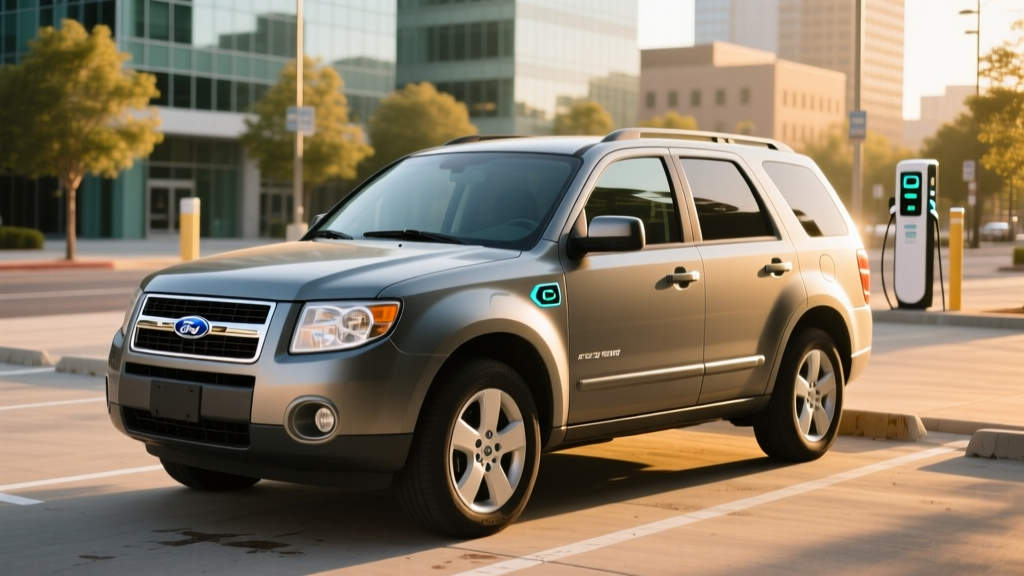
If you're searching for a 2008 Ford hybrid SUV, you're almost certainly looking at the second-generation Ford Escape Hybrid — the compact crossover that helped launch the mainstream hybrid SUV segment back in the mid-2000s. In 2026, this vehicle exists exclusively on the used market, and it remains one of the most affordable entry points into hybrid ownership, with clean examples typically selling for $4,500–$8,000 depending on mileage and condition.
The 2008 Escape Hybrid is a conventional hybrid (HEV), not a plug-in. It requires no charging infrastructure — it generates all its electricity internally through regenerative braking and its gasoline engine. For used-car buyers who want better fuel economy without the complexity, cost, or charging logistics of a plug-in hybrid or full EV, this is a pragmatic, proven choice.
| Spec | Value |
|---|---|
| Powertrain | 2.3L Atkinson-cycle I4 + electric motor (HEV) |
| Combined Horsepower | 155 HP (net system) |
| Transmission | Electronically controlled CVT (eCVT) |
| EPA MPG (City / Hwy / Combined) | 34 / 30 / 32 (FWD) · 29 / 27 / 28 (AWD) |
| Battery Chemistry / Capacity | NiMH (Nickel-Metal Hydride), ~1.8 kWh (not usable/plug-in) |
| Drivetrain Options | FWD or AWD |
| Towing Capacity | 1,000 lbs |
| Cargo Volume | 29.2 cu ft (rear seats up) · 67.2 cu ft (folded) |
| 0–60 MPH | ~10.5 seconds |
| Original MSRP (2008) | ~$26,995 (base Hybrid FWD) |
| Typical 2026 Used Price | $4,500 – $8,000 |
How Many MPG Does the 2008 Ford Escape Hybrid Get?
| Model | City MPG | Highway MPG | Combined MPG |
|---|---|---|---|
| Escape Hybrid FWD | 34 | 30 | 32 |
| Escape Hybrid AWD | 29 | 27 | 28 |
| Escape Gas 2.3L FWD (auto) | 20 | 25 | 22 |
| Escape Gas 3.0L V6 AWD | 17 | 22 | 19 |
The headline advantage of the 2008 Escape Hybrid is city fuel economy. The EPA rates the FWD model at 34 MPG city — a massive 14 MPG improvement over the equivalent gas-only four-cylinder Escape. That city advantage comes from the hybrid system's ability to shut off the engine at stops, capture energy during braking, and run on electric-only power at low speeds.
Real-World MPG: What Owners Actually Report
As with most conventional hybrids, real-world results depend heavily on driving style. City-dominant commuters often report 31–36 MPG in mixed driving, with some hypermilers pushing past 38 MPG in warm-weather stop-and-go traffic. Highway-heavy drivers should expect 27–30 MPG, as the hybrid system provides less benefit at sustained speeds.
Aging NiMH batteries in high-mileage examples (150,000+ miles) may show modest capacity loss, potentially dropping real-world MPG by 1–3 MPG versus a fresh pack. According to owner-reported data aggregated by fueleconomy.gov, the average driver achieves approximately 28–31 MPG combined — slightly below the EPA sticker but still dramatically better than a gas-only Escape.
HEV vs. PHEV vs. EV: Which Fits Your Needs?
The 2008 Escape Hybrid is a conventional hybrid electric vehicle (HEV). It has no plug, no electric-only driving range to speak of (it can creep on battery alone for roughly 1–2 miles at very low speeds), and it refuels exclusively at a gas station. Here's how it compares to the other electrified options available in 2026:
| Factor | HEV (Escape Hybrid) | PHEV (e.g., 2026 RAV4 Prime) | BEV (e.g., 2026 Ioniq 5) |
|---|---|---|---|
| Needs a plug? | No | Yes (for EV range) | Yes (always) |
| Electric-only range | ~0 miles | 30–42 miles | 250–350+ miles |
| Home charging needed? | No | Recommended | Essential |
| Upfront cost (used/new) | $4,500–$8,000 (used) | $40,000–$48,000 | $38,000–$55,000 |
| Federal tax credit | None | Up to $7,500 (§30D) | Up to $7,500 (§30D) |
| Fuel cost per mile | ~$0.10–$0.12 | ~$0.04–$0.10 | ~$0.03–$0.06 |
| Maintenance complexity | Low (proven tech) | Moderate (two systems) | Low (fewer moving parts) |
| Best for | No plug access, budget buyers | Short commutes + road trips | Home charging + daily driving |
Choose the 2008 Escape Hybrid If:
- You rent or live somewhere without access to a dedicated outlet or Level 2 charger
- Your budget is under $10,000 and you want lower fuel costs
- You drive mostly in city or suburban stop-and-go traffic
- You want a proven, simple hybrid system with no plug-in complexity
Choose a PHEV or EV Instead If:
- You have access to home or workplace Level 2 charging
- Your daily commute is under 40 miles (a PHEV covers it on electricity alone)
- You want to qualify for the federal §30D tax credit (up to $7,500 for new qualifying vehicles)
- You're looking for a new or certified pre-owned vehicle with a full warranty
Powertrain Deep Dive: How the Escape Hybrid Works
The 2008 Escape Hybrid pairs a 2.3-liter Atkinson-cycle four-cylinder engine (producing 133 HP on its own) with a permanent-magnet electric motor integrated into the transmission housing. Combined net system output is 155 HP. The transmission is Ford's eCVT — not a belt-and-pulley CVT like you'd find in a Nissan, but a planetary gearset design similar to Toyota's Hybrid Synergy Drive. In fact, the Escape Hybrid's powertrain was co-developed using Toyota-licensed hybrid patents, which is one reason it has proven so durable.
The system operates in several modes automatically:
- EV mode: At low speeds (under ~25 MPH) with light throttle, the vehicle can move on electric motor power alone for short distances
- Engine drive: The gas engine powers the wheels directly at highway speeds
- Combined: Both engine and motor work together for maximum acceleration
- Regenerative braking: The electric motor acts as a generator during deceleration, recharging the NiMH battery
- Auto stop: The engine shuts off completely at red lights and restarts seamlessly when you lift off the brake
The AWD version uses a second, smaller electric motor to drive the rear wheels when slip is detected — there is no mechanical driveshaft connecting the front and rear axles. This "eAWD" system is effective in rain and light snow but adds roughly 150 lbs and reduces fuel economy by 3–4 MPG versus FWD.
Battery Health, Warranty, and Replacement Costs
Original hybrid battery warranty: 8 years / 100,000 miles (extended to 10 years / 150,000 miles in California Air Resources Board (CARB) states including CA, NY, MA, and others adopting CARB standards).
Battery type: Nickel-Metal Hydride (NiMH), manufactured by Sanyo. Approximately 1.8 kWh gross capacity.
2026 warranty status: The original factory warranty has expired on all 2008 models. Any remaining coverage would come from an aftermarket extended warranty or a replacement battery's own warranty.
Is the Hybrid Battery Reliable?
The Escape Hybrid's NiMH battery pack has a strong track record. Because the system never fully charges or fully depletes the pack (it operates within a narrow state-of-charge "buffer" between roughly 40% and 80%), the cells experience relatively gentle cycling. Many examples have surpassed 200,000 miles on the original battery with minimal capacity degradation.
That said, age is now the primary concern. Even low-mileage 2008 examples have 18-year-old battery packs. NiMH cells degrade with time and heat exposure, not just cycle count. Expect a 10–20% capacity loss versus new on an original pack, which translates to slightly reduced low-speed EV creep distance and marginally lower MPG — but typically not catastrophic failure.
Hybrid Battery Replacement Cost
If the battery does fail, here's what 2026 replacement looks like:
- OEM new battery (Ford dealer): $2,500–$3,500 (parts + labor), though OEM availability for 2008 models is increasingly limited
- Refurbished/remanufactured pack: $1,200–$2,000 from specialists like Green Bean Battery or similar hybrid battery recyclers
- Individual cell module replacement: $400–$800 if only one or two modules are weak (requires a hybrid-savvy technician)
Before purchasing any used 2008 Escape Hybrid, request a hybrid battery health scan using an OBD-II tool that reads the battery's state of health (SoH) and individual module voltages. A healthy pack should show module voltages within 0.2V of each other under load.
Pricing, Tax Credits, and Total Cost of Ownership
Used Market Pricing (2026)
The 2008 Ford Escape Hybrid trades hands in 2026 at the following approximate ranges:
- High-mileage (150K+), fair condition: $3,500–$5,000
- Average (100K–150K), good condition: $5,000–$6,500
- Low-mileage (under 100K), excellent condition: $6,500–$8,500
Tax Credit Eligibility
The 2008 Escape Hybrid does not qualify for the current IRS §30D federal clean vehicle credit. That credit applies only to new qualifying plug-in EVs and PHEVs with sufficient battery capacity. As a conventional HEV purchased used, no federal tax credit is available. Some states offer modest used-EV rebates that occasionally cover hybrids, but these are rare and jurisdiction-specific — check your state's energy office for current programs.
Estimated Annual Fuel Cost
At 15,000 miles per year and $3.40/gallon (2026 national average for regular unleaded):
- Escape Hybrid FWD (32 MPG combined): ~$1,594/year
- Escape Gas 2.3L FWD (22 MPG combined): ~$2,318/year
- Annual fuel savings with hybrid: ~$724/year
Over a 5-year ownership horizon, that's roughly $3,600 in fuel savings versus the gas model — enough to offset a significant portion of the purchase price and any potential hybrid battery service.
Pros and Cons of the 2008 Ford Escape Hybrid
Pros
- Strong city MPG (34 EPA) — excellent for stop-and-go commuters
- No plug-in charging required — works with existing gas infrastructure
- Proven Toyota-licensed hybrid system with 200K+ mile longevity
- Low purchase price ($4,500–$8,000 in 2026)
- Higher seating position and SUV cargo utility
- Available AWD with electric rear axle
- Significantly lower annual fuel cost vs. gas Escape
Cons
- Sluggish acceleration (10.5 sec 0–60, 155 HP)
- Highway MPG advantage is modest (30 MPG)
- 18-year-old NiMH battery is a replacement risk
- No federal tax credit or incentive eligibility
- Dated interior, infotainment, and safety tech
- Low towing capacity (1,000 lbs)
- Original factory warranty fully expired
What to Inspect Before Buying a Used 2008 Escape Hybrid
Since every 2008 Escape Hybrid is now a used vehicle with at least 18 years of age, a thorough pre-purchase inspection is non-negotiable. Focus on these hybrid-specific and age-related items:
- Hybrid battery SoH scan: Check module voltage balance and overall pack resistance. Walk away if any module deviates more than 0.3V from the pack average.
- Inverter coolant: The hybrid system has a separate coolant loop for the power inverter. Verify it's been serviced and the fluid level is correct — inverter overheating is a costly failure.
- Brake actuator: The Escape Hybrid uses an electro-hydraulic brake system. Listen for unusual pump cycling when pressing the brake pedal with the vehicle off (key on, engine off). Excessive cycling may indicate a failing accumulator.
- eCVT operation: Test-drive for smooth, seamless transitions between EV and engine mode. Any shuddering, hesitation, or warning lights are red flags.
- Rust and suspension: Check subframe, rocker panels, and rear suspension mounting points for corrosion, especially in salt-belt states.
- General age items: Rubber hoses, belts, bushings, and the 12V auxiliary battery should all be inspected or recently replaced.
Frequently Asked Questions
Does the 2008 Ford Escape Hybrid need to be plugged in?
No. The 2008 Escape Hybrid is a conventional hybrid (HEV), not a plug-in hybrid (PHEV). It charges its battery entirely through regenerative braking and the gasoline engine. You never plug it in — just fill up at any gas station with regular unleaded fuel.
How far can the 2008 Escape Hybrid drive on electric power alone?
Effectively zero meaningful electric-only range. The hybrid system can propel the vehicle on battery power alone for roughly 1–2 miles at speeds under 25 MPH in ideal conditions (flat ground, gentle acceleration, warm battery). This is not a plug-in vehicle and offers no practical electric-only commuting capability.
Is the 2008 Escape Hybrid reliable?
The powertrain is among the most reliable Ford has ever produced, thanks to the Toyota-licensed hybrid system and the durability of the eCVT planetary gearset (which has no belts, clutches, or friction bands to wear out). The main reliability concern in 2026 is the age of the NiMH battery pack. Mechanically, the 2.3L engine and hybrid components have proven capable of 200,000+ miles with basic maintenance.
What does it cost to replace the hybrid battery?
A refurbished NiMH pack costs $1,200–$2,000 installed. An OEM new pack (if still available through Ford) runs $2,500–$3,500. Individual module repairs can cost as little as $400–$800 if only a few cells are degraded. Most hybrid battery specialists offer a 1–3 year warranty on refurbished packs.
Does the 2008 Escape Hybrid qualify for any tax credit in 2026?
No. The IRS §30D clean vehicle credit applies only to new plug-in electric vehicles and plug-in hybrids meeting battery capacity, sourcing, MSRP, and buyer income requirements. A used conventional hybrid does not qualify. The federal used-EV credit (§25E) also requires the vehicle to be a plug-in EV or PHEV, not a conventional HEV.
How does the Escape Hybrid compare to a Toyota Highlander Hybrid from the same era?
The 2008 Highlander Hybrid is larger (midsize vs. compact), offers a third row, and has a more powerful V6 hybrid system (270 HP combined). However, it gets lower MPG — EPA 25 combined vs. the Escape's 32 combined (FWD). The Escape Hybrid is lighter, more fuel-efficient, and cheaper to buy and maintain. The Highlander makes sense only if you need the extra space and towing capacity (3,500 lbs vs. 1,000 lbs).
Should I buy a 2008 Escape Hybrid or save for a newer plug-in hybrid?
If your budget is firmly under $10,000 and you lack home charging access, the Escape Hybrid is a smart, low-risk choice that will save $700+ per year in fuel versus a gas SUV. If you can stretch to $25,000–$35,000 and have Level 2 charging available, a newer PHEV like a 2018–2022 Toyota RAV4 Prime or Chrysler Pacifica Hybrid offers 30–42 miles of electric-only range, modern safety tech, and remaining warranty coverage — a meaningfully better daily experience.
Bottom Line: Who Should Buy the 2008 Ford Escape Hybrid?
The 2008 Ford Escape Hybrid occupies a specific niche in 2026: it's the budget-conscious, no-plug-needed hybrid SUV for buyers who want real fuel savings without the upfront cost or infrastructure demands of a plug-in vehicle. Its Toyota-derived hybrid system is genuinely one of the most durable ever put into a Ford product, and its 34 MPG city rating still holds up nearly two decades later.
Buy it if you commute in traffic, can't charge at home, and want to spend under $8,000 on a practical SUV that sips fuel. Skip it if you want modern safety features, quick acceleration, plug-in electric range, or the peace of mind of a warranty. For those needs, a newer PHEV or BEV is the better investment — but at three to five times the price.