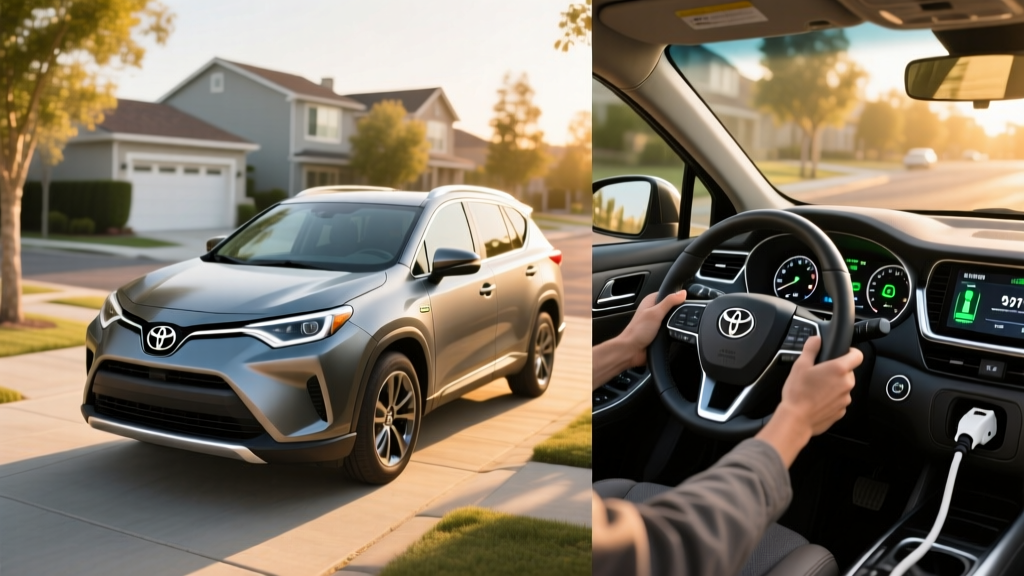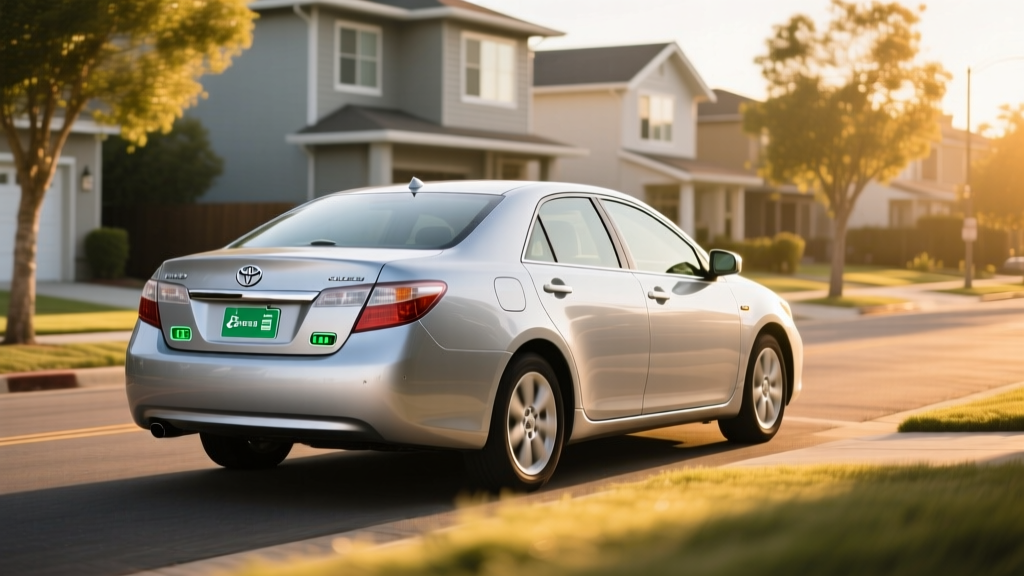
The 2007 Toyota Camry Hybrid was one of the first mainstream midsize sedans to pair a four-cylinder gasoline engine with an electric motor, promising sedan comfort with compact-car fuel economy. Nearly two decades later, thousands of these vehicles are still on the road — and buyers shopping the used market still search for the 2007 Toyota Camry Hybrid gas mileage to see if the numbers hold up. This guide covers the EPA ratings, real-world MPG expectations, hybrid battery longevity, replacement costs, and whether this early-generation hybrid still makes financial sense versus a modern hybrid, PHEV, or full EV in 2026.
2007 Toyota Camry Hybrid Gas Mileage: EPA Ratings vs. Real-World MPG
The 2007 Camry Hybrid is a conventional hybrid electric vehicle (HEV) — it does not plug in. The gasoline engine and regenerative braking charge a small nickel-metal hydride (NiMH) battery pack, which assists the engine during acceleration and allows brief electric-only driving at low speeds. Because there is no plug, all energy ultimately comes from gasoline.
| Metric | Value |
|---|---|
| EPA City MPG | 33 MPG |
| EPA Highway MPG | 34 MPG |
| EPA Combined MPG | 34 MPG |
| Fuel Tank Capacity | 17.2 gallons |
| Estimated Total Range | ~585 miles |
Source: fueleconomy.gov — 2007 Toyota Camry Hybrid
Powertrain Specs: Engine, Motor, and Combined Output
The 2007 Camry Hybrid uses Toyota's second-generation Hybrid Synergy Drive, pairing a 2.4-liter Atkinson-cycle four-cylinder engine with a permanent-magnet electric motor through an electronically controlled continuously variable transmission (eCVT).
| Component | Specification |
|---|---|
| Gasoline Engine | 2.4L 4-cylinder Atkinson-cycle (147 HP) |
| Electric Motor | Permanent-magnet synchronous (40 HP / 202 lb-ft) |
| Net Combined Horsepower | 192 HP |
| Transmission | eCVT (planetary gearset) |
| Hybrid Battery | NiMH, ~1.0 kWh (244.8V nominal) |
| Drivetrain | Front-wheel drive |
| 0–60 MPH | ~8.4 seconds |
| Curb Weight | ~3,680 lbs |
The combined 192 HP was competitive with the V6 Camry of its era, and the electric motor's instant torque gives the car a responsive feel around town despite the modest four-cylinder engine. The eCVT has no physical gears or belts — it uses a planetary gearset to blend engine and motor power seamlessly, which contributes to the powertrain's legendary reliability.
HEV vs. PHEV vs. EV: Where the 2007 Camry Hybrid Fits
Understanding the distinction between hybrid types is critical before comparing this car to modern alternatives.
| Feature | HEV (e.g., 2007 Camry Hybrid) | PHEV (e.g., 2026 RAV4 Prime) | BEV (e.g., 2026 Tesla Model 3) |
|---|---|---|---|
| Plugs in? | No | Yes | Yes |
| Electric-only range | ~0.5 mi at low speed | 35–42 mi | 250–360 mi |
| Fuel source | Gasoline only | Gasoline + grid electricity | Grid electricity only |
| Home charging needed? | No | Recommended (Level 2) | Essential (Level 2) |
| Federal tax credit (§30D) | No | Up to $7,500 (eligibility rules apply) | Up to $7,500 (eligibility rules apply) |
| Typical combined MPG/MPGe | 30–40 MPG | 38–94 MPGe (electric+gas) | 120–140 MPGe |
The 2007 Camry Hybrid is a pure HEV. It never plugs in and has no meaningful electric-only range — the battery assists the engine and enables brief engine-off coasting at low speeds, but you cannot charge it from a wall outlet. This is a key advantage for buyers without access to home or workplace charging: the car operates exactly like a conventional gas car, just with better fuel economy.
Hybrid Battery Lifespan, Warranty, and Replacement Cost
The most common concern for any used hybrid buyer is battery longevity. The 2007 Camry Hybrid uses a nickel-metal hydride (NiMH) battery pack — a mature, well-understood chemistry that Toyota has deployed in millions of vehicles since the 1997 Prius.
How Long Does the Battery Actually Last?
Real-world data from Camry Hybrid and Prius owners shows NiMH batteries typically last 150,000–200,000 miles before significant degradation triggers a check-engine light or noticeable fuel economy drop. Many examples exceed 200,000 miles with the original pack. Toyota's NiMH chemistry is conservative — it never charges above ~80% state of charge (SoC) or discharges below ~40%, which dramatically extends cycle life compared to fully cycling the battery.
Battery Replacement Cost in 2026
- Remanufactured NiMH pack: $1,500–$2,500 (parts + labor at an independent hybrid specialist)
- New OEM Toyota pack: $3,000–$4,200 (dealer-installed)
- Individual module replacement: Some hybrid shops can replace only the failed modules within the pack for $500–$1,000, though this is a temporary fix if the rest of the pack is also aging
At current used-car values for a 2007 Camry Hybrid ($3,500–$7,000 depending on mileage and condition), a full OEM battery replacement can represent 50–100% of the vehicle's value. This is the single biggest financial risk of buying an early-generation hybrid with high mileage.
Does the 2007 Camry Hybrid Qualify for Any Tax Credit?
No. The 2007 Camry Hybrid does not qualify for the federal §30D Clean Vehicle Credit. That credit applies only to new plug-in electric vehicles (BEVs and PHEVs) that meet battery sourcing, critical mineral, MSRP cap, and buyer income requirements set by the IRS. Conventional hybrids (HEVs) that do not plug in have never been eligible for §30D.
Some states historically offered rebates for HEVs, but nearly all state-level hybrid incentives have expired or shifted to plug-in vehicles. Check your state's current energy office or DMV website for any residual programs, but do not expect financial incentives for purchasing a 2007 HEV.
Reliability, Maintenance, and Long-Term Ownership Costs
The 2007 Camry Hybrid benefits from the same platform and build quality that made the conventional Camry the best-selling car in America for decades. Key reliability notes:
- Transmission: The eCVT planetary gearset has no clutch packs, bands, or belts to wear out. Failures are extremely rare and the unit is generally considered lifetime-rated.
- Brakes: Regenerative braking handles most deceleration, so friction brake pads often last 80,000–120,000 miles — two to three times longer than a conventional Camry.
- Engine: The 2AZ-FXE 2.4L engine runs the Atkinson cycle (reduced compression losses), which lowers stress and heat. Oil consumption complaints were documented in some 2007–2009 2AZ-FE engines; check service records for evidence of excessive oil burn.
- Coolant: The hybrid system has a separate inverter coolant loop. The inverter coolant pump was subject to a recall — verify it was completed.
- 12V battery: Like any car, the 12V auxiliary battery will need replacement every 4–6 years. The hybrid system cannot start if the 12V battery is dead, even if the high-voltage pack is fully charged.
2007 Camry Hybrid vs. Modern Alternatives: What Should You Buy?
| Vehicle | Approx. Price | Combined MPG/MPGe | Plugs In? | Tax Credit? |
|---|---|---|---|---|
| 2007 Toyota Camry Hybrid (used) | $3,500–$7,000 | 34 MPG | No | No |
| 2026 Toyota Camry Hybrid (new LE) | ~$30,000 | 52 MPG | No | No |
| 2026 Toyota RAV4 Prime (PHEV) | ~$44,500 | 94 MPGe / 38 MPG | Yes | Potentially $7,500* |
| 2026 Hyundai Ioniq 6 (BEV) | ~$38,000 | 140 MPGe | Yes | Potentially $7,500* |
*Federal §30D credit eligibility depends on MSRP caps, buyer income limits, battery critical-mineral sourcing, and point-of-sale transfer rules. Consult IRS.gov §30D guidelines and a tax professional before purchasing.
Choose the 2007 Camry Hybrid If:
- Your budget is under $7,000 and you need reliable daily transportation
- You have no access to home or workplace charging (apartment, street parking)
- You drive primarily in city/stop-and-go traffic where hybrid efficiency shines
- You want low maintenance costs and proven Toyota reliability
- You can verify the hybrid battery health via a pre-purchase inspection
Choose a Modern Alternative If:
- You can install a Level 2 home charger and want PHEV or BEV savings
- You want the latest safety features (AEB, lane-keeping, blind-spot monitoring) — the 2007 Camry has none of these
- You drive 15,000+ miles per year and the MPG improvement of a modern hybrid (52 MPG) or BEV (140 MPGe) saves $800–$2,000 annually in fuel
- You want federal tax credit eligibility to offset a new-vehicle purchase
Frequently Asked Questions
How many MPG does the 2007 Toyota Camry Hybrid get?
The EPA rates the 2007 Camry Hybrid at 33 city / 34 highway / 34 combined MPG. Real-world owners typically report 30–36 MPG in mixed driving, with city driving sometimes exceeding the EPA estimate thanks to regenerative braking. Highway driving at high speeds tends to return 29–32 MPG.
Does the 2007 Camry Hybrid plug in?
No. The 2007 Camry Hybrid is a conventional hybrid (HEV). It charges its battery solely through the gasoline engine and regenerative braking. There is no plug, no charging port, and no meaningful electric-only driving range.
How much does it cost to replace the hybrid battery?
A remanufactured NiMH battery pack costs $1,500–$2,500 installed at an independent hybrid shop. A new OEM Toyota pack runs $3,000–$4,200 at a dealer. Given the vehicle's current market value of $3,500–$7,000, battery replacement is a significant expense relative to the car's worth.
Is the 2007 Camry Hybrid reliable at high mileage?
Yes, with proper maintenance. The eCVT transmission and Atkinson-cycle engine are under-stressed and long-lived. The main risk is hybrid battery degradation past 150,000–200,000 miles. A pre-purchase hybrid battery health check (available at Toyota dealers and hybrid specialists) is strongly recommended before buying.
Does it qualify for any federal or state tax credit?
No. The federal §30D Clean Vehicle Credit applies only to new plug-in vehicles (BEVs and PHEVs). Conventional hybrids that do not plug in are not eligible. Most state hybrid incentives have also expired or shifted to plug-in vehicles.
Should I buy a 2007 Camry Hybrid or a newer used hybrid?
If your budget allows, a 2018+ Camry Hybrid (52 MPG combined EPA) offers dramatically better fuel economy, modern safety features (Toyota Safety Sense), Apple CarPlay/Android Auto, and remaining battery warranty. However, the 2007 model remains one of the cheapest ways to get into a reliable hybrid if you're willing to accept older technology and the battery-replacement risk.