The 2007 Lexus GS 450h: An Early Luxury Hybrid Under the Microscope
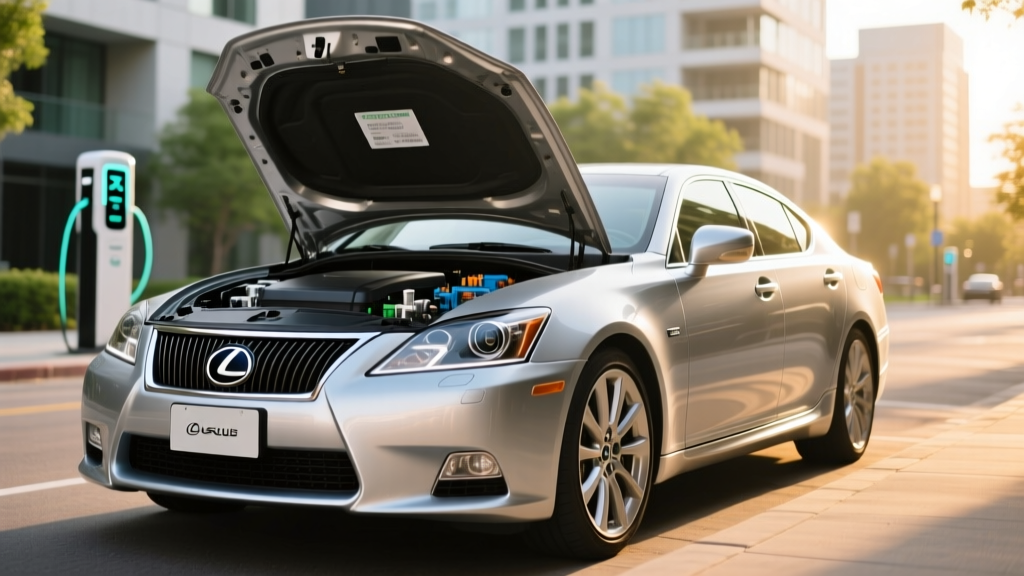
When Lexus launched the GS 450h for the 2007 model year, it was one of the first performance-oriented luxury sedans to pair a V6 with a hybrid electric drivetrain. Nearly two decades later, the 2007 Lexus GS hybrid occupies a curious spot in the used-car market: a pioneering HEV (conventional hybrid, not a plug-in) that can be had for a fraction of its original $52,000+ MSRP. But with a 19-year-old high-voltage battery as the elephant in the room, is it a smart buy in 2026, or a ticking time bomb?
This guide breaks down the GS 450h's real-world fuel economy, powertrain specs, hybrid battery longevity, replacement costs, and who should — and shouldn't — consider one today. We'll also compare it against modern PHEVs and full EVs so you can make an informed decision.
HEV vs PHEV vs EV: Where Does the GS 450h Fit?
Before we dig into specs, it's essential to understand what the 2007 Lexus GS hybrid actually is — and what it isn't.
Conventional Hybrid (HEV) — This Is the GS 450h
The GS 450h is a self-charging hybrid. Its small nickel-metal hydride (NiMH) battery recharges through regenerative braking and the gasoline engine. You never plug it in. There is no meaningful electric-only driving range — the electric motor assists the gas engine and enables brief low-speed electric creep, but the 3.5L V6 is always the primary power source.
Plug-In Hybrid (PHEV)
A PHEV (like the modern Lexus NX 450h+ or Toyota RAV4 Prime) has a larger battery (typically 14–22 kWh) that you plug in to charge. It delivers 25–45 miles of pure electric range before the gas engine engages. The GS 450h is not a PHEV.
Battery Electric Vehicle (BEV)
A full EV (Tesla Model S, Lucid Air) runs solely on a large battery pack (60–130+ kWh) charged from the grid. Zero gasoline, zero tailpipe emissions. A completely different ownership proposition from the GS 450h.
Bottom line: If you're searching for a "2007 Lexus GS hybrid" expecting plug-in capability or electric-only commuting, this isn't it. The GS 450h is a traditional HEV designed to improve fuel economy over a comparable gas-only V6 sedan.
Powertrain Specs: What's Under the Hood
The 2007 GS 450h pairs Lexus's Hybrid Synergy Drive with a direct-injection 3.5-liter V6. Here's the full breakdown:
| Specification | 2007 Lexus GS 450h |
|---|---|
| Gas Engine | 3.5L V6, direct injection, 292 hp |
| Electric Motor | Permanent-magnet AC synchronous, ~200 hp |
| Combined System Output | 339 hp (net) |
| Transmission | CVT (electronically controlled) |
| Drivetrain | Rear-wheel drive |
| Hybrid Battery Type | Nickel-Metal Hydride (NiMH) |
| Hybrid Battery Capacity | ~1.8 kWh (nominal, non-plug-in) |
| 0–60 mph | 5.6 seconds |
| Top Speed | ~130 mph (electronically limited) |
| Curb Weight | ~4,155 lbs |
| Original MSRP (2007) | ~$52,770 |
| Typical Used Price (2026) | $4,000–$9,000 depending on condition/mileage |
The dual-motor setup and CVT give the GS 450h smooth, linear acceleration. The 339 net horsepower was genuinely impressive for 2007 — it could outrun many V8 sport sedans of its era while returning significantly better fuel economy. The trade-off is weight: the hybrid system adds roughly 250 lbs over the gas-only GS 350, pushing the curb weight past 4,100 lbs.
Fuel Economy: EPA Numbers vs Real-World MPG
Here's where the hybrid proposition lives or dies. According to fueleconomy.gov, the 2007 Lexus GS 450h carries the following EPA ratings:
| Driving Condition | EPA MPG | Real-World Expectation |
|---|---|---|
| City | 22 MPG | 22–25 MPG |
| Highway | 25 MPG | 23–26 MPG |
| Combined | 23 MPG | 21–24 MPG |
Real-world context: Conventional hybrids like the GS 450h tend to perform close to or slightly better than their EPA city rating because stop-and-go traffic maximizes regenerative braking. Highway driving, where the electric motor provides less benefit, tends to match or slightly undercut the EPA figure. With a 19-year-old vehicle, expect real-world results to depend heavily on battery condition, tire pressure, driving style, and maintenance history. A degraded hybrid battery can knock 2–4 MPG off these figures.
For comparison, the gas-only 2007 GS 350 (same 3.5L V6 without hybrid assist) was EPA-rated at 18 city / 25 highway / 21 combined. The hybrid's advantage is most pronounced in city driving — roughly a 22% improvement. On the highway, the gap narrows considerably.
⚠️ Age caveat: At nearly 20 years old, actual fuel economy will vary widely based on the hybrid battery's state of health (SoH), engine maintenance, and tire condition. Budget for a fuel-system cleaning, new spark plugs, and a hybrid battery diagnostic before expecting peak MPG.
Hybrid Battery Health, Lifespan & Replacement Cost
This is the single most important factor when evaluating any used hybrid — and especially a 2007 model. The GS 450h uses a nickel-metal hydride (NiMH) battery pack mounted behind the rear seats. Unlike modern lithium-ion packs, NiMH chemistry degrades more gradually but is also heavier and less energy-dense.
Original Battery Warranty
When new, Lexus covered the GS 450h's hybrid battery for 8 years / 100,000 miles (10 years / 150,000 miles in California-emission states). That warranty expired no later than 2017. Any 2007 GS 450h on the road in 2026 is well beyond factory hybrid battery coverage.
Expected Battery Lifespan
Lexus/Toyota NiMH hybrid batteries have a strong track record for longevity. Real-world data from Prius and RX 400h owners (similar-era hybrid systems) shows many packs lasting 150,000–200,000 miles or 12–18 years before significant degradation. However, at 19 years old, most original GS 450h batteries are either already replaced, showing reduced capacity, or on borrowed time.
Battery Replacement Cost (2026 Estimates)
- OEM new battery (Lexus dealer): $3,500–$5,000 installed
- Refurbished/remanufactured pack: $1,500–$2,800 installed
- Individual module replacement (specialty hybrid shop): $800–$1,500 for targeted cell replacement
If you're shopping for a 2007 GS 450h, always request a hybrid battery health report. Many independent hybrid specialists can perform a capacity test that reveals remaining life. Factor at least $2,000–$3,500 into your budget for a battery replacement unless the seller can document a recent replacement with receipts.
Signs of a Failing Hybrid Battery
- Noticeable drop in fuel economy (3+ MPG below normal)
- More frequent engine cycling on and off
- Dashboard hybrid system warning light
- Reduced regenerative braking feel
- Higher-than-normal cooling fan noise from the rear seat area
Tax Credits, Insurance & Ownership Costs in 2026
Let's address the financial picture directly.
Federal Tax Credit Eligibility
The 2007 Lexus GS 450h does not qualify for any federal tax credit in 2026. The original IRS §30D clean vehicle credit applies only to new qualifying plug-in vehicles, and the GS 450h was never a plug-in. The used-EV credit (up to $4,000 under §25E) requires a plug-in electric vehicle with at least 7 kWh of battery capacity — the GS 450h's ~1.8 kWh NiMH pack doesn't qualify. There are no remaining hybrid-specific federal incentives for this model.
Insurance
Insurance costs for a 2007 GS 450h are generally moderate given its age and depreciated value. Expect $80–$140/month depending on your driving record, location, and coverage level. The hybrid system doesn't significantly increase premiums for a vehicle this old.
Maintenance Considerations
Beyond the hybrid battery, the GS 450h shares many components with the GS 350. Lexus reliability is generally strong, but at this age, budget for:
- Brake actuator assembly (a known wear item on Toyota/Lexus hybrids of this era): $800–$1,400
- Inverter coolant pump: $300–$600
- Standard aging items: suspension bushings, water pump, alternator (12V), seals
How Does the 2007 GS 450h Compare to Modern Alternatives?
If you're cross-shopping the 2007 GS hybrid against newer options, here's a reality check:
| Metric | 2007 GS 450h (HEV) | 2026 Lexus ES 300h (HEV) | 2026 Lexus NX 450h+ (PHEV) |
|---|---|---|---|
| Combined MPG / MPGe | 23 MPG | 44 MPG | 84 MPGe / 37 mi EV range |
| Combined HP | 339 hp | 215 hp | 302 hp |
| Plug-In Capable? | No | No | Yes |
| Federal Tax Credit | None | None | Up to $7,500 (§30D)* |
| Battery Warranty | Expired | 10 yr / 150,000 mi | 10 yr / 150,000 mi |
| Typical Price (2026) | $4,000–$9,000 | $44,000–$52,000 | $58,000–$66,000 |
* §30D credit eligibility depends on MSRP caps, buyer income limits, and battery sourcing requirements. Verify current rules at irs.gov.
The efficiency gap is stark: a 2026 ES 300h delivers nearly double the GS 450h's combined MPG thanks to two decades of hybrid system refinement, lighter components, and a more efficient Atkinson-cycle engine. If fuel savings are your primary goal, the 2007 GS hybrid is no longer competitive.
Pros and Cons of the 2007 Lexus GS 450h in 2026
✓ Pros
- Strong 339 hp performance — still quick by modern standards
- Lexus build quality and ride refinement
- Low purchase price ($4K–$9K used)
- Proven Toyota/Lexus hybrid system architecture
- No plug-in infrastructure needed — works like a gas car
- Premium interior with available Mark Levinson audio, adaptive suspension
✗ Cons
- Hybrid battery likely at or past end of life — $2,000–$5,000 replacement risk
- Modest 23 MPG combined — many modern 4-cylinder gas cars do better
- No federal or state tax credits available
- Heavy curb weight (4,155 lbs) hurts handling and tire wear
- Outdated infotainment and safety tech (no AEB, no backup camera standard)
- NiMH battery chemistry less efficient than modern Li-ion
- Limited cargo space due to battery placement behind rear seats
Who Should Buy the 2007 GS 450h — And Who Shouldn't
Choose the 2007 GS 450h if:
- You want a cheap, powerful luxury sedan and accept the hybrid battery risk
- You drive mostly city miles where the hybrid system provides the most benefit
- You have access to a hybrid-specialist mechanic for battery diagnostics and repair
- You value Lexus reliability and don't mind older technology
- You're buying it as a secondary or weekend car, not a daily commuter
Look elsewhere if:
- Fuel economy is your top priority — a 2026 Prius or ES 300h will crush the GS 450h's MPG
- You want plug-in electric commuting range — consider a used PHEV like a 2019+ Prius Prime or Clarity PHEV
- You can't absorb a $2,000–$5,000 surprise battery replacement bill
- You need modern safety features (automatic emergency braking, lane-keeping, blind-spot monitoring)
- You want to reduce emissions meaningfully — the 23 MPG combined figure isn't particularly green by today's standards
Frequently Asked Questions
How many MPG does the 2007 Lexus GS 450h hybrid get?
The EPA rates the 2007 GS 450h at 22 city / 25 highway / 23 combined MPG. Real-world results typically fall between 21–25 MPG combined depending on driving conditions and battery health. City driving tends to yield the best results due to regenerative braking.
Is the 2007 Lexus GS 450h a plug-in hybrid?
No. The GS 450h is a conventional hybrid (HEV). It cannot be plugged in and has no meaningful electric-only range. The hybrid battery recharges solely through regenerative braking and the gasoline engine. If you want plug-in capability, you'd need a PHEV or full EV.
How much does it cost to replace the hybrid battery?
In 2026, expect to pay $3,500–$5,000 for a new OEM battery at a Lexus dealer, $1,500–$2,800 for a refurbished pack from a hybrid specialist, or $800–$1,500 for individual module replacement. Given the vehicle's age, a replacement is likely needed if the original battery is still installed.
Is the 2007 GS 450h reliable?
The underlying Lexus/Toyota hybrid system is one of the most proven in the industry, with millions of miles logged across the Prius, Camry Hybrid, and RX 400h families. The GS 450h's specific V6 hybrid setup is generally reliable, but at 19 years old, age-related failures (hybrid battery, brake actuator, coolant pumps) are the primary concern. With a healthy battery and regular maintenance, these cars can reach 200,000+ miles.
Does the 2007 Lexus GS hybrid qualify for any tax credits?
No. The 2007 GS 450h does not qualify for the federal §30D new clean vehicle credit or the §25E used clean vehicle credit. The §30D credit requires a new plug-in vehicle, and the §25E credit requires a plug-in vehicle with at least 7 kWh of battery capacity. The GS 450h meets neither criterion. Check with a tax professional for any state-specific incentives that may apply to hybrid vehicle purchases in your jurisdiction.
How does the GS 450h compare to a full EV?
They serve fundamentally different use cases. The GS 450h is a gas-first sedan that uses a small electric motor to modestly improve fuel economy. A full EV like a used Tesla Model S or a new Hyundai Ioniq 6 eliminates gasoline entirely, offers dramatically lower per-mile energy costs (typically $0.03–$0.05/mile on electricity vs. $0.15–$0.20/mile on gas), and qualifies for various incentives. However, EVs require charging access and carry higher upfront costs. If you lack home charging or drive in areas with sparse public charging infrastructure, the GS 450h's gas-first approach may be more practical — though its 23 MPG won't save you much at the pump.
What should I check before buying a used 2007 GS 450h?
Prioritize these inspections: (1) hybrid battery health test at a qualified hybrid shop, (2) brake actuator function and regenerative braking feel, (3) inverter coolant level and pump operation, (4) full service history including timing chain and water pump, (5) suspension components (the available adaptive variable suspension is expensive to repair). A pre-purchase inspection by a Lexus-experienced technician is strongly recommended.
Sources: EPA Fuel Economy Guide — 2007 Lexus GS 450h, IRS Clean Vehicle Credits (§30D / §25E), Lexus USA press archives.