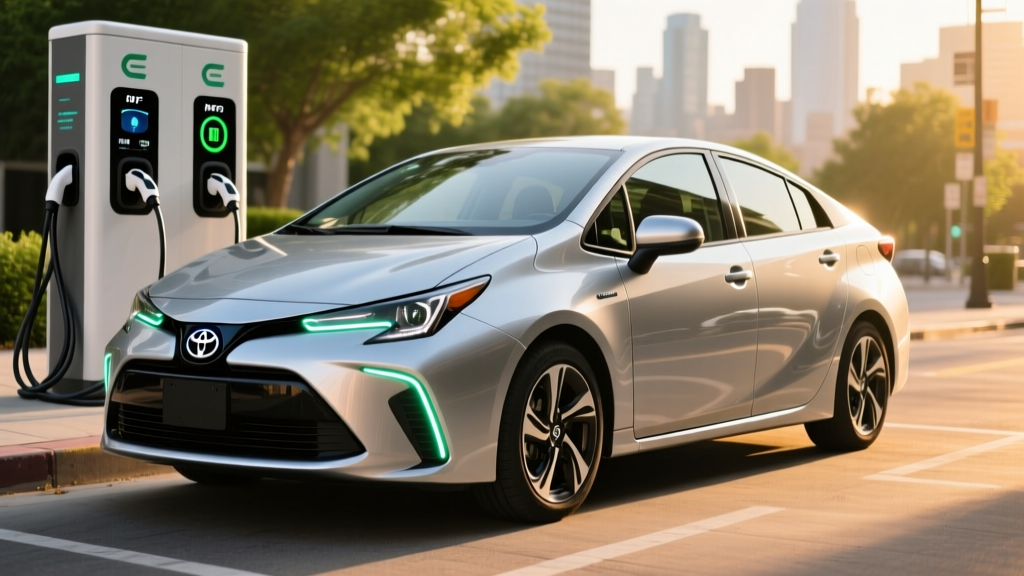
If you're researching the 2006 Toyota Prius hybrid MPG, you're likely considering one of the most iconic early mainstream hybrids on the used market. Nearly two decades after it left the showroom floor, the second-generation Prius (XW20) remains a benchmark for fuel efficiency, proving that Toyota's Hybrid Synergy Drive was engineered for longevity. But how does this 20-year-old hybrid actually perform at the pump today, what does battery replacement cost, and does it still make financial sense versus a modern hybrid, PHEV, or full EV?
We'll break down every number — EPA ratings, real-world fuel economy, battery health expectations, and total ownership cost — so you can decide whether a 2006 Prius deserves a spot in your driveway.
2006 Prius Hybrid MPG: The Official EPA Numbers
The 2006 Toyota Prius is a conventional hybrid electric vehicle (HEV), meaning it charges its battery exclusively through regenerative braking and its gasoline engine. You never plug it in. This is fundamentally different from a plug-in hybrid (PHEV) like the modern Prius Prime, which offers an electric-only driving range and requires wall or station charging to unlock its full efficiency potential.
| Metric | Value |
|---|---|
| City MPG | 60 |
| Highway MPG | 51 |
| Combined MPG | 55 |
| Annual Fuel Cost (est.) | ~$900 (15,000 mi/yr at $3.10/gal) |
| Fuel Type | Regular Unleaded (87 octane) |
| Fuel Tank Capacity | 11.9 gallons |
| Total Driving Range (est.) | ~654 miles |
At the time of its release, those figures were staggering — and they remain competitive with many new hybrids on the market today. The EPA's city-dominant testing cycle favors the Prius heavily because regenerative braking recaptures energy during stop-and-go driving, and the Atkinson-cycle 1.5L engine shuts off entirely at low speeds.
Real-World MPG: What Owners Actually Report
EPA stickers are a starting point, but real-world 2006 Prius hybrid MPG depends heavily on driving style, climate, and — critically — the age and health of the hybrid battery pack.
EPA Combined: 55 MPG
Real-World Expectation (2026): 42–50 MPG combined with an aging battery; 48–55 MPG with a refreshed or replacement battery pack.
Highway-heavy driving at 70+ mph typically drops to 40–45 MPG. Cold-weather operation (below 30°F) can reduce efficiency by 10–15% due to increased engine idling for cabin heat.
Several factors explain the gap between EPA and reality for a 20-year-old Prius:
- Battery degradation: The original nickel-metal hydride (NiMH) pack has likely lost 20–35% of its original capacity by now, reducing the frequency and duration of electric-only assist.
- Driving profile shift: The EPA's city-heavy test (55% city / 45% highway) rewards the Prius. Most drivers today log more highway miles, where the aerodynamic penalty and smaller engine's high-RPM operation hurt efficiency.
- Tire and maintenance condition: Underinflated tires, old spark plugs, and a dirty throttle body can each shave 2–4 MPG off a high-mileage example.
2006 Prius Powertrain Specs: How the Hybrid System Works
| Component | Specification |
|---|---|
| Gasoline Engine | 1.5L 4-cylinder Atkinson cycle (1NZ-FXE) |
| Engine Horsepower | 76 hp @ 5,000 rpm |
| Engine Torque | 82 lb-ft @ 4,200 rpm |
| Electric Motor (MG2) | 50 kW (67 hp) permanent magnet synchronous |
| Combined System Output | 110 hp (net) |
| Hybrid Battery | 1.3 kWh NiMH (201.6V nominal) |
| Transmission | Planetary eCVT (Power Split Device) |
| 0–60 mph | ~9.8 seconds |
| Curb Weight | ~2,890 lbs |
The 2006 Prius uses Toyota's second-generation Hybrid Synergy Drive (HSD), which pairs the 1.5L gasoline engine with two motor-generators (MG1 and MG2) through a planetary gear set. This power-split device acts as a continuously variable transmission without traditional belts, bands, or clutch packs — which is why Prius transmissions are among the most reliable in the industry.
At low speeds and light loads, the car can propel itself on electric power alone using energy from the NiMH battery. Under acceleration, both the engine and MG2 deliver torque simultaneously. During deceleration, MG2 reverses function to become a generator, recapturing kinetic energy that would otherwise be lost as brake heat.
HEV vs PHEV vs EV: Is the 2006 Prius Still the Right Choice?
Example: 2006 Prius
• No plug-in required
• 42–55 MPG combined
• Unlimited range on gasoline
• No EV tax credit eligibility
• Lowest upfront cost on used market
Example: 2026 Prius Prime
• 25–44 miles electric-only
• ~52 MPG combined after battery depletion
• Requires Level 1 or Level 2 charging
• May qualify for up to $3,750 §30D credit
• Mid-range upfront cost
Example: 2026 Tesla Model 3
• 250–360 miles total range
• 0 tailpipe emissions
• Requires home or public charging access
• Up to $7,500 §30D credit (eligibility varies)
• Highest upfront cost, lowest fuel cost
The 2006 Prius remains the right choice for a specific buyer: someone who needs maximum fuel economy on a minimal budget ($4,000–$8,000 on the used market), has no access to home or workplace charging, and wants the lowest possible cost per mile without any behavioral changes.
If you do have access to Level 2 charging and a higher budget, a modern PHEV like the 2026 Prius Prime (44 miles of electric-only range, ~$33,000 MSRP) delivers daily electric commuting with gasoline backup — effectively giving you EV economics on most trips while eliminating range anxiety on road trips.
Hybrid Battery Health, Lifespan, and Replacement Cost
Original Warranty: 8 years / 100,000 miles (10 years / 150,000 miles in CARB states)
Expected Lifespan: 150,000–200,000 miles for original pack; many 2006 Prius examples are on a second battery by now.
Warranty Status (2026): All 2006 Prius batteries are well beyond factory warranty coverage.
The single biggest ownership question for a 2006 Prius is the hybrid battery. Here's what you need to know:
| Option | Cost Range | Warranty | Notes |
|---|---|---|---|
| New OEM Toyota Battery | $2,200–$2,800 | 3 yr / 36,000 mi | Best longevity; dealer-installed |
| Remanufactured Battery | $1,000–$1,600 | 1–3 years | Replaced weak modules; variable quality |
| Used/Salvage Battery | $400–$800 | 30–90 days | Highest risk; unknown remaining life |
| Individual Module Replacement | $200–$500 (DIY) | None | Requires technical skill; temporary fix |
If you're shopping for a 2006 Prius, ask whether the hybrid battery has been replaced and request documentation. A Prius with a recently installed OEM replacement battery is often a better buy than one riding on the original 20-year-old pack, even if the asking price is $1,000–$1,500 higher.
Signs of battery degradation include: a noticeable drop in fuel economy (below 40 MPG), the engine running more frequently at stops, reduced regenerative braking strength, and the battery state-of-charge gauge fluctuating rapidly between full and near-empty.
Reliability, Maintenance, and Known Issues
Beyond the hybrid battery, the 2006 Prius is one of the most reliable vehicles Toyota has ever built. The eCVT planetary gear set has no wearable clutch packs or belts, the Atkinson-cycle engine runs cooler and under less stress than conventional engines, and the regenerative braking system extends conventional brake pad life to 80,000–100,000+ miles in many cases.
Known issues to watch for on high-mileage examples:
- Hybrid battery failure: As detailed above — the primary expense.
- Inverter coolant pump: Can fail around 120,000–160,000 miles; replacement is ~$300–$500.
- Combination meter (dashboard): Intermittent display failure is a known issue; repair or replacement runs $200–$600.
- 12V auxiliary battery: Located in the rear cargo area; replace every 4–5 years with an AGM-spec battery (~$180–$250).
- Oil consumption: Some 1NZ-FXE engines consume oil above 150,000 miles; check level every 1,000 miles.
According to data tracked by NHTSA, the 2006 Prius has relatively few safety recalls and a strong long-term reliability record compared to contemporaries.
2006 Prius Used Market Pricing and Tax Credit Reality
As of early 2026, used 2006 Toyota Prius pricing typically falls in these ranges:
| Condition | Mileage Range | Price Range |
|---|---|---|
| Fair / Needs Battery | 160,000–200,000+ | $2,500–$4,000 |
| Good / Running Well | 120,000–170,000 | $4,000–$6,500 |
| Excellent / Battery Replaced | 80,000–130,000 | $6,000–$8,500 |
The 2006 Prius does not qualify for any federal EV or PHEV tax credit. The IRS §30D credit applies only to plug-in electric vehicles (BEVs and PHEVs) with qualifying battery capacity and sourcing requirements. Conventional hybrids (HEVs) have never been eligible for §30D.
Some states previously offered hybrid purchase incentives, but most have expired or shifted exclusively to plug-in vehicles. Check your state's current energy office website for any remaining programs.
Pros and Cons: Buying a 2006 Prius in 2026
- 42–55 MPG real-world combined — still class-leading for the price
- Ultra-low purchase price ($3,000–$8,000)
- Proven powertrain reliability; simple to maintain
- Low annual fuel cost (~$900/yr at 15K mi)
- No charging infrastructure needed
- Strong parts availability and enthusiast community
- Hybrid battery replacement likely needed ($1,000–$2,800)
- No federal or state tax credits
- Outdated safety tech (no AEB, lane assist, or backup camera standard)
- Slow acceleration (0–60 in ~9.8 sec)
- Minimal electric-only capability (low-speed, short distance)
- Interior materials and infotainment feel dated
Who Should Buy the 2006 Prius — and Who Shouldn't
Choose the 2006 Prius if:
- Your budget is under $8,000 and you want maximum MPG
- You have no access to home or workplace charging
- You drive a mix of city and highway with heavy stop-and-go
- You want a reliable commuter with minimal complexity
- You're comfortable budgeting $1,500–$3,000 for a potential battery replacement
- You have Level 2 charging access at home or work
- Your budget allows $25,000+ and you want modern safety tech (AEB, BSM, lane keep)
- You want to eliminate gasoline use for daily commuting
- You qualify for the §30D federal tax credit (up to $7,500 for BEVs, up to $3,750 for qualifying PHEVs — subject to MSRP caps, income limits, and battery sourcing rules per IRS guidelines)
Frequently Asked Questions
How many MPG does the 2006 Prius hybrid get?
The EPA rates the 2006 Prius at 60 MPG city, 51 MPG highway, and 55 MPG combined. In real-world 2026 driving with an aging battery, expect 42–50 MPG combined. With a fresh replacement battery and careful driving, 50–55 MPG remains achievable, especially in city-dominant commutes.
Does the 2006 Prius need to be plugged in?
No. The 2006 Prius is a conventional hybrid (HEV). It charges its small 1.3 kWh NiMH battery through regenerative braking and the gasoline engine. You simply fill it with regular 87-octane gasoline and drive. This is fundamentally different from a plug-in hybrid (PHEV) or battery electric vehicle (BEV).
Is the 2006 Prius reliable, and what does a battery replacement cost?
Yes — the 2006 Prius is widely regarded as one of the most reliable vehicles of its era, with the eCVT powertrain outlasting most conventional automatics. The main expense is the hybrid battery: a new OEM replacement runs $2,200–$2,800, while remanufactured options start around $1,000. Budget for this expense when purchasing.
Does the 2006 Prius qualify for any tax credit?
No. The federal §30D clean vehicle credit applies only to plug-in vehicles (BEVs and PHEVs). Conventional hybrids like the 2006 Prius have never been eligible. Some states offered hybrid incentives in the past, but most have sunset. Check your state energy office for any current programs.
How does the 2006 Prius compare to a new hybrid?
A 2026 Toyota Prius LE delivers 57 MPG combined (EPA) with a modern 2.0L hybrid system producing 194 hp, standard Toyota Safety Sense 3.0 (AEB, lane tracing, adaptive cruise), and a full factory warranty — but starts at ~$28,000. The 2006 model delivers comparable MPG at a fraction of the purchase price, but with no modern safety tech and a likely battery replacement ahead. Your choice depends entirely on budget and risk tolerance.
What's the total cost of ownership for a 2006 Prius?
Assuming a $5,500 purchase, 15,000 miles/year, $3.10/gallon gas, and one battery replacement over 5 years: annual fuel cost runs ~$900, insurance averages $700–$1,000/year (varies by state and driver), and routine maintenance (oil, tires, brakes) averages $400–$600/year. Over 5 years/75,000 miles, total ownership cost including purchase is roughly $14,000–$17,000 — one of the lowest figures for any vehicle on the road.