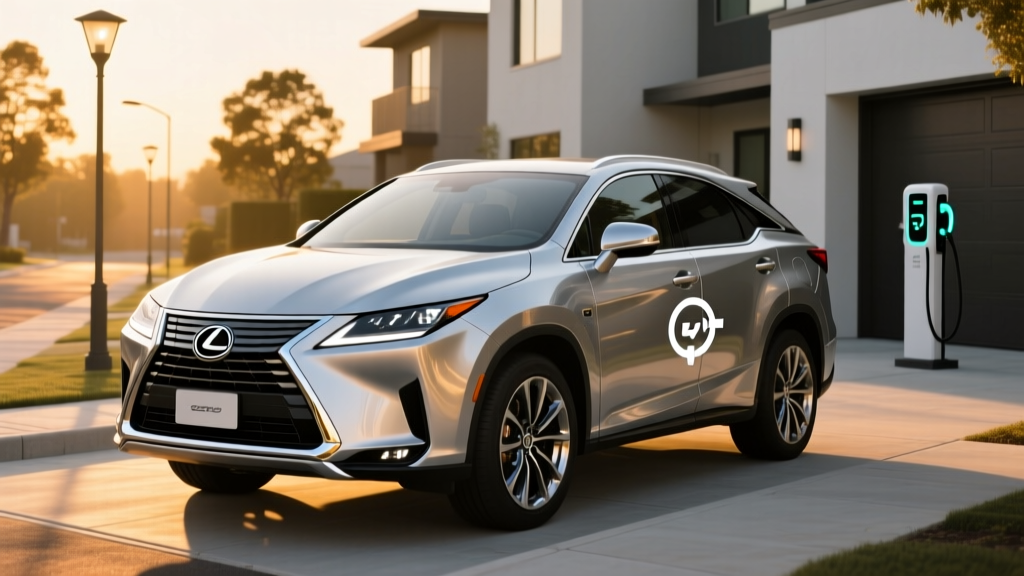
The 2006 Lexus RX 400h holds a unique place in automotive history: it was the luxury brand's first hybrid and one of the earliest premium hybrid SUVs sold in the United States. For buyers searching for a 2006 Lexus hybrid, the RX 400h is the model in question — a conventional hybrid electric vehicle (HEV) that requires no plug-in charging and operates solely on gasoline, supplemented by regenerative braking and an electric motor assist system. Nearly two decades after its debut, this SUV remains on the road in meaningful numbers, prized for Lexus reliability and surprisingly relevant fuel economy. This guide covers everything a 2026 buyer or current owner needs to know: exact MPG figures, battery longevity, replacement costs, and how this pioneering hybrid stacks up against modern alternatives.
What Exactly Is the 2006 Lexus RX 400h?
The 2006 Lexus RX 400h pairs a 3.3-liter V6 gasoline engine with two electric motors — one driving the front wheels and one powering the rear axle for electronic all-wheel drive (e-AWD). Combined system output is 270 horsepower, routed through an electronically controlled continuously variable transmission (e-CVT). The hybrid battery pack is a nickel-metal hydride (NiMH) unit with a capacity of approximately 6.5 kWh (gross), though usable capacity is far smaller — roughly 1.4 kWh — because the system keeps the battery in a narrow state-of-charge window to preserve longevity.
Critically, the RX 400h is a conventional hybrid (HEV), not a plug-in hybrid (PHEV). It cannot be plugged in, has no electric-only driving range to speak of (the electric motors assist at low speeds for brief distances, typically under 1 mile), and refuels exclusively at a gas station. The hybrid system captures energy during braking and deceleration to recharge the battery, which in turn powers the electric motors for acceleration assist and low-speed maneuvering.
HEV vs. PHEV: Where the RX 400h Fits
| Feature | 2006 Lexus RX 400h (HEV) | Modern PHEV (e.g., 2026 RAV4 Prime) |
|---|---|---|
| Plug-in charging? | No — never plugs in | Yes — Level 1/Level 2 |
| Electric-only range | ~0.5 mi at very low speed | 38–42 mi |
| Battery size (usable) | ~1.4 kWh | ~14.9 kWh |
| DC fast charging | No | No (most PHEVs) |
| Federal tax credit | No (expired; no used-EV credit for HEVs) | Up to $7,500 if §30D criteria met |
| How it refuels | Gasoline only | Gasoline + electricity |
Fuel Economy: EPA MPG and Real-World Numbers
According to EPA data at fueleconomy.gov, the 2006 Lexus RX 400h AWD is rated at:
| Driving Cycle | EPA MPG |
|---|---|
| City | 31 MPG |
| Highway | 27 MPG |
| Combined | 29 MPG |
For a 4,300-pound luxury SUV from 2006, 29 MPG combined was exceptional — it outperformed many compact sedans of the era. The city MPG advantage (31 vs. 27 highway) is a hallmark of conventional hybrids: regenerative braking recovers energy in stop-and-go traffic, and the electric motor handles low-speed driving where internal combustion engines are least efficient.
Real-World MPG: What Owners Actually Report
Real-world data from owner communities and fuel-tracking aggregators like Fuelly shows the RX 400h averaging between 24 and 28 MPG combined in typical mixed driving. Several factors explain the gap from the EPA sticker:
- Battery age: A 20-year-old NiMH pack has inevitably lost some capacity, reducing the electric motor's contribution and forcing the gasoline engine to work harder.
- Driving style: Aggressive acceleration defeats the hybrid system's efficiency advantages. The e-CVT rewards smooth, gradual inputs.
- Highway-heavy commutes: Hybrids shine in city driving. Owners with 80%+ highway miles often report 25–26 MPG.
- Climate: Cold weather reduces battery efficiency and increases engine idling for cabin heat, dropping winter MPG to 22–24 in northern climates.
Owners who drive primarily in urban conditions with a well-maintained battery report hitting 28–30 MPG, aligning closely with the EPA estimate. The hybrid system's city advantage remains intact even after nearly two decades.
Powertrain and Performance Specifications
| Specification | 2006 Lexus RX 400h |
|---|---|
| Engine | 3.3L V6 (3MZ-FE) |
| Engine power | 211 hp @ 5,600 rpm |
| Electric motors | Front (123 kW) + Rear (50 kW) |
| Combined system output | 270 hp |
| Transmission | e-CVT (electronically controlled CVT) |
| Drivetrain | Electronic AWD (e-AWD) |
| 0–60 mph | ~7.3 seconds |
| Hybrid battery | NiMH, ~6.5 kWh gross / ~1.4 kWh usable |
| Curb weight | ~4,390 lbs |
| Towing capacity | 3,500 lbs |
| Fuel tank | 17.2 gallons |
| Total range (est.) | ~498 miles (at 29 MPG combined) |
The 0–60 time of approximately 7.3 seconds was genuinely quick for a midsize luxury SUV in 2006, and the electric motor's instant torque gives the RX 400h a responsive feel around town. The e-CVT eliminates shift shock entirely, though it produces the characteristic "rubber-band" drone under hard acceleration that some drivers find unrefined compared to modern geared transmissions.
Hybrid Battery Life, Warranty, and Replacement Cost
The hybrid battery is the single largest concern for anyone buying a 2006 Lexus hybrid today. Here is what the data shows:
Original Battery Warranty
Lexus warranted the RX 400h hybrid battery for 8 years / 100,000 miles (extended to 10 years / 150,000 miles in California and states adopting CARB emissions standards). That factory coverage has long since expired for every 2006 model on the road.
How Long Do RX 400h Batteries Last?
NiMH hybrid batteries in Toyota/Lexus vehicles of this era have demonstrated remarkable longevity. Data from owner forums, repair databases, and hybrid specialists indicate:
- Average lifespan: 150,000 to 200,000 miles before significant degradation or failure, with many units exceeding 200,000 miles.
- Age-related failure: Even with low mileage, NiMH batteries begin showing measurable capacity loss after 12–15 years. In 2026, a 2006 RX 400h is 20 years old — battery replacement is either already done or imminent.
- Failure mode: NiMH packs rarely fail catastrophically. Instead, individual cells degrade unevenly, triggering a check-engine light (typically P0A80 or similar hybrid battery codes) and reducing fuel economy by 3–6 MPG as the system relies more heavily on the gasoline engine.
Battery Replacement Cost
| Replacement Option | Cost Range (2026) | Notes |
|---|---|---|
| New OEM Lexus battery | $3,500 – $4,800 (parts + labor) | Best longevity; available through dealers |
| Remanufactured battery | $1,800 – $2,800 (parts + labor) | Replaced weak cells; 1–3 year warranty typical |
| Reconditioned / used pack | $800 – $1,500 (parts + labor) | Lowest cost; variable remaining life; 6–12 month warranty |
| Individual cell replacement | $500 – $1,200 (specialist shops) | Replace only failed cells; requires hybrid specialist |
For a vehicle with a current market value of roughly $4,000–$7,500 in 2026 (depending on mileage and condition), a new OEM battery at $4,000+ represents a significant percentage of the car's worth. Most owners opt for remanufactured packs or cell-level repairs, which restore full hybrid functionality at a fraction of the cost. Independent hybrid specialists in most major metro areas offer these services.
Pricing, Tax Credits, and Ownership Economics
The 2006 Lexus RX 400h is available only on the used market. Current pricing in 2026:
- Fair market range: $4,000 – $7,500 depending on mileage (typically 120,000–190,000 miles), condition, and battery health.
- Examples with a recently replaced battery command a $1,000–$1,500 premium and are generally the smarter buy.
Tax Credit Eligibility
The 2006 RX 400h does not qualify for any federal tax credit in 2026:
- The original hybrid vehicle tax credit for the RX 400h was phased out for Lexus/Toyota in 2007 after the manufacturer hit the 60,000-unit cap under the Energy Policy Act of 2005.
- The current IRS §30D Clean Vehicle Credit applies only to new plug-in electric vehicles (BEVs and PHEVs) meeting battery sourcing, MSRP, and buyer income requirements. Conventional hybrids are excluded entirely.
- The used clean vehicle credit (up to $4,000 under §25E) also requires a plug-in EV or fuel-cell vehicle — HEVs do not qualify.
- Some states offer registration discounts or HOV lane access for hybrids, but these programs have largely sunsetted or apply only to newer models. Check your state's DMV for current status.
Reliability and Long-Term Ownership
The 2006 RX 400h benefits from the same fundamental architecture that made the Toyota Highlander Hybrid and subsequent Lexus hybrids benchmarks for durability. Key reliability notes:
- Powertrain: The 3MZ-FE V6 is a proven, timing-belt-driven engine with a strong service record. Timing belt replacement is due every 90,000 miles and should not be deferred — interference-engine design means failure causes catastrophic damage.
- e-CVT: The planetary-gear e-CVT has no belts, clutches, or torque converter to wear out. It is widely regarded as one of the most reliable transmissions ever mass-produced, with failures being exceedingly rare when fluid is changed at recommended intervals.
- Inverter / power electronics: The inverter coolant pump is a known wear item. Toyota/Lexus issued a recall (and extended warranty coverage in some cases) for inverter coolant pump failures on this generation. Verify recall completion before purchase.
- Brakes: Regenerative braking reduces wear on the friction brakes significantly. Owners routinely report 80,000–100,000+ miles on original brake pads and rotors.
- Suspension and body: Standard Lexus build quality. Control arm bushings, struts, and sway bar links are typical wear items at 120,000+ miles — no hybrid-specific concerns here.
Overall, the RX 400h is one of the most reliable vehicles Lexus has produced, provided the hybrid battery is addressed proactively and the timing belt is replaced on schedule. NHTSA records show relatively few complaints for this model year relative to production volume.
Who Should Buy a 2006 Lexus Hybrid — And Who Shouldn't?
Pros
- 29 MPG combined EPA — still competitive with many modern non-hybrid SUVs
- Lexus luxury, quiet cabin, and strong build quality
- e-CVT reliability is outstanding; low maintenance costs
- e-AWD provides confident traction without mechanical complexity
- Low entry price ($4K–$7.5K) with proven 200K+ mile potential
- No charging infrastructure needed — ideal for apartment dwellers
Cons
- 20-year-old hybrid battery is a near-certain replacement expense
- No electric-only range; no plug-in capability
- Outdated infotainment — no Apple CarPlay, Android Auto, or Bluetooth audio streaming
- No modern ADAS (no automatic emergency braking, lane-keeping, or adaptive cruise)
- Fuel economy falls short of modern hybrids (Toyota RAV4 Hybrid: 39 MPG combined)
- Technology and safety features are two generations behind
Decision Framework: Is the 2006 RX 400h Right for You?
Choose the 2006 Lexus RX 400h if: You need a low-cost, reliable, fuel-efficient AWD SUV; you have no access to plug-in charging; you value Lexus comfort and build quality on a tight budget; and you are prepared for a $1,500–$3,000 battery replacement within your ownership window.
Choose a newer hybrid (2020+ RAV4 Hybrid, Highlander Hybrid) if: You want modern safety tech (AEB, lane-keeping, adaptive cruise), current infotainment with smartphone integration, and a hybrid battery still under factory warranty — and can budget $20,000–$35,000.
Choose a PHEV (e.g., RAV4 Prime, Tucson PHEV) if: You have home charging access and want 35–42 miles of electric-only commuting with a gasoline backup for road trips. Federal §30D tax credits may apply to new PHEVs.
Choose a full BEV (e.g., Tesla Model Y, Hyundai Ioniq 5) if: You want zero tailpipe emissions, minimal maintenance, home charging convenience, and access to federal tax credits up to $7,500 — and your daily driving stays within 250–320 miles with access to DC fast charging for road trips.
Frequently Asked Questions
How many MPG does the 2006 Lexus RX 400h get?
The EPA rates the 2006 RX 400h at 31 MPG city, 27 MPG highway, and 29 MPG combined. Real-world averages for 20-year-old examples typically fall between 24 and 28 MPG combined, depending on battery health, driving style, and climate. City-heavy drivers with a healthy battery can still achieve 28–30 MPG.
Does the 2006 Lexus hybrid need to be plugged in?
No. The RX 400h is a conventional hybrid (HEV). It charges its battery exclusively through regenerative braking and the gasoline engine. There is no plug, no charging port, and no electric-only driving range of any practical distance.
How far can the 2006 RX 400h drive on electric only?
Effectively zero miles in practical terms. The electric motors can move the vehicle at very low speeds (under 25 mph) for roughly half a mile under ideal conditions, but the system is designed for acceleration assist and efficiency optimization, not standalone electric driving. This is fundamentally different from a PHEV, which offers 30–45 miles of electric-only range.
Is the 2006 Lexus RX 400h reliable, and what does a battery replacement cost?
Yes, the RX 400h is among the most reliable Lexus models ever produced, with the e-CVT transmission and V6 engine both demonstrating 200,000+ mile durability. The primary concern is the NiMH hybrid battery, which typically requires replacement or reconditioning at 150,000–200,000 miles or 12–18 years of age. Replacement costs range from $800 (used pack) to $4,800 (new OEM), with remanufactured units at $1,800–$2,800 representing the best value for most owners.
Does the 2006 Lexus RX 400h qualify for any tax credit in 2026?
No. The original hybrid tax credit for this model was fully phased out in 2007. Current federal clean vehicle credits under IRS §30D and §25E apply only to plug-in electric vehicles (BEVs and PHEVs) and fuel-cell vehicles. Conventional hybrids like the RX 400h are not eligible for any federal purchase incentive. Check your state DMV for any remaining local benefits, though most have been discontinued.
What should I check before buying a used 2006 RX 400h?
Prioritize these inspections: (1) Hybrid battery health — request a hybrid battery health report from a Toyota/Lexus dealer or hybrid specialist; (2) Timing belt replacement history — must be done every 90,000 miles; (3) Inverter coolant pump recall completion; (4) Transmission fluid service history; (5) Standard pre-purchase inspection for suspension, brakes, and body condition. Budget $1,500–$3,000 for battery work if it has not been recently replaced.