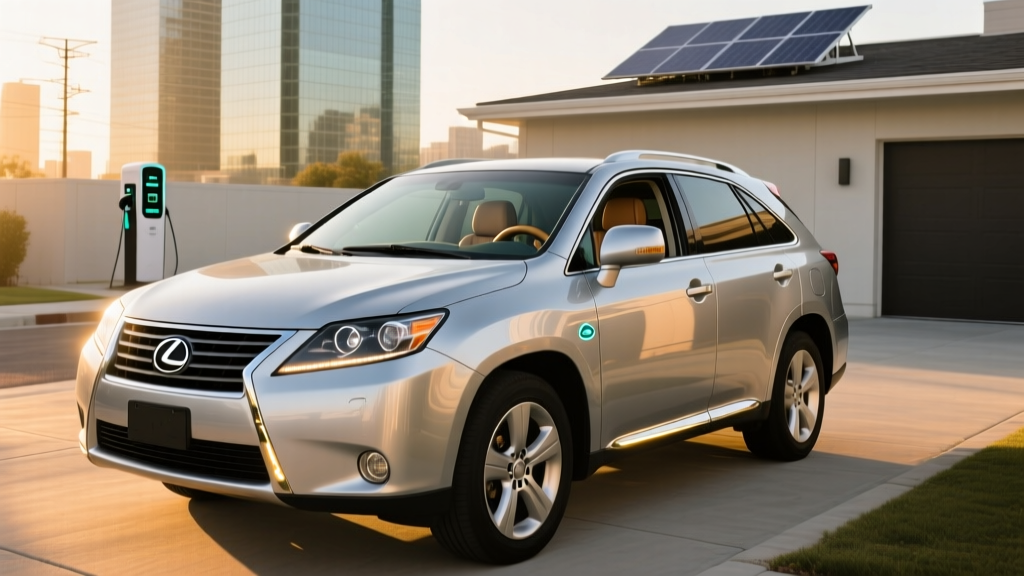
The 2006 Lexus RX 400h was the luxury SUV that proved hybrid powertrains could deliver both efficiency and performance. Nearly two decades later, buyers still search for the 2006 Lexus RX 400h hybrid MPG figures to determine whether this pioneering vehicle remains a smart used purchase. With modern hybrids and EVs dominating headlines, it's worth examining what this early hybrid delivers in 2026—and where it falls short.
2006 Lexus RX 400h MPG: EPA Ratings and Real-World Results
| Driving Condition | EPA MPG | Real-World Expectation (2026) |
|---|---|---|
| City | 31 MPG | 29-33 MPG (hybrids excel in stop-and-go) |
| Highway | 27 MPG | 24-26 MPG (aerodynamics and weight hurt at speed) |
| Combined | 29 MPG | 26-30 MPG depending on driving mix |
The EPA rated the 2006 RX 400h at 31 city / 27 highway / 29 combined MPG. These numbers were impressive for a 4,500-pound luxury SUV in 2006, and they remain competitive with some modern non-hybrid crossovers. According to fueleconomy.gov, the RX 400h's city rating exceeds its highway figure—a hallmark of conventional hybrids that recapture energy through regenerative braking in urban driving.
Real-World MPG Insight: Owners reporting to Fuelly and EPA datasets show the 2006 RX 400h averaging 25-28 MPG in mixed driving after 150,000+ miles. Battery degradation and aging engine components typically reduce efficiency by 5-10% compared to original specs. Expect closer to 26-27 MPG combined in 2026 unless the hybrid battery has been recently replaced.
Conventional Hybrid (HEV) vs. Plug-In Hybrid (PHEV): What the RX 400h Is
The 2006 Lexus RX 400h is a conventional hybrid (HEV), not a plug-in hybrid. This distinction matters for buyers comparing it to modern alternatives:
- HEV (RX 400h): No plug required. The 2.4 kWh nickel-metal hydride (NiMH) battery charges solely through regenerative braking and the gasoline engine. Electric-only operation is limited to low-speed creeping (under ~25 mph for short distances).
- PHEV (modern examples like Toyota RAV4 Prime): Requires plug-in charging. Larger batteries (18-20 kWh) enable 35-42 miles of electric-only driving before the gas engine engages.
- BEV (full electric): No gasoline engine. 200-350+ miles of range from grid-charged batteries (40-100+ kWh).
The RX 400h's hybrid system prioritizes fuel reduction over electric-only range. You'll never plug it in, and you can't drive more than a mile or two on electric power alone. This makes it fundamentally different from today's PHEVs, which function as part-time EVs for daily commuting.
Powertrain Specs: Horsepower, Engine, and Hybrid System
| Engine | 3.3L V6 (3MZ-FE) |
| Engine Power | 211 hp @ 5,600 rpm |
| Electric Motors | Front: 123 kW (165 hp); Rear: 50 kW (67 hp) |
| Combined System Output | 272 hp (net) |
| Transmission | eCVT (electronically controlled continuously variable) |
| Drivetrain | AWD (electric rear axle, no mechanical connection) |
| 0-60 mph | 7.3 seconds |
| Battery Type | Nickel-Metal Hydride (NiMH) |
| Battery Capacity | 2.4 kWh (gross), ~1.6 kWh usable |
| Curb Weight | 4,510 lbs |
The RX 400h's hybrid system was advanced for its era. The 3.3L V6 pairs with two electric motors—one driving the front wheels, one powering the rear axle for all-wheel drive. Unlike mechanical AWD systems, the rear motor engages only when slip is detected or under hard acceleration. The combined 272 hp output made it quicker than the gas-only RX 330 (230 hp) while delivering 40% better fuel economy.
Hybrid Battery Lifespan, Warranty, and Replacement Cost
Original Warranty: Lexus covered the 2006 RX 400h hybrid battery for 8 years / 100,000 miles (10 years / 150,000 miles in California-emissions states). This warranty expired for all 2006 models by 2016 at the latest.
Battery Lifespan Reality: NiMH batteries in the RX 400h typically last 150,000-200,000 miles before significant degradation. Many 2006 examples have already required battery replacement or are operating with reduced capacity.
Replacement Cost (2026):
- New OEM battery from Lexus: $3,500-$4,500 (parts + labor)
- Refurbished/remanufactured battery: $1,800-$2,800
- Individual cell replacement (specialist shops): $800-$1,500
Hybrid battery degradation manifests as reduced MPG (typically 2-4 MPG loss), more frequent engine engagement, and reduced regenerative braking effectiveness. If you're considering a 2006 RX 400h with 180,000+ miles and no documented battery replacement, budget $2,000-$4,000 for this service within your first year of ownership.
Reliability Track Record: What Owners Report
The 2006 RX 400h earned a reputation for strong reliability, though age introduces specific failure points. According to NHTSA complaint data, common issues include:
- Inverter coolant pump failure: The electric pump circulating coolant through the hybrid inverter can fail, triggering warning lights and limp mode. Replacement: $400-$700.
- Brake actuator wear: The electrohydraulic brake system (which blends regenerative and friction braking) can develop leaks or pump failures after 150,000+ miles. Repair: $1,200-$2,000.
- Hybrid battery degradation: As noted above, expect capacity loss after 15-20 years.
- Power steering pump: Electric power steering pumps can fail, requiring $600-$900 replacement.
Despite these age-related issues, the RX 400h's V6 engine and eCVT transmission are proven durable. The eCVT has no traditional gears or clutch packs—just planetary gearsets and electric motors—making it more reliable than conventional automatics. Many examples exceed 250,000 miles with proper maintenance.
Pricing in 2026: Used Market Values
The 2006 Lexus RX 400h holds value well for a 20-year-old vehicle, but prices vary dramatically based on mileage and battery condition:
- High-mileage (180,000+ miles), unknown battery history: $3,500-$5,000
- Average mileage (120,000-160,000 miles), original battery: $5,500-$7,500
- Lower mileage (under 120,000 miles), recent battery replacement: $8,000-$11,000
These prices reflect the RX 400h's dual appeal: budget-conscious buyers seeking a reliable luxury SUV, and hybrid enthusiasts wanting an early example of Toyota's hybrid synergy drive system.
Tax Credit Eligibility: Does the 2006 RX 400h Qualify?
No. The 2006 Lexus RX 400h does not qualify for any federal tax credits in 2026. Here's why:
- Federal EV credit (§30D): Only applies to new plug-in hybrids (PHEVs) and battery electric vehicles (BEVs) purchased new. Conventional hybrids like the RX 400h have never qualified.
- Used EV credit (§25E): This $4,000 credit applies to used PHEVs and BEVs under $25,000, but conventional hybrids are excluded.
- Original hybrid credit (expired): The Energy Policy Act of 2005 offered up to $2,200 for the RX 400h when new, but this credit phased out for Toyota/Lexus vehicles in 2007 and no longer applies.
Some states offer registration fee reductions or HOV lane access for hybrids, but these programs are increasingly focused on PHEVs and BEVs. Check your state's current incentives at afdc.energy.gov.
Who Should Buy the 2006 RX 400h in 2026?
Choose the 2006 RX 400h if:
- You want a proven, comfortable luxury SUV under $8,000
- Your driving is mostly city/suburban (where hybrid efficiency shines)
- You lack home charging access and can't consider a PHEV or EV
- You value Lexus reliability and can budget for potential battery replacement
- You drive 8,000-12,000 miles annually (fuel savings offset maintenance costs)
Look at modern alternatives if:
- You want electric-only range for daily commuting (consider a used Toyota RAV4 Prime or Chrysler Pacifica Hybrid PHEV)
- You need modern safety features (blind-spot monitoring, automatic emergency braking—unavailable on 2006 models)
- You want warranty coverage (new Toyota Highlander Hybrid starts at $42,000 with full warranty)
- You drive primarily highway miles (hybrid advantage diminishes at 70+ mph)
2006 RX 400h vs. Modern Hybrid and EV Alternatives
2006 Lexus RX 400h Pros
- Low entry price ($5,000-$8,000 typical)
- Proven hybrid system durability
- Comfortable ride and quiet cabin
- No plug-in charging required
- AWD capability with electric rear axle
- Strong reliability reputation
2006 Lexus RX 400h Cons
- No electric-only range (unlike modern PHEVs)
- Outdated safety features (no AEB, lane-keep, etc.)
- Aging infotainment (no Apple CarPlay/Android Auto)
- Battery replacement likely needed if original
- Lower MPG than modern hybrids (Toyota Highlander Hybrid: 35 combined)
- No tax credit eligibility
For comparison, a 2024 Toyota Highlander Hybrid delivers 35 MPG combined (vs. 29 MPG for the RX 400h), modern safety tech, and a full warranty—but starts at $42,000. A used 2018-2020 Toyota RAV4 Hybrid offers 40 MPG and newer features for $22,000-$28,000. The RX 400h makes sense only if your budget is under $10,000 and you accept the trade-offs of a 20-year-old vehicle.
Frequently Asked Questions
How many MPG does the 2006 Lexus RX 400h get in real-world driving?
Expect 26-30 MPG combined in 2026, depending on driving mix and battery condition. City driving yields 29-33 MPG; highway drops to 24-26 MPG. These figures assume a healthy hybrid battery—degraded batteries reduce efficiency by 2-4 MPG.
Is the 2006 RX 400h a plug-in hybrid?
No. The 2006 RX 400h is a conventional hybrid (HEV). It cannot plug in and has no meaningful electric-only range. The hybrid battery charges solely through regenerative braking and the gasoline engine.
What does it cost to replace the hybrid battery in a 2006 RX 400h?
New OEM batteries cost $3,500-$4,500 installed. Refurbished units run $1,800-$2,800. Individual cell replacement (if only a few cells are weak) can cost $800-$1,500 at specialist shops. Most 2006 examples will need this service if the battery hasn't been replaced.
Is the 2006 RX 400h reliable?
Yes, with caveats. The V6 engine and eCVT transmission are durable, but 20-year-old components like the inverter coolant pump, brake actuator, and hybrid battery are failure points. Budget $1,500-$3,000 annually for maintenance and repairs on a high-mileage example.
Does the 2006 RX 400h qualify for any tax credits in 2026?
No. Federal tax credits (§30D for new, §25E for used) apply only to plug-in hybrids and battery electric vehicles. Conventional hybrids like the RX 400h have never qualified for federal EV incentives.
How does the 2006 RX 400h compare to a modern hybrid SUV?
Modern hybrids like the 2024 Toyota Highlander Hybrid (35 MPG combined) or 2024 RAV4 Hybrid (40 MPG combined) deliver 20-35% better fuel economy, modern safety features, and full warranties—but cost $35,000-$45,000 new. The RX 400h is a budget option for buyers prioritizing low upfront cost over efficiency and features.
Should I buy a 2006 RX 400h or a newer used hybrid?
If your budget is under $10,000 and you accept older tech and potential battery replacement costs, the RX 400h is a solid choice. If you can spend $18,000-$25,000, a 2017-2020 Toyota RAV4 Hybrid or Highlander Hybrid offers better MPG, modern safety, and likely longer battery life remaining.
The 2006 Lexus RX 400h remains a testament to early hybrid engineering—delivering respectable efficiency and luxury at a bargain used price. But buyers should enter with realistic expectations about battery condition, outdated technology, and the efficiency gap versus modern hybrids. If the numbers work for your budget and driving pattern, it's a capable choice. If you need electric-only range or cutting-edge features, look to newer PHEVs or EVs instead.