2006 Honda Civic Hybrid MPG: What the EPA Says vs. What You'll Actually Get
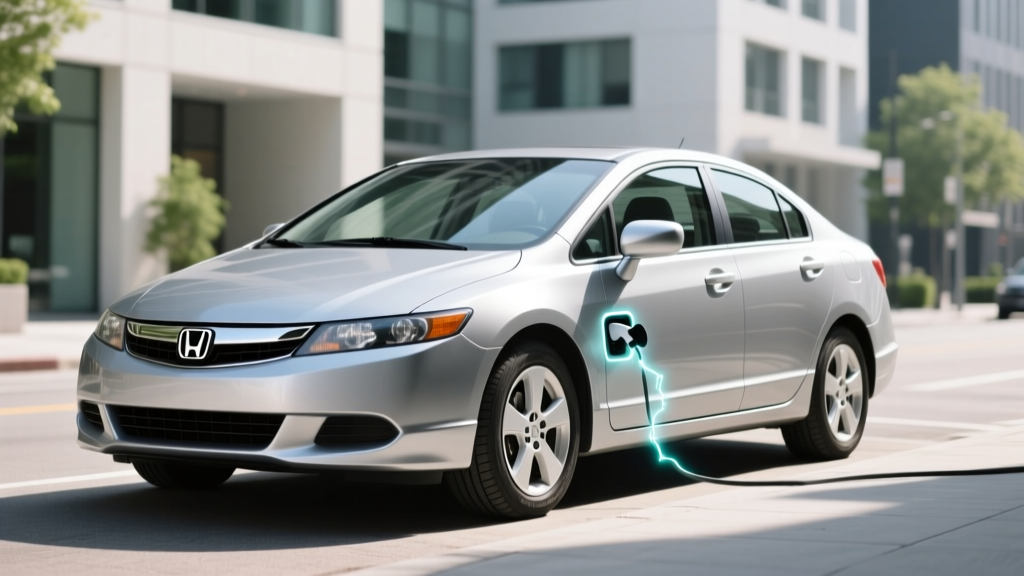
If you're researching the 2006 Honda Civic Hybrid MPG, you're likely looking at one of the most fuel-efficient used cars on the market — a vehicle that pioneered mainstream hybrid ownership alongside the Toyota Prius. Nearly two decades after its debut, this first-generation Integrated Motor Assist (IMA) hybrid still draws attention from budget-conscious commuters and hypermilers alike.
But the EPA sticker from 2006 doesn't tell the full story, especially two decades later with an aging battery pack. Here's the complete breakdown of what this car delivers at the pump, what ownership looks like in 2026, and how it compares to the modern hybrids and plug-in hybrids you can buy today.
Fuel Economy Breakdown: EPA Numbers and Real-World MPG
The 2006 Honda Civic Hybrid was rated by the EPA under the older testing methodology used prior to 2008. When adjusted to the current EPA formula (which the fueleconomy.gov database now reflects retroactively), the numbers look like this:
| Driving Cycle | EPA MPG | Real-World Expectation (2026) |
|---|---|---|
| City | 49 MPG | 42–48 MPG |
| Highway | 51 MPG | 44–50 MPG |
| Combined | 50 MPG | 43–49 MPG |
Why the gap? Several factors pull real-world numbers below the EPA sticker for a 20-year-old hybrid:
- Battery degradation: The original 158V nickel-metal hydride (NiMH) IMA battery pack has lost capacity over time. A degraded battery provides less electric assist, forcing the 1.3L gasoline engine to work harder.
- Engine wear: At 150,000–250,000+ miles (common for surviving examples), internal friction and worn components reduce efficiency.
- Tire and alignment factors: Replacement tires are rarely the low-rolling-resistance originals Honda spec'd in 2006.
That said, owners who've replaced the IMA battery report real-world combined MPG in the mid-to-upper 40s — still exceptional for a vehicle that costs $3,000–$6,000 on the used market.
Powertrain: How the 2006 Civic Hybrid IMA System Works
The 2006 Civic Hybrid uses Honda's Integrated Motor Assist (IMA) system — a mild hybrid architecture fundamentally different from the full hybrid systems in a Toyota Prius or modern Honda Accord Hybrid.
| Specification | Detail |
|---|---|
| Engine | 1.3L i-DSI 4-cylinder (8-valve) |
| Electric Motor | 15 kW (20 HP) thin DC brushless motor |
| Combined Output | 110 HP @ 6,000 RPM / 123 lb-ft torque @ 2,500 RPM |
| Transmission | CVT (continuously variable) |
| Battery Pack | 158V NiMH, ~0.35 kWh usable capacity |
| Hybrid Type | Mild hybrid (IMA) — cannot drive on electric only |
| Curb Weight | ~2,712 lbs |
| 0–60 MPH | ~11.5 seconds |
The IMA system's electric motor is sandwiched between the engine and transmission. It assists during acceleration, enables regenerative braking, and allows the engine to shut off at stops (auto idle-stop). However, unlike a Toyota Hybrid Synergy Drive or any modern PHEV, the Civic Hybrid cannot propel itself on electric power alone. The gasoline engine is always mechanically connected to the wheels when the car is moving.
This is a critical distinction: the 2006 Civic Hybrid is a conventional hybrid (HEV), not a plug-in hybrid (PHEV). You never plug it in. It generates all its electricity from the gasoline engine and regenerative braking.
HEV vs. PHEV vs. EV: Where Does the 2006 Civic Hybrid Fit?
If you're weighing this used hybrid against modern electrified options, here's how the categories break down:
| Feature | 2006 Civic Hybrid (HEV) | Modern PHEV (e.g., 2026 Prius Prime) | Full EV (e.g., 2026 Model 3) |
|---|---|---|---|
| Plug-in Required? | No | Yes (for EV range) | Yes |
| Electric-Only Range | 0 miles | 39–44 miles | 272–363 miles |
| Combined MPG / MPGe | 50 MPG | 52 MPG + 127 MPGe | 132 MPGe |
| Upfront Cost (2026) | $3,000–$6,000 (used) | $33,000–$40,000 | $38,990–$52,990 |
| Federal Tax Credit | None | Up to $7,500 (§30D) | Up to $7,500 (§30D) |
| Home Charging Needed? | No | Recommended (Level 2) | Essential (Level 2) |
| Maintenance Cost | Low (but aging) | Moderate | Low |
- Choose this HEV if: You need the absolute lowest-cost entry into high-MPG driving, have no access to plug-in charging, and can accept the risk of an aging hybrid battery.
- Choose a modern PHEV if: You want electric-only commuting with gas-engine backup, have access to Level 2 charging at home, and want current safety tech and a battery under warranty.
- Choose a full EV if: You have reliable home charging, want to eliminate gas entirely, and your budget allows $35K+ after incentives.
IMA Battery Lifespan, Replacement Cost, and Warranty
The single biggest ownership question for any 20-year-old hybrid is the battery. Here's what you need to know about the 2006 Civic Hybrid's IMA pack:
Battery lifespan reality: The NiMH IMA pack typically lasted 120,000–180,000 miles before degradation triggered IMA warning lights or noticeable efficiency loss. Many 2006 Civic Hybrids still on the road in 2026 have already had at least one battery replacement.
Replacement costs in 2026:
- Remanufactured IMA battery: $1,200–$2,000 (parts only, from suppliers like Dorman or BumbleBee Batteries)
- New OEM Honda battery: $2,500–$3,500 (limited availability for a 2006 model)
- Professional installation labor: $200–$500 (the IMA pack is behind the rear seat — a 1–2 hour job for a hybrid-qualified shop)
- Total installed cost: $1,400–$4,000 depending on source and labor
Grid charging workaround: Some owners install aftermarket "grid chargers" (~$300–$500) that slowly rebalance the NiMH cells overnight, extending battery life by months or years. This is a well-documented practice in the Honda hybrid community and can delay a full replacement.
Is the 2006 Civic Hybrid Reliable? Long-Term Ownership Data
Honda's 1.3L i-DSI engine and CVT transmission in this generation are generally durable, but there are known failure points to inspect before purchasing:
Common issues:
- IMA battery failure: The most frequent and costly repair. Dashboard IMA warning light illuminates when the system detects cell imbalance.
- CVT shudder: Some examples develop a low-speed shudder from the CVT. Honda issued a software update and fluid change procedure (CVT fluid flush with HMMF fluid) that resolves most cases.
- 12V battery drain: The IMA system's auto idle-stop feature can drain the conventional 12V battery if the car sits unused for extended periods.
- Motor mount wear: Engine mounts, especially the passenger-side hydraulic mount, wear out around 120,000–150,000 miles.
What holds up well:
- The 1.3L engine itself is simple and under-stressed — 300,000+ mile examples exist with basic maintenance.
- The electric assist motor has no brushes and rarely fails independently.
- Brake pads last exceptionally long (60,000–100,000 miles) thanks to regenerative braking handling most deceleration.
Does the 2006 Civic Hybrid Qualify for Any Tax Credit?
No. The 2006 Honda Civic Hybrid does not qualify for any current federal tax credit. Here's why:
- The IRS §30D Clean Vehicle Credit applies only to new plug-in electric vehicles (BEVs and PHEVs) meeting battery capacity, MSRP, income, and critical-mineral sourcing requirements. Conventional hybrids (HEVs) have never qualified for §30D.
- The Used Clean Vehicle Credit (§25E, up to $4,000) applies only to used BEVs and PHEVs — again, not conventional hybrids.
- The original hybrid tax incentives available in 2006 (a $2,100 federal income tax deduction) expired long ago and applied only to the original purchaser.
For current hybrid and PHEV incentive rules, refer to the IRS Clean Vehicle Credits page. State-level incentives vary — check your local energy office or Alternative Fuels Data Center for any hybrid-specific rebates in your jurisdiction.
Pros and Cons: The 2006 Civic Hybrid in 2026
Pros
- 43–49 MPG real-world combined — still top-tier for a gas car
- Extremely low purchase price ($3K–$6K used)
- No plug-in charging required — works with any gas station
- Strong owner community and aftermarket IMA battery support
- Low insurance costs
- Regen braking extends brake pad life significantly
Cons
- IMA battery replacement is likely needed ($1,400–$4,000)
- No electric-only driving capability (mild hybrid only)
- Dated safety equipment — no electronic stability control, no airbags beyond front
- Slow acceleration (11.5 sec 0–60) — challenging for highway merging
- No federal or state tax credit eligibility
- Parts availability declining for hybrid-specific components
Frequently Asked Questions
How many MPG does the 2006 Honda Civic Hybrid get?
The EPA rates it at 49 city / 51 highway / 50 combined. Real-world figures in 2026 with a healthy battery run 43–49 combined. Expect lower numbers with a degraded IMA pack or aggressive driving.
Does the 2006 Civic Hybrid need to be plugged in?
No. This is a conventional hybrid (HEV), not a plug-in hybrid (PHEV). The IMA battery charges entirely through regenerative braking and the gasoline engine. There is no charging port.
Can it drive on electric power alone?
No. The IMA system is a mild hybrid — the 15 kW electric motor assists the gasoline engine but cannot propel the car independently. The engine is always mechanically coupled to the drivetrain when the vehicle is moving.
What does it cost to replace the hybrid battery?
A remanufactured IMA battery costs $1,200–$2,000 plus $200–$500 for installation. New OEM batteries run $2,500–$3,500 but are increasingly scarce for a 2006 model year.
Is the 2006 Civic Hybrid a good buy in 2026?
It can be — if you find one with a recently replaced IMA battery and documented CVT maintenance. At $3,000–$6,000 with 50 MPG, the fuel savings are real. But weigh the battery replacement risk and outdated safety tech against a newer used hybrid like a 2014–2018 Prius ($8,000–$14,000, still under potential hybrid warranty).
How does it compare to a modern PHEV?
A 2026 Toyota Prius Prime offers 44 miles of electric-only range, 52 MPG on gas, modern safety features, and eligibility for up to $7,500 in federal tax credits — but costs $33,000+. The 2006 Civic Hybrid wins purely on upfront cost. If you have home charging access and a higher budget, a modern PHEV delivers far more capability.