Quick Verdict: The Pioneer That Still Delivers
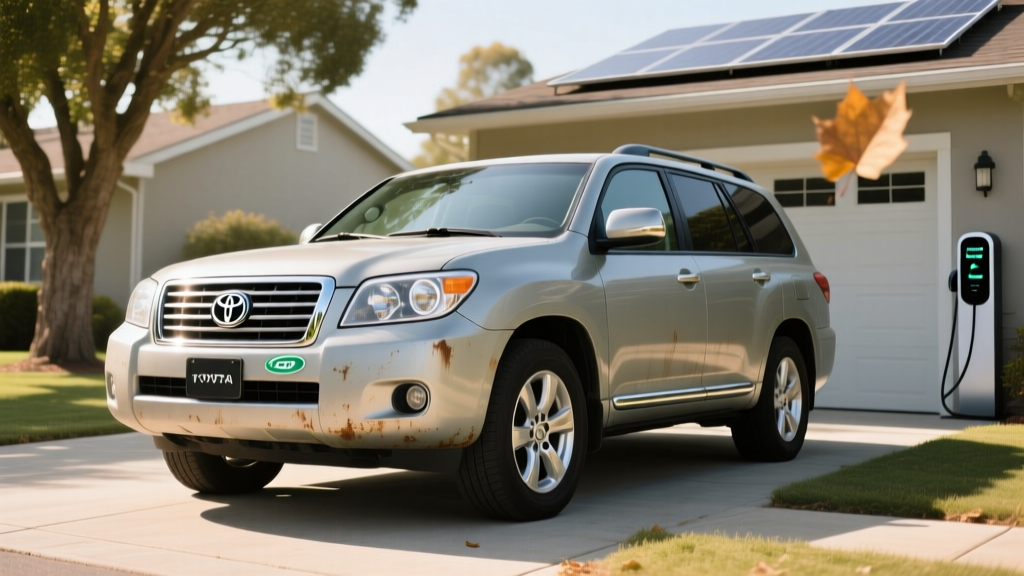
The 2006 Toyota Highlander Hybrid was one of the first hybrid SUVs to reach American driveways, and nearly two decades later, it remains a case study in durable hybrid engineering. If you're researching 2006 Highlander Hybrid gas mileage — whether as a current owner, prospective used-car buyer, or comparison shopper — here's the essential number: the EPA rated it at 28 MPG combined (31 city / 27 highway) for the 4WD-i model. In real-world driving, many owners report matching or slightly exceeding the city figure thanks to Toyota's early Hybrid Synergy Drive system, though highway and cold-weather numbers can dip to 24–25 MPG.
This guide breaks down the exact fuel economy, powertrain specs, battery longevity, and ownership economics of the 2006 Highlander Hybrid from a 2026 perspective — including what a replacement hybrid battery costs today and how this first-generation model stacks up against modern HEVs, PHEVs, and full EVs.
EPA Sticker: 31 city / 27 highway / 28 combined MPG
Real-World Owner Reports: 26–32 MPG (city-heavy driving favors the hybrid system; sustained highway speeds and cold weather reduce it to ~24–26 MPG)
EPA Fuel Economy Breakdown: 2006 Highlander Hybrid MPG
| Metric | EPA Rating | Real-World Expectation |
|---|---|---|
| City | 31 MPG | 29–32 MPG |
| Highway | 27 MPG | 24–26 MPG |
| Combined | 28 MPG | 26–29 MPG |
| Annual Fuel Cost (15,000 mi/yr) | ~$1,875 | ~$1,800–$2,100 |
Source: fueleconomy.gov — 2006 Toyota Highlander Hybrid 4WD. Annual cost based on 15,000 miles/year at $3.50/gallon regular unleaded (2026 national average estimate).
Why Hybrids Often Beat EPA in the City
The 2006 Highlander Hybrid's 3.3L V6 pairs with Toyota's Hybrid Synergy Drive (HSD), which uses the electric motor heavily at low speeds and during stop-and-go traffic. Regenerative braking recaptures energy that a conventional SUV would waste as heat. This is why city MPG (31) actually exceeds highway MPG (27) — the opposite of a gas-only vehicle. In suburban and urban driving with frequent stops, owners regularly report 30–32 MPG. On long, flat interstate cruises at 70–75 mph, the gas engine does more of the work, and fuel economy drops to the mid-20s.
Powertrain Specs: What's Under the Hood
| Specification | 2006 Highlander Hybrid |
|---|---|
| Engine | 3.3L V6 (3MZ-FE) |
| Gas Engine Power | 208 HP @ 5,600 RPM |
| Electric Motor (front) | 120 kW (161 HP) |
| Electric Motor (rear, 4WD-i) | 50 kW (67 HP) |
| Net System Horsepower | 270 HP |
| Transmission | eCVT (planetary gearset) |
| Hybrid Battery | Nickel-Metal Hydride (NiMH), ~6.5 Ah / 288V nominal |
| Drivetrain | 4WD-i (electric rear axle, no mechanical driveshaft) |
| 0–60 mph | ~7.3 seconds |
| Towing Capacity | 3,500 lbs |
| Fuel Tank | 17.2 gallons (regular unleaded) |
| Total Range (est.) | ~480 miles |
The 270 net horsepower figure made the 2006 Highlander Hybrid one of the most powerful hybrid vehicles on the road at launch — a deliberate move by Toyota to counter the perception that hybrids were slow. The eCVT is not a belt-driven CVT like those in some competitors; it uses a planetary gearset that seamlessly blends engine and motor power with no fixed gear ratios, contributing to the system's legendary reliability.
This Is a Conventional Hybrid (HEV) — Not a Plug-In
✅ 2006 Highlander Hybrid = HEV
- No plug required. The battery charges via regenerative braking and the gas engine.
- No electric-only range. The motor assists the engine but cannot propel the vehicle alone at meaningful speeds for more than ~1 mile at low speed.
- No charging infrastructure needed. You fuel it like any conventional car.
- Federal EV/PHEV tax credits: Not eligible (expired hybrid credits ended years ago).
⚡ PHEV Comparison (e.g., 2026 RAV4 Prime)
- Plugs in. Larger battery (18.1 kWh) charges from a wall outlet or Level 2 charger.
- 42 miles electric-only before the gas engine kicks in.
- ~$7,500 federal tax credit (subject to §30D income, MSRP, and battery sourcing rules).
- Higher upfront cost (~$44,000 MSRP vs. ~$5,000–$8,000 for a used 2006 HH).
This distinction matters because buyers sometimes search for "Highlander Hybrid" expecting a plug-in vehicle. Toyota did eventually offer the Highlander as a PHEV in certain Asian markets, but the 2006 U.S.-market Highlander Hybrid is strictly a conventional (self-charging) HEV. You never plug it in, and it has no meaningful electric-only driving range.
Hybrid Battery Longevity: What 20 Years of Data Tells Us
Toyota warranted the 2006 Highlander Hybrid battery for 8 years / 100,000 miles (10 years / 150,000 miles in CARB states: CA, CT, ME, MA, NJ, NY, OR, RI, VT, WA).
In 2026, all original warranties have expired. Any battery replacement is an out-of-pocket cost.
How Long Do These NiMH Batteries Actually Last?
The 2006 Highlander Hybrid uses a nickel-metal hydride (NiMH) battery pack — the same chemistry as the contemporaneous Prius. Real-world longevity data from two decades of owner reports, taxi fleets, and forum archives (priuschat.com, toyotanation.com) paints a clear picture:
- Typical lifespan: 150,000–200,000 miles or 12–18 years before noticeable capacity loss or cell failure
- Failure mode: Individual cells degrade unevenly, causing the pack to throw a diagnostic code (P0A80 or similar). Often only 1–2 of the 30 modules fail.
- Many 2006 Highlanders are still running on their original battery packs at 180,000+ miles in 2026, though with reduced electric-assist effectiveness.
Battery Replacement Cost in 2026
| Option | Cost Range | Notes |
|---|---|---|
| OEM Toyota dealer replacement | $3,500–$5,000 | New pack, labor included |
| Refurbished/remanufactured pack | $1,800–$2,800 | Reconditioned modules, 1–3 year warranty |
| Individual module replacement (DIY/specialist) | $400–$1,200 | Replace only failed cells; requires voltage balancing |
| Used/salvage yard pack | $600–$1,500 | Unknown remaining life; gamble |
For a vehicle with a 2026 market value of roughly $4,000–$8,000, a full OEM battery replacement can approach the car's worth. Most owners opt for refurbished packs or individual module replacement through hybrid-specialist shops. If you're buying a used 2006 Highlander Hybrid, budget $2,000–$3,000 as a potential battery contingency.
Tax Credits and Incentives: What Applies in 2026?
The 2006 Highlander Hybrid originally qualified for a federal hybrid tax credit of $2,200 under the Energy Policy Act of 2005. However, Toyota hit the 60,000-unit manufacturer cap in mid-2007, and the credit phased out. In 2026:
- No federal tax credit applies to purchasing a used 2006 Highlander Hybrid.
- The §30D Clean Vehicle Credit (up to $7,500) applies only to new qualifying EVs and PHEVs meeting battery-sourcing, MSRP, and buyer income requirements per IRS rules. Conventional HEVs are not eligible.
- Used EV credit (§25E): Up to $4,000 for used EVs and PHEVs under $25,000 — again, conventional hybrids like this one do not qualify.
- State incentives: A handful of states offer rebates or HOV-lane access for hybrids, but most have shifted incentives to PHEVs and BEVs. Check your state's energy office for current programs.
Bottom line: there is no tax credit available for buying a 2006 Highlander Hybrid in 2026. Its value proposition is purely in its low fuel cost and proven reliability.
2006 Highlander Hybrid vs. Modern Alternatives
If you're cross-shopping the 2006 Highlander Hybrid against newer options, here's how the numbers compare:
| Vehicle | Combined MPG / MPGe | Type | Approx. 2026 Price | Tax Credit |
|---|---|---|---|---|
| 2006 Highlander Hybrid | 28 MPG | HEV | $4,000–$8,000 (used) | None |
| 2026 Toyota Highlander Hybrid | 35 MPG | HEV | ~$42,000 new | None |
| 2026 Toyota RAV4 Prime | 94 MPGe / 42 mi EV | PHEV | ~$44,000 new | Up to $7,500* |
| 2026 Hyundai Tucson PHEV | 80 MPGe / 33 mi EV | PHEV | ~$39,000 new | Up to $7,500* |
| 2026 Tesla Model Y (Long Range) | 122 MPGe / 310 mi EV | BEV | ~$48,000 new | Up to $7,500* |
* §30D credit subject to buyer income limits, MSRP caps, and battery critical-mineral sourcing requirements. Confirm eligibility at fueleconomy.gov and with a tax professional.
The 2006 Highlander Hybrid's 28 MPG combined was impressive for a 7-passenger AWD SUV in 2006. The 2026 Highlander Hybrid improves that to 35 MPG combined with a more refined fourth-generation hybrid system. However, the used 2006 model's $4,000–$8,000 entry price is its strongest argument — it delivers hybrid efficiency at a fraction of any new vehicle's cost.
Who Should Buy the 2006 Highlander Hybrid in 2026?
✅ Pros
- 28 MPG combined in a 7-passenger AWD SUV — still competitive for the price
- Legendary Toyota hybrid reliability; eCVT has no belt or clutch to fail
- 270 HP makes it surprisingly quick (0–60 in ~7.3 sec)
- 3,500-lb towing capacity
- Low purchase price ($4K–$8K) vs. any new electrified vehicle
- No plug needed — ideal for apartment dwellers or those without home charging
❌ Cons
- Hybrid battery is 18–20 years old; replacement likely needed if not already done
- No electric-only range; no plug-in capability
- No federal or state tax credits available
- Dated interior tech, no modern ADAS (no automatic emergency braking, lane-keep, etc.)
- NiMH battery less energy-dense than modern lithium-ion packs
- Safety ratings below current standards (pre-dates IIHS small-overlap testing)
Choose the 2006 Highlander Hybrid If:
- You need a cheap, reliable, fuel-efficient family hauler under $8,000
- You can't plug in at home and don't want to depend on public charging
- You drive primarily in city/suburban conditions where the hybrid system shines
- You're comfortable budgeting $2,000–$3,000 for a potential battery replacement
Choose a Modern PHEV or EV Instead If:
- You want electric-only commuting (PHEVs offer 30–42 mi; BEVs offer 250–350+ mi)
- You want the latest safety tech (AEB, blind-spot monitoring, adaptive cruise)
- You qualify for the §30D tax credit (income under $150K single / $300K joint, vehicle under MSRP caps)
- You want to minimize maintenance costs and have home Level 2 charging access
Frequently Asked Questions
How many MPG does the 2006 Highlander Hybrid get?
The EPA rates the 2006 Toyota Highlander Hybrid 4WD at 31 MPG city, 27 MPG highway, and 28 MPG combined. In real-world driving, city-heavy commuters often see 29–32 MPG, while sustained highway driving drops to 24–26 MPG. Cold weather (below freezing) can reduce fuel economy by 10–15%, bringing combined figures to roughly 24–25 MPG in winter. Data from fueleconomy.gov confirms these ratings.
Does the 2006 Highlander Hybrid need to be plugged in?
No. The 2006 Highlander Hybrid is a conventional hybrid (HEV), not a plug-in hybrid (PHEV). Its nickel-metal hydride battery charges entirely through regenerative braking and the gasoline engine. You never plug it in — you simply refuel at any gas station with regular unleaded.
How far can it go on electric power alone?
Essentially zero meaningful electric-only distance. The electric motor assists the gas engine during acceleration and can propel the vehicle at very low speeds (under ~25 mph) for roughly a mile on a full battery charge. This is not a plug-in hybrid and was never designed for electric-only commuting. If electric-only driving is a priority, look at a modern PHEV like the RAV4 Prime (42 miles electric) or a full BEV.
Is the 2006 Highlander Hybrid reliable?
Yes — it is widely regarded as one of the most reliable hybrid SUVs ever built. The Hybrid Synergy Drive eCVT has no belts, clutches, or traditional friction components to wear out. The 3.3L V6 (3MZ-FE) is a proven engine shared with the Camry and Lexus RX330. The primary reliability concern in 2026 is the age of the NiMH hybrid battery, which is now 20 years old. Many original batteries are still functioning, but capacity loss and individual cell failure become increasingly likely past 150,000 miles or 15 years.
What does a hybrid battery replacement cost?
In 2026, expect to pay $3,500–$5,000 for a new OEM battery at a Toyota dealer, $1,800–$2,800 for a refurbished pack, or $400–$1,200 for individual module replacement through a hybrid specialist. Given the vehicle's $4,000–$8,000 market value, many owners choose refurbished packs or module-level repair. Before buying, have the hybrid battery health checked via an OBD-II scanner that reads individual module voltages — a spread greater than 0.3V between modules indicates imbalance and likely near-term failure.
Does the 2006 Highlander Hybrid qualify for any tax credit?
No. The original federal hybrid tax credit ($2,200) expired for Toyota vehicles in 2007 after the manufacturer hit the 60,000-unit cap. In 2026, neither the §30D new clean vehicle credit nor the §25E used clean vehicle credit applies to conventional hybrids. These credits are reserved for plug-in vehicles (PHEVs and BEVs) meeting specific battery sourcing and MSRP requirements per the IRS.
Hybrid vs. PHEV vs. EV — which should I choose?
HEV (like this 2006 Highlander Hybrid): Best if you can't charge at home, want the lowest purchase price, and primarily need fuel savings without changing your refueling habits. No plug, no range anxiety, no tax credit.
PHEV (like a RAV4 Prime): Best if you have home charging and a short commute (under 40 miles). You get electric-only daily driving with a gas engine for longer trips. Qualifies for up to $7,500 in federal credits if eligible.
BEV (like a Tesla Model Y): Best if you have reliable home or workplace charging, want the lowest per-mile fuel cost (~$0.04/mile vs. ~$0.13/mile for the Highlander Hybrid), and are ready to plan around charging infrastructure for road trips. Also qualifies for up to $7,500 in federal credits.
What should I check before buying a used 2006 Highlander Hybrid?
Beyond a standard pre-purchase inspection, prioritize these hybrid-specific checks:
- Hybrid battery health: Use a Techstream-compatible OBD-II scanner to read individual module voltages and the battery's state-of-health (SoH) reading.
- Inverter coolant: The hybrid inverter has its own coolant loop. Check for pink/clean fluid and no signs of the inverter coolant pump failure (a known issue that can destroy the inverter — a $2,000+ repair).
- Brake actuator: The regenerative braking system uses an electric brake actuator. Listen for unusual cycling or pump noises when pressing the brake pedal.
- Service records: Confirm whether the hybrid battery has been replaced. A documented battery replacement within the last 3–5 years significantly increases the vehicle's value and reduces your near-term risk.
Bottom Line: A Budget Hybrid That Still Makes Sense
The 2006 Toyota Highlander Hybrid's 28 MPG combined EPA rating remains respectable for a 7-passenger AWD SUV, even 20 years after it left the showroom. Its 270-horsepower hybrid powertrain delivers real-world fuel economy in the 26–32 MPG range depending on driving conditions, and its mechanical simplicity — no plug, no turbo, no belt-driven CVT — means fewer things to break.
For 2026 buyers on a tight budget who need a fuel-efficient family SUV without access to home charging, the 2006 Highlander Hybrid is a pragmatic choice. Just enter the purchase with eyes open about the hybrid battery's age and budget accordingly. If you can charge at home and have a larger budget, a modern PHEV or BEV will deliver dramatically lower per-mile costs, current safety technology, and available federal tax credits — but at 5–10× the purchase price.