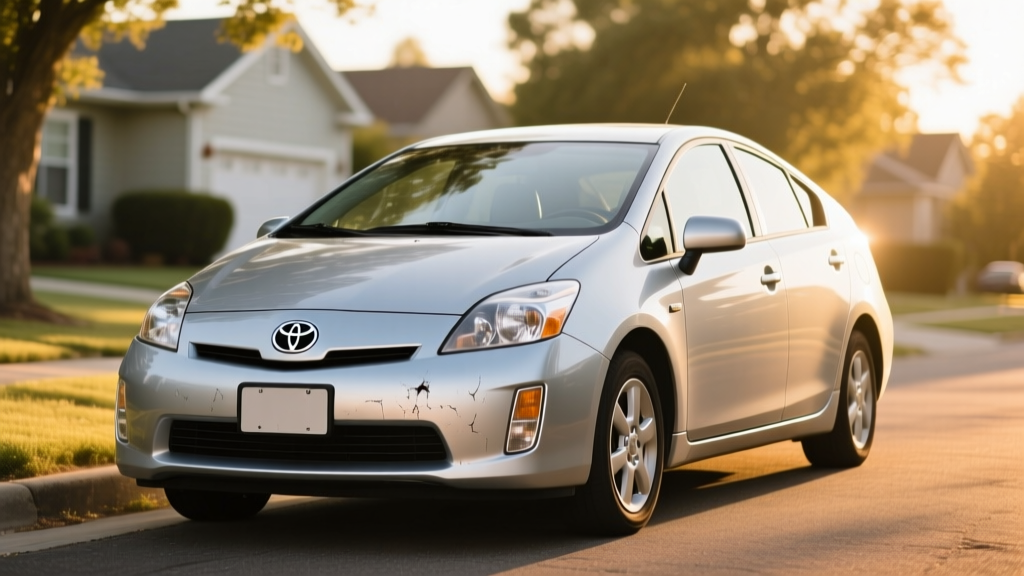
The 2005 Prius: America's Hybrid Benchmark — Two Decades Later
The second-generation Toyota Prius (XW20, model years 2004–2009) changed the American automotive landscape. It was the first mass-market hybrid to pair a gasoline engine with an electric motor in a package that everyday drivers could understand — and its fuel economy numbers stunned the industry. If you're researching 2005 Prius hybrid MPG today, you're likely either shopping for a budget-friendly commuter, evaluating a used Prius for a family member, or simply benchmarking how far hybrid technology has come.
This guide covers the original EPA ratings, what real-world owners actually see after 20 years of battery aging, the hybrid powertrain that made it all possible, battery longevity and replacement economics, and whether a two-decade-old Prius still holds up against modern hybrids, plug-in hybrids, and full EVs.
2005 Prius Hybrid MPG: EPA Ratings vs. Real-World Numbers
The EPA rated the 2005 Toyota Prius at the following fuel economy figures when new:
| Driving Cycle | EPA MPG |
|---|---|
| City | 60 MPG |
| Highway | 51 MPG |
| Combined | 55 MPG |
Source: fueleconomy.gov — 2005 Toyota Prius
Why City MPG Beats Highway MPG
The 2005 Prius earns better fuel economy in city driving than on the highway — the opposite of a conventional gas car. This is because the Hybrid Synergy Drive system recaptures kinetic energy through regenerative braking every time you slow down at a stoplight, and the electric motor handles low-speed propulsion where gasoline engines are least efficient. On the highway, the gasoline engine runs continuously, and aerodynamic drag increases exponentially above 65 mph. Expect highway fuel economy to drop to the low 40s at speeds above 75 mph.
How the 2005 Prius Hybrid Powertrain Works
The 2005 Prius uses Toyota's second-generation Hybrid Synergy Drive (HSD), a full-parallel hybrid system — meaning both the gasoline engine and electric motor can drive the wheels, either independently or together. This is a conventional hybrid (HEV), not a plug-in hybrid (PHEV). You never plug it in; the battery charges through regenerative braking and engine-driven generation.
| Component | Specification |
|---|---|
| Gasoline Engine | 1.5L inline-4 (1NZ-FXE), Atkinson cycle, 76 HP @ 5,000 rpm |
| Electric Motor (MG2) | Permanent-magnet synchronous, 67 HP (50 kW) |
| Combined Net Horsepower | 110 HP |
| Hybrid Battery | 1.3 kWh Nickel-Metal Hydride (NiMH), 201.6V nominal |
| Transmission | Planetary eCVT (continuously variable) |
| 0–60 mph | ~9.9 seconds |
| Curb Weight | ~2,890 lbs |
The Atkinson-cycle engine sacrifices some low-end torque for higher thermal efficiency, while the electric motor fills in the torque gap at low RPM. The planetary gearset acts as a power-split device, seamlessly blending engine and motor output — there are no fixed gear ratios and no traditional transmission to wear out.
Hybrid Battery Longevity: Degradation, Warranty, and Replacement
The number-one concern for any used-hybrid buyer is the traction battery. The 2005 Prius uses a Nickel-Metal Hydride (NiMH) pack — fundamentally different chemistry from the lithium-ion packs in modern EVs and PHEVs. NiMH batteries degrade more gradually and predictably than early lithium-ion cells, but after 20 years, every original 2005 Prius battery is well past its prime.
What Happens When a Prius Battery Degrades?
NiMH degradation manifests as reduced capacity, which means:
- Lower MPG: The electric motor assists less, forcing the gasoline engine to work harder. Expect a 5–15 MPG drop with a heavily degraded pack.
- More frequent engine cycling: The engine starts and stops more aggressively as the system tries to keep the weakened battery charged.
- Reduced performance: Acceleration feels sluggish because the electric motor can't contribute its full 67 HP.
- Diagnostic trouble codes: Eventually, the car will throw a hybrid system warning light. Common codes include P0A80 (replace hybrid battery) and individual module imbalance codes.
Battery Replacement Options and Costs (2026)
| Option | Cost Range | Warranty | Notes |
|---|---|---|---|
| New OEM Toyota Battery | $2,200 – $2,800 (installed) | 3 years / unlimited miles | Best longevity, dealer-installed |
| Aftermarket New NiMH Pack | $1,500 – $2,200 (installed) | 1–3 years | Brands like Dorman, Green Bean |
| Reconditioned / Rebuilt Pack | $800 – $1,500 (installed) | 6 months – 1 year | Replaces only weak modules; variable quality |
| Used Salvage Pack | $400 – $800 (parts only) | None | Risky — unknown remaining life |
| DIY Module Replacement | $200 – $400 (parts) | None | Requires high-voltage safety knowledge; not recommended for novices |
For a 2005 Prius with a market value of roughly $3,000–$5,500 in 2026, a new OEM battery at $2,500+ represents a significant percentage of the car's worth. Many owners opt for reconditioned packs or aftermarket replacements to keep the economics sensible. Independent hybrid specialists in most metro areas can perform the swap in 1–2 hours.
2005 Prius Reliability and Ownership Costs
Beyond the hybrid battery, the 2005 Prius has a strong reliability record. The 1NZ-FXE engine is under-stressed and routinely reaches 200,000+ miles with basic maintenance. The eCVT has no belts, clutch packs, or torque converter to fail — it's essentially a set of planetary gears that Toyota has proven over millions of units.
Common Issues at High Mileage
- Inverter coolant pump: Can fail around 120,000–150,000 miles. Replacement runs $300–$500. If the inverter overheats, it can cause a costly failure ($1,500+).
- Brake actuator: The regenerative braking system's actuator can develop issues above 150,000 miles. Symptoms include a firm pedal and ABS warning light. Replacement: $800–$1,200.
- Combination meter (dashboard): A known failure point where the instrument cluster goes dark. Repair or replacement: $200–$600.
- 12V auxiliary battery: Located in the trunk, this small battery powers electronics and must be replaced every 3–5 years. An AGM-type replacement costs $150–$250.
- Catalytic converter theft: The Prius catalytic converter contains precious metals and sits low to the ground, making it a theft target. A replacement shield costs $150–$300 installed.
Does the 2005 Prius Qualify for Any Tax Credit?
No. The 2005 Prius does not qualify for the federal §30D Clean Vehicle Credit. There are several reasons:
- The §30D credit applies only to new qualifying plug-in electric vehicles (BEVs and PHEVs with at least 7 kWh of battery capacity). The 2005 Prius is a conventional HEV with a 1.3 kWh NiMH battery and no plug-in capability.
- Even the federal used EV credit (up to $4,000 under §25E) requires the vehicle to be a plug-in EV or fuel-cell vehicle. Conventional hybrids have never qualified for federal purchase incentives.
- Toyota's hybrid tax credits under the original Energy Policy Act of 2005 were phased out for Toyota in 2007 after the company hit the 60,000-unit manufacturer cap. Those credits are long expired regardless.
Some states and local utilities offer rebates or HOV lane access for hybrids, but these programs almost universally target new purchases. Check your state's energy office or the DOE's Alternative Fuels Data Center for current local incentives.
2005 Prius vs. Modern Hybrids, PHEVs, and EVs: What Has Changed?
To put the 2005 Prius in perspective, here's how it compares to current electrified vehicles across key metrics:
| Vehicle | Type | Combined MPG / MPGe | Electric-Only Range | Starting Price (2026) |
|---|---|---|---|---|
| 2005 Toyota Prius | HEV | 55 MPG (EPA original) / ~46 (revised) | ~0.5 mi | N/A (used: $3,000–$5,500) |
| 2026 Toyota Prius LE | HEV | 57 MPG combined | ~1 mi | $29,445 |
| 2026 Toyota Prius Prime SE | PHEV | 52 MPG + 127 MPGe | 44 mi (electric) | $34,395 |
| 2026 Hyundai Elantra Hybrid | HEV | 54 MPG combined | N/A | $27,500 |
| 2026 Tesla Model 3 RWD | BEV | 132 MPGe | 272 mi (EPA) | $38,990 (before credit) |
The 2026 Prius achieves nearly identical combined MPG to the 2005 model on paper — but delivers significantly more power (196 HP vs. 110 HP), better safety equipment, modern infotainment, and a refined driving experience. The real efficiency leap has come in PHEVs and BEVs, where electric-only driving eliminates gasoline consumption for daily commutes.
Who Should Buy a 2005 Prius Today — And Who Shouldn't?
The 2005 Prius Makes Sense If:
- You need the cheapest possible high-MPG commuter ($3K–$5K entry price)
- You drive mostly in stop-and-go city traffic where hybrid efficiency shines
- You can verify the hybrid battery has been recently replaced or reconditioned
- You're comfortable with basic DIY maintenance or have a trusted independent hybrid shop nearby
- You drive under 15,000 miles/year and want minimal fuel spend without charging infrastructure
Look at a Modern Hybrid, PHEV, or EV If:
- You want current safety features (AEB, lane-keeping, blind-spot monitoring — none on the 2005)
- You have home charging access and could benefit from PHEV electric-only commuting
- You drive 20,000+ miles/year and need long-term reliability with a warranty
- You want to qualify for federal tax credits (up to $7,500 for new EVs, $4,000 for used EVs)
- You value modern tech: Apple CarPlay, adaptive cruise, backup camera
Frequently Asked Questions
How many MPG does the 2005 Prius actually get today?
With a healthy hybrid battery, expect 42–48 MPG combined in real-world driving. The original EPA sticker of 55 MPG combined was measured under pre-2008 testing methodology that was more generous. With a degraded battery, you may see 35–40 MPG until the pack is serviced.
Can I plug in the 2005 Prius to charge it?
No. The 2005 Prius is a conventional hybrid (HEV). It has no charging port. The 1.3 kWh NiMH battery charges exclusively through regenerative braking and the gasoline engine. If you want plug-in capability, look at the Prius Prime (PHEV) or a full EV.
How much does it cost to replace a 2005 Prius hybrid battery?
Expect to pay $1,500–$2,800 installed depending on whether you choose an aftermarket new pack, a reconditioned pack, or a genuine OEM Toyota battery. The battery is not covered by any remaining warranty. Given the car's current market value of $3,000–$5,500, a battery replacement is a meaningful investment — but it can extend the car's useful life by another 5–8 years.
Is the 2005 Prius safe by modern standards?
By 2026 standards, no. The 2005 Prius earned acceptable/good ratings from the IIHS in its era, but it lacks electronic stability control (standard only from 2008+), side curtain airbags (optional, not standard), and all modern active safety features. If safety is a priority — especially for a teen driver — consider a 2016+ Prius or a modern alternative.
Hybrid vs. PHEV vs. EV — which is right for me?
Choose a conventional hybrid (HEV) if you have no charging access and want maximum MPG with zero behavior change. Choose a PHEV if you can charge at home and want 30–44 miles of electric-only commuting with a gas engine for road trips. Choose a full EV (BEV) if you want the lowest operating costs, have reliable charging access, and are comfortable with 250–350 miles of range. The 2005 Prius fills the HEV role at rock-bottom cost, but a modern PHEV or EV delivers dramatically lower per-mile energy costs if you have charging infrastructure.
Does the 2005 Prius qualify for any tax credit or incentive?
No federal tax credits apply to the 2005 Prius. It is a conventional hybrid, and federal incentives (§30D for new, §25E for used) require plug-in electric vehicles with minimum battery capacity. Some local utilities may offer used-car rebates that include hybrids, but these are rare. Check your state and utility for specifics.