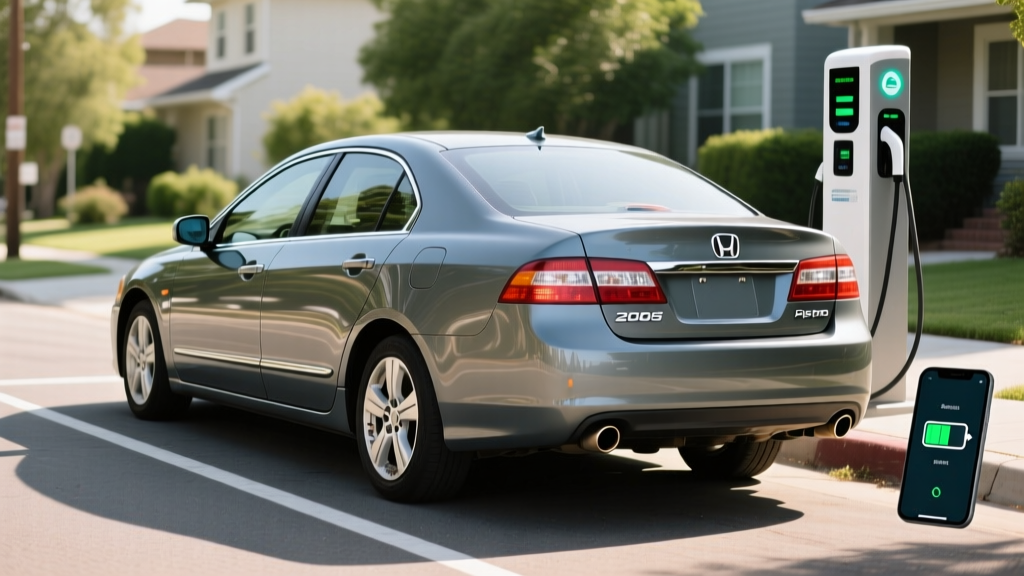
The 2005 Honda Accord Hybrid sedan holds a unique place in automotive history. As Honda's first hybrid sedan — and one of the earliest mainstream hybrid vehicles sold in the United States — it introduced the company's Integrated Motor Assist (IMA) system to a midsize family car. Now, over two decades later, buyers browsing the used market may encounter this model at bargain prices. But does a 20-year-old hybrid still deliver meaningful fuel savings, and what should you know about its aging battery pack before handing over cash?
This guide breaks down everything that matters for a prospective buyer in 2026: real-world MPG data, the IMA powertrain architecture, battery longevity and replacement costs, and how this early HEV stacks up against modern hybrids, PHEVs, and full EVs.
HEV vs. PHEV: Where the 2005 Accord Hybrid Fits
Before we get into the numbers, it's critical to understand what kind of hybrid this car is — because the distinction determines how you use it every day.
Conventional Hybrid (HEV)
The 2005 Honda Accord Hybrid is a conventional hybrid (HEV). It uses a small electric motor and a compact nickel-metal hydride (NiMH) battery pack to assist the gasoline engine. You never plug it in. The battery recharges through regenerative braking and engine power. There is no electric-only driving range — the motor simply reduces the engine's workload, improving fuel economy.
Plug-In Hybrid (PHEV)
A PHEV (like the modern Toyota RAV4 Prime or Honda Clarity Plug-In Hybrid) has a larger battery (typically 15–20 kWh) that you plug in to charge. It can drive 25–50 miles on electricity alone before the gas engine kicks in. PHEVs qualify for partial or full federal tax credits under IRS §30D when purchased new. The 2005 Accord Hybrid is not a PHEV.
This distinction matters because some used-car listings loosely label any hybrid as a "plug-in" or imply electric-only capability. The 2005 Accord Hybrid has none of that. It's a gas car that sips fuel more efficiently thanks to electric assist.
Fuel Economy: EPA MPG and Real-World Numbers
The headline reason anyone buys a hybrid is fuel economy. Here's what the EPA rated the 2005 Honda Accord Hybrid at, alongside the conventional 4-cylinder Accord for comparison:
| Model | City MPG | Highway MPG | Combined MPG |
|---|---|---|---|
| 2005 Honda Accord Hybrid (V6 + IMA) | 29 | 37 | 32 |
| 2005 Honda Accord 4-cyl (non-hybrid) | 24 | 34 | 28 |
| 2005 Honda Accord V6 (non-hybrid) | 21 | 30 | 24 |
Source: fueleconomy.gov
Real-World MPG vs. EPA Sticker
Early IMA systems were optimized for highway efficiency, which is unusual — most modern hybrids excel in city driving where regenerative braking and electric assist do the most work. The 2005 Accord Hybrid actually posts its best EPA number on the highway (37 MPG), a quirk of its V6 engine's cylinder-deactivation system (Variable Cylinder Management, or VCM), which shuts down three cylinders under light load.
In real-world ownership, expect the following:
- City driving: 25–28 MPG. The IMA system provides modest assist, but the V6 still does most of the work at low speeds.
- Highway cruising: 33–36 MPG. Cylinder deactivation helps here, but real-world speeds and conditions rarely match the EPA test cycle perfectly.
- Combined mixed driving: 28–31 MPG in typical use.
- Cold weather: Expect a 5–10% drop. The NiMH battery is less efficient in cold temperatures, and the engine runs richer during warm-up.
Owners who maintain the car well and drive conservatively report hitting the EPA combined figure of 32 MPG, but it's not a guarantee — especially on a vehicle that's now over 20 years old with potential engine wear and an aging hybrid battery.
Powertrain: The IMA System Explained
| Specification | 2005 Honda Accord Hybrid |
|---|---|
| Engine | 3.0L V6 (SOHC i-VTEC) |
| Electric Motor | IMA (Integrated Motor Assist), 15 kW |
| Combined Horsepower | 255 hp @ 6,000 rpm |
| Combined Torque | 232 lb-ft @ 5,000 rpm |
| Transmission | 5-speed automatic |
| Battery Type | Nickel-Metal Hydride (NiMH) |
| Battery Capacity | ~0.7 kWh (nominal) |
| Drivetrain | Front-wheel drive |
| Plug-In Charging | No — HEV only |
| Electric-Only Range | None (motor assist only) |
Honda's IMA system in the 2005 Accord is elegantly simple by today's standards. A thin electric motor is sandwiched between the V6 engine and the transmission, acting as a supplemental torque source during acceleration and as a generator during braking. The system never propels the car on electricity alone — it's always working in tandem with the gas engine.
The 255 combined horsepower output actually made this one of the quicker Accords of its era. Honda positioned the hybrid as a performance-plus-efficiency play rather than a pure economy car, which explains the V6 choice. The non-hybrid 4-cylinder Accord of the same year produced just 160 hp.
Cylinder Deactivation (VCM)
The 2005 Accord Hybrid was also Honda's first vehicle with Variable Cylinder Management. Under light-load conditions (steady-speed highway driving, gentle deceleration), the system deactivates three of the six cylinders, effectively running as a 1.5L 3-cylinder. This is what enables the impressive 37 MPG highway figure. However, early VCM systems have been associated with oil consumption and engine mount vibration issues in high-mileage examples — something to inspect carefully on any used example.
Battery Lifespan, Warranty, and Replacement Cost
Original Hybrid Battery Warranty
Honda originally warranted the IMA battery for 8 years / 80,000 miles (10 years / 150,000 miles in California and states that follow CARB emissions standards). As of 2026, all original warranty coverage has expired for every 2005 Accord Hybrid on the road.
How Long Does the IMA Battery Actually Last?
The NiMH battery pack in the 2005 Accord Hybrid was never designed for the deep cycling that modern lithium-ion packs handle. Real-world data from two decades of ownership shows:
- Typical lifespan: 100,000–150,000 miles, or 10–15 years, before significant capacity loss.
- Failure symptoms: Reduced fuel economy (the electric assist diminishes), IMA warning light on the dash, and in some cases the battery stops accepting regenerative charge entirely.
- Many surviving examples in 2026 are on their second or even third IMA battery pack.
IMA Battery Replacement Cost
| Replacement Option | Estimated Cost (2026) | Notes |
|---|---|---|
| Remanufactured IMA battery (aftermarket) | $1,200 – $2,000 | Most common choice; available from hybrid-specialty shops and online retailers. Typical warranty: 1–3 years. |
| New OEM Honda IMA battery | $2,500 – $3,500 | Availability may be limited for a 2005 model year. Check with Honda parts departments. |
| Used/salvage IMA battery | $400 – $800 | High risk — you're buying someone else's degraded battery. Not recommended. |
| DIY cell-level rebuild | $300 – $600 (parts) | Requires technical skill. Involves replacing individual NiMH D-cells within the pack. |
For a car that may be worth $3,000–$5,000 on the used market in 2026, a battery replacement can represent a significant percentage of the vehicle's value. Factor this into your purchase decision — if the seller can't confirm a recent IMA battery replacement, budget $1,500–$2,000 for one shortly after purchase.
Pricing and Tax Credit Eligibility
The 2005 Honda Accord Hybrid originally carried an MSRP of approximately $29,995 — a meaningful premium over the non-hybrid 4-cylinder Accord, which started around $19,000. Honda justified the premium with the V6 performance, hybrid efficiency, and standard leather-trimmed interior.
Used Market Pricing in 2026
Expect to find 2005 Accord Hybrids on the used market in the $2,500–$5,500 range, depending on mileage, condition, and whether the IMA battery has been recently replaced. Examples with a confirmed new or remanufactured IMA battery command a premium of roughly $1,000–$1,500 over those with the original (likely depleted) pack.
Does It Qualify for Any Tax Credit?
No. The 2005 Honda Accord Hybrid does not qualify for any federal tax credit in 2026. Here's why:
- The original IRS §30D Clean Vehicle Credit (up to $7,500) applies only to new qualifying plug-in electric vehicles and PHEVs — not conventional HEVs, and not used vehicles purchased after the original sale.
- The Used Clean Vehicle Credit (up to $4,000 under §25E) applies only to used plug-in EVs and PHEVs with a battery capacity of at least 7 kWh. The Accord Hybrid's ~0.7 kWh NiMH pack doesn't come close, and it isn't a plug-in vehicle.
- Honda's original hybrid tax credit (a much smaller incentive available in the mid-2000s) expired long ago and applied only to the original purchaser.
If you're seeking a tax-credit-eligible vehicle, you'll need to look at newer plug-in hybrids or battery-electric vehicles. See IRS.gov's Clean Vehicle Credits page for current eligibility rules.
Reliability and What to Inspect
The 2005 Accord Hybrid's reliability record is mixed. The underlying Accord platform is one of Honda's most durable, but the hybrid-specific components and the VCM system introduce complexity that non-hybrid Accords don't have.
Common Issues to Check
- IMA battery degradation: As discussed, this is the #1 concern. Ask for documentation of any replacement. If the IMA light is on, the battery needs service.
- VCM-related oil consumption: Early cylinder-deactivation systems can cause excessive oil consumption and fouled spark plugs in deactivated cylinders. Check oil level and ask about consumption history.
- Engine mounts: The VCM system's cylinder transitions can wear engine mounts prematurely. Listen for unusual vibrations at idle or during light-load cruising.
- Electric power steering: Not hybrid-specific, but the Accord's EPS rack can develop issues at high mileage. Check for whining noises or stiff steering.
- Transmission: The 5-speed automatic is generally robust but check for smooth shifts and no hesitation, especially under the unique torque profile of the IMA assist.
The non-hybrid 4-cylinder Accord of the same era is widely considered more reliable and cheaper to maintain, simply because it lacks the IMA system and VCM complexity.
Pros
- Strong V6 performance (255 hp) with better MPG than the non-hybrid V6
- Historic significance as Honda's first hybrid sedan
- Comfortable, spacious midsize sedan with good ride quality
- Low used-market entry price ($2,500–$5,500)
- No plug-in charging required — operates like a normal gas car
Cons
- IMA battery likely needs replacement if not already done ($1,200–$3,500)
- Real-world MPG modest by modern hybrid standards (28–31 combined vs. 50+ for a 2026 Prius)
- VCM cylinder deactivation can cause oil consumption and mount wear
- No federal or state tax credit eligibility
- Hybrid-specific parts becoming harder to source
- No electric-only driving capability
2005 Accord Hybrid vs. Modern Hybrids, PHEVs, and EVs
If you're considering a 2005 Accord Hybrid, you're likely cross-shopping it against other budget options. Here's how it compares to what you can buy today:
| Vehicle | Type | Combined MPG / MPGe | Electric-Only Range | Approx. Price (2026) |
|---|---|---|---|---|
| 2005 Honda Accord Hybrid | HEV | 32 MPG (EPA) / 28–31 real | None | $2,500–$5,500 (used) |
| 2026 Toyota Prius LE | HEV | 57 MPG (EPA) | None | ~$29,000 (new) |
| 2026 Toyota RAV4 Prime | PHEV | 94 MPGe / 38 MPG (gas-only) | 42 miles | ~$44,000 (new) |
| 2026 Honda Accord Hybrid | HEV | 48 MPG (EPA) | None | ~$34,000 (new) |
| 2026 Hyundai Ioniq 6 SE | BEV | 140 MPGe | 361 miles (EPA) | ~$38,000 (new, before credit) |
The efficiency gap is stark. A 2026 Prius delivers nearly double the combined MPG of the 2005 Accord Hybrid, and modern PHEVs add genuine electric-only commuting capability. However, those vehicles cost $29,000–$44,000 new. If your budget is firmly under $5,000, the 2005 Accord Hybrid occupies a specific niche — just don't expect it to rival modern efficiency.
Who Should Buy the 2005 Honda Accord Hybrid?
Choose the 2005 Accord Hybrid if:
- Your total budget is under $5,000 and you need a full-size sedan
- You want V6 power with slightly better fuel economy than a standard V6 Accord
- You can verify a recent IMA battery replacement (or budget for one)
- You drive primarily highway miles where VCM cylinder deactivation helps
- You appreciate owning a piece of hybrid history
Look elsewhere if:
- Fuel economy is your top priority — a 2010+ Prius or Insight will crush it on MPG for similar money
- You want electric-only driving or plug-in capability (look at used PHEVs like the Chevy Volt or Prius Plug-In)
- You can't budget $1,500+ for a potential IMA battery replacement
- You want modern safety features (the 2005 Accord lacks stability control, side curtain airbags in some trims, and any ADAS features)
- You want tax credit eligibility — only new or newer used PHEVs and BEVs qualify
Frequently Asked Questions
How many MPG does the 2005 Honda Accord Hybrid get?
The EPA rates it at 29 city / 37 highway / 32 combined MPG. In real-world driving in 2026, expect 25–28 city, 33–36 highway, and 28–31 combined — somewhat lower than the sticker, especially if the IMA battery is degraded. Highway driving is where this hybrid shines thanks to cylinder deactivation.
Does the 2005 Accord Hybrid need to be plugged in?
No. This is a conventional hybrid (HEV), not a plug-in hybrid (PHEV). The battery charges through regenerative braking and the gas engine. You fuel it like any other car — just less often.
How far can it drive on electric power alone?
It can't. The IMA system only assists the gasoline engine — it never propels the car independently. There is zero electric-only range. If you want electric-only driving, you need a PHEV or a full BEV.
Is the 2005 Accord Hybrid reliable?
The base Accord platform is solid, but the IMA battery, VCM cylinder deactivation, and associated components add failure points that non-hybrid Accords don't have. The IMA battery is the primary reliability concern and will likely need replacement if it hasn't been done already. Budget $1,200–$2,000 for a remanufactured unit.
What does a replacement IMA battery cost?
A remanufactured IMA battery typically costs $1,200–$2,000 installed. A new OEM Honda battery (if still available) runs $2,500–$3,500. DIY cell-level rebuilds are possible for $300–$600 in parts but require technical expertise.
Does the 2005 Accord Hybrid qualify for any tax credit in 2026?
No. Federal tax credits under IRS §30D (new vehicles) and §25E (used vehicles) require plug-in capability and minimum battery capacities the Accord Hybrid doesn't meet. The original hybrid incentive from the mid-2000s expired long ago. Check IRS.gov for current credit rules.
Hybrid vs. PHEV vs. EV — which should I choose?
If you have no home charging access and want zero behavior change, a conventional hybrid (HEV) like this Accord is the simplest option. If you can charge at home and want electric-only commuting with gas backup for road trips, a PHEV is the sweet spot. If you want the lowest operating cost, can charge at home, and your daily driving is under ~250 miles, a full BEV offers the best economics — especially with available tax credits. The 2005 Accord Hybrid makes sense only as a budget HEV when you need a cheap, large sedan and can't spend more than $5,000.
How does the 2005 Accord Hybrid compare to a modern Honda Accord Hybrid?
The 2026 Honda Accord Hybrid uses a two-motor system producing 204 hp combined with an EPA rating of 48 MPG combined — roughly 50% more efficient than the 2005 model. It also offers modern safety tech (Honda Sensing ADAS), Apple CarPlay/Android Auto, and a new-vehicle warranty. The trade-off is price: ~$34,000 new vs. ~$3,500 used.