The Original Honda Hybrid: Why It Still Matters in 2026
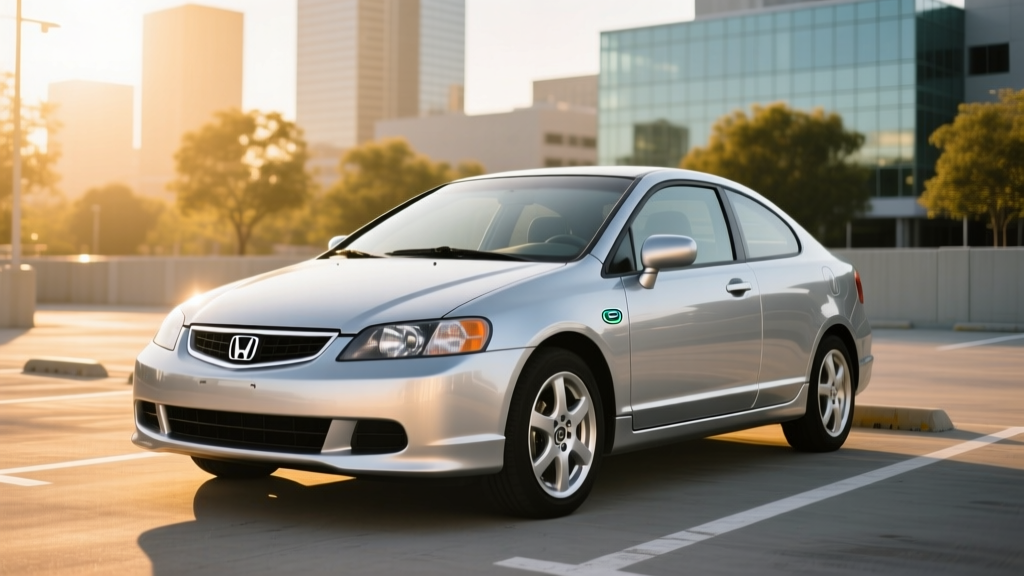
Before the Toyota Prius dominated American taxi fleets and before plug-in hybrids offered 30+ miles of electric-only range, there was the 2003 Honda Civic Hybrid. Launched as a 2003 model-year vehicle, it was one of the first mass-market hybrid electric vehicles (HEVs) sold in the United States — and Honda's very first hybrid offering on American soil. For collectors of automotive history, budget-conscious commuters shopping the used market, or anyone researching how far hybrid technology has come, the 2003 Civic Hybrid remains a fascinating and practical case study.
This guide covers the real-world fuel economy, the Integrated Motor Assist (IMA) powertrain, battery longevity and replacement costs, and how this early-2000s hybrid stacks up against the HEVs, PHEVs, and BEVs you can buy today. If you're evaluating a used 2003 Civic Hybrid or simply tracing Honda's electrification timeline, here's everything the spec sheets and two decades of owner data tell us.
HEV vs PHEV: Where the 2003 Civic Hybrid Fits
Before examining the numbers, it's critical to understand what the 2003 Civic Hybrid is — and what it is not.
Conventional Hybrid (HEV)
The 2003 Civic Hybrid is a conventional hybrid (HEV). It pairs a small gasoline engine with an electric motor and a compact nickel-metal hydride (NiMH) battery pack. The battery recharges through regenerative braking and the engine — you never plug it in. The electric motor assists the engine during acceleration and enables idle stop, but the car cannot drive on electric power alone for any meaningful distance.
Plug-In Hybrid (PHEV)
A plug-in hybrid, like the modern Toyota Prius Prime or Chrysler Pacifica Hybrid, carries a much larger battery (typically 10–20 kWh) that you charge from a wall outlet or public charger. PHEVs deliver 25–45 miles of electric-only driving before the gas engine engages. The 2003 Civic Hybrid has none of this capability — its battery is roughly 0.3 kWh, designed for assist, not standalone propulsion.
Battery Electric Vehicle (BEV)
A full EV like the Hyundai Ioniq 5 or Tesla Model 3 has no gasoline engine. It runs entirely on a large battery pack (58–100+ kWh) charged externally, offering 250–400+ miles of EPA range. The 2003 Civic Hybrid shares no architecture with modern BEVs.
Bottom line: The 2003 Civic Hybrid is a parallel-assist HEV. You fuel it with gasoline. It never plugs in. Its electric motor exists to reduce the engine's workload and recover braking energy.
Fuel Economy: EPA Ratings vs Real-World MPG
Fuel efficiency was the entire point of the 2003 Civic Hybrid, and by early-2000s standards, it delivered. Here are the official EPA figures as listed on fueleconomy.gov:
| Cycle | EPA Rating (Original) | Revised EPA Estimate* |
|---|---|---|
| City | 48 MPG | ~44 MPG |
| Highway | 51 MPG | ~47 MPG |
| Combined | ~47 MPG (original sticker) | ~45 MPG |
*The EPA revised its testing methodology in 2008 to better reflect real-world driving (higher speeds, air conditioning use, cold starts). Original pre-2008 window-sticker numbers for the Civic Hybrid were often 5–10% higher than what drivers actually achieved. The revised estimates above are more realistic benchmarks.
Real-World MPG: What Owners Actually Report
Owner-reported data on Fuelly and hybrid-owner forums consistently shows the 2003 Civic Hybrid averaging 38–44 MPG combined in daily driving. Several factors pull real-world numbers below the sticker:
- Battery age: A 20+ year-old NiMH pack that has lost capacity provides less electric assist, forcing the 1.3L engine to work harder.
- Highway vs. city: Unlike modern hybrids with larger motors, the IMA system provides minimal benefit at steady highway speeds. City driving with frequent stops yields the best MPG thanks to regen braking and idle stop.
- Driving style: Aggressive acceleration overwhelms the small electric motor's assist, defaulting to pure engine power.
- Climate: Cold weather reduces NiMH efficiency and increases engine idling for cabin heat, dropping MPG by 3–5 MPG in winter months.
Expect 40–44 MPG if the IMA battery is healthy and you drive primarily in urban conditions. Highway-only driving may drop to 36–40 MPG.
Powertrain: Honda's Integrated Motor Assist (IMA) System
| Specification | 2003 Honda Civic Hybrid |
|---|---|
| Engine | 1.3L i-DSI 4-cylinder (lean-burn) |
| Engine HP | 85 hp @ 5,700 rpm |
| Electric Motor | IMA permanent-magnet motor, ~13 hp / 20 kW |
| Combined System Output | ~93 hp |
| Combined Torque | ~105 lb-ft (motor assist peak) |
| Battery Type | Nickel-Metal Hydride (NiMH) |
| Battery Capacity | ~0.3 kWh (nominal) |
| Transmission | 5-speed manual or CVT (continuously variable) |
| Drivetrain | Front-wheel drive |
| 0–60 mph | ~10.5–11.0 seconds |
| Curb Weight | ~2,670 lbs |
| Plug-In Charging | None — HEV only |
The IMA system is elegantly simple by modern standards. A thin electric motor sits between the engine and transmission on the crankshaft. It adds torque during acceleration (filling in the 1.3L engine's low-end weakness), captures energy during deceleration via regenerative braking, and enables idle stop — shutting the engine off at red lights to save fuel. The motor cannot propel the car independently; it's strictly an assist device.
The 1.3L i-DSI engine uses Honda's dual-and-sequential ignition system with two spark plugs per cylinder, enabling a leaner burn for efficiency. Combined with the IMA assist and a relatively light curb weight, the package achieved remarkable efficiency for 2003.
Battery Longevity, Warranty, and Replacement Cost
Original IMA Battery Warranty
Honda originally warranted the IMA battery for 8 years / 80,000 miles (extended to 10 years / 150,000 miles in California Air Resources Board (CARB) states). That warranty has long expired for every 2003 Civic Hybrid on the road today.
Battery Lifespan in Practice
The NiMH IMA battery in the 2003 Civic Hybrid typically lasts 8–12 years or 100,000–150,000 miles before significant capacity loss triggers an IMA warning light. Many original batteries failed between 90,000–130,000 miles. Heat is the primary degradation accelerator — vehicles in hot climates (Arizona, Texas, Southern California) saw earlier failures.
IMA Battery Replacement Cost (2026)
If you're buying a used 2003 Civic Hybrid today, budget for battery replacement:
- Remanufactured IMA battery: $1,200–$1,800 (parts + labor at independent hybrid shops)
- New OEM IMA battery: $2,000–$3,000+ (limited availability from Honda; some part numbers discontinued)
- Grid charger/reconditioning: $300–$600 (a popular DIY approach among Civic Hybrid owners to rebalance cells and extend life by 1–3 years)
Important caveat: Honda issued a class-action settlement extension for certain 2003–2005 Civic Hybrid IMA batteries, but those extensions expired years ago. Any battery replacement today is an out-of-pocket owner expense.
Driving Impressions and Practical Ownership in 2026
The 2003 Civic Hybrid drives like what it fundamentally is: a 7th-generation Honda Civic with a fuel-economy optimization package. The 93 combined horsepower means merging onto fast-moving freeways requires planning, and the CVT-equipped models drone under hard acceleration (a characteristic Honda would refine in later generations).
Where the IMA system shines is in stop-and-go commuting. The idle stop engages smoothly, the regen braking is unobtrusive, and the electric assist masks the small engine's torque deficit at low speeds. The manual-transmission version is notably more engaging and arguably more efficient when driven by a skilled hypermiler.
What to Inspect on a Used 2003 Civic Hybrid
- IMA battery state: Check for the IMA warning light on the dash. A lit IMA light means the battery has failed and will not pass emissions in some states.
- 12V auxiliary battery: The Civic Hybrid uses a standard 12V battery for accessories — separate from the IMA pack. These are inexpensive to replace.
- CVT health: The CVT fluid should have been changed every 30,000–40,000 miles. Neglected CVTs in early-2000s Hondas are a known failure point.
- Rust: Check subframe and rear wheel arches, especially on cars from the Rust Belt.
- Recall status: Verify all recalls (including airbag inflator recalls under the Takata settlement) have been completed via NHTSA's VIN lookup.
Tax Credits and Incentives: What Applied Then vs Now
When new, the 2003 Honda Civic Hybrid qualified for a federal income tax deduction of up to $2,000 under the Energy Policy Act (this was a deduction, not a credit, and it phased out for Honda after the company hit its cumulative sales cap). That incentive expired long ago.
In 2026, buying a used 2003 Civic Hybrid qualifies for no federal tax credits. The current IRS §25E used clean vehicle credit (up to $4,000 or 30% of sale price) applies only to used EVs and PHEVs that meet specific battery-capacity and model-year requirements. Conventional hybrids like the Civic Hybrid do not qualify. No state incentives currently target 20+ year-old conventional hybrids either.
Used-market price (2026): A running, drivable 2003 Civic Hybrid typically sells for $2,500–$5,500 depending on mileage, condition, and IMA battery status. Examples with a recently replaced IMA battery command a premium of $800–$1,500.
How It Compares: 2003 Civic Hybrid vs Modern Hybrids and EVs
| Metric | 2003 Civic Hybrid (HEV) | 2026 Toyota Prius (HEV) | 2026 Toyota Prius Prime (PHEV) | 2026 Hyundai Ioniq 5 (BEV) |
|---|---|---|---|---|
| Combined MPG / MPGe | ~45 MPG | 57 MPG | 52 MPG / 127 MPGe | |
| Electric-Only Range | None | None | 44 miles | |
| Total Range | ~450 miles | ~620 miles | ~440 miles (gas + electric) | |
| Battery Capacity | ~0.3 kWh (NiMH) | ~1.0 kWh (Li-ion) | 13.6 kWh (Li-ion) | 77.4 kWh (NMC) |
| Combined HP | 93 hp | 196 hp | 220 hp | 225–320 hp |
| 0–60 mph | ~10.8 sec | ~7.0 sec | ~6.6 sec | 5.0–7.2 sec |
| Plug-In Required? | No | No | Yes (Level 2) | Yes (Level 2 / DC) |
| Starting Price (New) | ~$19,800 (2003 MSRP) | $28,350 | $33,450 | $42,600 |
| Federal Tax Credit | None (used) | None (HEV) | Up to $3,750 (§30D) | Up to $7,500 (§30D) |
The efficiency gap is stark. Toyota's 5th-generation Prius delivers 25% better fuel economy with nearly double the horsepower, thanks to a larger lithium-ion battery, more powerful motor-generators, and a dedicated hybrid platform. The Prius Prime adds genuine EV-mode commuting, and the Ioniq 5 eliminates gasoline entirely.
Where the 2003 Civic Hybrid still wins: purchase price. At $3,000–$5,000 used, it costs less than a single year's depreciation on a new Prius. For a budget commuter who drives 8,000–12,000 miles annually, the fuel savings over a conventional gas Civic of the same era (which gets ~30 MPG combined) amount to roughly $400–$600 per year at 2026 fuel prices.
Who Should Choose the 2003 Civic Hybrid — And Who Shouldn't
Pros
- Ultra-low purchase price ($3,000–$5,500 used)
- Strong city MPG (40–44 real-world)
- No plug-in charging required — fuel and go
- Lightweight, easy to park, simple to maintain
- Manual transmission option for enthusiasts
- Honda's reputation for mechanical durability (engine, suspension)
Cons
- IMA battery replacement is likely ($1,200–$3,000)
- Slow acceleration (0–60 in ~11 seconds)
- No electric-only driving capability
- Outdated safety features (no ESC, side-curtain airbags on early builds)
- No federal tax credits available
- Parts availability declining (some IMA components discontinued)
- CVT longevity concerns if maintenance was neglected
Decision Framework
Choose the 2003 Civic Hybrid if: You need a dirt-cheap commuter for city driving, you're comfortable budgeting $1,500+ for an eventual IMA battery replacement, and you want hybrid-level MPG without plug-in infrastructure.
Choose a modern HEV (Prius, Civic Hybrid 2026) if: You want 50+ MPG with modern safety tech, a fresh battery warranty, and no immediate repair risk — and you can afford $28,000+.
Choose a PHEV (Prius Prime, RAV4 Prime) if: You have home Level 2 charging, your commute is under 40 miles, and you want to drive mostly on electricity with a gas backup for road trips.
Choose a BEV (Ioniq 5, Model 3) if: You want zero tailpipe emissions, have reliable charging access, and are ready to invest $40,000+ (offset by up to $7,500 in federal tax credits) for the lowest per-mile energy cost.
Frequently Asked Questions
How many MPG does the 2003 Honda Civic Hybrid get?
The EPA originally rated it at 48 city / 51 highway MPG under pre-2008 testing. Under revised methodology, expect approximately 44 city / 47 highway. Real-world owner averages cluster around 38–44 MPG combined, heavily dependent on IMA battery health and driving conditions.
Can the 2003 Civic Hybrid drive on electric power alone?
No. The IMA system's electric motor only assists the gasoline engine — it cannot propel the car independently. The motor can enable very low-speed creep in some conditions, but this is not a usable electric-only mode. For electric-only commuting, you need a PHEV or BEV.
Is the 2003 Civic Hybrid reliable?
The mechanical components (engine, transmission, suspension) are generally durable with proper maintenance — Honda's 1.3L i-DSI is an under-stressed design. The primary reliability concern is the IMA NiMH battery, which typically requires replacement after 100,000–150,000 miles or 8–12 years. At 20+ years old, any surviving original battery is on borrowed time.
How much does it cost to replace the IMA battery?
A remanufactured IMA battery with installation runs $1,200–$1,800 at independent hybrid specialists. A new OEM battery (if available) costs $2,000–$3,000+. Many owners opt for a grid-charger reconditioning ($300–$600) to extend the existing battery's life by 1–3 years as a stopgap.
Does the 2003 Civic Hybrid qualify for any tax credits in 2026?
No. The original federal tax deduction (up to $2,000) expired over a decade ago. The current §25E used clean vehicle credit and §30D new clean vehicle credit do not apply to conventional hybrids. Only plug-in hybrids and battery electric vehicles qualify for federal clean-vehicle tax incentives under current IRS rules.
Is the 2003 Civic Hybrid a good car to buy used in 2026?
It can be — as a budget commuter with realistic expectations. At $3,000–$5,500, it's one of the cheapest ways to access hybrid-level fuel economy. But factor in the near-certainty of an IMA battery replacement ($1,200+), the lack of modern safety features, and the availability of newer, more efficient used hybrids (2010+ Prius, 2012+ Civic Hybrid) in the $7,000–$12,000 range. If IMA battery health is confirmed and the price is right, it's a frugal city runabout. If the IMA light is already on, negotiate aggressively or walk away.