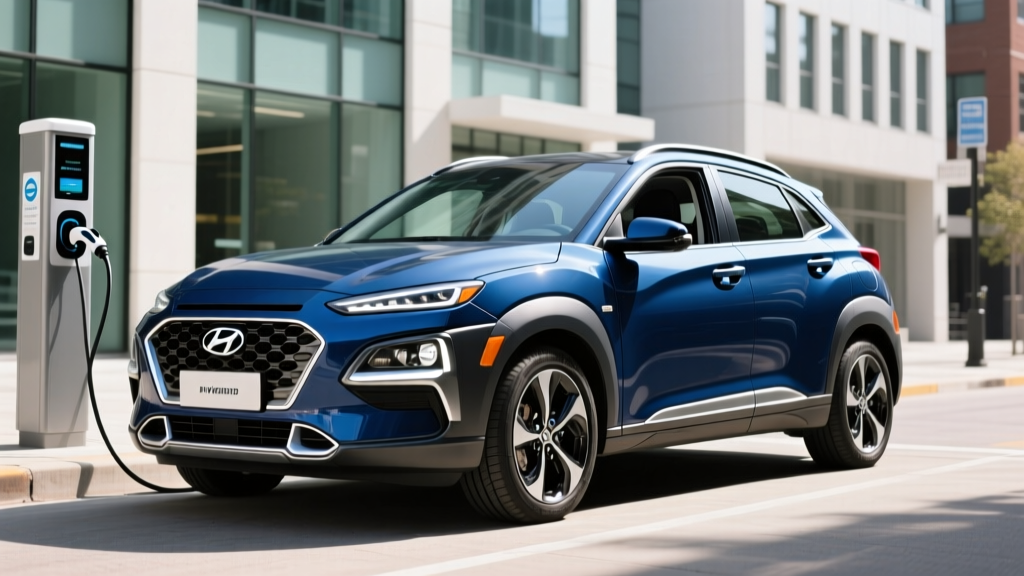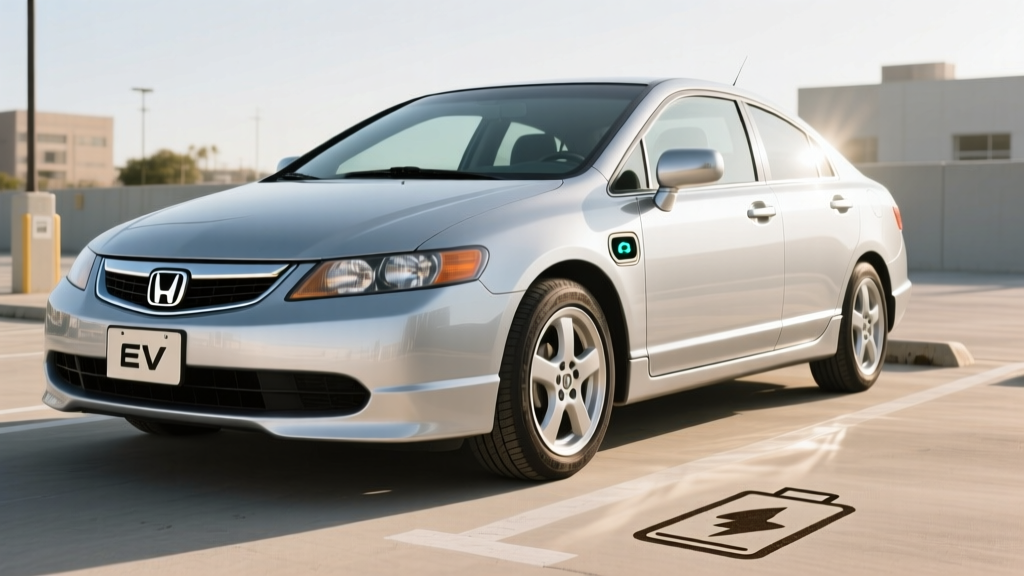
The 2003 Honda Civic Hybrid holds a unique place in automotive history. As one of the first mainstream gasoline-electric hybrids sold in the United States, it helped prove that electrified powertrains could deliver real-world fuel savings outside of a niche enthusiast market. More than two decades later, buyers still search for this car — whether as an ultra-cheap commuter, a collector curiosity, or a benchmark for understanding how far hybrid technology has come. This guide breaks down the 2003 Civic Hybrid's fuel economy, powertrain, battery longevity, replacement costs, and whether it remains a practical choice in 2026.
What Is the 2003 Honda Civic Hybrid?
The 2003 Civic Hybrid was Honda's first hybrid sold in the U.S. market, arriving alongside the Toyota Prius as one of only two mass-market hybrids available at the time. It used Honda's Integrated Motor Assist (IMA) system — a mild hybrid architecture fundamentally different from the full-parallel hybrid systems Toyota employed. Rather than driving the wheels independently, the IMA's electric motor sandwiched between the gasoline engine and the transmission provided supplemental torque during acceleration and enabled regenerative braking during deceleration.
This was a conventional hybrid (HEV), not a plug-in hybrid (PHEV). The battery charged exclusively through regenerative braking and the gasoline engine. There was no charging port, no electric-only driving mode, and no ability to plug in. Understanding this distinction is essential, because modern PHEVs like the Toyota Prius Prime or Honda Clarity Plug-In Hybrid operate on entirely different principles.
HEV vs. PHEV: Why It Matters for the 2003 Civic Hybrid
Conventional Hybrid (HEV) — 2003 Civic Hybrid: Small battery (~0.3 kWh usable), self-charging via regen and engine, no plug, no electric-only range. The motor assists the engine but cannot propel the car alone.
Plug-In Hybrid (PHEV) — e.g., 2026 Toyota Prius Prime: Larger battery (13.6 kWh), plug-in charging capability, 44 miles of electric-only range, then operates as a conventional hybrid once the battery depletes.
The 2003 Civic Hybrid is strictly an HEV. You will never plug it in.
Fuel Economy: How Many MPG Does the 2003 Civic Hybrid Get?
The 2003 Civic Hybrid's headline number was its fuel efficiency, which significantly outpaced the standard gasoline Civic of the same era. Here are the official EPA figures as recorded on fueleconomy.gov:
| Metric | 2003 Civic Hybrid (5-speed manual) | 2003 Civic Hybrid (CVT) | 2003 Civic Gas (DX/LX, auto) |
|---|---|---|---|
| City MPG | 47 | 48 | 29 |
| Highway MPG | 48 | 47 | 38 |
| Combined MPG | 47 | 47 | 33 |
Real-World MPG vs. EPA Estimates
The 2003 Civic Hybrid's EPA numbers were impressive for their time, and real-world results varied depending on driving style and conditions. Hybrid systems excel in stop-and-go city driving where regenerative braking recovers energy frequently. Many owners reported achieving 42–50 MPG in mixed driving, with some hypermilers squeezing past 55 MPG in warm-weather city conditions. However, sustained highway driving at 75+ mph, cold-weather operation, and aggressive acceleration could drop real-world figures to the mid-to-high 30s.
One critical caveat: as the IMA battery ages and loses capacity, the electric motor provides less assist, which forces the gasoline engine to work harder. A 2003 Civic Hybrid running on a degraded original battery may deliver only 35–40 MPG combined — still better than a gas-only Civic, but noticeably below the EPA sticker.
Powertrain and Performance Specs
| Specification | 2003 Honda Civic Hybrid |
|---|---|
| Gasoline Engine | 1.3L inline-4, lean-burn i-DSI, 85 hp @ 5,700 rpm |
| Electric Motor (IMA) | 10 kW (13 hp), 46 lb-ft torque |
| Combined System Output | 93 hp @ 5,700 rpm / 105 lb-ft @ 3,000 rpm |
| Battery Pack | Nickel-Metal Hydride (NiMH), ~144V nominal, ~0.3 kWh usable |
| Transmission | 5-speed manual or CVT (continuously variable) |
| 0–60 mph | ~10.5 seconds (CVT) |
| Drivetrain | Front-wheel drive |
| Curb Weight | ~2,580 lbs |
| Original MSRP | $19,800 (2003 base) |
The IMA system was elegantly simple compared to modern hybrid powertrains. The 1.3-liter i-DSI engine used lean-burn combustion and dual spark plugs per cylinder for efficiency, while the thin electric motor mounted directly on the crankshaft provided a torque fill during acceleration. The system could not drive on electric power alone — the motor only assisted the engine. Auto idle-stop shut off the engine at red lights to save fuel, restarting seamlessly when the driver released the brake.
IMA Battery Lifespan, Degradation, and Replacement Cost
The single biggest concern for anyone buying a 2003 Civic Hybrid in 2026 is the IMA battery. This nickel-metal hydride (NiMH) pack was rated for approximately 0.3 kWh of usable energy — tiny by modern standards (a 2026 Toyota Prius Prime carries a 13.6 kWh lithium-ion pack). NiMH chemistry degrades with age, heat, and charge cycling, and after 20+ years, any original battery will have lost significant capacity.
Battery Warranty & Expected Lifespan
Original warranty: Honda warranted the IMA battery for 8 years / 80,000 miles (10 years / 150,000 miles in CARB states like California, New York, and Massachusetts). This warranty expired long ago for all 2003 models.
Real-world lifespan: Most original IMA batteries lasted 8–12 years / 100,000–150,000 miles before degradation triggered an IMA warning light or noticeably reduced fuel economy. Many 2003 Civic Hybrids still on the road have had at least one battery replacement.
Replacement cost (2026):
- Refurbished/remanufactured IMA battery: $900–$1,500 (parts + labor at independent shops)
- New OEM Honda IMA battery (if available): $2,000–$3,200 (parts alone, though Honda has largely discontinued new IMA packs for this generation)
- Aftermarket NiMH replacement cells (DIY): $400–$800 for the cells alone, but requires technical skill
If you're considering a 2003 Civic Hybrid today, ask the seller whether the IMA battery has been replaced, and if so, when and with what type of pack. A car with a fresh refurb battery is significantly more valuable than one on an original 22-year-old pack.
Signs of IMA Battery Degradation
- IMA warning light illuminated on the dashboard
- Noticeable drop in fuel economy (below 38 MPG combined)
- Reduced assist during acceleration — the car feels sluggish
- More frequent engine running at idle (auto-stop disengaging)
- Recalibration events — the battery gauge drops and recharges repeatedly
Is the 2003 Civic Hybrid Reliable?
Beyond the IMA battery, the 2003 Civic Hybrid benefits from Honda's reputation for mechanical durability. The 1.3L i-DSI engine is under-stressed and simple, with timing chains rather than belts, and the CVT transmission (while not as refined as modern units) has proven generally robust when maintained. The manual transmission variant is nearly bulletproof.
Common non-hybrid issues mirror those of the standard 7th-generation Civic: potential for automatic transmission concerns in non-hybrid models (not applicable to the hybrid's CVT), suspension wear (struts, bushings), and typical aging rubber components. Rust can be a concern in salt-belt states.
For a 2003 vehicle, parts availability is becoming a consideration. Honda no longer manufactures many model-specific components, so body panels, interior trim, and IMA-specific electronics may require salvage yards or specialty suppliers. Mechanical parts shared with the broader Civic lineup remain widely available.
Tax Credits and Incentives: What Applied Then vs. Now
When the 2003 Civic Hybrid launched, the federal hybrid tax incentive was a $2,000 income tax deduction (not a credit) available under the Energy Policy Act. This was not the modern §30D Clean Vehicle Credit that exists today.
In 2026, the 2003 Civic Hybrid does not qualify for any federal tax credit. Here's why:
- The IRS §30D Clean Vehicle Credit applies only to new qualifying plug-in electric vehicles and fuel-cell vehicles — conventional hybrids (HEVs) have never qualified for §30D.
- The Used Clean Vehicle Credit (§25E, up to $4,000) applies only to used plug-in EVs and PHEVs with at least 4 kWh of battery capacity — the Civic Hybrid's ~0.3 kWh NiMH pack does not meet this threshold.
- No state currently offers incentives for purchasing a 20+ year-old conventional hybrid.
If you're shopping for a hybrid with tax-credit eligibility, you'd need to look at a used PHEV (such as a 2019+ Toyota Prius Prime or Honda Clarity Plug-In Hybrid) that meets the §25E requirements: sale price under $25,000, buyer income under $75,000 single / $150,000 joint, and purchased from a licensed dealer. Consult IRS.gov §25E guidelines for current-year eligibility details.
2003 Civic Hybrid vs. Modern Hybrids, PHEVs, and EVs: Which Fits You?
| Factor | 2003 Civic Hybrid (HEV) | 2026 Toyota Prius (HEV) | 2026 Prius Prime (PHEV) | 2026 Chevy Equinox EV |
|---|---|---|---|---|
| Combined MPG / MPGe | 47 MPG | 57 MPG | 52 MPG + 44 mi EV | 114 MPGe / 315 mi range |
| Electric-Only Range | 0 miles | 0 miles | 44 miles | 315 miles |
| Plug-In Required? | No | No | Yes (optional) | Yes (required) |
| Combined HP | 93 hp | 196 hp | 220 hp | 213 hp |
| Approx. Price (2026) | $2,000–$5,500 (used) | $28,350+ (new MSRP) | $33,445+ (new MSRP) | $33,600+ (new MSRP) |
| Federal Tax Credit | None | None (HEV) | Up to $3,750 (§30D) | Up to $7,500 (§30D) |
Choose the 2003 Civic Hybrid If
- You need the absolute cheapest possible commuter car (under $5,000)
- You want a simple, no-plug hybrid with no charging infrastructure needs
- You appreciate early hybrid history and Honda engineering
- Your commute is mostly city driving where the hybrid system shines
- You're willing to accept the risk of an aged IMA battery
Look at a Modern Hybrid, PHEV, or EV If
- You want modern safety features (ESC, side airbags, AEB — absent on the 2003)
- You need reliable daily transportation with warranty coverage
- You want plug-in electric range to eliminate short-trip gasoline use
- You want to claim a federal tax credit (PHEV or BEV only)
- You prioritize acceleration, tech, and connectivity
What to Check Before Buying a 2003 Civic Hybrid in 2026
If you've decided to pursue a 2003 Civic Hybrid, here's a practical pre-purchase checklist:
- IMA battery status: Has it been replaced? Is the IMA light on? Ask for maintenance records.
- IMA system test: During a test drive, accelerate hard from a stop — you should feel electric motor assist. Watch for the IMA charge/assist gauge to function normally.
- Auto idle-stop function: The engine should shut off at stoplights and restart smoothly. If it doesn't engage, the IMA system may be compromised.
- CVT behavior: The continuously variable transmission should operate smoothly without shuddering, whining, or hesitation.
- Rust inspection: Check rocker panels, wheel arches, and subframe mounting points, especially in salt-belt states.
- Timing chain: The 1.3L i-DSI uses a timing chain (not a belt), but listen for rattling on cold start, which indicates chain stretch.
- 12V battery: Like all hybrids, the Civic has a standard 12V battery for accessories. Ensure it's in good condition — a dead 12V battery can prevent the IMA system from booting.
Frequently Asked Questions
How many MPG does the 2003 Honda Civic Hybrid get?
The EPA rated the 2003 Civic Hybrid at 48 city / 47 highway / 47 combined MPG with the CVT, and 47/48/47 with the 5-speed manual. Real-world results typically range from 38–50 MPG depending on driving style, temperature, and battery health. A degraded IMA battery will reduce fuel economy by 5–10 MPG.
Is the 2003 Civic Hybrid a plug-in vehicle?
No. The 2003 Civic Hybrid is a conventional hybrid (HEV). It has no charging port and cannot be plugged in. The IMA battery charges solely through regenerative braking and the gasoline engine. There is zero electric-only driving range.
How much does it cost to replace the IMA battery?
A refurbished/remanufactured IMA battery typically costs $900–$1,500 installed at an independent hybrid specialist. A new OEM battery (if available) can cost $2,000–$3,200. DIY cell replacement is possible for $400–$800 in parts but requires technical knowledge of high-voltage NiMH systems.
Does the 2003 Civic Hybrid qualify for any tax credit in 2026?
No. The 2003 Civic Hybrid does not qualify for the federal §30D Clean Vehicle Credit (which requires plug-in capability) or the §25E Used Clean Vehicle Credit (which requires at least 4 kWh of battery capacity). The original $2,000 tax deduction available in 2003 is no longer applicable.
Is the 2003 Civic Hybrid reliable?
Mechanically, yes — the engine, transmission, and chassis are durable Honda components. The primary reliability concern is the IMA battery, which has a typical lifespan of 8–12 years. On a 2003 model, expect that the battery has been replaced at least once or will need replacement soon. Budget $1,000–$1,500 for this if records are unavailable.
Hybrid vs. PHEV vs. EV — which should I choose?
HEV (like the 2003 Civic Hybrid): Best if you have no home charging access, want maximum simplicity, and need the lowest purchase price. PHEV (like a Prius Prime): Best if you have home charging and a short commute (under 40 miles), letting you drive mostly on electricity while keeping gas-engine range for road trips. BEV (like an Equinox EV): Best if you want zero gasoline use, have reliable charging access, and want the lowest per-mile fuel cost. See fueleconomy.gov for side-by-side comparisons of any vehicle's efficiency data.
Can the 2003 Civic Hybrid's IMA system be deleted or disabled?
Some owners have performed an "IMA delete," removing the battery pack and bypassing the system to avoid replacement costs. This eliminates the hybrid assist (reducing fuel economy to roughly that of a standard Civic), disables auto idle-stop, and may trigger a permanent check-engine light. It's not recommended for emissions compliance or resale value.
Final Assessment: Does the 2003 Civic Hybrid Still Make Sense?
The 2003 Honda Civic Hybrid was a pioneering vehicle that proved hybrid technology could work in a mainstream compact car. In 2026, it survives as an ultra-budget commuter option for buyers who prioritize rock-bottom purchase price over modern safety, technology, and warranty coverage. At $2,000–$5,500 on the used market with 47 MPG combined, the math works for a short-term, low-mileage commuter role — provided you budget for an IMA battery replacement if one hasn't been done recently.
For buyers with a larger budget ($15,000+), a newer used hybrid like a 2016–2020 Toyota Prius or Honda Insight delivers superior fuel economy, modern safety features, and a fresher battery. For those who can charge at home, a used PHEV unlocks electric-only commuting and potential tax-credit eligibility that the 2003 Civic Hybrid simply cannot offer.