The Original Hybrid: Why the 2002 Toyota Prius Still Matters
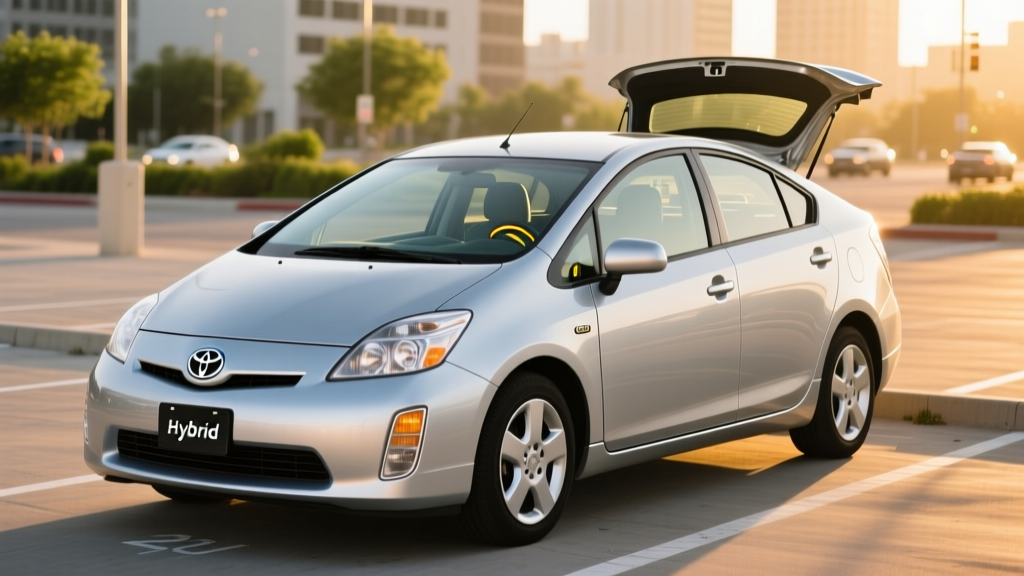
Before Tesla made electric vehicles mainstream, the 2002 Toyota Prius proved that a gasoline-electric hybrid could be practical, reliable, and efficient. As the first-generation Prius (model code NHW11) sold in the United States, the 2002 model established the blueprint that every modern hybrid follows: pair a small Atkinson-cycle gasoline engine with an electric motor, capture energy through regenerative braking, and let a computer seamlessly manage the power split.
If you're researching the 2002 Toyota Prius hybrid today, you're likely considering a used purchase, evaluating its long-term reliability, or comparing it to modern hybrids and full EVs. This guide covers the exact EPA fuel economy figures, the real-world ownership experience, battery longevity data, and where this pioneering hybrid fits in the 2026 automotive landscape.
EPA Fuel Economy: How Many MPG Does the 2002 Prius Get?
The 2002 Toyota Prius carries official EPA fuel economy ratings that remain competitive with many modern compact cars. According to fueleconomy.gov, the ratings break down as follows:
| Metric | MPG |
|---|---|
| City | 52 MPG |
| Highway | 45 MPG |
| Combined | 48 MPG |
Note on the 2008 EPA revision: In 2008, the EPA revised its testing methodology to better reflect real-world driving conditions (including air conditioning use, cold starts, and higher speeds). Under the original pre-2008 testing, the 2002 Prius was rated at 52 city / 45 highway. When re-evaluated under the modern EPA cycle, many early Prius models see adjusted figures closer to 42 city / 38 highway, with a combined rating near 41 MPG. This is the figure most comparable to current hybrid EPA stickers.
Real-World MPG vs. EPA Estimates
Hybrid vehicles, including the 2002 Prius, often exceed their EPA city estimates in real-world stop-and-go driving. The electric motor handles low-speed propulsion where gasoline engines are least efficient, and regenerative braking recaptures energy that would otherwise be lost as heat.
Owner-reported data from hybrid forums and fuel-tracking platforms consistently shows the 2002 Prius averaging 40–45 MPG combined in mixed driving. Drivers who do predominantly city commuting at moderate speeds sometimes report figures above 48 MPG. Highway-heavy driving at 70+ MPH typically drops efficiency to 38–42 MPG, as aerodynamic drag increases and the gasoline engine carries more of the load.
EPA Combined (revised): ~41 MPG | Real-world mixed driving: 40–45 MPG | City-dominant: 45–50 MPG | Highway-dominant (70+ MPH): 38–42 MPG
Powertrain Specs: Engine, Motor, and Combined Output
The 2002 Prius uses Toyota's Hybrid Synergy Drive system — a series-parallel hybrid architecture that can operate on the gasoline engine alone, the electric motor alone, or both simultaneously. Here are the precise specifications:
| Component | Specification |
|---|---|
| Gasoline Engine | 1.5L inline-4, Atkinson cycle (1NZ-FXE) |
| Engine Power | 70 HP @ 4,500 RPM |
| Engine Torque | 82 lb-ft @ 4,200 RPM |
| Electric Motor | Permanent magnet synchronous |
| Motor Power | 44 HP (33 kW) |
| Motor Torque | 258 lb-ft |
| Combined System Output | ~100 HP (net) |
| Transmission | Planetary gearset (e-CVT, no fixed gears) |
| Drivetrain | Front-wheel drive |
| 0-60 MPH | ~12.5 seconds |
The Atkinson-cycle engine sacrifices low-RPM torque in exchange for superior thermal efficiency. The electric motor fills the torque gap at low speeds, providing strong initial acceleration despite the modest combined horsepower. The planetary gearset — Toyota's e-CVT — has no traditional gears or belts; it continuously varies the ratio between engine and motor output, which is why the Prius delivers its characteristic smooth, drone-like acceleration.
HEV vs. PHEV: The 2002 Prius Is a Conventional Hybrid
The 2002 Toyota Prius is a conventional hybrid electric vehicle (HEV). It cannot be plugged in. The small nickel-metal hydride (NiMH) battery pack charges exclusively through regenerative braking and the gasoline engine. The electric motor assists during acceleration and enables brief electric-only operation at very low speeds (typically under 25 MPH for short distances), but there is no meaningful electric-only range.
| Feature | HEV (2002 Prius) | PHEV (e.g., Prius Prime) |
|---|---|---|
| Plugs In? | No | Yes |
| Battery Size | ~1.3 kWh (NiMH) | 13.6 kWh (lithium-ion, 2023+ Prime) |
| Electric-Only Range | Negligible (<1 mi at low speed) | 44 miles (2024 Prius Prime) |
| Gasoline Engine | Yes | Yes |
| Regenerative Braking | Yes | Yes |
| Federal Tax Credit (§30D) | No | Potentially (if eligible) |
| Requires Home Charging | No | Recommended for full benefit |
If you need electric-only commuting capability, you'd want a plug-in hybrid like the current-generation Toyota Prius Prime, which offers 44 miles of EPA-rated electric range before the gasoline engine engages. The 2002 Prius offers no such capability — it's purely a fuel-efficiency play.
Battery Life, Warranty, and Replacement Cost
Hybrid battery longevity is the number-one concern for anyone buying a used 2002 Toyota Prius. The original NiMH battery pack was warrantied for 8 years / 100,000 miles (10 years / 150,000 miles in California Air Resources Board states). Naturally, every original battery is now well past its warranty period.
- Chemistry: Nickel-Metal Hydride (NiMH)
- Capacity: ~1.3 kWh (nominal)
- Original Warranty: 8 yr / 100,000 mi (10 yr / 150,000 mi in CARB states)
- Typical Lifespan: 150,000–200,000+ miles with proper use
- Replacement Cost (2026): $1,500–$2,500 for a refurbished pack; $2,500–$3,500 for a new OEM pack
What Happens When the Battery Degrades?
Unlike a full EV where battery degradation directly reduces range, a degraded hybrid battery in the 2002 Prius primarily affects fuel economy and performance. As the NiMH pack loses capacity over time, the gasoline engine runs more frequently to compensate, dropping MPG from the 40s into the mid-30s. You'll also notice reduced regenerative braking effectiveness and more frequent engine cycling at stops.
The good news: the 2002 Prius will continue to drive even with a significantly degraded battery. It won't strand you — it just becomes a less efficient, slightly sluggish compact car. Many owners report original batteries lasting 200,000+ miles, though individual results depend heavily on climate (extreme heat accelerates NiMH degradation) and driving patterns.
Battery Replacement Options in 2026
If you're buying a 2002 Prius today, budget for a battery replacement if the current pack hasn't been recently serviced:
- Refurbished/reconditioned pack: $1,500–$2,500 installed. Independent hybrid specialists replace failed individual cells within the existing pack housing. This is the most common route for a vehicle of this age.
- New OEM Toyota pack: $2,500–$3,500 installed. Availability may be limited for the first-generation Prius as Toyota phases out parts support for 20+ year-old models.
- Aftermarket lithium-ion conversion: Some specialty shops offer modern Li-ion replacements with improved capacity and longevity, typically $2,000–$3,000.
Pricing and Tax Credit Eligibility
The 2002 Toyota Prius is available only on the used market. As of 2026, typical pricing ranges from $2,000 to $5,500 depending on mileage, condition, and battery health. Well-maintained examples under 100,000 miles command a premium.
Does the 2002 Prius Qualify for Any Tax Credit?
No. The 2002 Toyota Prius does not qualify for the federal §30D new clean vehicle credit, which applies only to new vehicles meeting specific MSRP caps, buyer income limits, and battery-sourcing requirements outlined by the IRS. The original hybrid vehicle tax credit that existed when the Prius was new expired for Toyota vehicles in 2007 after the manufacturer hit the 60,000-unit phase-out cap.
For used EV and PHEV purchases, the §25E used clean vehicle credit (up to $4,000 or 30% of the sale price, whichever is less) requires the vehicle to be a qualified plug-in electric vehicle or fuel cell vehicle. The 2002 Prius is a conventional HEV with no plug-in capability, so it does not qualify for this credit either.
Some states and local utilities offer incentives for hybrid purchases, but these vary by jurisdiction. Check your state's energy office or utility provider for current programs.
Reliability and Long-Term Ownership
The 2002 Toyota Prius earned a reputation for exceptional reliability that helped establish consumer trust in hybrid technology. The planetary e-CVT transmission has no belts, clutches, or traditional wear components — it's one of the most durable transmissions Toyota has ever built. The 1NZ-FXE engine is under-stressed and conservatively tuned, contributing to longevity well past 250,000 miles with basic maintenance.
Pros
- Proven 40+ MPG combined real-world fuel economy
- Exceptional powertrain durability (e-CVT, Atkinson-cycle engine)
- Low annual maintenance costs (no timing belt; chain-driven)
- Strong regenerative braking extends brake pad life significantly
- Low purchase price on the used market ($2,000–$5,500)
- No plug-in charging required — ideal for apartment dwellers
Cons
- Slow acceleration (0-60 in ~12.5 seconds)
- Tight rear seat and limited cargo space vs. modern hybrids
- NiMH battery likely needs replacement if original
- Outdated infotainment — no Bluetooth, USB, or backup camera
- No federal or state tax credit eligibility
- Safety equipment is minimal by modern standards (no ESC on all trims)
Common Issues to Watch
- Hybrid battery degradation: The primary expense. Check for dashboard warning lights and monitor real-world MPG vs. the 41 MPG combined baseline.
- 12V auxiliary battery: Located in the trunk, this standard lead-acid battery powers electronics and must be in good condition for the hybrid system to boot.
- Inverter coolant pump: A known wear item. Failure can cause the hybrid system to overheat and shut down.
- Steering rack: Some first-generation Prius owners report premature wear. Listen for clunking at low speeds.
2002 Prius vs. Modern Hybrids and Full EVs: Which Should You Choose?
The automotive landscape has transformed dramatically since 2002. Here's how the original Prius compares to current options:
| Vehicle | Type | Combined MPG / MPGe | Electric-Only Range | Starting Price |
|---|---|---|---|---|
| 2002 Toyota Prius | HEV | ~41 MPG (revised) | None | $2,000–$5,500 (used) |
| 2026 Toyota Prius LE | HEV | 57 MPG | None | ~$29,500 |
| 2026 Toyota Prius Prime | PHEV | 52 MPG + 127 MPGe | 44 miles | ~$34,000 |
| 2026 Hyundai Elantra Hybrid | HEV | 54 MPG | None | ~$30,000 |
| 2026 Chevrolet Equinox EV | BEV | 113 MPGe | 319 miles | ~$33,000 |
Decision Framework
- You need the lowest-cost entry into hybrid ownership (under $5,000)
- You want proven, simple hybrid tech with no plug-in requirement
- Your daily commute is short-to-moderate and city-heavy
- You're comfortable with older safety tech and no modern infotainment
- You want 55+ MPG with current safety features (AEB, lane-keeping, adaptive cruise)
- You plan to keep the vehicle 8+ years and want a full warranty
- You can charge at home and want 40+ miles of electric commuting
- You want to eliminate most gasoline use without range anxiety on road trips
- You have reliable home or workplace Level 2 charging
- You want zero tailpipe emissions and minimal maintenance
- Your typical trips fall within 200–300 miles or you're willing to plan DC fast-charging stops
Frequently Asked Questions
How many MPG does the 2002 Toyota Prius hybrid get?
The 2002 Prius is rated at 52 city / 45 highway / 48 combined under the original EPA testing methodology. Under the revised 2008+ EPA cycle, the comparable figures are approximately 42 city / 38 highway / 41 combined. Real-world owners typically report 40–45 MPG in mixed driving, with city-dominant routes sometimes yielding 48+ MPG.
Does the 2002 Toyota Prius need to be plugged in?
No. The 2002 Prius is a conventional hybrid (HEV), not a plug-in hybrid. The battery charges through regenerative braking and the gasoline engine. There is no charging port and no electric-only driving range of any practical significance.
Is the 2002 Prius hybrid battery reliable, and what does replacement cost?
The original NiMH battery typically lasts 150,000–200,000+ miles. Given the vehicle's age, most surviving examples have had a battery replacement or will need one soon. A refurbished pack costs $1,500–$2,500 installed; a new OEM pack runs $2,500–$3,500. The powertrain itself (engine, e-CVT) is exceptionally durable.
Does the 2002 Toyota Prius qualify for any federal tax credit?
No. The 2002 Prius does not qualify for the §30D new vehicle credit or the §25E used clean vehicle credit. The §30D credit applies to new qualifying plug-in vehicles, and the §25E credit requires a plug-in electric or fuel cell vehicle. The 2002 Prius is a conventional hybrid with no plug-in capability.
Is the 2002 Prius a good car to buy in 2026?
It can be an excellent ultra-budget commuter if you accept its limitations: slow acceleration, outdated safety features, no modern infotainment, and a likely battery replacement expense. At $2,000–$5,500, it's one of the cheapest ways to access 40+ MPG fuel economy. However, a modern hybrid like the 2026 Prius LE offers 57 MPG, comprehensive safety tech, and a full warranty for ~$29,500 — making it a better long-term investment if your budget allows.
How does the 2002 Prius compare to the current Prius?
The current-generation Toyota Prius (redesigned for 2023) produces 194 HP (vs. ~100 HP in 2002), achieves 57 MPG combined (vs. ~41 revised), accelerates to 60 MPH in 7.2 seconds (vs. ~12.5 seconds), and includes modern safety features like automatic emergency braking, lane-keeping assist, and adaptive cruise control. The efficiency gap has widened significantly thanks to advances in battery chemistry, motor design, and aerodynamics.