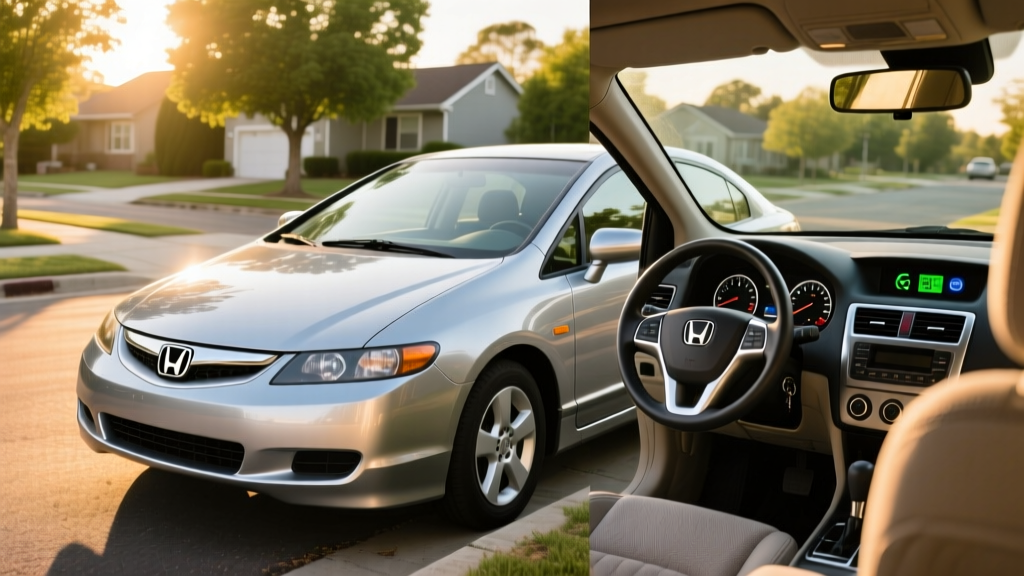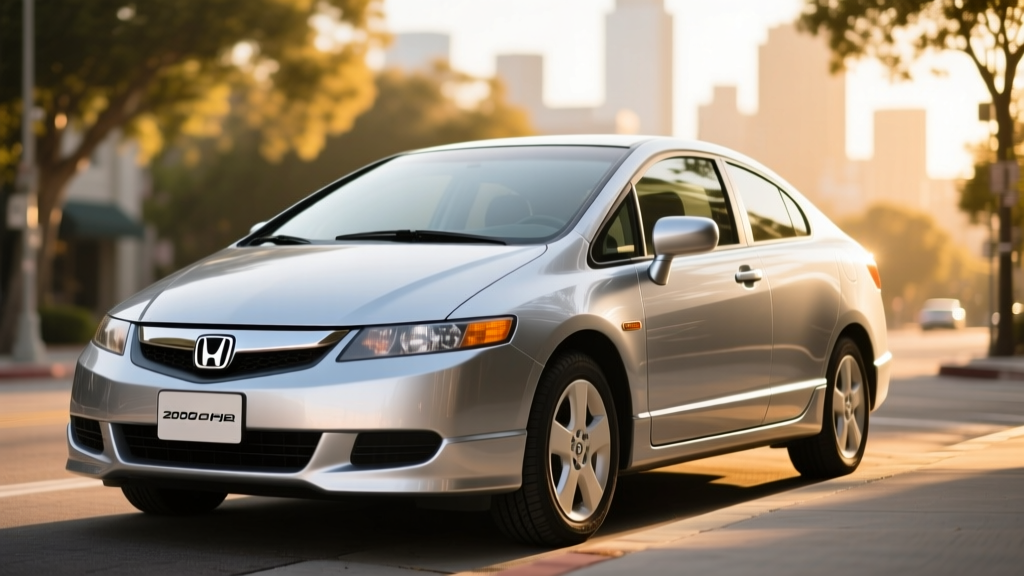
Before the Toyota Prius became a cultural icon, before plug-in hybrids and 300-mile EVs, there was the 2000 Honda Insight. Launched in December 1999 as a 2000 model year, the first-generation Insight was the first mass-produced gasoline-electric hybrid sold in the United States. Its jaw-dropping EPA rating of 70 MPG on the highway (under the pre-2008 testing cycle) made it the most fuel-efficient car America had ever seen. More than two decades later, this two-seat, aluminum-bodied hatchback remains a landmark in electrified vehicle history — and a surprisingly viable ultra-commuter for enthusiasts willing to maintain a 25-year-old hybrid.
In this guide, we break down what makes the 2000 Honda Insight hybrid tick, its real-world fuel economy, the state of its nickel-metal hydride (NiMH) battery in 2026, and whether this pioneer still earns a spot in your garage.
HEV vs PHEV vs EV: Where the 2000 Insight Fits
The 2000 Honda Insight is a conventional hybrid electric vehicle (HEV). It cannot be plugged in. Its small battery pack recharges exclusively through regenerative braking and the gasoline engine. This is a critical distinction from modern plug-in hybrids (PHEVs) like the Toyota Prius Prime, which offer 25–45 miles of electric-only range before the engine kicks in, and from battery electric vehicles (BEVs) like the Chevrolet Equinox EV, which use no gasoline at all.
| Feature | 2000 Honda Insight (HEV) | 2026 Toyota Prius Prime (PHEV) | 2026 Chevrolet Equinox EV (BEV) |
|---|---|---|---|
| Plug-in Charging | No — self-charging | Yes — Level 1/2 AC | Yes — Level 2 AC + DC fast |
| Electric-Only Range | 0 miles (motor always assists engine) | ~44 miles | ~319 miles (EPA) |
| Battery Capacity | ~0.65 kWh (NiMH, usable fraction) | 13.6 kWh (lithium-ion) | 85 kWh (NMC lithium-ion) |
| EPA Combined Efficiency | ~63 MPG (original rating) | 52 MPG + 127 MPGe | 115 MPGe (3.0 kWh/mi) |
| Fuel Required | Regular unleaded | Regular unleaded | None |
| Tax Credit (§30D) | None (discontinued, no credit) | Up to $3,750 (income/MSRP rules apply) | Up to $7,500 (income/sourcing rules apply) |
The Insight's Integrated Motor Assist (IMA) system was designed for a single purpose: squeeze maximum miles from every drop of gasoline. It was never intended to drive on electric power alone — a concept that wouldn't reach consumers until the Chevrolet Volt arrived a decade later.
Powertrain: Honda's Integrated Motor Assist (IMA) System
The 2000 Insight pairs a tiny 1.0-liter three-cylinder gasoline engine (67 horsepower at 5,700 rpm) with a 10-kilowatt (13 hp) electric motor mounted directly on the crankshaft. Combined output is approximately 73 horsepower and 92 lb-ft of torque. The electric motor provides assist during acceleration and captures energy during braking, but it cannot propel the car independently.
Key IMA characteristics:
- Engine: 999 cc SOHC 12-valve inline-3 with VTEC, lean-burn capable
- Motor: 10 kW brushless DC, ultra-thin (60 mm) pancake design
- Transmission: 5-speed manual (primary) or CVT (introduced for later model years on the first-gen platform)
- Curb weight: ~1,850 lbs — achieved through an aluminum body and frame, making it roughly 600 lbs lighter than a contemporary Civic
- 0–60 mph: ~11 seconds (manual) — leisurely, but adequate for its commuter mission
The Insight's lean-burn engine could run at air-fuel ratios as lean as 25:1 under light-load cruising, a key contributor to its extraordinary highway economy. Honda's lean-burn technology was later abandoned in the U.S. market due to NOx emissions challenges under stricter standards.
Fuel Economy: EPA Ratings and Real-World MPG
| Cycle | City | Highway | Combined |
|---|---|---|---|
| Original EPA (pre-2008 methodology) | 61 MPG | 70 MPG | 63 MPG |
| Revised EPA (2008+ methodology, retroactive estimate) | ~49 MPG | ~61 MPG | ~53 MPG |
| Real-World Owner Reports (2020s, aging battery) | 40–55 MPG | 50–65 MPG | 45–60 MPG |
The EPA's fueleconomy.gov database reflects the Insight's original ratings, but it's important to understand that the EPA revised its testing methodology in 2008 to better reflect real-world driving (higher speeds, air conditioning use, colder temperatures). Under the revised cycle, the Insight's numbers drop but remain exceptional for a gasoline vehicle.
The Insight's 10.6-gallon fuel tank yields a real-world range of roughly 500–630 miles between fill-ups — a figure that still competes with modern long-range EVs on total distance, albeit with stops at gas stations instead of chargers.
Battery Health, Warranty, and Replacement in 2026
The 2000 Insight uses a nickel-metal hydride (NiMH) battery pack located behind the seats. The pack consists of 120 D-cell-sized cells in a single stick configuration, with a nominal voltage of 144V and a total capacity of approximately 6.5 Ah (~0.65 kWh usable). This is tiny by modern standards — the Toyota Prius Prime's pack holds over 20 times the energy — but it's all the IMA system needs for assist and regen.
Battery Replacement Options and Costs
IMA battery failure is the single biggest ownership concern for any first-generation Insight. Symptoms include reduced MPG, IMA warning lights, and the battery gauge refusing to hold charge. Options in 2026 include:
- OEM-style NiMH replacement: ~$1,800–$2,500 (parts + labor at a hybrid specialist). New-old-stock Honda packs are essentially unavailable.
- Aftermarket NiMH rebuild: ~$1,200–$1,800. Several specialist shops rebuild packs with fresh cells.
- Lithium conversion (enthusiast): ~$2,500–$4,000. A growing community of Insight owners has adapted lithium iron phosphate (LiFePO4/LFP) cells, gaining weight savings and longer cycle life, but this requires custom electronics and is not street-legal in all jurisdictions without certification.
- Used/salvage pack: ~$300–$600. High risk — you're buying another 20-year-old battery with unknown history.
For context, a modern hybrid battery replacement (e.g., a 2026 Prius) runs $2,000–$3,500 at a dealer, so the Insight's costs are comparable despite its age — though the availability of parts is far more limited.
Will the Battery Last?
NiMH batteries degrade primarily from heat, deep cycling, and calendar age. A well-maintained replacement pack driven in moderate climates can reasonably last 8–12 years or 100,000–150,000 miles. Owners in hot climates (Arizona, Texas) should expect shorter lifespans. Grid charging (using an aftermarket NiMH grid charger to balance cells periodically) can extend pack life significantly — a practice well-documented in the InsightCentral enthusiast community.
Reliability and Long-Term Ownership
Beyond the IMA battery, the first-generation Insight is mechanically simple and robust. The 1.0L three-cylinder engine is under-stressed and can exceed 200,000 miles with basic maintenance. The manual transmission is durable. The aluminum body resists rust better than steel, though suspension bushings, engine mounts, and CV joints are wear items on any 25-year-old car.
Common issues to inspect on a 2000 Insight in 2026:
- IMA battery health: Check for recalibration events (battery gauge drops and recharges frequently). A healthy pack holds charge under load.
- 12V auxiliary battery: Like all hybrids, the Insight has a conventional 12V battery for accessories. If it dies, the car won't start — even if the IMA pack is full.
- Lean-burn O2 sensor: The Insight uses a specialized wideband oxygen sensor for lean-burn operation. Failure triggers a check engine light and disables lean-burn, dropping MPG by 10–15%.
- A/C compressor: Electrically driven; expensive to replace if failed (~$800–$1,200).
- Catalytic converter: Original cats may be degraded after 25 years; replacement runs $400–$800 for an aftermarket unit.
Pricing and Tax Credit Eligibility
The 2000 Honda Insight is long discontinued (first generation ended in 2006; a second-generation Insight ran 2010–2014 as a five-seat Prius competitor). In 2026, first-generation Insights trade primarily as enthusiast and collector vehicles:
| Condition | Approximate Price (2026) |
|---|---|
| Project car / non-running IMA | $1,500–$3,000 |
| Driver-quality, functioning IMA | $4,000–$7,000 |
| Excellent / low miles (<60k) | $8,000–$15,000 |
| Concours / museum-quality | $15,000–$25,000+ |
Federal Tax Credits
The 2000 Insight does not qualify for any current federal tax credit. The IRS §30D Clean Vehicle Credit applies only to new qualifying plug-in vehicles (BEVs and PHEVs) meeting battery sourcing, MSRP cap ($55,000 sedans / $80,000 SUVs and trucks), and buyer income limits. The used-EV credit (§25E, up to $4,000) requires a plug-in vehicle — conventional hybrids like the Insight are excluded. Some states historically offered hybrid incentives, but virtually all have expired or shifted to plug-in vehicles.
For current credit rules, consult the IRS Clean Vehicle Credits page.
Who Should Choose the 2000 Insight — and Who Shouldn't
Choose the 2000 Honda Insight hybrid if:
- You want a unique, historically significant ultra-efficient commuter
- You're mechanically inclined or have access to a hybrid specialist
- Your priority is maximum MPG from a gasoline car with zero plug-in infrastructure needs
- You value lightweight, analog driving feel over modern tech
- You're adding to a hybrid/EV collection
Look at a modern PHEV or EV instead if:
- You want warranty coverage and dealer support
- You need more than two seats
- Safety features (airbags beyond the front pair, ABS, stability control, crash-test ratings) are priorities
- You want electric-only driving for short commutes (PHEV) or zero tailpipe emissions (EV)
- You want a tax credit — modern PHEVs like the Prius Prime or BEVs like the Equinox EV qualify under §30D
- 50–65 MPG real-world — still among the most efficient gasoline cars ever made
- Ultra-light (1,850 lbs) — minimal tire and brake wear
- Simple mechanics — DIY-friendly for enthusiasts
- Aluminum body resists corrosion
- Rising collector interest; values appreciating for clean examples
- No plug-in charging required — works anywhere with a gas pump
- Only two seats; minimal cargo space (~14 cu ft)
- No modern safety features (no side airbags, no ESC, no backup camera)
- IMA battery replacement is expensive and parts are scarce
- Slow (0–60 in ~11 seconds); highway merging requires planning
- No tax credit eligibility
- Lean-burn O2 sensor is proprietary and costly
FAQ: 2000 Honda Insight Hybrid
How many MPG does the 2000 Honda Insight hybrid get?
Under its original EPA rating, the 2000 Insight achieved 61 city / 70 highway / 63 combined MPG. Under the revised 2008+ EPA methodology, estimates drop to roughly 49/61/53. Real-world owners in the 2020s with a healthy IMA battery report 45–60 MPG combined, depending on driving style and battery condition. City driving tends to yield higher MPG in hybrids because regenerative braking recaptures energy that gasoline-only cars waste as heat.
Does the 2000 Honda Insight need to be plugged in?
No. The 2000 Insight is a conventional hybrid (HEV), not a plug-in hybrid (PHEV). Its NiMH battery charges exclusively through regenerative braking and the gasoline engine. You simply fill the 10.6-gallon tank with regular unleaded and drive.
How far can the 2000 Insight go on electric power alone?
Zero miles. The IMA system's electric motor is designed to assist the gasoline engine, not to drive the car independently. The motor provides up to 10 kW (13 hp) of additional torque during acceleration and recovers energy during deceleration, but the gasoline engine is always running when the car is moving (except at idle-stop, where the engine shuts off at a standstill and restarts instantly when you release the clutch).
Is the 2000 Insight reliable, and what does a battery replacement cost?
Mechanically, the Insight is quite reliable — the 1.0L engine and manual transmission are simple and durable. The primary reliability concern is the IMA battery, which is now 25+ years old on original packs. A replacement NiMH pack costs $1,200–$2,500 depending on source (aftermarket rebuild vs. specialist install). Lithium conversions run $2,500–$4,000 but offer longer life and lighter weight. With a healthy battery, the car is dependable for daily use.
Does the 2000 Honda Insight qualify for any tax credit?
No. Federal §30D and §25E clean vehicle credits apply only to plug-in vehicles (BEVs and PHEVs). The Insight is a conventional hybrid and is not eligible for any current federal incentive. State-level hybrid incentives have largely expired or shifted to plug-in vehicles. Consult IRS.gov for current credit rules.
Hybrid vs PHEV vs EV — which should I buy in 2026?
It depends on your driving pattern and charging access. A conventional hybrid (HEV) like the Insight or a modern Prius is ideal if you lack home charging and want maximum MPG with zero behavior change. A plug-in hybrid (PHEV) like the Prius Prime is ideal if you have home Level 2 charging and a short commute (under 40 miles) — you'll drive most days on electricity and use gas only for longer trips. A battery electric vehicle (BEV) is ideal if you want zero tailpipe emissions, have reliable charging access, and want the lowest per-mile fuel cost (~$0.04–$0.06/mile on home electricity vs. ~$0.12–$0.15/mile for gas in a hybrid).
What is the 2000 Insight's collector value in 2026?
Clean, low-mileage first-generation Insights (under 60,000 miles, functioning IMA, original paint) command $8,000–$15,000 on enthusiast auction platforms. Concours examples have touched $25,000+. Driver-quality cars with functional IMA trade in the $4,000–$7,000 range. Project cars with dead batteries sell for $1,500–$3,000. Values have been appreciating as the car gains recognition as the genesis of the modern hybrid movement.