The Hybrid That Started It All
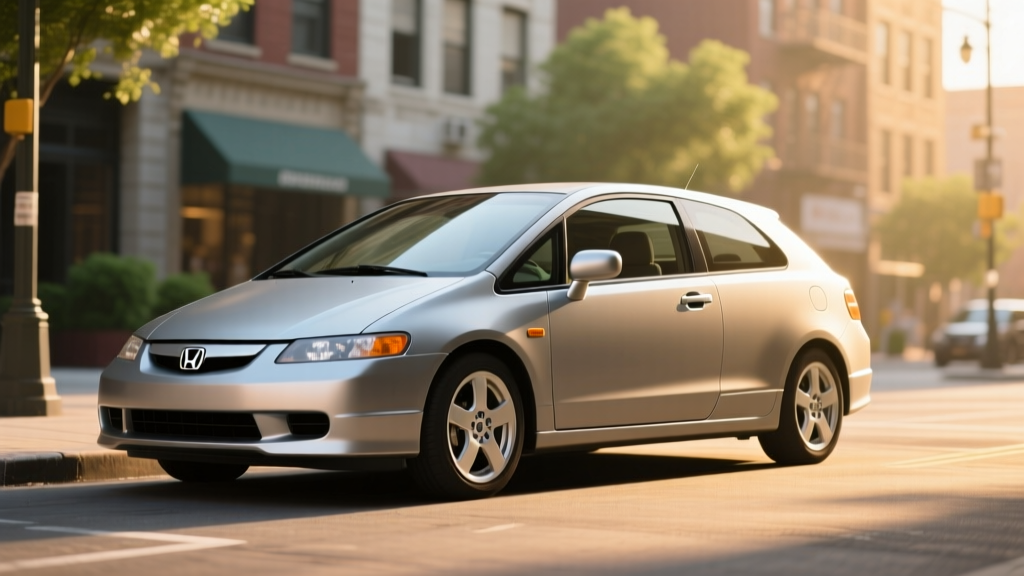
Before the Toyota Prius became a cultural icon, before plug-in hybrids and battery-electric vehicles dominated headlines, there was the 1999 Honda Insight. Launched in the United States in December 1999 as a 2000 model-year vehicle, the first-generation Insight was Honda's — and America's — introduction to what a mass-produced gasoline-electric hybrid could achieve. It arrived with an EPA-estimated 53 MPG city and 70 MPG highway (later revised under updated EPA testing methodology), figures that still rival many modern hybrids more than a quarter-century later.
The Insight was never a high-volume seller. Honda imported roughly 17,000 first-generation units (2000–2006 model years) into the U.S. market. But its engineering legacy is outsized: the Insight's Integrated Motor Assist (IMA) system proved that a parallel hybrid architecture could deliver extraordinary efficiency without exotic infrastructure. For collectors, hypermilers, and EV historians, the 1999 Honda Insight hybrid remains a fascinating artifact — and a surprisingly practical daily driver if you can find one.
1999 Honda Insight Hybrid: Full Specs at a Glance
| Specification | Value |
|---|---|
| Model Years (Gen 1) | 2000–2006 |
| Body Style | 2-door, 2-passenger coupe |
| Gasoline Engine | 1.0L 3-cylinder (67 hp @ 5,700 rpm) |
| Electric Motor (IMA) | 10 kW (13 hp), nickel-metal hydride (NiMH) |
| Combined System Output | 73 hp / 92 lb-ft torque |
| Transmission | 5-speed manual (standard) or CVT (2001+) |
| EPA MPG (Original Sticker) | 61 city / 70 highway / 64 combined (manual) |
| EPA MPG (Revised 2008+ Methodology) | 49 city / 61 highway / 53 combined (manual) |
| Fuel Tank | 10.6 gallons |
| Total Range | ~560–640 miles (revised/orig estimates) |
| Curb Weight | ~1,850 lbs (manual) |
| 0–60 mph | ~10.5 seconds (manual) |
| Hybrid Battery | NiMH, ~6.5 kWh gross (144V, 120 cells) |
| Original MSRP | $18,987 (2000 model year) |
| Used Price Range (2026) | $3,500–$12,000 depending on condition/mileage |
Understanding the IMA Hybrid System: HEV, Not PHEV
The first-generation Insight is a conventional hybrid electric vehicle (HEV). It cannot be plugged in and has no electric-only driving range beyond momentary motor assist. This is a critical distinction for modern buyers comparing it to today's plug-in hybrids (PHEVs) like the Toyota RAV4 Prime or full battery-electric vehicles (BEVs) like the Tesla Model 3.
HEV vs PHEV vs BEV — Where the 1999 Insight Fits
| Feature | HEV (1999 Insight) | PHEV (e.g., RAV4 Prime) | BEV (e.g., Tesla Model 3) |
|---|---|---|---|
| Plug-in Charging | No | Yes | Yes |
| Electric-Only Range | 0 miles | 25–42 miles typical | 250–360+ miles |
| Gasoline Engine | Yes (primary) | Yes (backup) | No |
| Federal Tax Credit (§30D) | No (expired) | Up to $7,500 (if eligible) | Up to $7,500 (if eligible) |
| Regenerative Braking | Yes | Yes | Yes |
| Home Charging Required | No | Recommended | Essential |
The Insight's IMA system uses a thin 10-kilowatt electric motor sandwiched between the 1.0L three-cylinder engine and the transmission. The motor assists during acceleration (reducing engine load), enables idle stop (shutting the engine off at red lights), and captures energy during braking via regeneration. The gasoline engine remains the primary propulsion source at all times. There is no EV mode button, no plug, and no electric-only cruising.
Fuel Economy: EPA Numbers vs. Real-World Results
The 1999 Honda Insight hybrid's fuel economy is legendary, but the numbers require context. Honda's original EPA sticker listed 61 city / 70 highway / 64 combined MPG for the manual transmission model. In 2008, the EPA revised its testing methodology to better reflect real-world driving (higher speeds, air conditioning use, colder temperatures). Under the revised methodology, the Insight's ratings dropped to 49 city / 61 highway / 53 combined MPG.
| Driving Scenario | EPA Revised MPG | Real-World Expectation |
|---|---|---|
| City (stop-and-go) | 49 MPG | 50–58 MPG (regen excels here) |
| Highway (65–70 mph) | 61 MPG | 50–55 MPG (aero drag at speed) |
| Combined | 53 MPG | 48–55 MPG depending on driving style |
| Hypermiling (best-case) | N/A | 70–100+ MPG documented by enthusiasts |
| Cold Weather (<32°F) | N/A | 38–45 MPG (engine runs more for heat) |
The Insight's real-world advantage is in city driving, where frequent stops maximize regenerative braking and idle-stop fuel savings. On the highway, the tiny 1.0L engine works harder to maintain speed, and the two-seat coupe's low weight helps but doesn't fully overcome aerodynamic drag at 70+ mph. Hypermilers — drivers who use extreme efficiency techniques like pulse-and-glide, lean-burn cruising (on VTEC-E models), and minimal HVAC use — have documented 80–100+ MPG on specific routes. These are not reproducible in normal driving but demonstrate the platform's ceiling.
Key insight: Hybrids typically exceed their EPA city rating in stop-and-go traffic because regenerative braking recovers energy that gas-only cars waste as heat. The Insight is a textbook example — expect better-than-sticker numbers around town, worse on open highway at high speed.
Battery Longevity, Warranty, and Replacement Costs
Original Honda IMA Battery Warranty
Honda originally warranted the Insight's NiMH hybrid battery for 8 years / 80,000 miles (10 years / 150,000 miles in California-emissions states). That factory warranty has long expired for all 1999–2006 examples. In 2026, any Insight you purchase will be at least 20 years old, and battery condition is the single most important factor in the car's drivability.
The Insight's 144-volt NiMH pack consists of 120 individual D-cell-sized sub-cells arranged in a stick configuration. NiMH chemistry is robust but not immortal. Common failure modes include:
- Cell imbalance: Individual cells degrade at different rates, causing the battery management system (BMS) to limit charge/discharge to protect weak cells. This reduces available assist and regen, effectively neutering the hybrid system.
- Memory effect / voltage depression: Repeated shallow charge-discharge cycles (common in HEV use) can cause NiMH cells to lose usable capacity over time. Deep discharge-recharge conditioning can partially reverse this.
- Thermal degradation: Prolonged exposure to high ambient temperatures (common in Arizona, Texas) accelerates capacity loss.
| Battery Service Option | Cost Range (2026) | Notes |
|---|---|---|
| Dealer OEM replacement | $2,000–$3,500 | Limited availability; Honda discontinued production |
| Aftermarket refurbished pack | $1,000–$1,800 | Reconditioned cells from specialty shops (BumbleBee Batteries, etc.) |
| DIY cell replacement (grid charger + rebalancing) | $100–$400 | Requires technical skill; individual sub-cells replaced |
| Li-ion conversion (aftermarket) | $2,500–$4,000 | Lighter, more powerful; niche aftermarket support |
The most common and cost-effective solution in 2026 is a refurbished NiMH pack from a hybrid battery specialist, typically costing $1,200–$1,800 installed. Many Insight owners also invest in an aftermarket grid charger ($150–$300) to periodically balance and condition the pack, extending its life by years. A well-maintained IMA battery can deliver 150,000–200,000+ miles; neglected packs may fail before 100,000 miles.
According to fueleconomy.gov, the 2000 Honda Insight's combined energy equivalent remains competitive with many modern hybrids, a testament to the efficiency of its ultra-lightweight design.
Driving Experience and Powertrain Character
With 73 combined horsepower moving just 1,850 pounds, the Insight is slow by modern standards but not dangerously so. The 0–60 mph time of approximately 10.5 seconds (manual) is leisurely, but the electric motor's instant torque fill makes the car feel peppier around town than the horsepower figure suggests. The IMA system seamlessly blends engine and motor output — most drivers won't notice when the electric assist engages.
The manual transmission is the enthusiast's choice. Honda's five-speed is precise and light, and the Insight's lean-burn mode (available in certain low-load cruising conditions on manual models) can push instantaneous fuel economy above 80 MPG on flat roads at moderate speed. The continuously variable transmission (CVT), introduced for the 2001 model year, sacrifices some efficiency and engagement for convenience but remains a solid option for commuters.
Ride quality is firm but not harsh — the Insight's low weight and long wheelbase (relative to its overall length) give it surprisingly stable highway manners. The trade-off is road noise; insulation was sacrificed for weight savings. Cargo space behind the two seats is modest (approximately 15 cubic feet) but adequate for groceries or a weekend trip for two.
Tax Credits, Pricing, and Ownership Economics
The 1999 Honda Insight hybrid does not qualify for any federal tax credit in 2026. The IRS §30D Clean Vehicle Credit applies only to new qualifying plug-in electric vehicles (PHEVs and BEVs) and certain used EVs purchased from dealers. The Insight is a conventional HEV with no plug, and its age disqualifies it from the used-EV credit (which requires a model year at least two years older than the current calendar year and a plug-in powertrain). State-level incentives for hybrids have also largely expired or shifted to PHEV/BEV focus.
| Cost Factor | 1999 Insight (Used) | 2026 Toyota Prius (New HEV) | 2026 Toyota RAV4 Prime (PHEV) |
|---|---|---|---|
| Purchase Price | $3,500–$12,000 | $28,350–$36,000 | $43,690–$48,000 |
| Federal Tax Credit | $0 | $0 | Up to $7,500 (§30D, income/MSRP rules apply) |
| Annual Fuel Cost (12,000 mi) | ~$680 (53 MPG) | ~$640 (57 MPG) | ~$450 (94 MPGe combined) |
| Insurance (Annual Avg) | $800–$1,200 | $1,400–$1,800 | $1,600–$2,200 |
| Maintenance (Annual Avg) | $600–$1,200 (age-related) | $400–$600 | $500–$800 |
The Insight's ownership economics are driven by its low purchase price and strong fuel economy, offset by the reality of maintaining a 25-year-old vehicle. Parts availability is narrowing — Honda no longer produces many Insight-specific components — and the hybrid battery will likely need service during ownership. Budget $1,500–$2,500 in the first year for battery refurbishment, fluid changes, and deferred maintenance (brakes, suspension bushings, tires). After that, running costs are minimal.
For current federal tax credit rules on qualifying new and used plug-in vehicles, consult the IRS Clean Vehicle Credits page.
Reliability and Known Issues
The Insight's mechanical simplicity is an asset. The 1.0L three-cylinder engine (code ECA1) is under-stressed and can exceed 200,000 miles with basic maintenance. The IMA system has few moving parts. That said, age-related issues are the primary concern for any 2026 buyer:
- IMA battery degradation — Near-certain on original packs; budget for replacement or refurbishment.
- 12V auxiliary battery drain — The Insight's DC-DC converter charges the 12V from the IMA pack, but parasitic drain can kill the 12V if the car sits for weeks.
- Lean-burn NOx sensor (O2 sensor) failure — Specific to the Insight's lean-burn system; replacement sensors are increasingly scarce.
- CVT shudder (2001+ models) — Honda's early CVT fluid degrades; flush with genuine Honda CVT-F fluid at 30,000-mile intervals.
- Rear drum brake corrosion — Low regenerative braking force means the friction brakes do more work; inspect drums and shoes.
- A/C compressor clutch — Electrically driven; failures are uncommon but expensive due to parts scarcity.
Overall reliability is good for a vehicle of this age, provided the IMA system is healthy. The Insight has no timing belt (it uses a timing chain), and the simple electrical architecture means fewer failure points than modern vehicles. Enthusiast communities like InsightCentral.net provide extensive DIY repair documentation.
Who Should Buy the 1999 Honda Insight Hybrid?
Decision Framework
Choose the 1999 Insight if:
- You want maximum MPG for minimum purchase cost (under $10K).
- You're a hypermiler or efficiency enthusiast who values driver involvement (manual transmission).
- You want a lightweight, simple, repairable hybrid with strong enthusiast support.
- You're adding a second/third car for commuting and want ultra-low fuel costs.
- You appreciate automotive history and want the car that launched the hybrid era in America.
Choose a modern HEV (2026 Prius, Accord Hybrid) if:
- You need four doors, modern safety features (AEB, lane-keeping, blind-spot monitoring), and a warranty.
- You want reliability without age-related maintenance surprises.
- You need back seats for passengers or child car seats.
Choose a PHEV (RAV4 Prime, Prius Prime) if:
Choose a BEV (Model 3, Ioniq 6, Equinox EV) if:
- You have reliable home or workplace Level 2 charging and want zero tailpipe emissions.
- Your daily driving is under 250 miles and you want minimal maintenance (no oil changes, no spark plugs).
Frequently Asked Questions
How many MPG does the 1999 Honda Insight hybrid get?
Under the EPA's revised testing methodology (post-2008), the manual-transmission Insight is rated at 49 city / 61 highway / 53 combined MPG. Real-world results typically range from 48–58 MPG depending on driving style, with city driving yielding higher numbers thanks to regenerative braking. Original window stickers listed 61/70/64, but those figures used older, less realistic EPA test cycles.
Can you plug in the 1999 Honda Insight?
No. The Insight is a conventional hybrid (HEV), not a plug-in hybrid (PHEV). It charges its battery exclusively through regenerative braking and the gasoline engine. There is no charge port and no electric-only driving mode.
Is the 1999 Insight reliable, and what does a battery replacement cost?
Mechanically, the Insight is reliable — the 1.0L engine and IMA system are simple and under-stressed. The primary concern is the aging NiMH hybrid battery, which will likely need refurbishment ($1,000–$1,800) or replacement ($2,000–$3,500 OEM, if available) if it hasn't been serviced already. With a healthy battery, the car is dependable for daily use.
Does the 1999 Honda Insight qualify for any tax credit?
No. The federal §30D Clean Vehicle Credit applies only to qualifying plug-in vehicles (PHEVs and BEVs). The Insight is a conventional HEV with no plug and does not qualify for any current federal or typical state incentive. See IRS.gov for current credit rules.
Is the 1999 Insight safe by modern standards?
No. The Insight predates modern crash-test protocols and lacks stability control, side-curtain airbags, anti-lock brakes (on some trims), and any driver-assistance features. It earned acceptable ratings in its era but would perform poorly in current IIHS or NHTSA testing. It is best suited as a secondary vehicle, a collector car, or a commuter for low-speed, low-traffic routes.
Where can I find parts and support for a first-gen Insight?
Honda dealers can still source some mechanical parts (filters, brake components, engine gaskets), but Insight-specific hybrid components (IMA battery, lean-burn sensors) are increasingly dealer-NLA (no longer available). Specialty hybrid battery shops (BumbleBee Batteries, Hybrid Automotive) and online enthusiast forums remain the best resources for IMA-specific parts and repair guidance.