Quick Verdict: An Early Hybrid Pioneer Showing Its Age
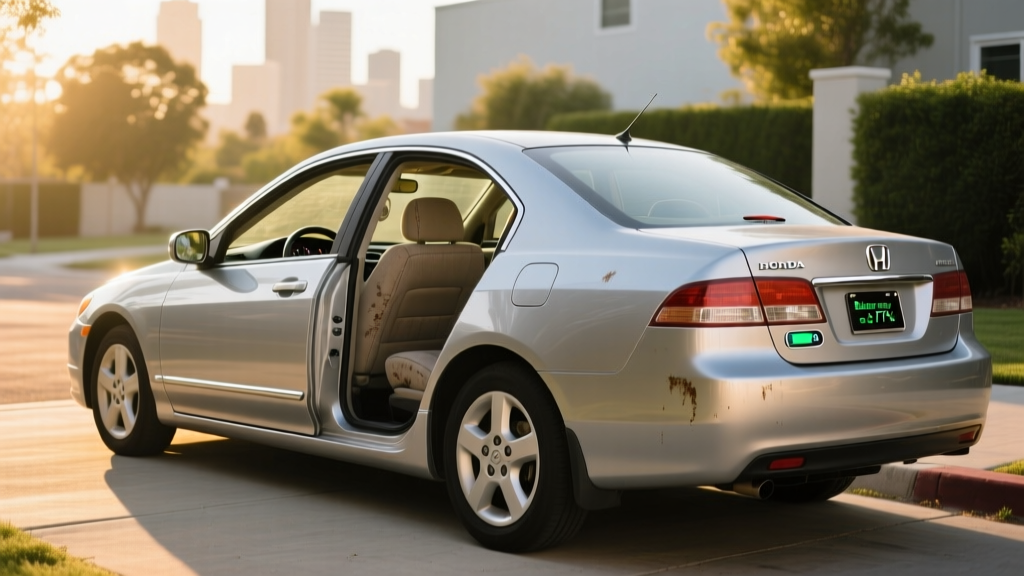
The 2006 Honda Accord Hybrid was one of the first mainstream V6 sedans to pair an electric motor with a gasoline engine, using Honda's Integrated Motor Assist (IMA) system. Nearly two decades later, it remains a curiosity on the used market — a vehicle that demonstrated hybrid efficiency gains but fell short of the Toyota Camry Hybrid's fuel economy and long-term battery durability. If you're researching the 06 Honda Accord Hybrid today, you're likely evaluating a high-mileage used example or considering it as a budget commuter. Here's the full data-driven breakdown of what to expect.
| Spec | Value |
|---|---|
| Powertrain | 3.0L V6 + IMA electric motor |
| Combined Horsepower | 255 hp @ 6,000 rpm |
| Combined Torque | 232 lb-ft @ 5,000 rpm |
| Transmission | 5-speed automatic |
| EPA City MPG | 28 mpg |
| EPA Highway MPG | 35 mpg |
| EPA Combined MPG | 31 mpg |
| IMA Battery Type | NiMH (Nickel-Metal Hydride) |
| IMA Battery Capacity | ~0.5 kWh (nominal) |
| Battery Warranty (Original) | 8 years / 80,000 miles (10 yr/150k in CARB states) |
| Drivetrain | Front-wheel drive |
| 0–60 mph (est.) | ~7.2 seconds |
| Original MSRP | ~$30,140 |
| Used Price Range (2026) | $2,500–$5,500 |
Fuel Economy: EPA Ratings vs. Real-World MPG
The 2006 Accord Hybrid's EPA-estimated fuel economy is 28 city / 35 highway / 31 combined mpg, according to fueleconomy.gov. For context, the conventional 2006 Accord V6 was rated at 21/30/24 mpg — meaning the hybrid delivered roughly a 29% improvement in combined efficiency.
| Vehicle | City | Highway | Combined |
|---|---|---|---|
| 2006 Honda Accord Hybrid (V6) | 28 | 35 | 31 |
| 2006 Honda Accord V6 (gas) | 21 | 30 | 24 |
| 2006 Toyota Camry Hybrid (I4) | 33 | 38 | 35 |
| 2006 Toyota Prius (I4) | 48 | 45 | 46 |
Real-World MPG Expectations
Honda's IMA system was notably different from Toyota's Hybrid Synergy Drive. The IMA motor was sandwiched between the engine and transmission, providing assist during acceleration and enabling regenerative braking — but it could not drive the car on electric power alone at any meaningful speed. The V6 also featured Honda's Variable Cylinder Management (VCM), which shut down three cylinders under light load to save fuel.
In real-world ownership, drivers report a wide spread:
- City driving with a healthy battery: 26–30 mpg (slightly below EPA, as the IMA system's stop-start and assist features are less impactful than Toyota's full hybrid system in stop-and-go traffic)
- Highway cruising: 32–37 mpg (VCM cylinder deactivation helps here; some owners report matching or slightly exceeding the EPA highway estimate on flat terrain)
- With a degraded IMA battery: 22–26 mpg combined. Once the NiMH pack loses capacity — common after 120,000+ miles — the electric assist diminishes, and the V6 carries the full load. Fuel economy drops noticeably.
Many owners on fuel-tracking sites report lifetime averages in the 25–28 mpg combined range, which falls short of the EPA sticker. This is a pattern with early Honda IMA systems: the real-world advantage over the conventional V6 was meaningful but smaller than the EPA numbers suggested.
Hybrid vs. Plug-In Hybrid vs. EV: Where the 2006 Accord Fits
The 2006 Honda Accord Hybrid is a conventional hybrid (HEV) — not a plug-in hybrid (PHEV) and not a battery electric vehicle (BEV). Understanding this distinction is essential before purchase.
| Feature | HEV (this car) | PHEV | BEV (Full EV) |
|---|---|---|---|
| Plug-in charging? | No — gas only | Yes — plug in for electric range | Yes — plug in only |
| Electric-only driving | None (motor assists only) | 20–50 mi typical | 200–400+ mi |
| Battery size | ~0.5 kWh | 8–25 kWh | 50–120 kWh |
| Gas engine? | Yes (primary power) | Yes (backup) | No |
| Home charging needed? | No | Recommended | Required |
| Federal tax credit (new)? | No | Up to $7,500 (§30D) | Up to $7,500 (§30D) |
The 06 Accord Hybrid's IMA battery stores roughly 0.5 kWh — enough to provide torque assist during acceleration and capture energy during braking, but not enough to propel the car without the gasoline engine. You never plug this vehicle in. It runs entirely on gasoline, with the electric system operating autonomously to improve efficiency.
IMA Battery Lifespan, Reliability, and Replacement Costs
This is the single most important factor when evaluating any 2006 Honda Accord Hybrid in 2026. The original NiMH IMA battery pack is now 20 years old. Honda's original hybrid battery warranty was 8 years/80,000 miles (extended to 10 years/150,000 miles in California Air Resources Board states). That warranty has long since expired on every example on the road.
Battery Replacement Reality: The IMA battery in the 2006 Accord Hybrid typically begins showing degradation between 100,000 and 150,000 miles. Common failure signs include the IMA warning light on the dash, reduced fuel economy, and loss of electric assist. Replacement options in 2026:
- OEM replacement (Honda dealer): $2,000–$3,500 (parts + labor) — though OEM availability is increasingly limited for this model year
- Aftermarket/remanufactured pack: $1,000–$2,000 from suppliers like BumbleBee Batteries or Green Tech Automotive
- Used/salvage pack: $300–$700 — risky, as the donor battery may be similarly aged and degraded
- IMA bypass/disable: Some owners disconnect the IMA system entirely and drive the car as a conventional V6. This eliminates the hybrid benefit and may trigger a check-engine light, but avoids the replacement cost.
Is the 2006 Accord Hybrid Reliable?
The 7th-generation Accord platform (2003–2007) is broadly regarded as mechanically solid — the V6 engine and 5-speed automatic are durable if maintained. However, the IMA system introduces specific failure points:
- IMA battery degradation: Near-universal at this age. Budget for a replacement or bypass.
- IMA motor: Generally reliable; failures are rare but expensive if they occur.
- VCM-related oil consumption: The cylinder-deactivation system can cause uneven wear and increased oil consumption at high mileage. Some owners report burning 1 quart per 1,000–2,000 miles after 150,000 miles.
- DC-DC converter: The IMA system's DC-DC converter (which charges the 12V accessory battery) can fail, leading to 12V battery drain. Replacement runs $400–$800.
Overall, the 06 Accord Hybrid is mechanically reliable but electrically compromised at this stage of its life. Any purchase should factor in a $1,000–$2,500 budget for IMA system attention.
Does the 2006 Honda Accord Hybrid Qualify for Any Tax Credit?
No. The 2006 Honda Accord Hybrid does not qualify for the federal §30D clean vehicle tax credit. That credit, as currently structured by the IRS, applies only to new plug-in electric vehicles (PHEVs and BEVs) meeting battery capacity, critical mineral sourcing, MSRP cap, and buyer income requirements. Conventional hybrids (HEVs) have never qualified for §30D.
When new, the 2006 Accord Hybrid did qualify for a modest federal income tax deduction for clean-fuel vehicles (up to $650 in the first year), but that provision expired long ago and has no bearing on a 2026 used purchase.
There is also no federal used-EV credit (§25E) available here — that credit applies only to used plug-in vehicles (BEVs and PHEVs) priced under $25,000. A conventional hybrid is ineligible regardless of price.
Some states may offer minimal registration or inspection fee advantages for hybrid vehicles, but these vary by jurisdiction. Check your state's DMV or department of revenue for specifics.
Who Should Buy the 2006 Accord Hybrid — And Who Shouldn't
Pros
- Strong V6 performance (255 hp) with a modest efficiency bump over the gas V6
- Comfortable, spacious midsize sedan with a well-built interior
- No plug-in infrastructure needed — runs on gas alone
- Low used-car entry price ($2,500–$5,500 in 2026)
- Solid Honda build quality for the mechanical components
Cons
- IMA battery almost certainly degraded or already replaced — adds cost
- Real-world MPG (25–28 combined) falls short of the 31 mpg EPA sticker
- No electric-only driving capability
- Outdated 2006-era tech: no Apple CarPlay, no modern ADAS, no backup camera (on most trims)
- Far surpassed by modern hybrids (2026 Accord Hybrid: 48 mpg combined) and PHEVs
- No tax credit eligibility of any kind
Choose the 2006 Accord Hybrid If:
- You need a cheap, powerful V6 sedan and the hybrid efficiency bump is a bonus, not the primary reason for buying
- You have no access to plug-in charging and don't want a BEV or PHEV
- You're comfortable budgeting $1,000–$2,500 for IMA battery replacement or bypass
- You plan to drive the car for 2–3 years as a budget commuter before upgrading
Look Elsewhere If:
- Fuel economy is your top priority — a 2006 Toyota Prius (46 mpg combined) or a newer used hybrid (2018+ Camry Hybrid, 52 mpg) will save significantly more at the pump
- You want modern safety features (automatic emergency braking, lane-keeping, blind-spot monitoring) — these didn't exist on the 2006 Accord
- You want a vehicle that will reliably run another 100,000 miles without major hybrid-system investment
- You're interested in any tax incentives — you'll need a PHEV or BEV for those
How It Compares to Modern Alternatives
To put the 2006 Accord Hybrid's 31 mpg EPA rating in perspective, Honda's own 2026 Accord Hybrid achieves an EPA-estimated 48 mpg combined with a far more advanced two-motor hybrid system, a lithium-ion battery, and a full suite of Honda Sensing ADAS features. The efficiency gap between a 2006 and 2026 Accord Hybrid is roughly 55% — two decades of powertrain evolution make the original look more like a proof of concept than a competitive product.
If your budget allows ($18,000–$25,000 on the used market), a 2018–2022 Toyota Camry Hybrid, Honda Accord Hybrid, or Hyundai Sonata Hybrid delivers 45–52 mpg combined, modern safety tech, and a hybrid battery with meaningful remaining warranty coverage.
For buyers open to plug-in vehicles, a used Chevrolet Volt (2016–2019) offers 53 miles of electric-only range plus a gas engine for longer trips — and may still qualify for the federal used clean vehicle credit of up to $4,000 if the sale price is under $25,000 and buyer income limits are met.
Frequently Asked Questions
How many MPG does the 2006 Honda Accord Hybrid actually get?
The EPA rates it at 28 city / 35 highway / 31 combined mpg. In real-world driving with a healthy IMA battery, expect 25–28 combined. With a degraded battery, that drops to 22–26 mpg combined.
Can you drive the 2006 Accord Hybrid on electric power alone?
No. Honda's IMA system provides electric motor assist to the V6 engine but cannot propel the car independently at any practical speed. This is a conventional hybrid — it runs on gasoline at all times.
How much does it cost to replace the IMA battery?
An aftermarket remanufactured IMA battery costs $1,000–$2,000 installed. An OEM Honda replacement (if available) runs $2,000–$3,500. Some owners bypass the IMA system entirely for a few hundred dollars, sacrificing the hybrid efficiency gain.
Is the 2006 Honda Accord Hybrid reliable at high mileage?
The V6 engine and transmission are durable, but the IMA battery, DC-DC converter, and VCM cylinder-deactivation system are known failure points after 120,000+ miles. Budget for hybrid-system maintenance when evaluating any example.
Does this car qualify for any hybrid tax credit in 2026?
No. The federal §30D credit applies only to new plug-in vehicles (PHEVs and BEVs). The §25E used-EV credit also requires a plug-in vehicle. Conventional hybrids like the 2006 Accord Hybrid are ineligible for federal tax incentives.
Should I buy a 2006 Accord Hybrid or a used Prius?
If fuel economy is your priority, the Prius wins decisively (46 mpg combined vs. ~27 mpg real-world for the Accord Hybrid). The Accord Hybrid makes sense only if you specifically want V6 power and a larger sedan and are willing to accept the IMA battery risk.
What is the difference between Honda IMA and Toyota's hybrid system?
Toyota's Hybrid Synergy Drive uses two motor-generators and a planetary gearset that allows electric-only driving at low speeds, more aggressive regenerative braking, and seamless engine-motor blending. Honda's IMA uses a single thin motor between the engine and transmission — simpler and lighter, but less capable. The result: Toyota hybrids typically achieve higher real-world MPG and have demonstrated better long-term battery durability.