What Is a PHEV, Exactly?
A plug-in hybrid electric vehicle (PHEV) pairs a gasoline engine with a larger battery and electric motor than a conventional hybrid. The defining feature: you can plug it in to charge the battery and drive a meaningful distance on electricity alone — typically 25 to 45 miles in current 2026 models — before the gas engine takes over. Once the battery is depleted, a PHEV operates just like a standard hybrid, using regenerative braking and the engine to maintain efficiency without any further plugging in.
Think of a PHEV as a bridge between two worlds. For daily commutes under 40 miles round-trip, many owners rarely visit a gas station. For road trips, the gas engine eliminates any concern about charging infrastructure. It's a pragmatic solution for drivers who want electric commuting but aren't ready — or able — to commit to a fully electric vehicle (BEV).
HEV vs. PHEV: The Core Difference
Conventional Hybrid (HEV): Small battery (~1–2 kWh), charged only by the engine and regenerative braking. You never plug it in. Electric-only driving is limited to very low speeds and short bursts. Examples: Toyota Prius, Honda CR-V Hybrid.
Plug-In Hybrid (PHEV): Larger battery (~13–25 kWh), charges via a plug (Level 1 or Level 2). Delivers 25–45+ miles of electric-only driving at full highway speeds. Once depleted, reverts to hybrid mode. Examples: Toyota RAV4 Prime, Jeep Wrangler 4xe, Chrysler Pacifica Hybrid.
How Far Can a PHEV Go on Electric Only?
Electric-only range varies significantly by model, battery size, and driving conditions. Here's what current popular PHEVs deliver according to EPA estimates on fueleconomy.gov:
| Model (2025–2026) | Battery (kWh) | EV Range (mi) | Total Range (mi) | Combined MPG* |
|---|---|---|---|---|
| Toyota RAV4 Prime | 18.1 | 42 | 600 | 38 (94 MPGe) |
| Toyota Prius Prime | 13.6 | 44 | 510 | 52 (127 MPGe) |
| Jeep Wrangler 4xe | 17.3 | 22 | 370 | 20 (49 MPGe) |
| Chrysler Pacifica Hybrid | 16.0 | 32 | 430 | 30 (82 MPGe) |
| Ford Escape PHEV | 14.4 | 37 | 520 | 40 (105 MPGe) |
| Hyundai Tucson PHEV | 13.8 | 33 | 440 | 35 (80 MPGe) |
*Combined MPG shown is for charge-sustaining (hybrid) mode after EV range is depleted. MPGe reflects combined electric+gas operation when battery is charged.
Real-world caveat: Electric-only range drops 15–30% in cold weather (below 40°F) because the battery is less efficient and cabin heating draws significant energy. Highway-speed driving at 75+ mph also reduces EV range compared to city use. A RAV4 Prime rated at 42 miles may realistically deliver 30–35 miles in winter or sustained highway driving.
How Many MPG Does a PHEV Get?
This is where PHEVs get confusing if you don't understand the two numbers the EPA provides:
- MPGe (miles per gallon equivalent): This measures efficiency when the battery is charged and you're driving in a mix of electric and gas mode. It's the headline number, but it only applies if you plug in regularly.
- Charge-sustaining MPG: Once the battery is depleted and the PHEV operates as a conventional hybrid, this is the fuel economy you'll see. It's typically lower than MPGe but still competitive with standard hybrids.
| Model | City MPG | Hwy MPG | Combined MPG | MPGe |
|---|---|---|---|---|
| Toyota Prius Prime | 50 | 47 | 48 | 127 |
| Toyota RAV4 Prime | 40 | 36 | 38 | 94 |
| Ford Escape PHEV | 42 | 37 | 40 | 105 |
| Hyundai Tucson PHEV | 36 | 33 | 35 | 80 |
Real-world MPG reality: Hybrids and PHEVs in hybrid mode often exceed their EPA city estimates in stop-and-go traffic because regenerative braking recovers energy that a gas car wastes as heat. On the highway, where regen provides less benefit and aerodynamic drag dominates, expect numbers closer to — or slightly below — the EPA highway figure. A Prius Prime owner doing mostly city driving in hybrid mode might see 52–55 MPG, while sustained 80-mph highway travel might yield 43–46 MPG.
PHEV Powertrain and Battery Specs Explained
A PHEV's powertrain combines a gasoline engine (usually a 4-cylinder) with one or more electric motors and a significantly larger battery than a conventional hybrid. Here's what that looks like in practice:
Typical PHEV powertrain layout:
- Engine: 1.5L to 2.5L inline-4, producing 130–200 hp independently
- Electric motor(s): 80–180 kW (107–241 hp), integrated with the transmission or on a separate axle
- Combined output: 200–375 hp depending on model
- Battery: 13–25 kWh usable capacity, typically lithium-ion (NMC chemistry)
- Transmission: e-CVT or conventional automatic, depending on manufacturer
The RAV4 Prime, for example, pairs a 2.5L engine with front and rear electric motors for a combined 302 hp and standard all-wheel drive — making it the quickest RAV4 Toyota sells, with a 0–60 mph time of 5.7 seconds. The Prius Prime uses a more efficiency-focused setup with 220 combined hp and a 0–60 of 6.6 seconds.
Charging a PHEV: What You Need to Know
PHEV batteries are small enough that charging is straightforward and doesn't require the high-power infrastructure a full EV needs:
| Charging Level | Power (kW) | Time to Full (typical) | Notes |
|---|---|---|---|
| Level 1 (120V household outlet) | 1.2–1.4 kW | 10–14 hours | Adequate for overnight; no install needed |
| Level 2 (240V home/public) | 3.3–7.2 kW | 2–5 hours | Ideal for daily top-ups; requires 240V circuit |
| DC Fast Charge | N/A for most | N/A | Most PHEVs do NOT support DC fast charging |
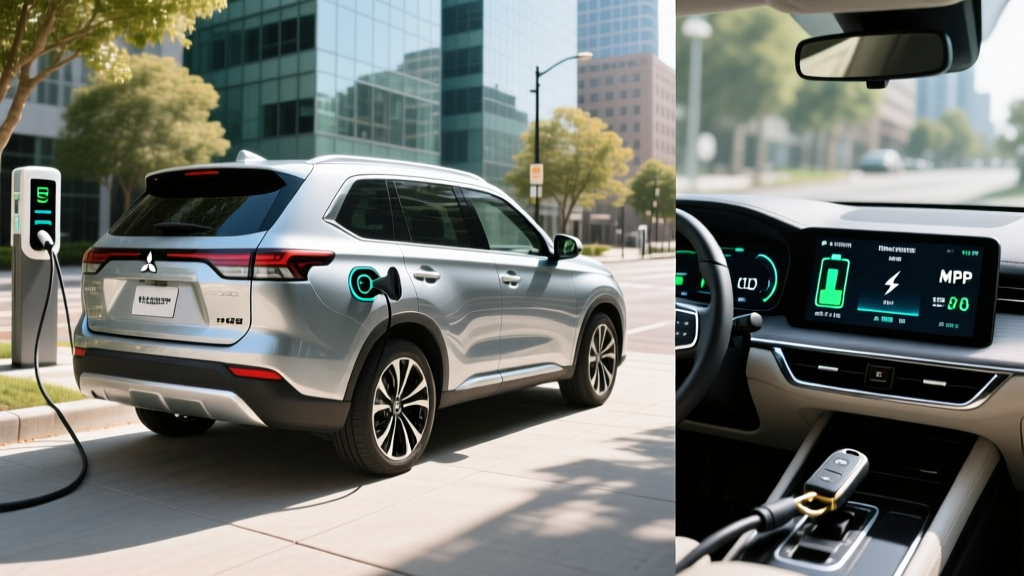
Critical note on DC fast charging: The vast majority of PHEVs on the market cannot use DC fast chargers. Their batteries are small enough that Level 2 charging fills them in a few hours, and adding DC fast-charge hardware would increase cost and weight for minimal benefit. A few exceptions exist — the Mitsubishi Outlander PHEV has historically offered DC fast-charge capability — but expect to rely on Level 1 or Level 2 charging for most PHEVs.
For most PHEV owners, a standard 120V outlet is sufficient if the vehicle is parked overnight and daily electric driving is under 30 miles. A Level 2 home charger ($300–$600 for equipment, $500–$1,500 for professional installation) provides a full charge in 2–4 hours and is worthwhile if you want midday top-ups or have a larger-battery PHEV.
Hybrid vs. PHEV vs. Full EV: Which Is Right for You?
The choice between a conventional hybrid, a plug-in hybrid, and a battery electric vehicle comes down to three factors: your daily mileage, your charging access, and your road-trip tolerance for stops.
Choose a Conventional Hybrid (HEV) If:
- You have no access to plug-in charging at home or work
- You want maximum simplicity — no plugs, no charging habits to change
- Your priority is better fuel economy without altering your routine
- You drive 15,000+ miles/year in mixed conditions and want consistent 40–55 MPG
Choose a Plug-In Hybrid (PHEV) If:
- You can charge at home (even a 120V outlet works) and your commute is under 40 miles round-trip
- You want electric daily driving but need a gas engine for frequent road trips or towing
- You live in an area with unreliable or sparse public charging infrastructure
- You want to reduce gas consumption by 60–80% without range anxiety
Choose a Full EV (BEV) If:
- You have reliable Level 2 home charging and your daily driving is under 250 miles
- You want zero tailpipe emissions and the lowest per-mile fuel cost
- You're willing to plan charging stops on road trips (15–30 min every 200–300 mi)
- You want minimal maintenance — no oil changes, no spark plugs, fewer moving parts
The PHEV's sweet spot is the driver who can charge at home, drives 25–40 miles daily, but takes 4+ road trips per year where charging infrastructure is uncertain. It's also ideal for households with one car that must serve both commuting and long-distance roles.
PHEV Pricing, Tax Credits, and Ownership Costs
PHEVs carry a price premium over their conventional hybrid counterparts, typically $3,000–$7,000 more for the larger battery and more powerful electric drivetrain. Here's where current popular models land:
| Model | Base MSRP | Federal Credit Eligible? |
|---|---|---|
| Toyota Prius Prime SE | ~$33,445 | No (battery sourcing) |
| Toyota RAV4 Prime SE | ~$44,500 | No (battery sourcing) |
| Ford Escape PHEV | ~$39,500 | Check current IRS list |
| Jeep Wrangler 4xe | ~$51,500 | Check current IRS list |
| Chrysler Pacifica Hybrid | ~$51,000 | Check current IRS list |
Federal Tax Credit for PHEVs (§30D)
PHEVs are eligible for the same federal clean vehicle credit under IRS §30D as full EVs — up to $7,500 — but the eligibility requirements are strict and model-specific. To qualify, a PHEV must meet:
- Battery capacity: At least 7 kWh (most PHEVs meet this)
- MSRP cap: Vans/SUVs/pickups ≤ $80,000; sedans ≤ $55,000
- Buyer income cap: AGI ≤ $150,000 (single) / $300,000 (joint)
- Battery sourcing: Critical minerals and battery components must meet phased-in domestic/free-trade-area sourcing thresholds (these tighten annually through 2029)
- Final assembly: Must occur in North America
The battery sourcing requirements have disqualified several popular PHEVs (including most Toyota models) as of 2025–2026. The IRS maintains a list of eligible vehicles on fueleconomy.gov — always verify before purchasing, as eligibility can change with model-year updates and supply-chain shifts. As of 2026, the credit can be transferred to the dealer at point of sale, reducing your purchase price directly rather than waiting for a tax refund.
State incentives: Several states offer additional rebates or HOV-lane access for PHEVs. California's CVRP program, for example, has historically offered rebates for PHEVs, though amounts and eligibility vary. Check your state energy office or DMV for current programs.
Battery Reliability, Warranty, and Replacement Cost
Battery longevity is one of the top concerns for hybrid and PHEV buyers. The good news: modern hybrid batteries have proven remarkably durable, and federal law mandates substantial warranty coverage.
PHEV Battery Warranty Standards
Federal minimum: All PHEVs sold in the US must carry a hybrid battery warranty of at least 8 years / 100,000 miles. In CARB states (California and states that follow CARB emissions rules), the warranty extends to 10 years / 150,000 miles.
What's covered: Battery capacity loss below a manufacturer-defined threshold (typically 60–70% of original capacity), cell failures, and related powertrain components.
Real-world track record: Toyota's hybrid batteries in the Prius lineup have demonstrated 150,000–200,000+ mile lifespans in large fleet samples. PHEV batteries are larger and experience deeper cycles, but modern thermal management and buffer zones (the car never lets you use 100% of the battery) protect longevity.
What Does a PHEV Battery Replacement Cost?
Out-of-warranty replacement is the worst-case scenario, and it's expensive:
- Toyota Prius Prime: $3,000–$5,000 (battery pack)
- Toyota RAV4 Prime: $5,000–$8,000 (larger pack)
- Chrysler Pacifica Hybrid: $6,000–$9,000
- Jeep Wrangler 4xe: $5,500–$8,500
These are ballpark figures that include the battery pack but may not include labor ($500–$1,500 additional). However, the likelihood of needing a replacement within the first 10 years or 150,000 miles is low based on current data. Many hybrid batteries outlast the vehicles they're installed in.
Reliability comparison: PHEVs have more complex powertrains than either pure EVs or conventional gas cars — they carry both a full internal combustion system and an electric drivetrain. However, the electric motor and battery reduce wear on the engine and brakes (via regenerative braking). Toyota's PHEV models have tracked closely with their HEV counterparts in long-term reliability surveys from Consumer Reports and J.D. Power. Stellantis PHEV models (Wrangler 4xe, Pacifica Hybrid) have had more mixed records, with some early-model-year software and electrical issues.
Pros and Cons of PHEV Ownership
✓ Pros
- 25–45 miles of zero-emission daily driving without range anxiety
- Gas engine eliminates charging-infrastructure dependence on road trips
- Significantly lower fuel costs if you plug in daily (electricity ≈ $0.04–0.06/mi vs. gas ≈ $0.12–0.18/mi)
- Less brake wear from regenerative braking
- No behavioral change needed for long trips — just drive and fill up normally
- Strong resale value for popular models (RAV4 Prime has historically commanded premiums)
✗ Cons
- $3,000–$7,000 price premium over equivalent conventional hybrid
- Heavier than HEV or gas-only equivalents (battery weight reduces efficiency in hybrid mode)
- Must plug in regularly to realize fuel savings — an unplugged PHEV is just a heavy hybrid
- Most PHEVs lack DC fast charging, limiting public-charging utility
- Two powertrains mean two systems to maintain (engine oil + electric drivetrain)
- Cargo space may be reduced vs. gas-only models due to battery placement
- Federal tax credit eligibility is uncertain for many models due to sourcing rules
Frequently Asked Questions
Do I have to plug in a PHEV, or can I just drive it like a regular hybrid?
You can drive a PHEV without ever plugging it in — it will function as a conventional hybrid once the battery is depleted. However, you'll miss the entire point of the PHEV premium. The fuel savings and emissions benefits come from electric-only miles, which require plugging in. If you never plan to plug in, a conventional hybrid (HEV) is a better, cheaper choice.
How long does it take to charge a PHEV at home?
On a standard 120V household outlet (Level 1), expect 10–14 hours for a full charge — fine for overnight charging. On a 240V Level 2 charger, most PHEVs charge fully in 2–5 hours depending on battery size and onboard charger capacity (typically 3.3 kW to 7.2 kW). Because PHEV batteries are small (13–25 kWh), even slow charging is practical for daily use.
Can a PHEV use DC fast chargers like Tesla Superchargers or Electrify America?
Almost all PHEVs cannot use DC fast chargers. The battery is too small to justify the hardware cost, and Level 2 charging fills them fast enough for their use case. The Mitsubishi Outlander PHEV is a rare exception that has offered DC fast-charge capability. Don't buy a PHEV expecting to use public fast-charging networks.
Is a PHEV better than a full EV?
It depends on your situation. A PHEV is better if you lack reliable charging access, regularly drive more than 250 miles in a day, or need one vehicle for both commuting and road trips. A full EV is better if you have home charging, want the lowest operating cost, prefer minimal maintenance, and can plan charging stops on longer trips. For many two-car households, a BEV for commuting and a PHEV or gas car for longer trips is an optimal combination.
What happens when the PHEV battery degrades over time?
Like all lithium-ion batteries, PHEV batteries gradually lose capacity. Expect 10–20% capacity loss over 8–10 years based on current data. This means a PHEV originally rated for 40 miles of EV range might deliver 32–36 miles after several years. The battery won't suddenly fail — it simply provides less electric range over time. If capacity drops below the warranty threshold (usually 60–70%), the manufacturer will replace it at no cost within the warranty period.
Does a PHEV qualify for the $7,500 federal tax credit?
Some PHEVs qualify, but eligibility is model-specific and changes frequently due to battery sourcing requirements under the Inflation Reduction Act. As of 2026, many Toyota PHEVs do not qualify due to battery component sourcing, while some domestic-brand PHEVs may qualify depending on current IRS guidance. Always check the official fueleconomy.gov tax credit list before purchasing. The credit can be applied at point of sale if the dealer is registered with the IRS.
Are PHEVs more expensive to maintain than regular cars?
Maintenance costs are generally comparable to conventional hybrids. You still need oil changes, but intervals may be longer if you drive mostly on electric. Brake pads last significantly longer due to regenerative braking. The electric drivetrain has fewer moving parts than a conventional transmission. The main cost risk is out-of-warranty battery replacement ($3,000–$9,000), but this is unlikely within the first 10–15 years based on current reliability data.
The Bottom Line on PHEVs
A plug-in hybrid is the most pragmatic electrified choice for drivers who want electric commuting without sacrificing road-trip freedom. The math works best when you can charge at home daily, your commute falls within the 25–45 mile EV range, and you take enough long trips that a full EV would require inconvenient charging planning. If you can't plug in regularly, skip the PHEV premium and buy a conventional hybrid. If you can charge at home and rarely exceed 200 miles in a day, a full EV will save you more money and require less maintenance. The PHEV occupies a specific, valuable niche — and for the right driver, it's the most sensible vehicle on the market.