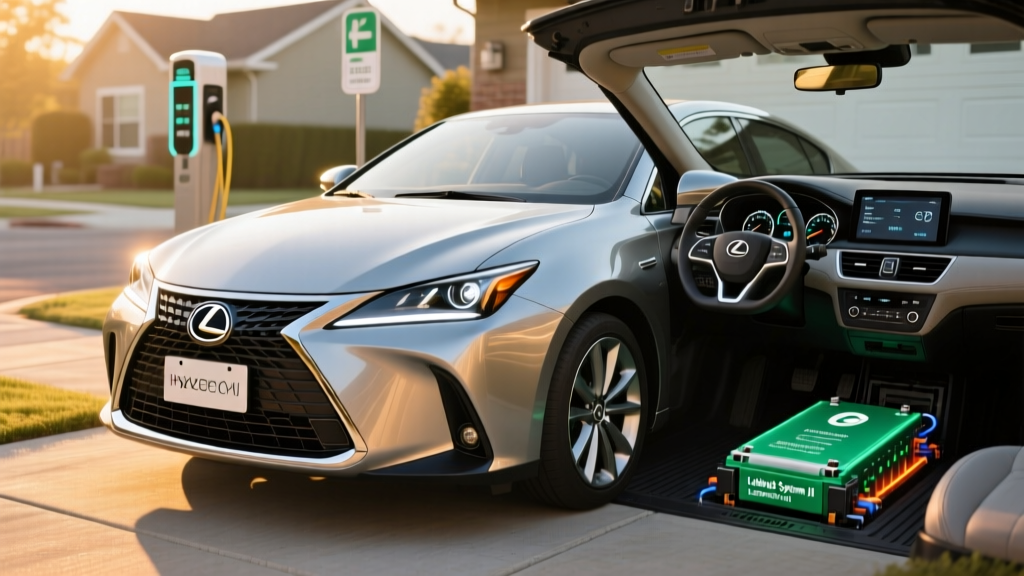
If you've searched "what is meant by hybrid vehicle" and found conflicting answers, you're not alone. The term hybrid now covers two fundamentally different powertrains: the conventional hybrid (HEV) that never plugs in, and the plug-in hybrid (PHEV) that drives on electricity alone before its gas engine kicks in. Both pair an internal combustion engine with an electric motor and a battery pack, but how they use that combination — and what they cost you at the pump, the charger, and the dealership — diverges sharply.
This guide uses current 2026 model-year data from two benchmark vehicles — the Toyota RAV4 Hybrid (HEV) and the Toyota RAV4 Prime (PHEV) — to show exactly what each type delivers in MPG, range, pricing, and long-term ownership.
What Is Meant by Hybrid Vehicle? The Core Definition
A hybrid vehicle is any car or SUV that combines a gasoline engine with at least one electric motor and a battery pack to improve efficiency, performance, or both. The electric motor assists during acceleration, captures energy during braking (regenerative braking), and in some cases can propel the vehicle on electricity alone for short distances.
The critical split is between two architectures:
Conventional Hybrid (HEV)
- Battery: 1–2 kWh (small, self-charging)
- Plugs in? No — recharges via regenerative braking and the engine
- Electric-only driving: minimal (under 1 mile at low speed, if at all)
- Primary benefit: 30–50% better MPG than a comparable gas-only vehicle
Plug-In Hybrid (PHEV)
- Battery: 12–25+ kWh (larger, externally chargeable)
- Plugs in? Yes — Level 1 (120V) or Level 2 (240V) charging
- Electric-only driving: 25–50+ miles at full highway speed
- Primary benefit: daily EV commuting with a gas engine for longer trips
HEV vs PHEV: Side-by-Side Specs (2026 Toyota RAV4)
To make the distinction concrete, here's how the two RAV4 variants stack up on the numbers that matter.
| Specification | 2026 RAV4 Hybrid (HEV) | 2026 RAV4 Prime (PHEV) |
|---|---|---|
| Powertrain | 2.5L 4-cyl + 2 electric motors (AWD) | 2.5L 4-cyl + 2 electric motors (AWD) |
| Combined Horsepower | 219 hp | 302 hp |
| Battery Capacity | ~1.6 kWh (NiMH) | 18.1 kWh (Li-ion) |
| Electric-Only Range | N/A (not a plug-in) | 42 miles (EPA) |
| Total Combined Range | ~580 miles | ~600 miles (electric + gas) |
| EPA MPG (Gas Mode) | 41 city / 38 hwy / 40 combined | 38 city / 35 hwy / 38 combined (gas-only) |
| MPGe (Electric Mode) | N/A | 94 MPGe combined |
| 0–60 mph | 7.4 seconds | 5.7 seconds |
| Charging Time (Level 2) | N/A | ~2.5 hours (6.6 kW onboard charger) |
| DC Fast Charging | N/A | Not available |
| Starting MSRP | $33,500 | $44,500 |
Sources: fueleconomy.gov, Toyota. EPA estimates; your actual results will vary.
How Many MPG Does a Hybrid Actually Get?
The EPA numbers tell part of the story, but hybrids behave differently from gas cars in real-world driving — and usually in the buyer's favor around town.
| Vehicle | EPA City | EPA Highway | EPA Combined | Real-World Expectation |
|---|---|---|---|---|
| RAV4 Hybrid (HEV) | 41 MPG | 38 MPG | 40 MPG | City: 42–45 MPG (regen-heavy); Highway: 35–37 MPG |
| RAV4 Prime (PHEV, gas mode) | 38 MPG | 35 MPG | 38 MPG | City: 36–40 MPG; Highway: 33–35 MPG |
| Gas-only RAV4 (baseline) | 27 MPG | 35 MPG | 30 MPG | City: 24–26 MPG; Highway: 32–34 MPG |
Why do hybrids often beat their EPA city estimate? In stop-and-go traffic, regenerative braking recovers kinetic energy that a gas car wastes as heat, and the electric motor handles low-speed propulsion where engines are least efficient. On the highway, however, the engine does most of the work, so the hybrid advantage narrows. If your commute is mostly urban, an HEV's real-world city MPG can exceed 45.
For the PHEV, the math changes entirely if you charge daily. A 42-mile electric-only range covers the average American's round-trip commute (FHWA data puts the average one-way commute at ~16 miles). Charge every night and you may burn zero gasoline on weekdays, using the engine only for weekend road trips.
Electric-Only Range: How Far Can a PHEV Go Without Gas?
The 2026 RAV4 Prime delivers 42 miles of EPA-rated electric-only range. That's enough for most daily driving — school runs, grocery trips, and commutes — without the engine ever starting.
Real-world electric range depends on conditions:
- Mild weather, city driving: 40–44 miles (regen braking extends range)
- Highway at 70 mph: 32–36 miles (aerodynamic drag drains battery faster)
- Cold weather (below 30°F): 28–34 miles (cabin heating and battery resistance reduce usable capacity)
Once the battery depletes, the RAV4 Prime seamlessly switches to hybrid mode, operating exactly like a conventional HEV with its 38 MPG combined rating. This is the PHEV's core advantage over a full EV: there's no range ceiling. The combined electric + gas range exceeds 600 miles.
Other 2026 PHEVs offer different electric ranges: the Hyundai Tucson PHEV delivers ~33 miles, while the Jeep Wrangler 4xe manages ~22 miles. If electric-only commuting is your priority, choose a PHEV with at least 35+ miles of rated range.
Battery Warranty, Lifespan, and Replacement Cost
Hybrid battery longevity is the single most common concern among first-time hybrid buyers. Here's what the data shows.
Federal Mandate & Toyota Coverage
U.S. federal law requires hybrid battery warranties of at least 8 years / 100,000 miles (extended to 10 years / 150,000 miles in California Air Resources Board states). Toyota covers both the RAV4 Hybrid and RAV4 Prime hybrid batteries for 10 years / 150,000 miles nationwide on 2026 models.
Real-world longevity typically exceeds warranty terms. Toyota's hybrid Synergy Drive system has been in production since 1997 (Prius), and fleet data shows most HEV batteries last 150,000–200,000+ miles before significant degradation. The smaller NiMH pack in the HEV is less stressed than a full EV battery because it operates in a narrow state-of-charge window (roughly 40–80%), which minimizes wear.
PHEV batteries are larger lithium-ion packs that see deeper cycles, but Toyota's thermal management and conservative buffer strategy (the car never uses 100% of the 18.1 kWh pack) protect long-term health. Expect 12–15 years of service before capacity drops enough to noticeably reduce electric-only range.
Replacement costs if out of warranty:
- HEV battery (RAV4 Hybrid): $2,500–$4,000 (refurbished packs available for ~$1,500–$2,000)
- PHEV battery (RAV4 Prime): $6,000–$9,000 (larger lithium-ion pack)
For context, these costs are comparable to a major transmission rebuild on a conventional vehicle — and they occur far less frequently than marketing fear would suggest.
Pricing and Tax Credit Eligibility
The price gap between HEV and PHEV is significant, and tax incentives can narrow it — but only if you meet specific requirements.
| Cost Factor | RAV4 Hybrid (HEV) | RAV4 Prime (PHEV) |
|---|---|---|
| Base MSRP | $33,500 | $44,500 |
| Federal Tax Credit (§30D) | $0 (not a plug-in) | Up to $7,500 (if eligible) |
| Credit-Adjusted Price | $33,500 | As low as $37,000 |
| Annual Fuel Cost (est.) | ~$1,450 | ~$600–$1,100 (depends on charging) |
Federal tax credit rules for PHEVs (2026): Under IRS §30D, the RAV4 Prime may qualify for up to $7,500 — but eligibility hinges on three factors:
- MSRP cap: SUVs must be under $80,000 (RAV4 Prime qualifies)
- Buyer income cap: Modified AGI ≤ $150,000 (single) or ≤ $300,000 (joint)
- Battery sourcing: Critical minerals and battery components must meet phased-in domestic-content thresholds that tighten annually — verify current-year compliance at IRS.gov's qualified vehicle list
The credit is now available as a point-of-sale transfer, meaning the dealer reduces your purchase price directly rather than making you wait for tax filing. Conventional hybrids like the RAV4 Hybrid receive no federal purchase credit, though some states offer rebates for HEVs — check your local program.
Hybrid vs PHEV vs Full EV: Which Fits You?
Choose a Conventional Hybrid (HEV) If:
- You cannot charge at home (apartment, street parking, no garage outlet)
- You want maximum MPG with zero behavior change — just gas up and go
- Your budget is under $35,000 and you don't qualify for PHEV tax credits
- You drive mostly city miles where regen braking maximizes efficiency
Choose a Plug-In Hybrid (PHEV) If:
- You can install a Level 2 charger at home (240V, ~$500–$1,500 install)
- Your daily round-trip commute is under 40 miles
- You want EV-like daily driving but take road trips where charging infrastructure is sparse
- You qualify for the $7,500 federal credit, narrowing the price gap
Choose a Full EV (BEV) Instead If:
- You have reliable home charging AND your daily driving is under 250 miles
- You want to eliminate oil changes, spark plugs, and engine maintenance entirely
- You prioritize lowest per-mile fuel cost (electricity at ~$0.04–$0.06/mile vs gas at ~$0.12–$0.15/mile)
- You're ready to plan road trips around DC fast-charging stops
Real-World Ownership: What Hybrid Buyers Should Know
Beyond the spec sheet, here's what living with a hybrid actually looks like in 2026:
Maintenance: Hybrids require the same engine maintenance as gas cars (oil changes, air filters, coolant), but brake pads last significantly longer — often 80,000–100,000 miles — because regenerative braking handles most deceleration. The electric motor and power electronics require no scheduled maintenance.
Insurance: Hybrid insurance premiums are typically 5–10% higher than gas-only equivalents due to higher repair costs for the powertrain. PHEVs can be 10–15% higher. Get quotes before purchasing.
Resale value: Toyota hybrids hold value exceptionally well. According to Kelley Blue Book data, the RAV4 Hybrid retains roughly 55–60% of its value after 5 years, compared to ~45% for the gas-only RAV4. PHEVs retain value well but are more sensitive to battery health perception.
Cold-weather performance: HEVs see a modest MPG drop in winter (expect 2–4 MPG less in sub-freezing temps) because the engine runs more to provide cabin heat. PHEVs lose more electric range in cold weather (20–30% reduction below 30°F) but the gas engine provides backup. Both are far less affected by cold than full EVs, which can lose 25–40% of range.
Frequently Asked Questions
Does a conventional hybrid need to be plugged in?
No. A conventional hybrid (HEV) charges its small battery entirely through regenerative braking and the gasoline engine. You never plug it in — you simply refuel at a gas station as you would with any other car.
How many MPG does a hybrid get compared to a gas car?
Most 2026 hybrid SUVs achieve 35–50 MPG combined, compared to 22–30 MPG for their gas-only counterparts. The Toyota RAV4 Hybrid delivers 40 MPG combined — a 33% improvement over the gas-only RAV4's 30 MPG. In city driving, the gap widens further because regenerative braking recovers energy that gas cars waste.
How far can a PHEV go on electric only?
Current 2026 PHEVs offer 22–48 miles of EPA-rated electric-only range depending on the model. The RAV4 Prime delivers 42 miles, the Hyundai Tucson PHEV offers 33 miles, and the Chrysler Pacifica PHEV achieves 32 miles. Real-world range drops 15–30% in cold weather or sustained highway driving.
Is a hybrid reliable, and what does battery replacement cost?
Toyota's hybrid system has two decades of proven reliability, with most batteries lasting 150,000–200,000+ miles. The hybrid battery is warranted for 10 years / 150,000 miles. Out-of-warranty replacement runs $2,500–$4,000 for an HEV and $6,000–$9,000 for a PHEV — but most owners never need one within the vehicle's useful life.
Does a hybrid qualify for a tax credit?
Conventional hybrids (HEVs) do not qualify for the federal §30D tax credit. Plug-in hybrids (PHEVs) with at least 7 kWh of battery capacity may qualify for up to $7,500, subject to MSRP caps ($80,000 for SUVs), buyer income limits ($150K single / $300K joint), and battery-component sourcing requirements that change annually. Always verify eligibility at IRS.gov before purchasing.
Can a PHEV use DC fast charging?
Most PHEVs, including the RAV4 Prime, do not support DC fast charging. They charge via Level 1 (120V household outlet, ~8–10 hours for a full charge) or Level 2 (240V, ~2.5 hours). A few PHEVs like the Mitsubishi Outlander PHEV offer DC fast charging, but the smaller battery makes it less critical than on a full EV.
What is meant by hybrid vehicle vs. mild hybrid?
A "mild hybrid" (MHEV) uses a small 48-volt motor that assists the engine but cannot propel the car on electricity alone. It offers modest MPG gains (1–3 MPG). A full hybrid (HEV) has a more powerful electric motor capable of moving the vehicle independently at low speeds and delivers substantially better efficiency gains. When people ask "what is meant by hybrid vehicle," they're usually referring to a full hybrid.