What Is the Meaning of Hybrid Vehicle? A Plain-English Definition
A hybrid vehicle is any car that pairs a gasoline engine with at least one electric motor and a small battery pack, using both power sources to move the wheels. The electric system recovers energy during braking (regenerative braking) and assists the engine during acceleration, cutting fuel consumption compared to a conventional gas-only car. In 2026, hybrids come in two distinct flavors — and confusing them is the single most common mistake buyers make.
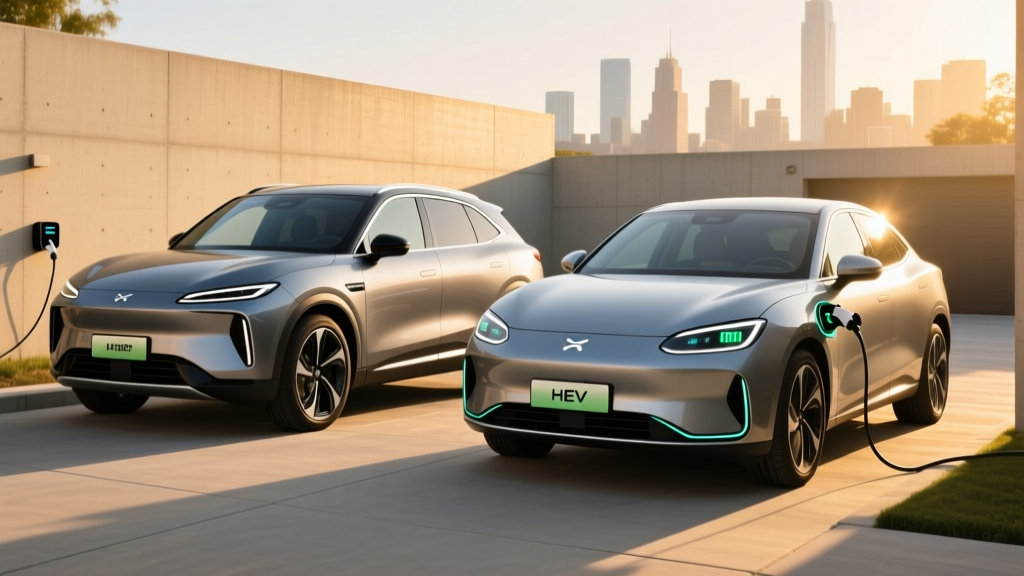
The two types are the conventional hybrid (HEV), which never plugs in, and the plug-in hybrid (PHEV), which has a larger battery you can charge from a wall outlet or public charger to drive 25–50+ miles on electricity alone before the gas engine kicks in. Both use less fuel than a gas car, but they work very differently and suit different drivers.
HEV vs PHEV: The Two Meanings of "Hybrid"
To understand what hybrid means for your wallet and daily driving, you need to see these two architectures side by side. Here's how they compare using two of the most popular models in 2026 — the Toyota RAV4 Hybrid (HEV) and the Toyota RAV4 Prime (PHEV).
| Attribute | RAV4 Hybrid (HEV) | RAV4 Prime (PHEV) |
|---|---|---|
| Powertrain | 2.5L 4-cyl + 2 electric motors | 2.5L 4-cyl + 2 electric motors (higher output) |
| Combined Horsepower | 219 hp | 302 hp |
| Battery Capacity | 1.6 kWh (NiMH) | 18.1 kWh (Li-ion) |
| Electric-Only Range | N/A (electric assist only) | 42 miles (EPA) |
| EPA Combined MPG | 39 MPG (gas mode) | 38 MPG (gas mode after battery depleted) |
| EPA MPGe (electric mode) | N/A | 94 MPGe |
| Total Range | ~580 miles | ~600 miles (electric + gas) |
| Plugs In? | No | Yes — Level 1 or Level 2 |
| DC Fast Charging | No | No |
| Level 2 Charge Time (0–100%) | N/A | ~2.5 hours at 6.6 kW |
| Base MSRP | $33,575 | $44,515 |
| Federal Tax Credit (§30D) | Not eligible | Up to $7,500 (eligibility varies) |
How Many MPG Does a Hybrid Get? Real-World vs EPA Numbers
The headline question for any hybrid buyer is fuel economy. Here's the data for several top-selling 2026 hybrids across both HEV and PHEV categories, sourced from fueleconomy.gov.
| Model | Type | City MPG | Highway MPG | Combined MPG | PHEV Electric Range |
|---|---|---|---|---|---|
| Toyota Prius | HEV | 57 | 56 | 57 | N/A |
| Toyota Prius Prime | PHEV | 52 (gas) | 48 (gas) | 50 (gas) / 127 MPGe | 44 mi |
| Honda Accord Hybrid | HEV | 51 | 44 | 48 | N/A |
| Toyota RAV4 Hybrid | HEV | 41 | 38 | 39 | N/A |
| Ford Escape PHEV | PHEV | 42 (gas) | 38 (gas) | 40 (gas) / 105 MPGe | 37 mi |
| Hyundai Tucson PHEV | PHEV | 38 (gas) | 36 (gas) | 37 (gas) / 84 MPGe | 33 mi |
How Far Can a Plug-In Hybrid Go on Electric Only?
For PHEV buyers, electric-only range is the spec that matters most. In the current 2026 lineup, PHEV electric ranges span from about 25 miles to over 50 miles on a full charge:
- Toyota Prius Prime: 44 miles EPA electric-only
- Toyota RAV4 Prime: 42 miles EPA electric-only
- Ford Escape PHEV: 37 miles EPA electric-only
- Hyundai Tucson PHEV: 33 miles EPA electric-only
- Jeep Wrangler 4xe: 22 miles EPA electric-only
- BMW X5 xDrive50e: 38 miles EPA electric-only
Once the battery depletes, the vehicle operates as a conventional hybrid — you're never stranded. The gas engine seamlessly takes over, and total combined range (electric + gas) typically exceeds 500 miles. This "no range anxiety" characteristic is the core appeal of PHEVs for buyers not ready to commit to a full battery-electric vehicle (BEV).
Powertrain and Battery: What's Under the Hood
Hybrid powertrains vary by architecture, but the core components are consistent: a gasoline engine, one or more electric motor-generators, a power-split device or clutch system to blend power, and a battery pack.
Conventional Hybrid (HEV) Battery
HEV batteries are small — typically 1.0 to 2.0 kWh — because they only need to buffer energy recovered from braking and assist during acceleration. Toyota's hybrid system uses nickel-metal hydride (NiMH) cells in many models, chosen for durability and cost. The battery is constantly being charged and discharged in small increments; you never deplete it fully. This shallow-cycling is why HEV batteries routinely last 150,000–200,000+ miles with minimal degradation.
Plug-In Hybrid (PHEV) Battery
PHEV batteries are substantially larger — 13 to 25 kWh in the 2026 lineup — because they must store enough energy for 25–50 miles of pure electric driving. These are lithium-ion packs (typically NMC chemistry) mounted under the rear seat or cargo floor. PHEV batteries are charged via:
- Level 1 (120V household outlet): Adds roughly 4–5 miles of range per hour; a full charge takes 8–12 hours
- Level 2 (240V home or public charger): Adds roughly 15–25 miles per hour; a full charge takes 2–3 hours at the vehicle's onboard charger rate (typically 3.3–7.2 kW)
Most PHEVs do not support DC fast charging. The battery is too small to justify the hardware cost, and a Level 2 charge fills it in a few hours anyway. The notable exceptions are larger PHEVs like the Mitsubishi Outlander PHEV, which supports DC fast charging at up to 22 kW — still far slower than a BEV but useful for quick top-ups on road trips.
Hybrid Battery Reliability, Warranty, and Replacement Cost
Battery longevity is the top concern for hybrid buyers, and the data is reassuring. Conventional hybrids have been on the road for over 25 years (the original Prius launched in the US for model year 2001), and failure rates are low.
What Does Hybrid Battery Replacement Cost?
If a hybrid battery fails out of warranty, replacement costs depend on the model:
- Toyota Prius (HEV): $2,000–$3,500 for a new OEM battery pack; refurbished packs available for $1,000–$1,800
- Toyota RAV4 Hybrid: $3,000–$4,500
- PHEV battery (e.g., RAV4 Prime, Prius Prime): $5,000–$8,000 due to larger lithium-ion pack
In practice, hybrid battery failures before 150,000 miles are uncommon. Individual cell modules can often be replaced instead of the entire pack, reducing cost to $500–$1,500 at a specialist shop. Data from fleet operators and sources like Consumer Reports show that Toyota and Honda hybrid systems are among the most reliable powertrains in their lineups.
Pricing, Tax Credits, and Total Cost of Ownership
Hybrids carry a price premium over their gas-only counterparts, but the gap has narrowed significantly. Here's what 2026 pricing looks like:
- HEV premium over gas model: $1,000–$2,500 (e.g., RAV4 Hybrid costs ~$1,500 more than the gas RAV4 LE)
- PHEV premium over gas model: $6,000–$12,000 (reflecting the larger battery and more complex powertrain)
Federal Tax Credit for PHEVs (§30D)
Conventional hybrids (HEVs) do not qualify for the federal §30D tax credit — it is reserved for plug-in vehicles. PHEVs may qualify for up to $7,500, but eligibility depends on several requirements that change frequently. As of 2026, per IRS clean vehicle credit rules:
- Battery capacity: Must be at least 7 kWh (most PHEVs qualify)
- MSRP cap: Vans, SUVs, and trucks ≤ $80,000; sedans ≤ $55,000
- Buyer income cap: AGI ≤ $150,000 (single) / $300,000 (joint)
- Battery sourcing: Critical minerals and battery component requirements phase in annually — verify current-year compliance on the IRS eligible vehicle list
- Point-of-sale transfer: You can transfer the credit to the dealer for an immediate price reduction instead of claiming it on your tax return
Always confirm a specific PHEV's eligibility on the IRS clean vehicle portal before purchasing, as sourcing rules have disqualified some models mid-year in the past.
5-Year Cost Snapshot: HEV vs PHEV vs Gas
Assuming 15,000 miles/year, $3.50/gallon gas, and $0.14/kWh electricity:
| Vehicle Type | Example | 5-Year Fuel Cost | Upfront Premium vs Gas |
|---|---|---|---|
| Gas Only (28 MPG combined) | Toyota RAV4 LE AWD | $9,375 | Baseline |
| HEV (39 MPG combined) | Toyota RAV4 Hybrid | $6,730 | +$1,500 |
| PHEV (daily charge, 42 mi electric) | Toyota RAV4 Prime | $2,800–$4,200* | +$11,000 (before credit) |
*PHEV cost varies dramatically based on charging frequency. If you plug in nightly and commute under 40 miles, fuel cost is mostly electricity. If you never plug in, you're paying for a premium hybrid.
Hybrid vs PHEV vs Full EV: Which Fits Your Life?
The meaning of "hybrid" extends beyond a technical definition — it's about choosing the right electrification level for your driving pattern, home setup, and budget. Here's a practical decision framework:
Choose an HEV If:
- You can't charge at home (apartment, street parking)
- You want maximum simplicity — no plugs, no behavior change
- Your budget is tight and you want a $1,000–$2,000 premium
- You drive a lot of city miles (where regen braking shines)
Choose a PHEV If:
- You can install a Level 2 charger at home
- Your daily commute is under 40 miles round-trip
- You road-trip regularly and don't want to plan charging stops
- You want electric daily driving but gas flexibility
Choose a Full EV If:
- You have reliable home Level 2 charging
- Your daily driving is under 250 miles
- You want the lowest per-mile energy cost and minimal maintenance
- You qualify for the full $7,500 federal credit
Pros and Cons of Hybrid Vehicles
✓ Pros
- 25–60% better fuel economy vs gas-only equivalents
- No range anxiety — gas stations everywhere
- HEVs require no charging infrastructure or behavior change
- PHEVs offer 25–50 miles of zero-gas daily driving
- Proven reliability with 25+ years of hybrid deployment
- Strong resale value, especially Toyota and Honda hybrids
- Regenerative braking reduces brake pad wear
✗ Cons
- HEVs still burn gasoline — no zero-emission driving
- PHEVs are $6,000–$12,000 more expensive than gas equivalents
- PHEVs are pointless if you never plug them in (you're just carrying dead battery weight)
- PHEV cargo space is sometimes reduced by the larger battery
- Hybrid system adds mechanical complexity vs pure EV or pure gas
- HEVs not eligible for federal tax credits
- Highway MPG gains are smaller than city gains
Frequently Asked Questions
Do hybrid cars need to be plugged in?
Conventional hybrids (HEVs) do not plug in — they generate electricity from the gas engine and regenerative braking. Plug-in hybrids (PHEVs) do plug in, and you should charge them regularly to get the fuel savings you paid for. A PHEV that's never plugged in is just a heavier, more expensive conventional hybrid.
How long do hybrid batteries last?
Most hybrid batteries last 150,000–200,000+ miles based on fleet data and owner reports. Federal warranty requirements mandate at least 8 years / 100,000 miles of coverage (10 years / 150,000 miles in CARB states). Toyota extends this to 10 years / 150,000 miles nationwide for 2026 models.
Is a hybrid better than a gas car?
For most drivers, yes — hybrids deliver 25–60% better fuel economy with no change in driving habits (HEV) or just overnight plugging in (PHEV). The upfront premium ($1,000–$2,500 for HEV) typically pays back in fuel savings within 2–4 years at current gas prices. The tradeoff is slightly higher purchase price and added powertrain complexity.
What's the difference between hybrid and electric?
A hybrid uses both a gas engine and an electric motor, always carrying a gasoline tank. A full electric vehicle (BEV) runs exclusively on battery power with no gas engine at all. Hybrids are a bridge technology — they reduce fuel use but still require gas station visits and oil changes. BEVs eliminate both but require charging access.
Does a hybrid qualify for a tax credit?
Only plug-in hybrids (PHEVs) may qualify for the federal §30D clean vehicle tax credit of up to $7,500. Conventional hybrids (HEVs) are not eligible. PHEV eligibility depends on battery sourcing, MSRP caps, buyer income limits, and the specific model's compliance status — always verify on the IRS clean vehicle credit page before purchasing.
Are hybrids good for highway driving?
Hybrids help on the highway but shine in the city. At steady highway speeds, the electric motor provides less benefit because there's little braking to recover energy. Expect highway MPG to be 3–8 MPG lower than city MPG in most hybrids. If your driving is 90% highway, a fuel-efficient gas car or a diesel may close the gap. If you drive a mix or mostly city, the hybrid advantage is substantial.