If you're shopping for a more efficient car but aren't ready to commit to a fully electric vehicle, you've likely asked: what is a hybrid vehicle, and how does it differ from a plug-in hybrid or a battery EV? The answer matters more than ever in 2026, as automakers have expanded hybrid lineups across nearly every segment — from compact SUVs to full-size pickups — and the technology has matured to deliver real-world fuel savings that often exceed EPA estimates.
This guide cuts through the marketing to explain exactly how conventional hybrids (HEVs) and plug-in hybrids (PHEVs) work, what kind of efficiency you can expect, what it costs to own one, and which type actually fits your driving life.
What Is a Hybrid Vehicle, Exactly?
A hybrid vehicle pairs a gasoline engine with one or more electric motors and a small battery pack. The electric motor assists the engine during acceleration, captures energy during braking (regenerative braking), and in some cases can propel the car at low speeds on electric power alone. The key benefit: significantly better fuel economy than a conventional gas car, without any change to how you refuel.
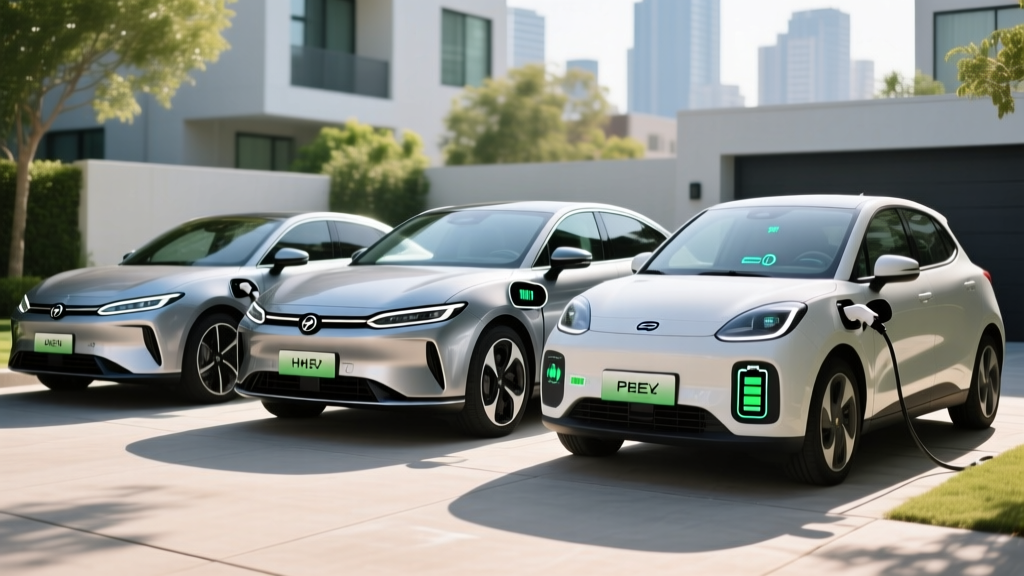
There are two distinct categories buyers need to understand, because they work differently, cost differently, and serve different use cases.
Conventional Hybrid (HEV)
A standard hybrid — like the Toyota RAV4 Hybrid or Honda CR-V Hybrid — charges its battery entirely through regenerative braking and the gasoline engine. You never plug it in. The battery is small (typically 1.0–2.0 kWh), and electric-only driving is limited to brief, low-speed moments. The payoff is strong fuel economy across all driving conditions, especially in stop-and-go city traffic where regenerative braking recovers the most energy.
Plug-In Hybrid (PHEV)
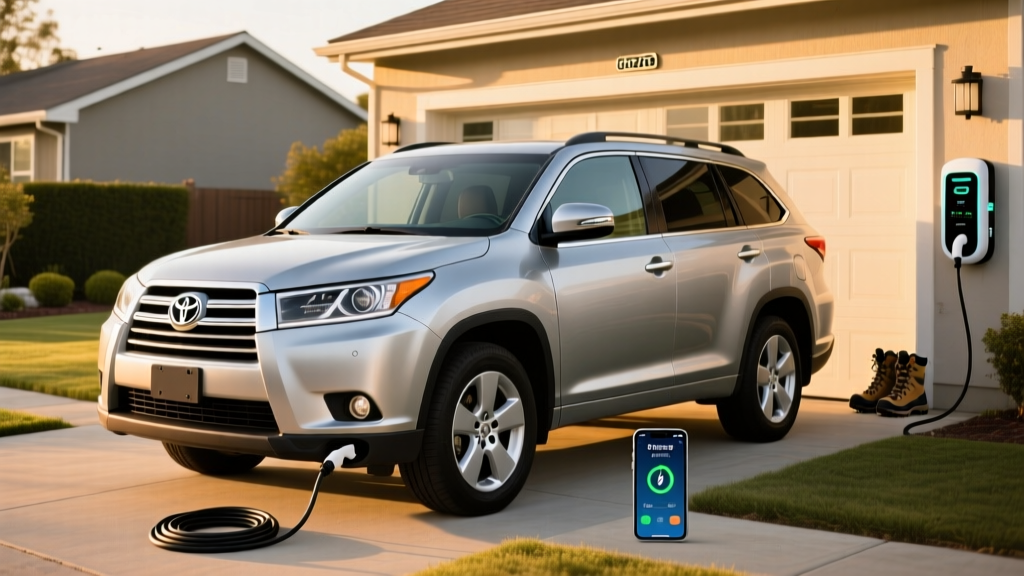
A plug-in hybrid — like the Toyota RAV4 Prime or Chrysler Pacifica Hybrid — has a larger battery (typically 13–20 kWh) that you can charge from a wall outlet, Level 2 home charger, or in some cases a DC fast charger. This gives you a meaningful electric-only range (usually 25–45 miles) before the gasoline engine kicks in. Once the battery depletes, it operates like a conventional hybrid. The payoff: many daily commutes can be completed on zero gasoline, with the gas engine available for longer trips.
HEV vs PHEV: Side-by-Side Comparison
The table below compares two of the most popular hybrid SUVs on the market to illustrate the real differences between HEV and PHEV architectures. Both are 2026 models with current EPA data from fueleconomy.gov.
| Specification | 2026 Toyota RAV4 Hybrid (HEV) | 2026 Toyota RAV4 Prime (PHEV) |
|---|---|---|
| Powertrain | 2.5L 4-cyl + 2 electric motors | 2.5L 4-cyl + 2 electric motors |
| Combined Horsepower | 219 hp | 302 hp |
| Battery Capacity | ~1.6 kWh (NiMH) | 18.1 kWh (Lithium-ion) |
| Electric-Only Range | N/A (brief low-speed assist) | 42 miles (EPA) |
| EPA City MPG | 41 mpg | 40 mpg (hybrid mode) / 94 MPGe (electric) |
| EPA Highway MPG | 38 mpg | 36 mpg (hybrid mode) |
| EPA Combined MPG | 40 mpg | 38 mpg (hybrid mode) / 94 MPGe |
| Total Combined Range | ~580 miles | ~600 miles (42 mi electric + ~558 mi gas) |
| Charging (Level 1 / Level 2) | Not applicable | ~12 hrs (120V) / ~2.5 hrs (240V) |
| DC Fast Charging | No | No |
| 0–60 mph | 7.4 seconds | 5.7 seconds |
| Starting MSRP | ~$33,500 | ~$44,500 |
The RAV4 Prime's 302 combined horsepower is a direct result of its larger battery and more powerful electric motors — PHEVs are often the quickest variants in a model lineup. The trade-off is a roughly $11,000 higher starting price, though that gap narrows when you factor in fuel savings and potential tax incentives.
How Many MPG Does a Hybrid Actually Get?
Hybrid fuel economy varies widely by model, but the pattern is consistent: hybrids deliver their best MPG in city driving, the opposite of conventional gas cars. This is because regenerative braking recovers kinetic energy that would otherwise be lost as heat at every stop, and the electric motor handles low-speed propulsion where gasoline engines are least efficient.
| 2026 Model | Type | City MPG | Highway MPG | Combined MPG |
|---|---|---|---|---|
| Toyota Prius | HEV | 57 | 56 | 57 |
| Honda Accord Hybrid | HEV | 51 | 44 | 48 |
| Toyota RAV4 Hybrid | HEV | 41 | 38 | 40 |
| Ford Maverick Hybrid | HEV | 42 | 33 | 37 |
| Hyundai Tucson Hybrid | HEV | 38 | 38 | 38 |
| Toyota RAV4 Prime | PHEV | 40* | 36* | 38* / 94 MPGe |
| Jeep Wrangler 4xe | PHEV | 20* | 20* | 20* / 49 MPGe |
*PHEV MPG figures reflect hybrid (charge-sustaining) mode after electric range is depleted.
Real-World MPG: What to Actually Expect
Here's where hybrids shine compared to their EPA stickers: many HEVs meet or exceed their EPA city estimates in real-world driving. In extensive owner-reported data tracked by fueleconomy.gov's My MPG tool, the Toyota Prius and Honda Accord Hybrid consistently log real-world combined figures within 1–3 mpg of their EPA ratings, with some drivers exceeding them in warm-weather city driving.
However, highway-heavy drivers will see lower numbers. At sustained 75+ mph speeds, the electric motor provides minimal assist and the gasoline engine does most of the work. Expect highway fuel economy to land 2–5 mpg below the EPA highway estimate on long, flat interstate runs. Cold weather also reduces efficiency — engine warm-up cycles and cabin heating draw energy, typically reducing winter MPG by 5–10% in northern climates.
For PHEVs, real-world electric-only range depends heavily on temperature and driving style. The RAV4 Prime's EPA-rated 42 miles of electric range may drop to 30–35 miles in freezing weather or sustained highway driving, because cabin heating and high-speed propulsion demand more from the battery. In mild weather around town, some owners report stretching it to 45+ miles.
PHEV Electric Range and Charging Explained
If you're considering a PHEV, the electric-only range is the number that determines how much gasoline you'll actually use. Most 2026 PHEVs offer between 25 and 45 miles of EPA-rated electric range, which covers the average American's one-way commute (roughly 16 miles each way according to Census data).
PHEV batteries range from about 13 kWh (smaller crossovers) to 20+ kWh (larger SUVs and minivans). Charging times depend on your power source:
- Level 1 (standard 120V outlet): 8–14 hours for a full charge. Fine for overnight if your daily electric use is under 30 miles.
- Level 2 (240V home charger): 2–4 hours for a full charge. The practical sweet spot — you can top up during the workday or between errands.
- DC Fast Charging: Very few PHEVs support DC fast charging. The Mitsubishi Outlander PHEV is one exception, offering CHAdeMO DC charging at up to ~22 kW, reaching 80% in roughly 38 minutes. Most PHEVs — including all Toyota, Hyundai, and Stellantis models — do not offer DC fast charging.
PHEV Charging Cost Reality
At the US average residential electricity rate of ~$0.17/kWh (EIA, 2025 data), fully charging an 18 kWh PHEV battery costs roughly $3.06. That buys you approximately 40 miles of driving — equivalent to $0.076 per mile. Compare that to a 30 mpg gas car at $3.20/gallon: $0.107 per mile. The PHEV saves about $0.03 per mile on electric driving, which adds up to ~$375 annually if you drive 12,500 miles and cover 40% of them on electricity.
Hybrid and PHEV Battery Reliability, Warranty, and Replacement Cost
Battery longevity is consistently the top concern among hybrid shoppers — and the data is reassuring. Modern hybrid batteries are engineered to last the life of the vehicle. Toyota's hybrid synergy drive system, for example, has accumulated billions of real-world miles across two decades of Prius, Camry, and RAV4 Hybrid production, with widespread reports of original batteries lasting 150,000–200,000+ miles.
| Manufacturer | Hybrid Battery Warranty | Capacity Retention Threshold |
|---|---|---|
| Toyota | 10 years / 150,000 miles | Below ~60% of original capacity |
| Honda | 8 years / 100,000 miles (10/150k in CARB states) | Significant degradation per dealer diagnostic |
| Hyundai / Kia | 10 years / 100,000 miles | Below ~70% of original capacity |
| Ford | 8 years / 100,000 miles | Below ~70% of original capacity |
Federal law mandates that hybrid and EV battery warranties cover at least 8 years / 100,000 miles, and in California Air Resources Board (CARB) states — which include California, New York, Massachusetts, and several others — that extends to 10 years / 150,000 miles for emissions-related components including the hybrid battery.
What Does Hybrid Battery Replacement Cost?
If your battery does fail outside warranty, replacement costs in 2026 typically range from:
- HEV battery replacement: $2,000–$4,000 (parts and labor). The smaller NiMH or lithium-ion packs in conventional hybrids are less expensive than full EV batteries.
- PHEV battery replacement: $4,000–$8,000. Larger lithium-ion packs cost more, but prices have declined steadily as battery manufacturing scales.
For context, a third-party rebuilt or refurbished hybrid battery can reduce these costs by 30–50%. And because hybrid batteries experience far fewer full charge-discharge cycles than EV batteries (they operate in a narrow state-of-charge window, typically 40–80%), degradation is minimal under normal use.
Tax Credits and Incentives: What Do Hybrids Qualify For?
This is where the distinction between HEV and PHEV becomes financially significant.
Federal §30D Clean Vehicle Credit — PHEV Eligibility
Under current IRS §30D rules, a plug-in hybrid may qualify for up to $7,500 in federal tax credits, but only if it meets all of the following requirements:
- Battery capacity: At least 7 kWh (most PHEVs meet this)
- MSRP caps: Vans, SUVs, and pickups ≤ $80,000; sedans and other vehicles ≤ $55,000
- Buyer income limits: Modified AGI ≤ $150,000 (single), $225,000 (head of household), $300,000 (joint)
- Battery component sourcing: Must meet phased-in domestic content and critical mineral requirements (tightening annually through 2030)
- Final assembly: Must occur in North America
- Point-of-sale transfer: As of 2024, eligible buyers can transfer the credit to the dealer for an immediate price reduction at purchase
Conventional hybrids (HEVs) do NOT qualify for the §30D federal credit. The credit applies only to plug-in vehicles (PHEVs and BEVs) with at least 7 kWh of battery capacity.
Many PHEVs that previously qualified have lost partial or full eligibility as battery-sourcing rules tightened in 2025 and 2026. Always verify current eligibility on the fueleconomy.gov tax credit tracker before purchasing, as the list updates frequently.
Some states offer additional incentives for PHEVs (typically $1,000–$2,500), and a handful offer smaller rebates for conventional hybrids, but these vary widely by jurisdiction. Check your state energy office or DMV for current programs.
Hybrid vs PHEV vs EV: Which One Fits You?
The decision between a conventional hybrid, a plug-in hybrid, and a full battery electric vehicle comes down to three factors: your daily mileage, your charging access, and your willingness to adapt your fueling habits.
Choose a Conventional Hybrid (HEV) If:
- You don't have access to home or workplace charging
- You want maximum fuel efficiency with zero behavior change — just fill up at any gas station
- Your budget is tighter (HEVs typically start $5,000–$12,000 below PHEV equivalents)
- You drive a mix of city and highway and want consistent MPG in both
- You plan to keep the vehicle 10+ years and want proven long-term reliability
Choose a Plug-In Hybrid (PHEV) If:
- You can charge at home (even a standard 120V outlet works for daily top-ups)
- Your daily round-trip commute is under 40 miles — you could drive months without buying gas
- You want electric driving for daily errands but need gas-engine range for road trips or towing
- You qualify for the federal §30D credit, which can offset the PHEV price premium
- You live in a region with extreme cold where full EV range loss is a concern
Choose a Full Battery EV (BEV) If:
- You have reliable Level 2 home charging and your daily driving is under 250 miles
- You want the lowest per-mile fuel cost and zero tailpipe emissions
- You want to eliminate oil changes, spark plugs, and transmission fluid forever
- You qualify for the full $7,500 federal credit and your state offers additional EV incentives
- You're comfortable planning longer road trips around DC fast-charging stops
Who Should Buy a Hybrid in 2026?
Hybrids — both HEV and PHEV — are the pragmatic choice for a large segment of new-car buyers. They make the most sense for:
- Apartment dwellers and renters who lack dedicated charging access but want better fuel economy. A conventional hybrid requires nothing more than a gas station.
- High-mileage commuters covering 30,000+ miles per year, where the fuel savings compound quickly. A 40 mpg hybrid vs a 25 mpg gas car saves roughly $1,800/year at 30,000 miles and $3.20/gallon.
- One-car households that need a single vehicle to handle daily commuting, weekend road trips, and occasional towing — a PHEV covers the commute on electricity and the road trip on gasoline without range compromise.
- Buyers in regions with unreliable charging infrastructure — rural areas, extreme-cold climates, or regions with frequent power outages where a gasoline backup provides peace of mind.
- Cost-conscious buyers who want efficiency without the $10,000–$15,000 price premium that many BEVs still carry over their hybrid counterparts.
Hybrid (HEV) Pros
- No plug-in required — zero behavior change
- Excellent real-world city MPG, often exceeding EPA
- Lower purchase price than PHEV or BEV
- Proven 20+ year reliability track record
- Available in nearly every vehicle segment
Hybrid (HEV) Cons
- No electric-only driving range
- Does not qualify for federal §30D tax credit
- Still requires gasoline and oil changes
- Highway MPG advantage over gas cars is smaller
Plug-In Hybrid (PHEV) Pros
- 25–45 miles of electric-only range covers most commutes
- Gas engine eliminates range anxiety on long trips
- May qualify for up to $7,500 federal tax credit
- Often the quickest variant in the model lineup
- Significant fuel cost savings if charged daily
Plug-In Hybrid (PHEV) Cons
- $5,000–$12,000 price premium over HEV equivalent
- Requires home charging access to realize full benefit
- Heavier than HEV due to larger battery — slightly worse hybrid-mode MPG
- Most models lack DC fast charging capability
- Tax credit eligibility varies and may phase out by model
Frequently Asked Questions
Do hybrid vehicles need to be plugged in?
No. Conventional hybrids (HEVs) charge their batteries entirely through regenerative braking and the gasoline engine. You never plug them in — you just fill up at a gas station like any other car. Only plug-in hybrids (PHEVs) require or benefit from being plugged in to charge their larger batteries for electric-only driving.
How long do hybrid batteries last?
Modern hybrid batteries are designed to last 150,000–200,000+ miles under normal driving conditions. All manufacturers provide a minimum warranty of 8 years/100,000 miles (10 years/150,000 miles in CARB states). Real-world data from Toyota Prius and RAV4 Hybrid fleets shows that many original batteries exceed 200,000 miles without significant degradation, because the system keeps the battery in a narrow 40–80% state-of-charge window that minimizes stress.
Is a hybrid more expensive to maintain than a gas car?
Generally, no. Hybrids share most maintenance items with their gas counterparts (oil changes, brake pads, tires, filters). In fact, regenerative braking reduces wear on the friction brakes, often extending brake pad life to 80,000–100,000+ miles. The hybrid system itself has no routine maintenance items. The only additional cost risk is eventual battery replacement outside warranty, which runs $2,000–$4,000 for most HEVs.
Can a PHEV save me money compared to a regular hybrid?
Yes, but it depends on how much you drive on electricity. If you charge daily and your commute is under 40 miles round-trip, a PHEV can reduce your gasoline consumption by 60–80%. At current fuel and electricity prices, that translates to $500–$1,200 in annual savings for a typical driver. However, if you rarely plug in, a PHEV's heavier weight can actually result in slightly worse hybrid-mode fuel economy than an equivalent HEV, negating the purchase premium.
Does a hybrid qualify for the $7,500 federal tax credit?
Only plug-in hybrids (PHEVs) can qualify, and only if they meet current IRS §30D requirements including battery sourcing, MSRP caps, buyer income limits, and North American assembly. Conventional hybrids (HEVs) never qualify for the federal clean vehicle credit. Check fueleconomy.gov for the latest eligible vehicle list before purchasing.
What's better for highway driving — a hybrid or a diesel?
For pure highway efficiency, modern turbo-diesels still hold a slight advantage at sustained high speeds. However, diesels are increasingly unavailable in the US passenger vehicle market due to emissions regulations. A hybrid's advantage is in combined and city driving, where it dramatically outperforms any gasoline or diesel vehicle. If your driving is 80%+ highway, a fuel-efficient gas or diesel car may match a hybrid's real-world economy, but for mixed driving, the hybrid wins.