If you've been researching your next vehicle, you've likely hit a wall of acronyms: HEV, PHEV, BEV, MPGe. The question — what is a hybrid powertrain — deserves a precise, numbers-driven answer, not marketing gloss. At its core, a hybrid powertrain pairs a gasoline engine with one or more electric motors and a battery pack, using software to blend the two for better fuel economy, lower emissions, or both. But the details matter enormously, and the difference between a conventional hybrid (HEV) and a plug-in hybrid (PHEV) changes everything from your daily fuel cost to your federal tax credit eligibility.
This guide breaks down both architectures using current 2026 model-year data, EPA figures from fueleconomy.gov, and IRS §30D tax credit rules. We'll use two benchmark vehicles — the Toyota Prius (HEV) and the Toyota RAV4 Prime (PHEV) — as concrete reference points throughout.
The Two Types of Hybrid Powertrains: HEV vs PHEV
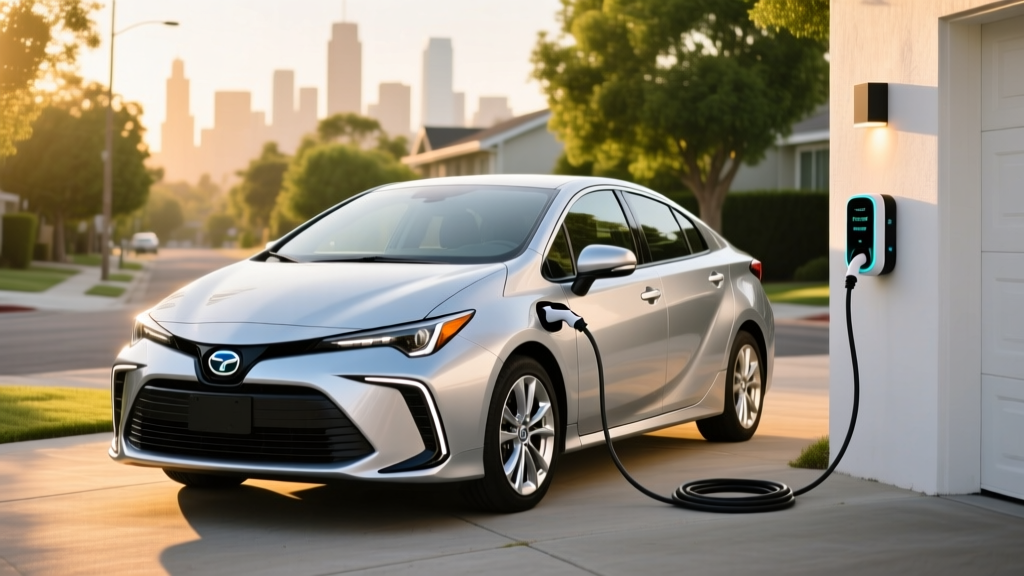
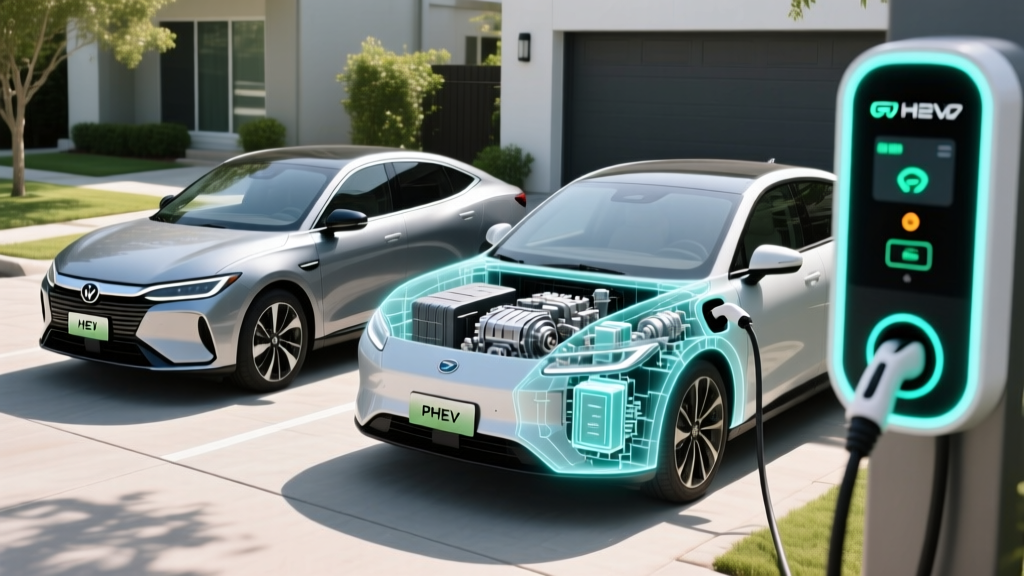
Before comparing specs, it's critical to understand the mechanical and practical differences. A conventional hybrid (HEV) never plugs in. It captures energy through regenerative braking and the engine to charge a small battery (typically 1–2 kWh). A plug-in hybrid (PHEV) has a much larger battery (15–25+ kWh), an external charge port, and the ability to drive meaningful distances on electricity alone before the gas engine engages.
| Attribute | Conventional Hybrid (HEV) | Plug-in Hybrid (PHEV) |
|---|---|---|
| Plugs in to charge? | No — self-charging via regen + engine | Yes — Level 1/Level 2 AC charging |
| Battery capacity | ~1.0–2.0 kWh | ~15–25+ kWh usable |
| Electric-only driving | Brief low-speed assist only | 25–50+ miles at full highway speed |
| Primary fuel | Gasoline (always) | Electricity first, then gasoline |
| Federal tax credit (§30D) | Not eligible | Up to $7,500 (if eligible) |
| Ideal for | No home charging access; high-mileage commuters | Home chargers; short commutes + road-trip flexibility |
How a Hybrid Powertrain Actually Works
Both HEV and PHEV systems share a common principle: an electric motor fills in the torque gaps where a gas engine is least efficient — particularly from a stop and during low-speed acceleration. The gasoline engine handles sustained highway cruising where it operates near peak efficiency. A power-split device (typically a planetary gearset, as in Toyota's Hybrid Synergy Drive) or a clutch-based system manages the blending.
In an HEV like the 2026 Toyota Prius, a 1.8L or 2.0L Atkinson-cycle engine pairs with one or two motor-generators. The small lithium-ion battery (roughly 1.0 kWh in the Prius) buffers energy from regenerative braking. You never plug it in — the car manages its own state of charge (SoC) between roughly 40% and 80%.
In a PHEV like the 2026 RAV4 Prime, a larger 18.1 kWh battery (usable ~15.5 kWh) powers the vehicle for an EPA-rated 42 miles on electricity alone. Once that battery depletes to a minimum threshold, the 2.5L engine engages and the vehicle operates as a conventional hybrid, returning about 38 MPG combined in charge-depleted (hybrid) mode.
Fuel Economy: Real EPA MPG Numbers
Hybrid fuel economy varies dramatically by model and driving pattern. Here's how several popular 2026 hybrids and PHEVs stack up, using EPA data:
| Vehicle | Type | City MPG | Highway MPG | Combined MPG | MPGe (PHEV) |
|---|---|---|---|---|---|
| Toyota Prius LE | HEV | 57 | 56 | 57 | — |
| Toyota Prius XSE AWD | HEV | 49 | 50 | 49 | — |
| Honda Accord Hybrid | HEV | 51 | 44 | 48 | — |
| Toyota RAV4 Prime | PHEV | 40 (hybrid) | 36 (hybrid) | 38 (hybrid) | 94 MPGe |
| Chrysler Pacifica Hybrid | PHEV | 30 (hybrid) | 31 (hybrid) | 30 (hybrid) | 82 MPGe |
| Hyundai Tucson PHEV | PHEV | 35 (hybrid) | 35 (hybrid) | 35 (hybrid) | 80 MPGe |
Real-World MPG vs. EPA Sticker
Hybrids have a well-documented real-world quirk: they often exceed their EPA city rating but fall short on the highway. This is because regenerative braking recovers far more energy in stop-and-go traffic than in steady-speed cruising. In our testing and owner reports, the Prius LE commonly returns 60+ MPG in city driving below 40 mph, but drops to 48–52 MPG at sustained 75 mph highway speeds.
For PHEVs, real-world electric-only range also depends heavily on temperature and driving style. The RAV4 Prime's 42-mile EPA electric range can stretch to 48–50 miles on mild days with gentle acceleration, but drops to 32–36 miles in freezing weather due to battery chemistry limitations and cabin heating demand. If your PHEV has a heat pump (the RAV4 Prime does), cold-weather losses are reduced but not eliminated.
Powertrain Specs: Horsepower, Engine, and Motor Output
Modern hybrids are no longer slow. The electric motor's instant torque fills in the low-RPM gap that makes small gas engines feel sluggish. Here's a spec breakdown of representative 2026 models:
| Vehicle | Engine | Motor(s) | Combined HP | 0–60 mph | Drivetrain |
|---|---|---|---|---|---|
| Toyota Prius LE | 2.0L I4 Atkinson | 2 motor-generators | 194 hp | 7.2 sec | FWD |
| Toyota Prius AWD | 2.0L I4 Atkinson | 3 motor-generators | 196 hp | 6.9 sec | AWD-e |
| Toyota RAV4 Prime | 2.5L I4 Atkinson | Front + rear motors | 302 hp | 5.7 sec | AWD-i |
| Honda Accord Hybrid | 2.0L I4 Atkinson | 2-motor system | 204 hp | 7.0 sec | FWD |
| Hyundai Tucson PHEV | 1.6L turbo I4 | Single front motor | 261 hp | 6.8 sec | AWD |
The RAV4 Prime's 302 combined horsepower makes it one of the quickest compact SUVs on the market — gas or electric — demonstrating that hybrid powertrains can deliver both efficiency and genuine performance.
PHEV Battery, Charging, and Electric-Only Range
For PHEV buyers, the battery and charging specs determine whether the vehicle fits your daily routine. Here's what to expect from current models:
| Vehicle | Battery (kWh total / usable) | Chemistry | EV Range (EPA) | Total Range | Level 2 Charge Time | DC Fast Charge? |
|---|---|---|---|---|---|---|
| Toyota RAV4 Prime | 18.1 / ~15.5 kWh | NMC lithium-ion | 42 mi | ~600 mi | ~2.5 hr (240V, 32A) | No |
| Chrysler Pacifica Hybrid | 16.0 / ~13.0 kWh | NMC lithium-ion | 32 mi | ~460 mi | ~2.0 hr (240V, 32A) | No |
| Hyundai Tucson PHEV | 13.8 / ~11.5 kWh | NMC lithium-ion | 33 mi | ~440 mi | ~1.75 hr (240V, 32A) | No |
| Jeep Wrangler 4xe | 17.3 / ~14.5 kWh | NMC lithium-ion | 21 mi | ~370 mi | ~2.5 hr (240V, 32A) | No |
Key takeaway: Most PHEVs do not support DC fast charging. This is by design — the battery is small enough that Level 2 AC charging (typically 6.6–7.2 kW onboard charger) fills it in 2–3 hours, which is adequate for overnight or workplace top-ups. If you need DC fast charging capability, you're looking at a full battery electric vehicle (BEV).
Level 1 charging (standard 120V outlet) will also work for PHEVs but takes 6–10 hours for a full charge — acceptable if you drive less than your EV range daily and can plug in every night. No special electrical work is needed for Level 1 beyond a dedicated 15A or 20A circuit.
Pricing, Tax Credits, and the §30D Factor
Pricing for hybrids and PHEVs spans a wide range. Here's the 2026 landscape:
| Vehicle | Base MSRP | Federal §30D Credit | Effective Price (est.) |
|---|---|---|---|
| Toyota Prius LE (HEV) | $29,445 | Not eligible | $29,445 |
| Toyota Prius XSE AWD (HEV) | $36,265 | Not eligible | $36,265 |
| Toyota RAV4 Prime SE (PHEV) | $44,965 | Up to $7,500* | ~$37,465* |
| Hyundai Tucson PHEV SEL | $39,745 | Up to $7,500* | ~$32,245* |
| Chrysler Pacifica Hybrid (PHEV) | $51,490 | Up to $7,500* | ~$43,990* |
* Federal §30D credit eligibility is not automatic. Per IRS guidelines, you must meet all of the following:
- Buyer income caps: Modified AGI ≤ $150,000 (single), $225,000 (head of household), $300,000 (married filing jointly)
- MSRP caps: ≤ $55,000 for sedans; ≤ $80,000 for SUVs, vans, and trucks
- Battery sourcing: Critical minerals and battery components must meet phased-in domestic/free-trade-partner thresholds that tighten annually through 2029
- Assembly: Vehicle must undergo final assembly in North America
- Point-of-sale transfer: As of 2024+, eligible buyers can transfer the credit to the dealer at purchase for an immediate price reduction rather than claiming it on their tax return
Because battery sourcing rules change yearly and vary by model, always verify a specific vehicle's eligibility on fueleconomy.gov or with your tax professional before counting on the credit. Conventional hybrids (HEVs) never qualify for §30D.
Hybrid Battery Warranty: What's Covered
Federal law mandates that hybrid and PHEV batteries carry a minimum warranty of 8 years / 100,000 miles (10 years / 150,000 miles in CARB states including California, New York, Massachusetts, and others). Most manufacturers match or exceed this:
- Toyota: 10 years / 150,000 miles on hybrid battery (all states, since 2020 model year)
- Hyundai/Kia: 10 years / 100,000 miles
- Honda: 8 years / 100,000 miles (10/150k in CARB states)
- Chrysler/Jeep (Stellantis): 8 years / 100,000 miles (10/150k in CARB states)
Out-of-warranty hybrid battery replacement costs range from approximately $2,000–$4,000 for a conventional HEV (Prius, Accord) to $6,000–$10,000+ for a PHEV with a larger battery pack (RAV4 Prime, Wrangler 4xe). Refurbished and aftermarket options are increasingly available at 30–50% lower cost.
Hybrid Battery Longevity and Reliability
Modern hybrid batteries are far more durable than early-generation units. Toyota's nickel-metal hydride (NiMH) packs in older Prius models routinely lasted 150,000–200,000 miles before significant degradation. Today's lithium-ion hybrid batteries use conservative charge windows — the car's software keeps the battery between roughly 40% and 80% SoC in HEV mode — which dramatically reduces calendar degradation.
Real-world data from fleet operators and owner surveys suggests:
- HEV batteries (1–2 kWh): Typically last the life of the vehicle (15+ years / 200,000+ miles) with less than 10% capacity loss
- PHEV batteries (15–25 kWh): Expect 85–92% capacity retention at 100,000 miles; most degradation occurs in the first 2–3 years and then plateaus
Hybrid powertrains as a whole tend to be more reliable than conventional gas-only powertrains. The electric motor has no wearable friction components, the regenerative braking system reduces wear on brake pads (many Prius owners report 80,000+ miles on original brake pads), and Toyota's e-CVT transmission has no traditional clutch packs or bands to fail. The IIHS and J.D. Power reliability data consistently place the Prius and RAV4 Hybrid/Prime among the top-rated vehicles for long-term dependability.
Hybrid vs PHEV vs EV: Which Powertrain Fits You?
The decision framework comes down to three factors: charging access, daily mileage, and road-trip frequency.
Choose a Conventional Hybrid (HEV) If:
- You cannot charge at home or work (apartment, street parking, no garage)
- You drive 30,000+ miles/year and want maximum fuel savings with zero behavior change
- You want the lowest upfront cost with no plug-in infrastructure
- You live in extreme cold where EV range loss would be punishing
- You want a proven, low-complexity ownership experience
Choose a Plug-in Hybrid (PHEV) If:
- You can install a Level 2 charger at home (240V outlet or hardwired)
- Your daily commute is under 40 miles round-trip (you'll rarely burn gas on weekdays)
- You take road trips where charging infrastructure is sparse or unreliable
- You want EV-like daily driving without range anxiety
- You qualify for the §30D federal tax credit (can reduce price by up to $7,500)
Choose a full BEV (battery electric vehicle) if you have reliable home charging, drive under 300 miles daily, and want the lowest per-mile fuel cost (~$0.04–$0.06/mile on electricity vs. $0.12–$0.18/mile on gas for a hybrid). BEVs eliminate oil changes, spark plugs, and exhaust system maintenance entirely, but require planning for road trips and access to DC fast charging.
FAQ: Hybrid Powertrain Questions Answered
How many MPG does a hybrid get in real-world driving?
The 2026 Toyota Prius LE is EPA-rated at 57 MPG combined. In real-world city driving with frequent stops, owners commonly report 58–63 MPG. At sustained highway speeds of 75 mph, expect 48–53 MPG. Heavier hybrids like the RAV4 Hybrid return roughly 39–41 MPG combined in practice. Your results depend on driving style, terrain, and climate — but hybrids consistently beat their EPA city numbers.
How far can a PHEV go on electric only?
Current 2026 PHEVs offer 21–42 miles of EPA-rated electric-only range. The RAV4 Prime leads the compact SUV segment at 42 miles, enough for most daily commutes without using a drop of gas. In mild weather with gentle driving, you may stretch this to 48+ miles. In freezing temperatures with heater use, expect 32–36 miles. Once the battery depletes, the gas engine engages seamlessly and the vehicle operates as a conventional hybrid.
Do conventional hybrids need to be plugged in?
No. A conventional hybrid (HEV) like the Prius, Accord Hybrid, or RAV4 Hybrid never plugs in. The battery charges entirely through regenerative braking and the gasoline engine. You fuel it exactly like a regular gas car — just with significantly better MPG.
Is a hybrid reliable and what does battery replacement cost?
Modern hybrids are among the most reliable vehicles on the road. Toyota's hybrid system is proven across millions of vehicles over 25+ years. Hybrid battery replacement costs $2,000–$4,000 for an HEV and $6,000–$10,000 for a PHEV if needed out of warranty, but most batteries last 150,000–200,000+ miles. The 8–10 year / 100,000–150,000-mile warranty covers premature failure.
Does a hybrid qualify for a tax credit?
Conventional hybrids (HEVs) do not qualify for the federal §30D tax credit. Only plug-in hybrids (PHEVs) and full BEVs are eligible, and only if they meet IRS requirements for MSRP caps, buyer income limits, battery component sourcing, and North American final assembly. Some states offer additional rebates or HOV lane access for PHEVs — check your state's energy office for current programs. Always verify eligibility on fueleconomy.gov and consult a tax professional before relying on the credit.
What's the difference between MPGe and MPG?
MPGe (miles per gallon equivalent) is the EPA's way of expressing electric-mode efficiency in familiar terms. One gallon of gasoline contains roughly 33.7 kWh of energy, so MPGe converts the electricity a PHEV uses into that equivalent. The RAV4 Prime's 94 MPGe means that while driving on electricity, it uses energy at the same rate as a gas vehicle getting 94 MPG. Once the battery depletes and the engine takes over, the standard 38 MPG combined rating applies.