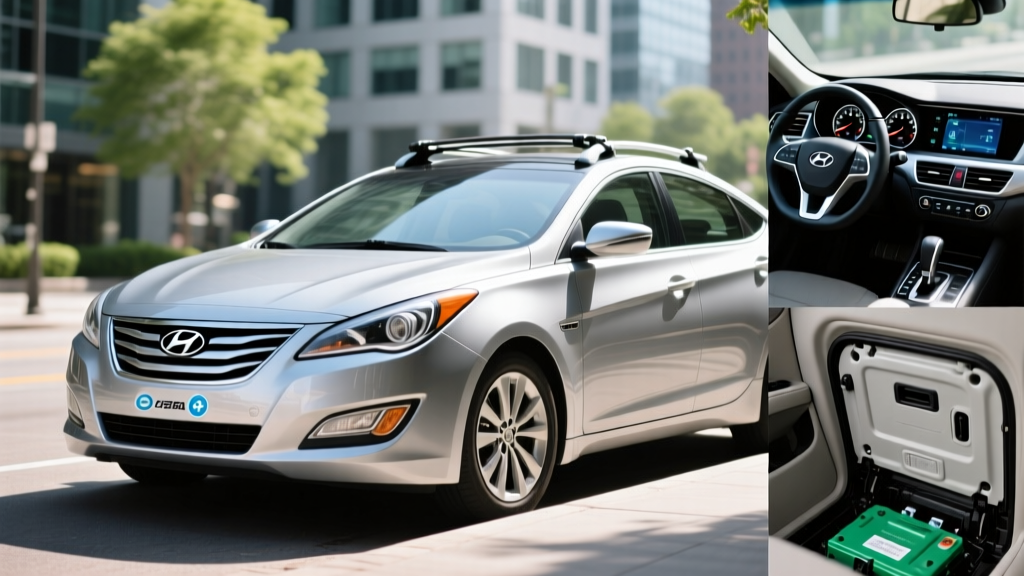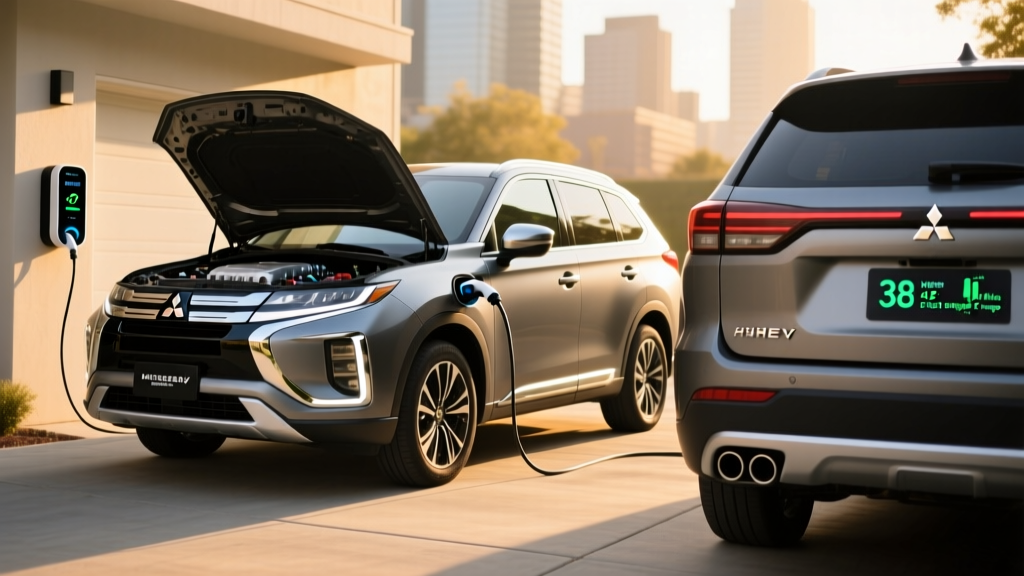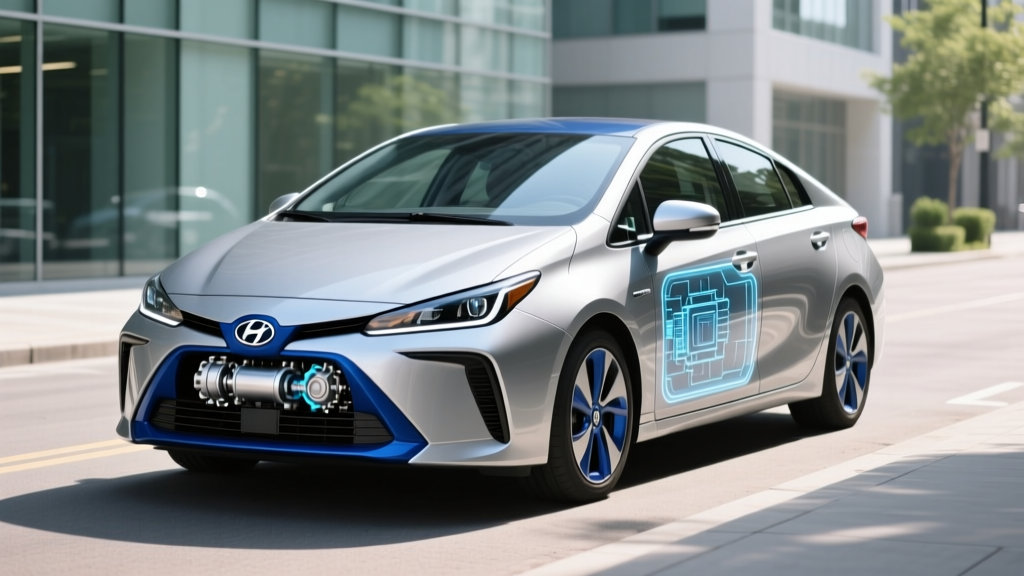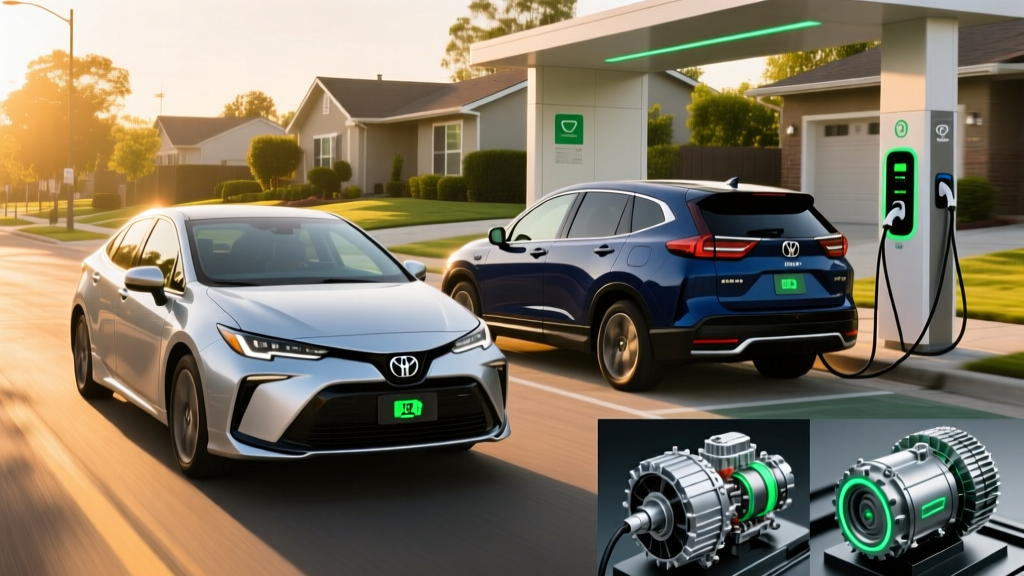
Search for "hybrid fuel" and you'll find a lot of confusion. Some people think it's a special type of gasoline. Others assume hybrids run on hydrogen or ethanol. The reality is simpler—and more practical. Hybrid fuel isn't a fuel at all. It's a powertrain strategy: combining a gasoline engine with one or more electric motors and a battery pack to squeeze more miles out of every gallon.
As of 2026, hybrid technology splits into two distinct categories that serve very different drivers: the conventional hybrid (HEV), which you never plug in, and the plug-in hybrid (PHEV), which offers 25–45 miles of pure electric driving before the gas engine takes over. Understanding the difference is the single most important thing you can do before shopping for an electrified vehicle.
What Does "Hybrid Fuel" Actually Mean?
When drivers ask "what is hybrid fuel," they're usually asking one of two things: (1) what do I put in the tank, or (2) how does the car use fuel differently than a normal gas car?
The answer to the first question is straightforward: conventional hybrids and plug-in hybrids both use regular unleaded gasoline (87 octane for most models, premium for some performance variants). There is no special hybrid fuel blend, no exotic additive, no hydrogen cell. You fill up at any gas station, exactly as you would with a conventional car.
The answer to the second question is where the engineering gets interesting. A hybrid powertrain recaptures energy that a gas-only car wastes—mainly during braking and deceleration—and stores it in a battery. That stored energy then assists the engine during acceleration, powers accessories, or (in PHEVs) drives the wheels on electricity alone. The result is dramatically better fuel economy, especially in stop-and-go city driving where regenerative braking has the most energy to recapture.
HEV vs. PHEV: The Two Types of Hybrid Powertrains
Before comparing fuel economy or pricing, you need to understand the structural difference between a conventional hybrid and a plug-in hybrid. They share a name but operate very differently day to day.
| Feature | Conventional Hybrid (HEV) | Plug-In Hybrid (PHEV) |
|---|---|---|
| Plugs in? | No — charges via regenerative braking and engine | Yes — Level 1 (120V) or Level 2 (240V) |
| Battery size | 1.0–2.0 kWh (small) | 13–25 kWh (much larger) |
| Electric-only range | Less than 1 mile at low speeds | 25–45+ miles (EPA rated) |
| DC fast charging? | Not applicable | Rarely — most are Level 2 only (a few exceptions like Mitsubishi Outlander PHEV) |
| Federal tax credit | Not eligible under §30D | Up to $7,500 (subject to battery sourcing, MSRP caps, income limits) |
| Typical use case | No home charging access; wants better MPG with zero behavior change | Has home/work charging; short commute but wants gas backup for road trips |
The practical upshot: if you can charge at home and your daily round-trip commute is under 40 miles, a PHEV can function as an EV on most days while retaining a gas engine for longer trips. If you can't charge at home or don't want to think about plugging in, an HEV delivers meaningful fuel savings with zero lifestyle change.
How Many MPG Does a Hybrid Get? Real Numbers by Category
Fuel economy is the primary reason most buyers choose a hybrid. Below are representative 2025–2026 EPA figures for popular models in each segment, drawn from fueleconomy.gov. We've included city, highway, and combined MPG because hybrids behave differently than gas cars across these driving conditions.
| Model | Type | City MPG | Hwy MPG | Combined | EV Range (mi) |
|---|---|---|---|---|---|
| Toyota Prius | HEV | 57 | 56 | 57 | — |
| Toyota Prius Prime | PHEV | — | — | 52 (gas) / 127 MPGe | 44 |
| Honda Accord Hybrid | HEV | 51 | 44 | 48 | — |
| Toyota RAV4 Hybrid | HEV | 41 | 38 | 39 | — |
| Toyota RAV4 Prime | PHEV | — | — | 38 (gas) / 94 MPGe | 42 |
| Hyundai Tucson PHEV | PHEV | — | — | 35 (gas) / 80 MPGe | 33 |
| Ford Maverick Hybrid | HEV | 42 | 33 | 37 | — |
How Plug-In Hybrids Use Electricity: Range, Charging, and Battery Specs
For PHEV buyers, the electric-only range is the headline number. This is how far you can drive on battery power alone—zero gasoline—before the engine seamlessly starts. As of 2026, most mainstream PHEVs deliver 25–45 miles of electric range, enough to cover the average American's daily commute (the U.S. Census Bureau reports a median one-way commute of about 26 miles).
PHEV Battery Size and Charging
PHEV batteries are substantially larger than HEV batteries but far smaller than full EV packs. A typical PHEV battery holds 13–25 kWh of energy (usable). For context, a full EV like the Tesla Model Y carries roughly 75 kWh.
| Charging Level | Power (kW) | 0–100% Time (typical PHEV) | Notes |
|---|---|---|---|
| Level 1 (120V household outlet) | ~1.4 kW | 8–14 hours | Included cord; overnight charge for most PHEVs |
| Level 2 (240V home/public) | 3.3–7.2 kW | 2–4 hours | Recommended for daily use; requires 240V outlet or installed charger |
| DC Fast Charging | 22–50 kW (if equipped) | 25–40 min (0–80%) | Very few PHEVs support DC fast charging; Mitsubishi Outlander PHEV is a notable exception |
kW vs. kWh — the critical distinction: kW (kilowatts) measures power—the rate at which electricity flows into the battery. kWh (kilowatt-hours) measures energy—the total capacity of the battery. Think of kW as how wide the hose is and kWh as how big the bucket is. A PHEV with an 18 kWh battery charging at 3.3 kW will take roughly 5.5 hours from empty to full.
Hybrid Powertrain Specs: Where the Power Comes From
Hybrids combine a gasoline engine with one or more electric motors. The combined output—measured in total system horsepower—is often significantly higher than the engine alone would produce. This is why many modern hybrids are quicker than their gas-only counterparts, not slower.
| Model | Engine | Total System HP | 0–60 mph | Drivetrain |
|---|---|---|---|---|
| Toyota Prius | 2.0L 4-cyl | 194 hp | 7.2 sec | FWD / AWD |
| Toyota RAV4 Prime | 2.5L 4-cyl + dual motors | 302 hp | 5.7 sec | AWD (eAWD) |
| Honda Accord Hybrid | 2.0L 4-cyl + dual motors | 204 hp | 6.5 sec | FWD |
| Ford Maverick Hybrid | 2.5L 4-cyl + motor | 191 hp | 7.6 sec | FWD |
| Hyundai Tucson PHEV | 1.6L turbo 4-cyl + motor | 261 hp | 6.4 sec | AWD |
The RAV4 Prime is a standout example: its PHEV powertrain produces 302 hp, making it one of the quickest vehicles in the Toyota lineup. This isn't a compromise—it's a performance upgrade that happens to deliver 42 miles of electric commuting.
Pricing and Tax Credit Eligibility for Hybrids and PHEVs
Hybrid pricing varies widely by segment. Conventional hybrids typically start between $28,000 and $38,000, while PHEVs—owing to their larger batteries and more complex powertrains—start between $36,000 and $50,000+.
Federal Tax Credits: PHEVs Only
Under the current IRS §30D Clean Vehicle Credit, only plug-in hybrids (PHEVs) and full EVs qualify for the federal tax credit. Conventional hybrids (HEVs) do not qualify—they have no plug-in capability and their batteries are too small to meet the statute's requirements.
For eligible PHEVs, the credit can be up to $7,500, but qualification depends on several factors that change frequently:
- Battery capacity: Minimum 7 kWh (most PHEVs qualify)
- MSRP cap: Vans/SUVs/pickups ≤ $80,000; sedans ≤ $55,000
- Buyer income cap: AGI ≤ $150,000 (single) / $300,000 (joint)
- Battery component sourcing: Must meet escalating domestic-content and critical-minerals thresholds (phased in through 2026)
- FEOC restriction: Battery components cannot be sourced from a "foreign entity of concern" (primarily targeting Chinese supply chains)
- Point-of-sale transfer: Eligible buyers can apply the credit as a dealer discount at purchase rather than waiting to claim it on their tax return
Rules are subject to legislative change. Consult IRS.gov or a tax professional before relying on credit eligibility for your purchase decision.
As of early 2026, several popular PHEVs remain eligible for partial or full credits, but the battery-sourcing and critical-minerals requirements have tightened significantly since the Inflation Reduction Act's passage. Always verify current eligibility on fueleconomy.gov's tax credit page before purchasing.
Representative Pricing (2025–2026 MSRP)
| Model | Base MSRP | Est. Price After Federal Credit |
|---|---|---|
| Toyota Prius (HEV) | ~$28,350 | Not eligible |
| Toyota Prius Prime (PHEV) | ~$33,475 | ~$25,975 (if eligible) |
| Toyota RAV4 Prime (PHEV) | ~$44,230 | ~$36,730 (if eligible) |
| Ford Maverick Hybrid (HEV) | ~$28,350 | Not eligible |
| Hyundai Tucson PHEV | ~$39,490 | ~$31,990 (if eligible) |
Battery Reliability, Warranty, and Replacement Costs
Battery longevity is consistently the top concern among hybrid shoppers—and it's where the data should ease most fears. Modern hybrid batteries are engineered to last the life of the vehicle under normal use.
Real-World Longevity Data
Toyota's hybrid systems have accumulated over two decades of field data. Prius taxis regularly exceed 300,000 miles on original battery packs. A study by Consumer Reports consistently ranks Toyota and Lexus hybrids among the most reliable vehicles in their lineup, with hybrid-specific components showing lower failure rates than conventional transmissions in many cases.
Why? Hybrid powertrains often use a planetary gearset (Toyota's e-CVT) with no traditional transmission clutches or bands to wear out. Regenerative braking also reduces wear on friction brake pads—many hybrid owners report 80,000+ miles on original brake pads.
Replacement Cost if the Battery Fails
Out-of-warranty hybrid battery replacement costs vary by model:
- Toyota Prius: $2,000–$4,000 (refurbished or new OEM)
- Toyota RAV4 Hybrid/Prime: $3,000–$6,000
- Honda Accord Hybrid: $2,500–$5,000
- PHEV packs (larger): $5,000–$9,000+ depending on kWh capacity
Third-party refurbishers and independent hybrid shops now offer reconditioned battery packs at 40–60% of OEM new pricing, further reducing worst-case costs.
Hybrid vs. PHEV vs. Full EV: Which Fits Your Situation?
The decision between an HEV, a PHEV, and a full battery-electric vehicle (BEV) comes down to three variables: charging access, commute distance, and trip flexibility.
✓ Choose a Conventional Hybrid (HEV) If:
- You cannot charge at home or work (apartment, street parking)
- You want better MPG with zero behavior change
- Your budget is under $35,000
- You drive mostly city/stop-and-go (where hybrids shine)
- You want proven long-term reliability with minimal maintenance
✓ Choose a Plug-In Hybrid (PHEV) If:
- You can install a Level 2 charger at home
- Your daily round-trip commute is under 40 miles
- You take occasional road trips and don't want to plan charging stops
- You want EV-like daily driving with a gas safety net
- You qualify for the federal tax credit (significant savings)
✓ Choose a Full EV (BEV) If:
- You have reliable home charging (Level 2 strongly recommended)
- Your daily driving is under 250 miles and you can plan for longer trips
- You want zero tailpipe emissions and minimal maintenance
- You want the lowest per-mile "fuel" cost (electricity vs. gas)
- You qualify for the full $7,500 federal tax credit
Frequently Asked Questions About Hybrid Fuel and Hybrids
Do hybrids need special fuel?
No. All mainstream hybrids and plug-in hybrids run on standard unleaded gasoline (87 octane for most models). There is no "hybrid fuel" blend. The hybrid system simply uses that gasoline more efficiently by supplementing the engine with electric motor assistance.
How many MPG does a hybrid get compared to a gas-only car?
Hybrids typically deliver 30–50% better combined fuel economy than comparable gas-only vehicles. For example, the Toyota RAV4 Hybrid returns 39 MPG combined versus the gas RAV4's 30 MPG combined. The Prius achieves 57 MPG combined versus a similarly sized gas compact at roughly 30–33 MPG.
How far can a plug-in hybrid go on electric only?
Most 2025–2026 PHEVs offer 25–45 miles of EPA-rated electric-only range. The Toyota Prius Prime leads at 44 miles; the RAV4 Prime delivers 42 miles. Real-world electric range varies with temperature (expect 15–25% reduction in freezing weather), terrain, and driving speed.
Is a hybrid reliable, and what does battery replacement cost?
Hybrids from Toyota, Honda, and Hyundai/Kia have demonstrated strong long-term reliability. Battery packs are warranted for 8–10 years / 100,000–150,000 miles. Out-of-warranty replacement costs $2,000–$6,000 for most HEVs and $5,000–$9,000 for PHEVs, though refurbished options reduce this significantly. Many hybrid packs last 200,000+ miles without issue.
Does a hybrid qualify for any tax credit?
Conventional hybrids (HEVs) do not qualify for the federal §30D Clean Vehicle Credit. Only plug-in hybrids (PHEVs) and full EVs are eligible, for up to $7,500 depending on battery sourcing requirements, MSRP caps, and buyer income limits. Some states offer additional incentives for PHEVs—check your state energy office or AFDC's state incentive database.
Do I need to plug in a hybrid?
Conventional hybrids (HEVs) never need to be plugged in. They charge their small battery entirely through regenerative braking and the gasoline engine. Plug-in hybrids (PHEVs) can be plugged in to access their electric-only range, but they will still function as regular hybrids if you never charge them—you simply won't get the electric miles.
What happens if the hybrid battery dies while driving?
In a conventional hybrid, if the high-voltage battery were to fail completely, the vehicle would lose electric motor assist and the engine would need to handle all propulsion. In practice, this is extremely rare during normal operation—the battery management system prevents deep discharge. If a fault is detected, the vehicle will display a warning and enter a reduced-power "limp" mode, allowing you to drive to a service center.