If you've shopped for a new vehicle in the last few years, you've probably seen the term "mild hybrid" on a window sticker and wondered what it actually means — especially compared to a full hybrid like the Toyota Prius or a plug-in hybrid like the Jeep Wrangler 4xe. The answer matters, because the fuel-economy gap between these three electrified powertrains can be the difference between 28 MPG combined and 56 MPG combined.
This guide breaks down exactly what a mild hybrid is, how it differs from a conventional hybrid (HEV) and a plug-in hybrid (PHEV), and which one actually fits your driving life in 2026. We'll use real EPA data, current pricing, and tax-credit rules to cut through the marketing.
What Is a Mild Hybrid (MHEV)? The 48-Volt Assist Explained
A mild hybrid electric vehicle (MHEV) pairs a small electric motor — typically a belt-driven integrated starter-generator (ISG) operating on a 48-volt electrical architecture — with a conventional internal-combustion engine. The key word is mild: the electric motor cannot propel the vehicle on its own. It assists the gas engine during acceleration, enables smoother stop-start operation, and recovers a small amount of energy during braking.
Think of it as an efficiency-enhanced gas car, not a true hybrid. The battery pack is tiny — usually between 0.5 and 1.5 kWh — and it's never plugged in. You'll find MHEV systems in vehicles like the 2026 Ram 1500 with the 3.0L Hurricane inline-six, the Audi Q5 55 TFSI, and various Mercedes-Benz models with their EQ Boost system.
What a mild hybrid actually does
- Smooth stop-start: The 48V system restarts the engine nearly imperceptibly at traffic lights, eliminating the shudder you feel in older stop-start systems.
- Torque fill: The electric motor adds 10–20 lb-ft of torque during initial acceleration, reducing turbo lag and making the engine feel more responsive.
- Coasting/sailing: Some MHEV systems can shut off the engine entirely while coasting on the highway, then restart it instantly when you touch the brake.
- Regenerative braking: Captures kinetic energy during deceleration to recharge the small 48V battery.
What a mild hybrid cannot do
- Drive on electric power alone — not even for a few hundred feet
- Be plugged in to charge
- Deliver meaningful fuel-economy gains (typically 1–3 MPG improvement over the non-hybrid equivalent)
- Qualify for any federal EV tax credit
MHEV vs HEV vs PHEV: The Hybrid Spectrum Compared
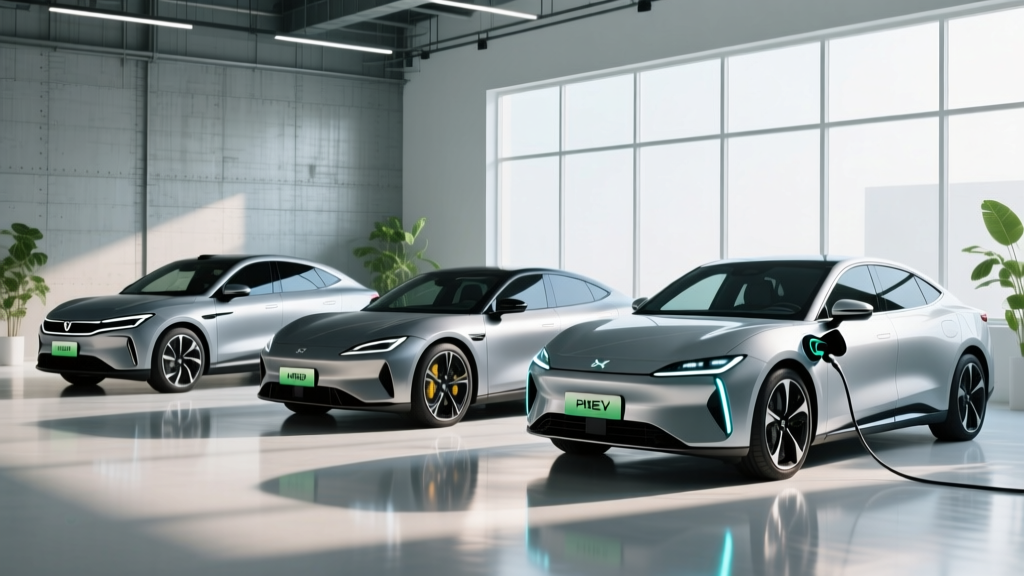
Understanding where mild hybrids sit requires seeing all three side by side. Here's how they differ across the metrics that matter:
| Feature | Mild Hybrid (MHEV) | Full Hybrid (HEV) | Plug-In Hybrid (PHEV) |
|---|---|---|---|
| Battery size | 0.5–1.5 kWh (48V) | 1.0–2.0 kWh (high-voltage) | 13–30+ kWh (high-voltage) |
| Electric-only driving | None | Very short, low-speed only (~1 mi) | 20–50+ miles at highway speed |
| Plugs in? | No | No | Yes (Level 1 or Level 2) |
| Typical MPG improvement vs gas | +1 to 3 MPG | +10 to 25 MPG | Varies (see below) |
| EPA combined MPG (representative) | 22–28 MPG | 40–57 MPG | 25–35 MPG (gas mode) + 80–100 MPGe (electric) |
| Federal tax credit (§30D) | Not eligible | Not eligible | Up to $7,500 (with caveats) |
| Price premium over gas model | $500–$1,500 | $1,500–$3,500 | $4,000–$8,000+ |
| DC fast charging | N/A | N/A | Rare (most are Level 2 only) |
The takeaway: a mild hybrid is a refinement upgrade to a gas car. A full hybrid is a fuel-economy revolution. A plug-in hybrid is a bridge to electric driving for people who can charge at home but still need gas-engine range.
Real-World MPG: What Mild Hybrids Actually Deliver
Let's put numbers on the page using current 2026 models that use MHEV, HEV, and PHEV powertrains in comparable vehicle segments.
| Vehicle (2026) | Powertrain | City MPG | Highway MPG | Combined MPG |
|---|---|---|---|---|
| Ram 1500 4x4 (3.0L Hurricane I6 MHEV) | Mild Hybrid | 19 | 24 | 21 |
| Toyota RAV4 Hybrid (AWD) | Full Hybrid (HEV) | 41 | 38 | 40 |
| Toyota RAV4 Prime (AWD) | Plug-In Hybrid (PHEV) | 40 (gas) / 94 MPGe | 36 (gas) / 88 MPGe | 38 (gas) / 94 MPGe |
| BMW X5 xDrive50e | Plug-In Hybrid (PHEV) | — (gas: 21) | — (gas: 25) | — (gas: 22) / 56 MPGe |
| Audi Q5 55 TFSI e | Plug-In Hybrid (PHEV) | — (gas: 23) | — (gas: 28) | — (gas: 25) / 61 MPGe |
Real-world note: Full hybrids consistently match or exceed their EPA city ratings because regenerative braking works hardest in stop-and-go traffic. The RAV4 Hybrid, for instance, often returns 42–44 MPG in real urban driving per fueleconomy.gov user reports. Mild hybrids, by contrast, track very close to their EPA numbers — the 48V assist is too small to meaningfully shift real-world results. PHEVs are the most variable: if you charge daily and drive under 30 miles, you might burn almost no gas. Skip the charging, and you're driving a heavy gas car with worse MPG than a dedicated HEV.
How Mild Hybrid Powertrains Work Under the Hood
A typical MHEV system adds three components to a conventional powertrain:
- 48-volt lithium-ion battery: Usually mounted under the rear seat or in the cargo area. At 0.5–1.5 kWh, it holds roughly the energy of a laptop battery — enough for brief assist, not sustained driving.
- Belt-driven integrated starter-generator (ISG): Replaces the traditional alternator and starter motor. It's connected to the engine's crankshaft via a reinforced belt and can both generate electricity (during braking/coasting) and inject torque (during acceleration).
- DC-DC converter: Steps the 48V down to 12V to power the vehicle's conventional electrical systems (lights, infotainment, ECU).
Combined output depends on the base engine. The 2026 Ram 1500's Hurricane inline-six, for example, produces 420 hp and 468 lb-ft of torque; the MHEV system's contribution is embedded in those figures rather than additive in a way the driver can feel as a separate "electric boost." Compare that to the RAV4 Prime PHEV, where a 134-kW electric motor works with a 2.5L four-cylinder for a combined 302 hp — and can hit 60 mph in 5.7 seconds on electric power alone.
PHEV Deep Dive: Electric-Only Range, Charging, and Battery Specs
Because plug-in hybrids represent the biggest practical step up from a mild hybrid, here's what the current PHEV landscape looks like for buyers considering the jump:
| Model | Battery (kWh usable) | Electric-Only Range (EPA) | Total Range (gas + electric) | Level 2 Charge Time (0–100%) | DC Fast Charge? | Combined HP |
|---|---|---|---|---|---|---|
| Toyota RAV4 Prime | 14.9 kWh | 42 miles | ~600 miles | ~2.5 hrs (6.6 kW) | No | 302 hp |
| Jeep Wrangler 4xe | 15.0 kWh | 22 miles | ~370 miles | ~2.0 hrs (7.2 kW) | No | 375 hp |
| BMW X5 xDrive50e | 22.3 kWh | 38 miles | ~440 miles | ~3.0 hrs (7.4 kW) | No | 483 hp |
| Chrysler Pacifica Hybrid | 16.0 kWh | 32 miles | ~520 miles | ~2.0 hrs (7.2 kW) | No | 260 hp |
| Hyundai Tucson PHEV | 13.8 kWh | 33 miles | ~440 miles | ~1.7 hrs (7.2 kW) | No | 261 hp |
Key insight: Nearly no PHEVs on the US market offer DC fast charging. The Mitsubishi Outlander PHEV is a rare exception, supporting up to 22 kW DC — still far below what a full BEV offers. For PHEV owners, home Level 2 charging (240V) is the practical standard, and that's fine: a 15–20 kWh battery fully replenishes in roughly 2 hours on a standard Level 2 home charger, meaning you can easily recharge during the workday or overnight.
Tax Credits: What Qualifies and What Doesn't
This is where mild hybrid buyers need a reality check. Under current IRS §30D rules for 2026, the federal clean vehicle credit applies only to plug-in vehicles — battery electric vehicles (BEVs) and plug-in hybrids (PHEVs) that meet battery-capacity, critical-mineral sourcing, and battery-component manufacturing requirements.
- Mild hybrids (MHEV): Not eligible. No plug, no credit.
- Full hybrids (HEV): Not eligible. No plug, no credit.
- Plug-in hybrids (PHEV): Potentially eligible for up to $7,500, subject to:
- Battery capacity ≥ 7 kWh
- MSRP caps: $80,000 for vans/SUVs/pickups, $55,000 for sedans
- Buyer income caps: $300,000 joint / $225,000 head of household / $150,000 individual (MAGI)
- Critical minerals and battery component sourcing thresholds (which tighten annually)
- Point-of-sale transfer available — the credit can be applied as a down-payment reduction at the dealer
In practice for 2026, the tightening critical-mineral and battery-component rules have disqualified several PHEVs that previously qualified. The RAV4 Prime, for example, has faced eligibility uncertainty due to battery-sourcing requirements. Always verify current eligibility on the IRS clean vehicle credit page or with a tax professional before counting on the credit in your purchase math.
Battery Longevity, Warranty, and Replacement Costs
Hybrid Battery Warranty Snapshot (2026 Models)
| Brand | Hybrid Battery Warranty | Powertrain Warranty |
|---|---|---|
| Toyota (HEV/PHEV) | 10 years / 150,000 miles | 5 years / 60,000 miles |
| Hyundai / Kia (HEV/PHEV) | 10 years / 100,000 miles | 10 years / 100,000 miles |
| BMW (PHEV) | 8 years / 80,000 miles | 4 years / 50,000 miles |
| Jeep / Chrysler (PHEV) | 8 years / 100,000 miles | 5 years / 60,000 miles |
| Ford (HEV/PHEV) | 8 years / 100,000 miles | 5 years / 60,000 miles |
Federal law mandates a minimum 8-year/80,000-mile warranty on hybrid and EV battery packs. California-emissions states often extend this to 10 years / 150,000 miles.
Mild hybrid 48V batteries are small and lightly stressed. They rarely fail in the vehicle's normal lifespan, and replacement cost — when needed out of warranty — typically runs $500–$1,500, far less than a full hybrid or PHEV pack.
Full hybrid (HEV) batteries (1–2 kWh, typically nickel-metal-hydride or lithium-ion) have proven extremely durable. Toyota Prius packs routinely last 200,000+ miles. Out-of-warranty replacement runs $2,000–$4,000 depending on the model, with refurbished options available for $1,000–$2,000.
PHEV batteries (13–30 kWh) are larger and more expensive. Out-of-warranty replacement currently ranges from $6,000 to $12,000+ depending on capacity and brand. However, degradation data from independent testing shows most PHEV packs retain 85–90% of original capacity after 100,000 miles — well within the warranty's capacity-retention threshold (usually 60–70% of original capacity).
Who Should Choose a Mild Hybrid vs HEV vs PHEV vs Full EV?
Buyer Decision Framework
Choose a mild hybrid (MHEV) if:
- You want a specific vehicle (e.g., Ram 1500, Audi Q5) that only comes with MHEV in certain trims
- You want marginally smoother stop-start and a slight efficiency bump without changing your fueling habits
- You don't want to pay a significant powertrain premium or deal with charging
Choose a full hybrid (HEV) if:
- Fuel economy is your top priority and you can't charge at home
- You do a lot of city driving (where hybrids shine, often beating EPA estimates)
- You want a proven, low-maintenance powertrain with no plug-in hassle
Choose a plug-in hybrid (PHEV) if:
- You can charge at home (Level 2, 240V) and your daily commute is under 30–40 miles
- You want electric driving for daily errands but need gas-engine range for road trips
- You want to reduce fuel costs significantly without committing to a full EV
Choose a full battery EV (BEV) if:
- You have reliable home charging and want zero tailpipe emissions
- Your daily driving is within the vehicle's real-world range (accounting for cold weather and highway losses)
- You want the lowest per-mile "fuel" cost and minimal maintenance (no oil changes, fewer moving parts)
Pricing Context: What These Powertrains Cost in 2026
Here's how the upfront cost stacks up, using the Toyota RAV4 lineup as a consistent comparison (prices are base MSRP including destination):
- 2026 RAV4 LE (gas): ~$30,500 — no hybrid, no MHEV, baseline
- 2026 RAV4 Hybrid LE (HEV): ~$33,000 — roughly $2,500 premium for the hybrid powertrain, 40 MPG combined vs 30 MPG combined for the gas model
- 2026 RAV4 Prime SE (PHEV): ~$45,500 — roughly $15,000 premium over gas, 42 miles electric-only, potentially eligible for federal credit
For mild hybrid vehicles, the premium is usually baked into the trim rather than offered as a standalone option. The 2026 Ram 1500 with the Hurricane I6 (which includes the 48V MHEV system) starts around $50,000 in Laramie trim — but there's no non-MHEV version of that engine to compare against.
When evaluating cost, factor in fuel savings. At 15,000 miles/year and $3.40/gallon:
- RAV4 gas (30 MPG): $1,700/year in fuel
- RAV4 Hybrid (40 MPG): $1,275/year — saving $425/year, paying back the hybrid premium in ~6 years
- RAV4 Prime (charged daily, ~80% electric): ~$600–$900/year in combined electricity + gas — paying back the premium faster, especially with a tax credit
Mild Hybrid Pros
- No behavior change needed — no plugging in
- Smoother stop-start than conventional gas cars
- Low cost premium ($500–$1,500)
- Minimal complexity; 48V battery rarely fails
- Available in trucks and SUVs where full hybrids are limited
Mild Hybrid Cons
- Negligible fuel-economy improvement (1–3 MPG)
- Cannot drive on electric power at all
- No federal or state tax credits
- Doesn't meaningfully reduce emissions
- Marketing can mislead buyers into thinking it's a "real" hybrid
Frequently Asked Questions
How many MPG does a mild hybrid get?
A mild hybrid typically gets 1–3 MPG more than its non-hybrid counterpart. For example, the 2026 Ram 1500 4x4 with the MHEV-equipped Hurricane I6 returns an EPA-estimated 21 MPG combined (19 city / 24 highway). Compare that to the Toyota RAV4 Hybrid (a full HEV) at 40 MPG combined — the difference in architecture is enormous.
Can a mild hybrid drive on electric power alone?
No. A mild hybrid's electric motor is too small and its battery too tiny (0.5–1.5 kWh) to propel the vehicle independently. The motor only assists the gas engine. If you want electric-only driving, you need at least a full hybrid (very limited low-speed EV mode) or a plug-in hybrid (20–50 miles of electric range).
Is a mild hybrid the same as a regular hybrid?
No. A "regular" or full hybrid (HEV) like the Toyota Prius or Honda CR-V Hybrid uses a much larger electric motor and a higher-voltage battery (1–2 kWh) that can briefly drive the wheels alone, recovers significantly more braking energy, and delivers 10–25 MPG improvement over a gas car. A mild hybrid is a modest assist system that delivers marginal gains.
Do mild hybrids need to be plugged in?
No. Mild hybrids charge their small 48V battery entirely through regenerative braking and the engine-driven generator. You fuel them exactly like a conventional gas car.
Is a mild hybrid reliable, and what does battery replacement cost?
Mild hybrid systems are generally very reliable because the 48V battery is small, lightly cycled, and not subjected to the deep charge/discharge cycles of a full hybrid or PHEV pack. Out-of-warranty 48V battery replacement typically costs $500–$1,500. Most manufacturers cover the 48V system under the standard powertrain warranty (5 years / 60,000 miles or similar), though it may not fall under the extended hybrid battery warranty mandated for high-voltage systems.
Does a mild hybrid qualify for any tax credit?
No. Under current IRS §30D rules, the federal clean vehicle credit applies only to plug-in vehicles (BEVs and PHEVs) with a battery capacity of at least 7 kWh that meet sourcing, MSRP, and buyer-income requirements. Mild hybrids and conventional (non-plug-in) hybrids are not eligible. Some states may offer minor incentives for any electrified vehicle, but these are rare for MHEVs — check your state's energy office for specifics.
Hybrid vs PHEV vs EV — which one fits me?
If you can't charge at home and want maximum fuel economy with zero hassle: choose a full hybrid (HEV). If you can charge at home and your commute is under 40 miles: a PHEV gives you electric daily driving with gas-engine road-trip freedom. If you have home charging, want the lowest operating cost, and your driving fits within ~250–300 miles between charges: a full BEV. A mild hybrid makes sense only if the specific vehicle you want happens to come with MHEV — it's not a powertrain you should seek out for efficiency reasons.