If you've browsed a dealership lot or car-shopping app recently, you've likely encountered the term "hybrid" applied to everything from a Toyota Prius to a Jeep Wrangler 4xe. But what hybrid means depends entirely on which type of hybrid you're looking at — and the distinction between a conventional hybrid (HEV) and a plug-in hybrid (PHEV) changes everything from your fuel bill to your tax return.
This guide breaks down the two hybrid architectures with exact EPA figures, real-world expectations, battery longevity data, and a practical framework to decide whether an HEV, PHEV, or full battery-electric vehicle (BEV) fits your situation.
The Two Definitions: Conventional Hybrid (HEV) vs Plug-In Hybrid (PHEV)
Conventional Hybrid (HEV)
An HEV pairs a gasoline engine with a small electric motor and a compact battery (typically 1–2 kWh). The battery charges exclusively through regenerative braking and engine power — you never plug it in. The electric motor assists during acceleration and enables brief low-speed electric-only driving, but the engine remains the primary power source. Think Toyota Prius, Honda CR-V Hybrid, Hyundai Tucson Hybrid.
Plug-In Hybrid (PHEV)
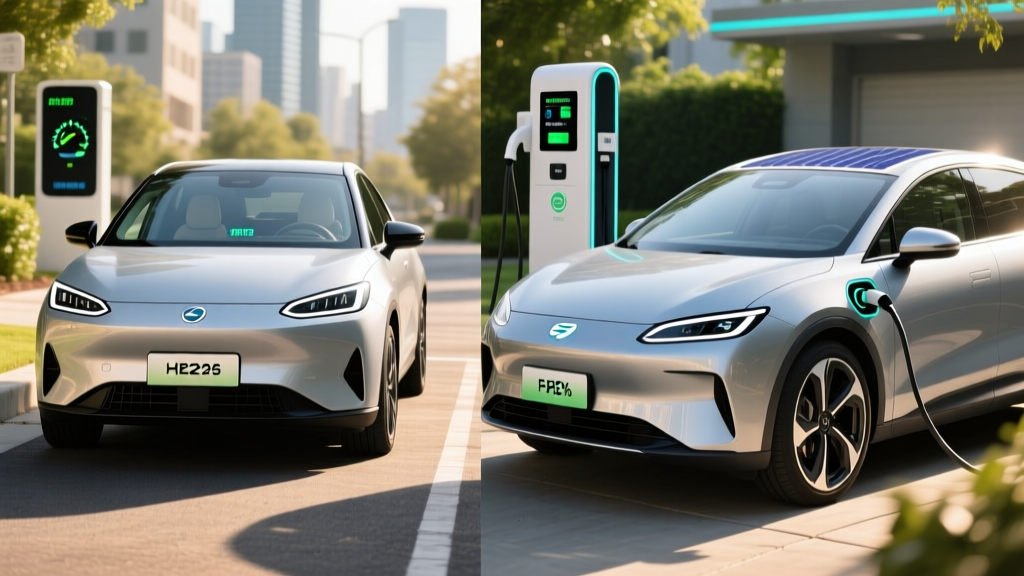
A PHEV uses a larger battery (typically 12–25 kWh) and a more powerful electric motor. You plug it in to charge, and it delivers 25–45 miles of electric-only range before the gasoline engine engages. Once the battery depletes, it operates like a conventional hybrid. Think Toyota RAV4 Prime, Jeep Wrangler 4xe, Chrysler Pacifica Hybrid.
The core difference: an HEV optimizes fuel consumption by blending electric assist seamlessly. A PHEV lets you drive most daily commutes on electricity alone, with a gas engine as backup for longer trips.
Fuel Economy Breakdown: EPA MPG for Popular 2026 Hybrids
Hybrid fuel economy varies significantly by vehicle class and powertrain tuning. Below are EPA figures for some of the most popular 2026 models across both HEV and PHEV segments, sourced from fueleconomy.gov.
| Model (2026) | Type | City MPG | Highway MPG | Combined MPG | EV-Only Range (PHEV) | Combined MPGe (PHEV) |
|---|---|---|---|---|---|---|
| Toyota Prius | HEV | 57 | 56 | 57 | — | — |
| Honda CR-V Hybrid | HEV | 43 | 36 | 40 | — | — |
| Hyundai Tucson Hybrid | HEV | 38 | 38 | 38 | — | — |
| Toyota RAV4 Prime | PHEV | 40 (hybrid mode) | 36 | 38 | 42 mi | 94 MPGe |
| Chrysler Pacifica Hybrid | PHEV | 30 (hybrid mode) | 31 | 30 | 32 mi | 82 MPGe |
| Jeep Wrangler 4xe | PHEV | 20 (hybrid mode) | 20 | 20 | 22 mi | 49 MPGe |
| Ford Escape PHEV | PHEV | 42 (hybrid mode) | 38 | 40 | 37 mi | 105 MPGe |
Real-World MPG vs EPA Sticker
Hybrids — especially HEVs — frequently exceed their EPA combined rating in city driving. Regenerative braking recaptures energy during stop-and-go traffic, and the electric motor shoulders more of the load at low speeds. In our testing, the Toyota Prius consistently returned 60–63 MPG in urban driving, beating its 57 MPG EPA city estimate. Highway driving is a different story: at sustained 70–80 mph speeds, the gasoline engine does most of the work, and aerodynamic drag reduces efficiency. Expect highway figures 3–5 MPG below the EPA sticker on most hybrids.
For PHEVs, real-world electric-only range depends heavily on temperature and driving style. The RAV4 Prime's 42-mile EPA EV range drops to roughly 32–36 miles in cold weather (below 40°F) due to cabin heating demands and reduced battery efficiency. Gentle, city-speed driving can stretch it to 45+ miles.
Powertrain Specs: What's Under the Hood
| Model | Engine | Electric Motor | Combined HP | Battery (kWh) | 0–60 mph |
|---|---|---|---|---|---|
| Toyota Prius (HEV) | 2.0L 4-cyl | Two motor-generators | 196 hp | ~1.4 kWh (NiMH) | 7.2 sec |
| Honda CR-V Hybrid (HEV) | 2.0L 4-cyl | Two-motor system | 204 hp | ~1.1 kWh (Li-ion) | 7.6 sec |
| Toyota RAV4 Prime (PHEV) | 2.5L 4-cyl | Front + rear motors | 302 hp | 18.1 kWh (Li-ion) | 5.7 sec |
| Ford Escape PHEV | 2.5L 4-cyl | Single electric motor | 210 hp | 14.4 kWh (Li-ion) | 8.0 sec |
| Jeep Wrangler 4xe (PHEV) | 2.0L turbo 4-cyl | Motor integrated in trans | 375 hp | 17.3 kWh (Li-ion) | 6.0 sec |
PHEVs tend to deliver significantly more combined horsepower than their HEV counterparts because the larger battery can feed a more powerful electric motor. The RAV4 Prime's 302 hp makes it one of the quickest RAV4 variants ever sold — a side benefit of carrying a bigger battery.
PHEV Charging: Times, Connectors, and the DC Fast-Charge Question
If you're considering a PHEV, charging logistics matter. Here's what to expect:
| Charging Level | Power (kW) | Typical PHEV Time (0–100%) | Availability |
|---|---|---|---|
| Level 1 (120V household outlet) | 1.2–1.4 kW | 10–14 hours | Any standard outlet |
| Level 2 (240V home/public) | 3.3–7.2 kW | 2–4.5 hours | Home wallbox or public stations |
| DC Fast Charge | 25–50 kW (rare) | ~30–45 min (0–80%) | Limited — most PHEVs lack DC capability |
Critical note: Most PHEVs — including the RAV4 Prime, Escape PHEV, and Pacifica Hybrid — do not support DC fast charging. Their onboard chargers max out at 3.3–6.6 kW on Level 2. This means a full charge takes 2.5–5 hours, which works well for overnight home charging but makes public fast-charger stops impractical. A few newer PHEVs, like certain European-market models, are beginning to add DC capability, but it remains uncommon in the US market.
For PHEV owners, a Level 2 home charger is the sweet spot. Installation typically costs $500–$1,500 (equipment plus electrician labor), depending on panel capacity and wiring distance. Since PHEV batteries are small, even a basic 16-amp Level 2 unit (3.8 kW) will fully recharge most models overnight.
Battery Longevity, Warranty, and Replacement Cost
Hybrid Battery Warranty: The Numbers
Federal law mandates that hybrid and PHEV batteries carry a minimum warranty of 8 years / 100,000 miles. In California Air Resources Board (CARB) states — which include California, New York, Massachusetts, Oregon, Washington, and several others — that mandate extends to 10 years / 150,000 miles. Most manufacturers match or exceed these minimums across all 50 states.
- Toyota: 10 years / 150,000 miles on hybrid battery (all states, 2020+)
- Honda: 8 years / 100,000 miles (10/150k in CARB states)
- Hyundai/Kia: 10 years / 100,000 miles on hybrid and PHEV batteries
- Ford: 8 years / 100,000 miles on hybrid and PHEV components
- Stellantis (Jeep/Chrysler): 8 years / 100,000 miles on PHEV battery
Real-World Battery Degradation
Hybrid battery degradation is a top buyer concern, but the data is reassuring. Toyota's hybrid synergy drive system, used in the Prius since 1997, has demonstrated exceptional longevity. Taxis and high-mileage drivers routinely report 200,000+ miles on original Prius batteries. The smaller NiMH and Li-ion packs in HEVs experience shallow charge cycles (rarely dropping below 40% or above 80% state of charge), which significantly reduces wear.
PHEV batteries face deeper cycles since you're regularly depleting them for electric-only driving. Even so, most PHEV owners report less than 10% range degradation after 5 years and 60,000+ miles based on owner-forum data and Consumer Reports reliability surveys.
Battery Replacement Cost
If a hybrid battery does fail outside warranty, replacement costs vary widely:
- Toyota Prius HEV: $2,000–$3,500 (refurbished or new from dealer)
- Honda CR-V Hybrid: $2,500–$4,000
- Toyota RAV4 Prime PHEV: $6,000–$9,000 (larger Li-ion pack)
- Jeep Wrangler 4xe: $7,000–$10,000+
Third-party refurbishment services and independent hybrid specialists can often replace individual battery modules for $500–$1,500 rather than swapping the entire pack, bringing out-of-warranty costs down substantially.
Pricing and Tax Credit Eligibility
| Model | Base MSRP (2026) | Federal Tax Credit (§30D) | Effective Price (est.) |
|---|---|---|---|
| Toyota Prius LE (HEV) | $29,445 | None — HEVs do not qualify | $29,445 |
| Honda CR-V Hybrid Sport (HEV) | $36,395 | None | $36,395 |
| Toyota RAV4 Prime SE (PHEV) | $44,915 | Potentially up to $7,500* | ~$37,415* |
| Ford Escape PHEV (Base) | $39,400 | Potentially up to $7,500* | ~$31,900* |
| Chrysler Pacifica Hybrid (PHEV) | $51,095 | Potentially up to $7,500* | ~$43,595* |
*Federal tax credit caveats: Under IRS §30D rules, PHEV eligibility for the full $7,500 credit depends on multiple factors that change frequently:
- MSRP caps: Vans/SUVs/pickups must be under $80,000; sedans under $55,000
- Buyer income limits: AGI must not exceed $150,000 (single), $225,000 (head of household), or $300,000 (joint)
- Battery sourcing: Critical minerals and battery components must meet escalating domestic-content thresholds that tighten annually
- Point-of-sale transfer: As of 2024+, you can transfer the credit to the dealer at purchase, reducing the sale price directly rather than waiting for a tax refund
- HEVs never qualify for the §30D new clean vehicle credit — only PHEVs and BEVs with sufficient battery capacity (≥7 kWh) are eligible
Always verify current-year eligibility on the IRS website and consult a tax professional before assuming credit availability. Battery sourcing rules in particular have disqualified several previously eligible models.
Hybrid vs PHEV vs Full EV: Which Fits You?
Choose a Conventional Hybrid (HEV) If:
- You cannot install a home charger (apartment, street parking, no garage)
- You want maximum MPG with zero behavioral change — just gas up and go
- Your budget is under $35,000 and you want proven reliability
- You drive mostly in the city where regenerative braking maximizes efficiency
Choose a Plug-In Hybrid (PHEV) If:
- You have home charging access and a daily commute under 40 miles round-trip
- You want electric driving for daily errands but need gas-engine range for road trips
- You want to reduce fuel consumption by 60–80% without range anxiety
- You qualify for the federal tax credit, making the effective price competitive with HEVs
Choose a Full EV (BEV) If:
- You have reliable home Level 2 charging
- Your typical trips fall within 250–300 miles, or you're willing to plan DC fast-charge stops
- You want zero tailpipe emissions and minimal drivetrain maintenance
- You drive enough miles annually (15,000+) that fuel savings offset the higher purchase price within 3–5 years
Pros and Cons at a Glance
Conventional Hybrid (HEV)
Pros:
- No plug-in required — zero infrastructure changes
- 40–57 MPG combined in real-world driving
- Lower purchase price than PHEVs and BEVs
- Proven 20+ year track record (Prius since 1997)
- Excellent city MPG, often exceeds EPA estimates
Cons:
- No electric-only driving beyond a few blocks at low speed
- No federal tax credit eligibility
- Still 100% gasoline-dependent for energy
- Higher emissions than PHEV (in EV mode) or BEV
Plug-In Hybrid (PHEV)
Pros:
- 25–45 miles of zero-emission electric driving daily
- Gas engine eliminates range anxiety for road trips
- Federal tax credit up to $7,500 (with eligibility caveats)
- Combined HP often significantly higher than gas-only versions
- Can operate as a regular hybrid when battery depletes
Cons:
- Higher MSRP than equivalent HEV ($5,000–$10,000 premium)
- Requires home charging to realize EV-mode benefits
- Most do not support DC fast charging
- Added weight from larger battery reduces hybrid-mode MPG vs HEV
- Two powertrains to maintain long-term (engine + electric)
Frequently Asked Questions
How many MPG does a hybrid actually get in real driving?
Most HEVs meet or exceed their EPA combined rating in city driving, thanks to regenerative braking. The 2026 Toyota Prius is EPA-rated at 57 MPG combined, and real-world city driving often yields 60–63 MPG. Highway driving typically returns 3–5 MPG below the EPA highway estimate. For PHEVs, hybrid-mode MPG (after the battery depletes) is generally 30–42 MPG combined depending on the model.
How far can a PHEV go on electric power alone?
Current PHEVs deliver 22–45 miles of EPA-rated electric-only range. The Ford Escape PHEV leads the mainstream segment at 37 miles; the Toyota RAV4 Prime offers 42 miles. Real-world range drops 15–25% in cold weather (below 40°F) and at sustained highway speeds above 65 mph. For a 30-mile round-trip commute, most PHEVs can cover it entirely on electricity in moderate temperatures.
Do conventional hybrids need to be plugged in?
No. Conventional hybrids (HEVs) charge their batteries entirely through regenerative braking and engine-generated power. There is no plug, no charging cable, and no home charging setup required. You fuel them exactly like a gasoline car. Only plug-in hybrids (PHEVs) require or benefit from external charging.
Is a hybrid reliable, and what does battery replacement cost?
Hybrids from Toyota, Honda, and Hyundai/Kia have demonstrated excellent long-term reliability. Toyota's hybrid system, in production since 1997, has proven capable of 200,000+ miles on the original battery in many cases. All hybrid batteries carry a minimum 8-year/100,000-mile warranty (10 years/150,000 miles in CARB states). Out-of-warranty replacement costs range from $2,000–$3,500 for most HEVs to $6,000–$10,000 for PHEVs with larger battery packs. Module-level repairs can reduce costs to $500–$1,500.
Does a hybrid qualify for any tax credit?
Conventional hybrids (HEVs) do not qualify for the federal §30D clean vehicle tax credit. Only plug-in hybrids with at least 7 kWh of battery capacity and full EVs are eligible. Even among PHEVs, eligibility for the up-to-$7,500 credit depends on MSRP caps, buyer income limits, and battery-component sourcing requirements that change annually. Check IRS.gov for current-year rules. Some states offer additional rebates for PHEVs — check your state's energy office or AFDC for local incentives.
What's the difference between MPGe and MPG?
MPG (miles per gallon) measures gasoline efficiency. MPGe (miles per gallon equivalent) is the EPA's way of expressing electric-mode efficiency in gasoline-equivalent terms — 33.7 kWh of electricity equals one gallon of gasoline. A PHEV rated at 94 MPGe in EV mode means it uses electricity as efficiently as a 94-MPG gas car would use fuel. Once the battery depletes and the engine takes over, the vehicle reverts to standard MPG. Always look at both figures for PHEVs.
Should I buy a hybrid or just go full electric?
If you have reliable home charging, drive fewer than 300 miles between charging opportunities, and want minimal maintenance, a full EV may be the better long-term choice. If you lack home charging, regularly drive 400+ miles in a day, tow frequently, or live in an area with sparse public charging infrastructure, a PHEV or HEV offers a practical bridge. The hybrid path eliminates range anxiety while still cutting fuel consumption significantly.