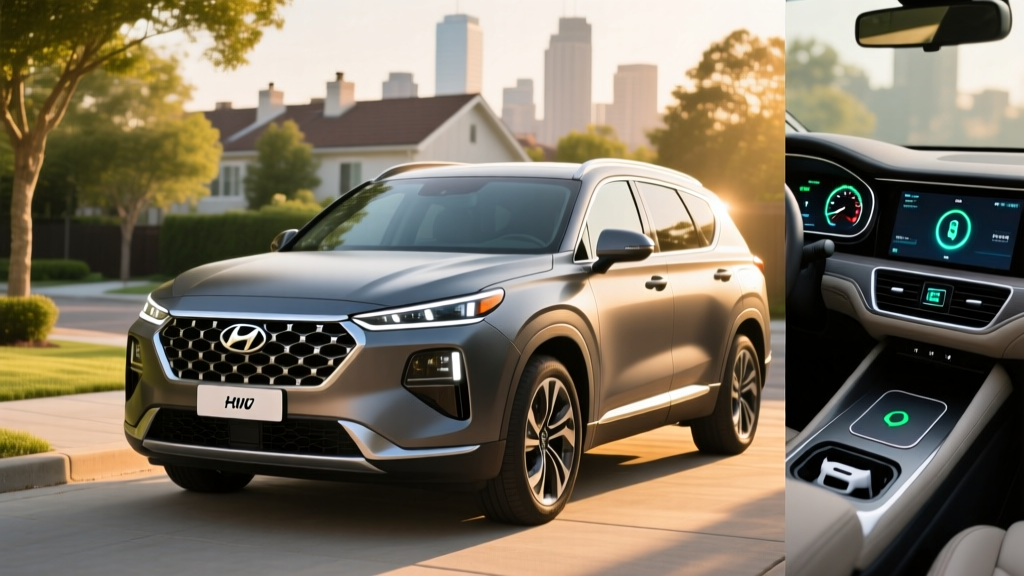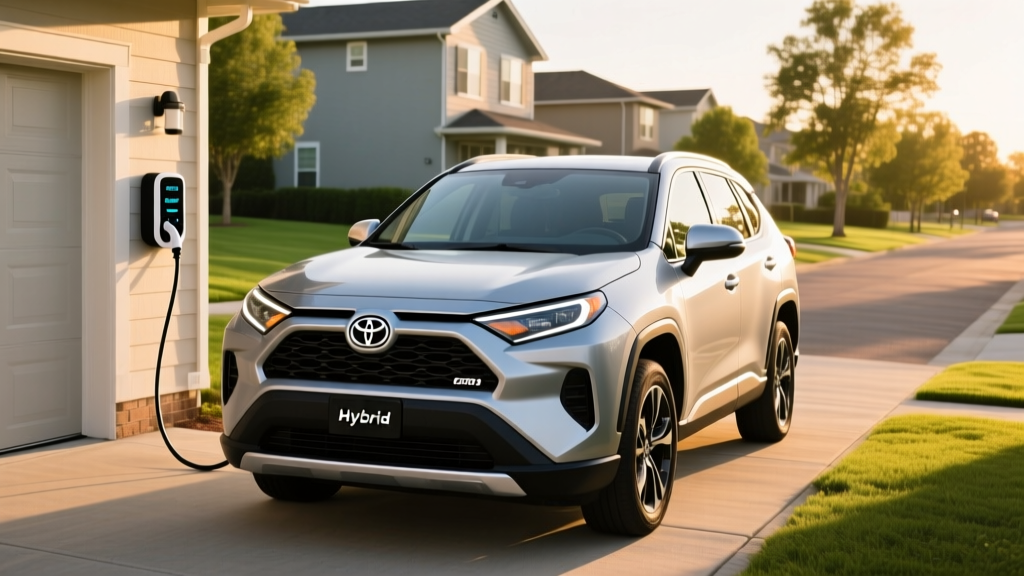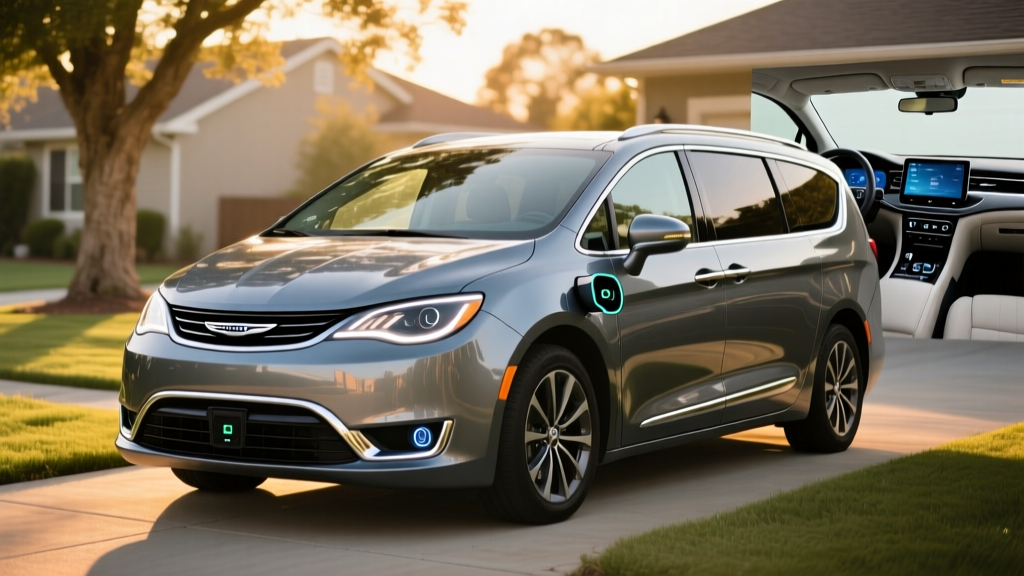
If you've been shopping for an electrified vehicle, you've likely encountered the acronym PHEV and wondered how it differs from a regular hybrid or a full electric car. The short answer: a plug-in hybrid electric vehicle (PHEV) pairs a gasoline engine with a larger battery and electric motor than a conventional hybrid, giving you 20–45 miles of pure electric driving before the gas engine takes over. You can plug it in to recharge that battery — or simply fill up at a gas station and drive it like any hybrid.
This guide dissects exactly what PHEV technology means for your daily commute, your fuel bill, and your next car purchase, using 2026 model-year data from the EPA, IRS, and leading manufacturers.
What Does PHEV Mean — and How Is It Different from HEV?
PHEV stands for Plug-in Hybrid Electric Vehicle. The "plug-in" part is the key distinction. Here's how the two main hybrid categories compare:
HEV (Conventional Hybrid)
- Battery: 1–2 kWh (small, self-charging via regenerative braking and engine)
- Electric-only driving: None or less than 1 mile at very low speed
- Plug in to charge: No
- Electric-only range: ~0 miles
- Example: Toyota Prius (HEV), Honda CR-V Hybrid
PHEV (Plug-in Hybrid)
- Battery: 13–25+ kWh (much larger, grid-rechargeable)
- Electric-only driving: 20–45+ miles at full highway speed
- Plug in to charge: Yes (Level 1 or Level 2)
- Electric-only range: 20–45+ EPA-rated miles
- Example: Toyota RAV4 Prime, Jeep Wrangler 4xe, Chrysler Pacifica Hybrid
Once a PHEV depletes its electric-only range, it seamlessly transitions to hybrid mode — functioning exactly like a conventional HEV. The gasoline engine and regenerative braking sustain the battery at a lower state of charge. You never get stranded; the total combined range (electric + gasoline) typically exceeds 400–500 miles.
How Many MPG Does a PHEV Get?
PHEVs carry two fuel-economy ratings from the EPA: an MPGe figure (miles-per-gallon-equivalent when running on electricity) and a standard MPG figure (when the battery is depleted and the vehicle operates as a hybrid).
| Model | MPGe (Electric+Gas) | MPG (Hybrid-Only, Combined) | City/Hwy MPG (Hybrid) | Electric-Only Range |
|---|---|---|---|---|
| Toyota RAV4 Prime | 94 MPGe | 38 MPG | 40 city / 36 hwy | 42 mi |
| Chrysler Pacifica Hybrid | 82 MPGe | 30 MPG | 29 city / 30 hwy | 32 mi |
| Jeep Wrangler 4xe | 49 MPGe | 20 MPG | — | 22 mi |
| Hyundai Tucson PHEV | 80 MPGe | 35 MPG | 36 city / 35 hwy | 33 mi |
| Toyota Prius Prime | 127 MPGe | 48 MPG | 50 city / 47 hwy | 44 mi |
Real-World MPG vs. EPA Sticker
Hybrid and PHEV fuel economy behaves differently than gas-only cars in practice:
- City driving: Hybrids and PHEVs often exceed EPA city estimates because regenerative braking recaptures energy in stop-and-go traffic. A Prius Prime rated at 50 city may deliver 52–55 in real-world urban driving.
- Highway driving: Expect 5–10% below EPA highway numbers at sustained 70–80 mph speeds. Aerodynamic drag dominates, and the electric motor contributes less at constant high speed.
- Cold weather (below 30°F): Both electric-only range and hybrid-mode MPG drop. PHEV electric range can fall 20–30% in winter due to cabin heating demands and reduced battery efficiency. Hybrid-mode MPG may drop 5–15%.
- If you never plug in: A PHEV driven exclusively on gas performs as a slightly heavier conventional hybrid. The RAV4 Prime delivers 38 MPG hybrid-only — still excellent, but you're carrying 300+ lbs of battery you never use.
PHEV Specs: Battery, Charging, and Powertrain
| Spec | Toyota RAV4 Prime | Prius Prime | Tucson PHEV |
|---|---|---|---|
| Battery Capacity | 18.1 kWh (Li-ion) | 13.6 kWh (Li-ion) | 13.8 kWh (Li-ion) |
| Combined Horsepower | 302 hp | 220 hp | 261 hp |
| Engine | 2.5L I4 + 2 motors | 2.0L I4 + motor | 1.6L Turbo I4 + motor |
| 0–60 mph | 5.7 sec | 6.6 sec | 7.0 sec (est.) |
| Level 2 Charge Time (0–100%) | ~2.5 hr (6.6 kW) | ~4 hr (3.5 kW) | ~2 hr (7.2 kW) |
| DC Fast Charging | No | No | No |
| Level 1 Charge (120V, 0–100%) | ~12 hr | ~11 hr | ~10 hr |
Do PHEVs Support DC Fast Charging?
Almost universally, no. The vast majority of 2026 PHEVs — including Toyota, Hyundai, Jeep, and Chrysler models — accept only Level 1 (120V household) and Level 2 (240V) AC charging. The batteries are small enough (13–25 kWh) that a full Level 2 charge completes in 2–5 hours, making DC fast charging unnecessary for overnight top-ups. A few exceptions exist: the Mitsubishi Outlander PHEV has historically offered CHAdeMO DC charging, but this remains rare. If you need rapid public charging, a full BEV is the better fit.
PHEV Pricing and Federal Tax Credit Eligibility
PHEVs carry a price premium over their conventional hybrid siblings — typically $4,000–$8,000 more — due to the larger battery pack and more powerful electric motor. Here's where 2026 pricing stands:
- Toyota Prius Prime: Starting at ~$33,445 MSRP
- Toyota RAV4 Prime: Starting at ~$44,500 MSRP
- Hyundai Tucson PHEV: Starting at ~$39,400 MSRP
- Chrysler Pacifica Hybrid: Starting at ~$51,000 MSRP
- Jeep Wrangler 4xe: Starting at ~$50,695 MSRP
Does a PHEV Qualify for the Federal Tax Credit?
Under IRS §30D rules, PHEVs can qualify for the federal clean vehicle credit — but eligibility is far from guaranteed and depends on several strict criteria:
- Battery capacity: Must be at least 7 kWh (most PHEVs meet this)
- MSRP cap: SUVs, vans, and trucks ≤ $80,000; sedans ≤ $55,000
- Buyer income cap: AGI ≤ $150,000 (single) / $225,000 (head of household) / $300,000 (joint)
- Final assembly: Must occur in North America
- Battery sourcing: Critical minerals and battery components must meet escalating domestic-content thresholds (these tighten annually through 2029)
- Point-of-sale transfer: As of 2024+, eligible buyers can transfer the credit to the dealer for an immediate price reduction at purchase
Key caveat: Many PHEVs have lost partial or full credit eligibility as battery-sourcing rules tightened in 2024–2026. The credit amount can range from $3,750 to $7,500 depending on whether the vehicle meets the critical-minerals and battery-component requirements independently. Always verify current eligibility on fueleconomy.gov before purchasing — the list changes frequently.
Battery Reliability, Warranty, and Replacement Cost
Hybrid & PHEV Battery Warranty: What's Covered
Federal emissions regulations mandate that hybrid and PHEV batteries carry a minimum warranty of 8 years / 100,000 miles. Many manufacturers exceed this:
- Toyota: 10 years / 150,000 miles on hybrid battery
- Hyundai/Kia: 10 years / 100,000 miles on hybrid/PHEV battery
- Chrysler/Jeep (Stellantis): 8 years / 100,000 miles
These warranties typically cover capacity loss below ~70% of original, plus defects. They are transferable to subsequent owners in most states.
How Long Do PHEV Batteries Actually Last?
Real-world data from millions of Toyota, Hyundai, and Ford hybrids on the road shows that modern lithium-ion hybrid batteries regularly last 150,000–200,000+ miles before significant degradation. The smaller battery in a conventional HEV actually cycles more frequently (charge-discharge) than a PHEV's larger pack, yet failures remain uncommon past the 10-year mark.
PHEV batteries experience less stress per cycle because the usable window is larger and the battery management system (BMS) maintains conservative charge buffers. However, frequent DC-level charging (where available) and habitual operation in extreme heat can accelerate degradation modestly.
Battery Replacement Cost
If a PHEV battery does require out-of-warranty replacement, expect:
- Prius Prime: $4,000–$6,000 (battery pack + labor)
- RAV4 Prime: $6,000–$9,000
- Pacifica Hybrid: $7,000–$10,000
- Wrangler 4xe: $7,500–$12,000
These costs are higher than conventional HEV battery replacements ($2,000–$4,000) due to the larger pack size. However, the vast majority of PHEV owners will sell or trade the vehicle before a replacement is needed.
Hybrid vs. PHEV vs. Full EV — Which Fits You?
Choose a Conventional Hybrid (HEV) If:
- You cannot install a home charger (apartment, street parking, no garage)
- You want maximum simplicity — no plugs, no charging apps, no range planning
- Your budget is tighter; HEVs cost $4,000–$8,000 less than PHEV equivalents
- You drive mostly highway miles where electric-only range offers little benefit
Choose a Plug-in Hybrid (PHEV) If:
- You have access to Level 2 charging at home or work
- Your daily commute is under 30–40 miles round-trip (you'll drive on electricity most days)
- You take regular road trips and don't want to plan around public charging infrastructure
- You want EV-like daily driving with gas-engine insurance for longer trips
- Your household has one car and can't commit to a full BEV yet
Choose a Full Battery Electric Vehicle (BEV) If:
- You can charge at home and want the lowest per-mile fuel cost (~$0.04–$0.06/mile vs. $0.12–$0.15 for gas)
- You want zero tailpipe emissions and minimal maintenance (no oil changes, no spark plugs)
- Your daily driving is within the vehicle's EPA range, and you're comfortable with road-trip charging planning
- You want access to the full $7,500 federal credit (more BEVs qualify than PHEVs)
Pros and Cons of PHEV Ownership
Pros
- 20–45 miles of zero-emission electric driving for daily commutes
- No range anxiety — gas engine provides 400+ mile total range
- Lower fuel costs if you plug in regularly (electricity costs ~1/3 of gasoline per mile)
- Stronger acceleration from combined electric + gas power (e.g., RAV4 Prime: 302 hp, 5.7s 0–60)
- Available AWD on many models without mechanical drivetrain complexity
- Qualifies for HOV lane access in some states (CA, CO, etc.)
Cons
- $4,000–$8,000 price premium over conventional hybrid equivalent
- Requires home or workplace charging access to realize fuel savings
- Reduced cargo space in some models (battery pack under floor/rear seats)
- More complex powertrain — two systems (electric + gas) to maintain long-term
- Heavier than HEV or BEV equivalents, reducing hybrid-only efficiency
- Federal tax credit eligibility uncertain — depends on sourcing rules that change annually
- If you never plug in, you're carrying dead weight and paying for capability you don't use
Frequently Asked Questions
How far can a PHEV go on electric only?
Current 2026 PHEVs deliver between 22 and 44 miles of EPA-rated electric-only range. The Toyota Prius Prime leads at 44 miles, while the RAV4 Prime achieves 42 miles. Real-world electric range drops 20–30% in cold weather (below 30°F) due to cabin heating and reduced battery efficiency. Highway-speed driving also shortens electric range compared to the EPA combined test cycle.
What happens when a PHEV battery runs out of charge?
The vehicle seamlessly switches to hybrid mode. The gasoline engine takes over, and the car drives like a conventional hybrid — regenerative braking and the engine maintain a small battery buffer. You do not need to stop or take any action. Total range on a full tank plus full charge typically exceeds 400–500 miles.
Do I need to plug in a PHEV every night?
You don't need to — the car functions fine as a hybrid without plugging in. But to capture the fuel-cost savings and electric-only driving you paid extra for, nightly Level 2 charging is ideal. A 13–18 kWh battery fully replenishes in 2–5 hours on a 240V outlet, so plugging in when you get home means a full electric range every morning.
Is a PHEV more reliable than a gas car?
Hybrid and PHEV powertrains have proven highly reliable. Toyota's hybrid system, now in its fifth generation, has accumulated billions of real-world miles. The electric motor has far fewer moving parts than a traditional transmission, and regenerative braking reduces wear on brake pads (often lasting 80,000–100,000+ miles). The main long-term cost risk is out-of-warranty battery replacement — but this is uncommon before 150,000 miles.
Does a PHEV qualify for the $7,500 federal tax credit?
Some do, but eligibility is not guaranteed. Under IRS §30D, the vehicle must meet MSRP caps ($55,000 sedans / $80,000 SUVs and trucks), buyer income limits, North American assembly, and battery-sourcing requirements. Many PHEVs qualify for a partial credit ($3,750) or have lost eligibility entirely as sourcing rules tightened. Always check the current eligible-vehicle list on fueleconomy.gov before purchasing.
Can I install a Level 2 charger at home for a PHEV?
Yes, and it's strongly recommended. Most PHEVs accept 3.3–7.2 kW on Level 2, meaning a standard 240V/30A or 40A circuit handles charging easily. Home Level 2 installation typically costs $500–$2,000 depending on whether your electrical panel needs an upgrade. Because PHEV batteries are small, even a basic Level 2 charger fully replenishes the pack overnight. Consult a licensed electrician for a site assessment.
PHEV vs. full EV: which saves more money?
It depends on your driving pattern. If your daily commute fits within the PHEV's electric range and you charge at home, your weekday fuel cost approaches that of a full EV (~$0.04–$0.06/mile on electricity). However, on road trips the PHEV burns gasoline at hybrid-mode MPG rates. A full BEV eliminates gasoline entirely and has lower maintenance costs (no oil changes, fewer moving parts), but requires access to charging and comfort with trip planning. For a one-car household that road-trips 3+ times per year, the PHEV often provides the best balance of daily savings and long-distance flexibility.