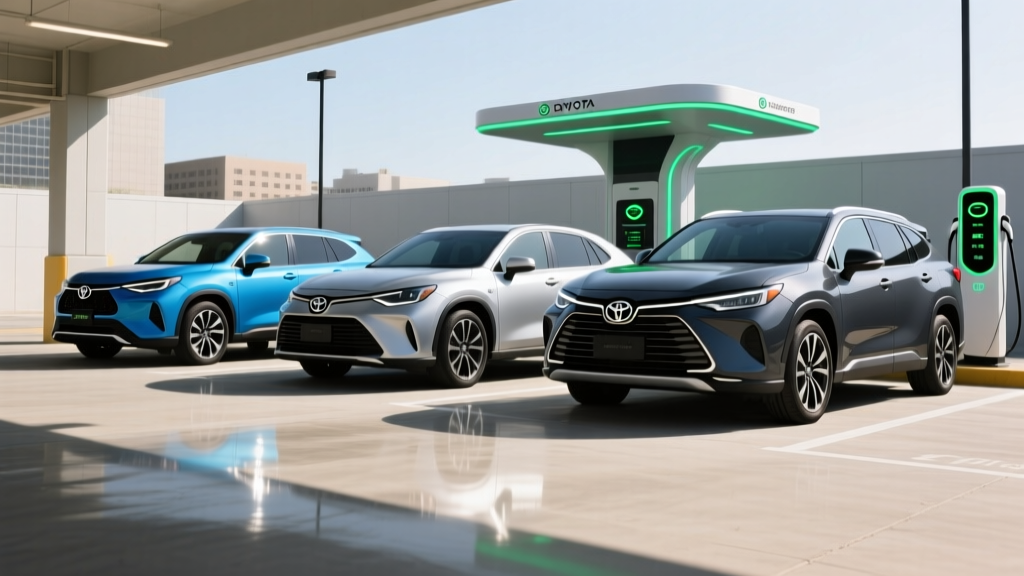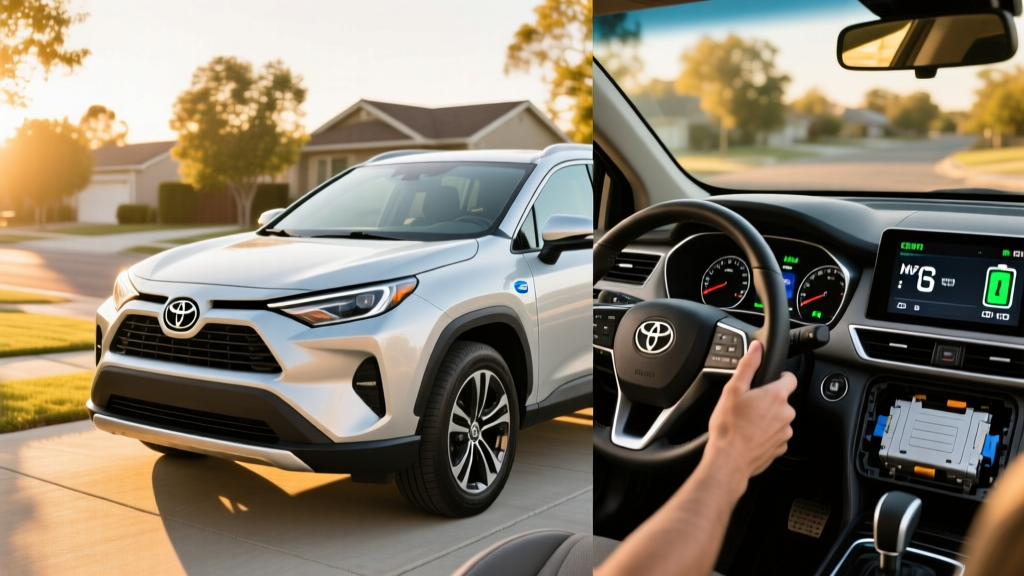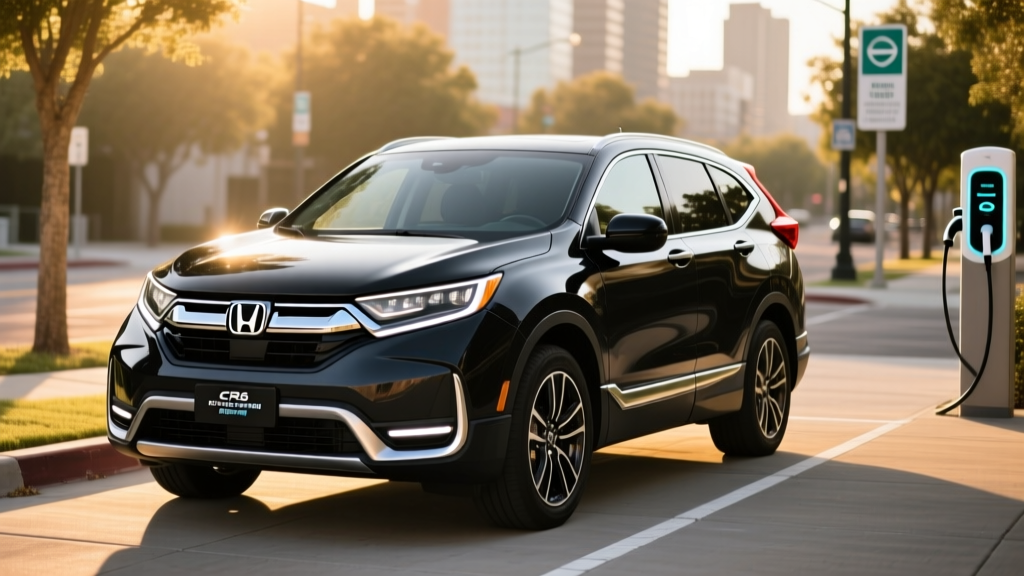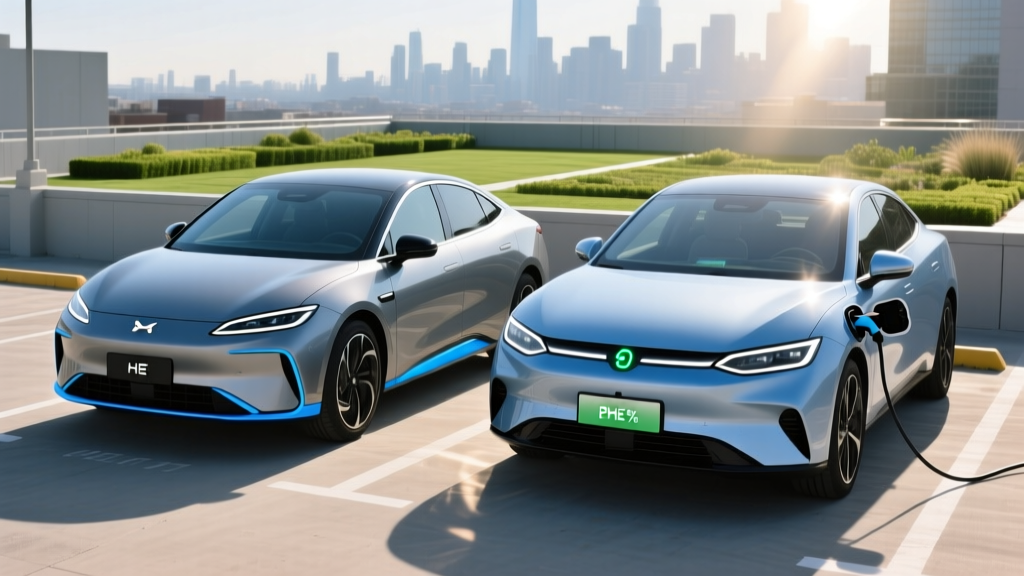
If you've stood in a dealership or scrolled a configurator wondering "what does a hybrid actually do compared to a normal car?" you aren't alone. The term covers two very different powertrains — conventional hybrids (HEVs) and plug-in hybrids (PHEVs) — and the answer to what they do depends entirely on which type you're looking at, how you drive, and whether you can charge at home.
This guide strips away the marketing gloss and explains exactly what a hybrid does in measurable terms: fuel economy, electric-only range, battery longevity, real-world efficiency, and total ownership cost. We'll use current 2026 model-year benchmarks — including the Toyota RAV4 Hybrid, Honda CR-V Hybrid, Toyota RAV4 Prime PHEV, and Chrysler Pacifica PHEV — to anchor every claim in hard numbers.
The Short Answer: What Does a Hybrid Do?
A hybrid pairs a gasoline engine with one or more electric motors and a small battery pack. The system recaptures energy normally lost during braking (regenerative braking) and uses it to assist acceleration, power accessories, or — in some cases — drive the car on electricity alone for short distances. The result is lower fuel consumption, smoother stop-and-go driving, and reduced tailpipe emissions compared to a gasoline-only equivalent.
But the specifics matter enormously. A conventional hybrid (HEV) like the Toyota RAV4 Hybrid never plugs in, carries roughly 1.0–1.6 kWh of usable battery, and delivers 39–41 MPG combined. A plug-in hybrid (PHEV) like the Toyota RAV4 Prime carries 14.5–18.1 kWh, plugs into a wall outlet or Level 2 charger, drives 42–48 miles on electricity alone, and then operates as a conventional hybrid once the battery depletes.
HEV vs PHEV: What Each Hybrid Type Actually Does
| Attribute | Conventional Hybrid (HEV) | Plug-in Hybrid (PHEV) |
|---|---|---|
| Battery capacity (usable) | ~1.0–1.6 kWh | ~13–20 kWh |
| Plug-in charging required? | No — self-charging via regen + engine | Yes — for electric-only range |
| Electric-only range | ~0.5–1 mile at low speed | 25–50 miles (EPA) |
| Combined MPG (after battery depletion) | 35–55 MPG | 27–40 MPG (hybrid mode) |
| DC fast charging? | No | Rare — most are Level 2 only |
| Weight penalty vs gas car | +150–250 lbs | +400–700 lbs |
| Federal tax credit (§30D) | No | Up to $7,500 (eligibility varies) |
| Starting MSRP range (2026) | $28,000–$42,000 | $38,000–$58,000 |
The core difference is simple: an HEV optimizes every drop of gasoline through electric assist and regen. A PHEV lets you eliminate gasoline entirely for short daily trips while retaining a gas engine for long road trips. If your commute is under 40 miles round-trip and you can install a Level 2 charger at home, a PHEV can operate as a de facto EV six days a week — then drive 400+ miles on a weekend trip without stopping to charge.
Real-World Fuel Economy: How Many MPG Does a Hybrid Get?
EPA sticker numbers tell only part of the story. Hybrids consistently outperform their EPA city ratings in real-world stop-and-go traffic because regenerative braking recovers kinetic energy that a gas car wastes as heat. On the highway, where regen opportunities are scarce, hybrids often fall slightly below their EPA highway figure.
| 2026 Model | Type | EPA City | EPA Highway | EPA Combined | Real-World Observed* |
|---|---|---|---|---|---|
| Toyota RAV4 Hybrid AWD | HEV | 41 MPG | 38 MPG | 39 MPG | 40–44 city / 34–37 hwy |
| Honda CR-V Hybrid AWD | HEV | 40 MPG | 34 MPG | 37 MPG | 41–45 city / 31–34 hwy |
| Toyota Prius LE | HEV | 57 MPG | 56 MPG | 57 MPG | 55–62 city / 50–54 hwy |
| Toyota RAV4 Prime (hybrid mode) | PHEV | 40 MPG | 36 MPG | 38 MPG | 38–42 city / 33–36 hwy |
| Chrysler Pacifica PHEV (hybrid mode) | PHEV | 30 MPG | 31 MPG | 30 MPG | 28–32 combined |
*Real-world observed ranges compiled from owner-reported data and independent testing. City driving favors hybrids; sustained highway speeds above 70 mph reduce efficiency.
The Toyota Prius LE remains the efficiency benchmark at 57 MPG combined — a figure that translates to roughly 550 miles per 9.7-gallon tank. For SUV buyers, the RAV4 Hybrid's 39 MPG combined represents a 40% improvement over the non-hybrid RAV4's 28 MPG combined. That gap means approximately $600–$800 less spent on gasoline annually for a driver covering 15,000 miles per year at $3.50/gallon.
PHEV Electric-Only Range: How Far Can It Go Without Gas?
If you're considering a PHEV, electric-only range is the single most important spec. It determines whether your daily driving can be gasoline-free. Here's what current models deliver:
| 2026 PHEV Model | Battery (usable kWh) | EPA Electric Range | MPGe (electric mode) | Total Combined Range | Level 2 Charge Time (0–100%) | DC Fast Charge |
|---|---|---|---|---|---|---|
| Toyota RAV4 Prime | 14.5 kWh | 42 miles | 94 MPGe | ~600 miles | ~2.5 hours (3.3 kW) | No |
| Jeep Wrangler 4xe | 15.3 kWh | 22 miles | 49 MPGe | ~370 miles | ~2.0 hours (7.2 kW) | No |
| Chrysler Pacifica PHEV | 13.0 kWh | 32 miles | 82 MPGe | ~460 miles | ~2.0 hours (6.6 kW) | No |
| Hyundai Tucson PHEV | 11.2 kWh | 33 miles | 80 MPGe | ~420 miles | ~1.75 hours (7.2 kW) | No |
| BMW X5 xDrive50e | 22.1 kWh | 38 miles | 56 MPGe | ~430 miles | ~3.5 hours (7.4 kW) | No |
A few critical observations from these numbers:
- MPGe explained: Miles Per Gallon equivalent measures how far the vehicle travels on the electrical energy equivalent of one gallon of gasoline (33.7 kWh). It's useful for comparing electric-mode efficiency but doesn't tell you range — that's determined by battery size.
- Most PHEVs cannot DC fast charge. The onboard chargers max out at 3.3–7.4 kW, meaning a full charge takes 1.5–3.5 hours on a 240V Level 2 circuit. This is perfectly adequate for overnight home charging but means you won't "top up" at a public fast charger on a road trip.
- Electric range drops in cold weather. Expect 20–35% less electric-only range below 32°F due to cabin heating demands and reduced battery efficiency. A RAV4 Prime rated at 42 miles may deliver only 28–34 miles in January in Minnesota.
- Highway speeds reduce electric range. The EPA electric-range test includes low-speed urban driving. Sustained 70-mph highway driving can reduce electric-only range by 15–25%.
Powertrain Output: What a Hybrid Does for Performance
Hybrids don't just save fuel — the electric motor's instant torque often makes them quicker than their gas-only counterparts. Here's how the powertrains stack up:
| Model | Engine | Combined System HP | 0–60 mph | Drivetrain |
|---|---|---|---|---|
| Toyota RAV4 Hybrid | 2.5L I4 + 2 motors | 219 hp | 7.4 sec | AWD (e-motor rear axle) |
| Toyota RAV4 Prime | 2.5L I4 + 2 motors | 302 hp | 5.7 sec | AWD (e-motor rear axle) |
| Honda CR-V Hybrid | 2.0L I4 + 2 motors | 204 hp | 7.6 sec | AWD |
| Toyota Prius | 2.0L I4 + 1 motor | 194 hp | 7.0 sec | FWD |
The RAV4 Prime's 302 combined horsepower and 5.7-second 0–60 time make it the quickest vehicle in Toyota's non-sports lineup — a fact that surprises many buyers who assume efficiency means sluggishness. This performance advantage comes from the electric motor's ability to fill in torque at low RPM where the gas engine hasn't yet reached its power band.
Battery Longevity, Warranty, and Replacement Cost
Hybrid Battery Warranty Standard: Federal emissions regulations require that hybrid and PHEV battery packs carry a minimum warranty of 8 years / 100,000 miles (10 years / 150,000 miles in California and states adopting CARB standards). Toyota, Honda, Hyundai, and Ford all meet or exceed this baseline. Many manufacturers warrant the battery to retain at least 60–70% of original capacity through the warranty period.
Hybrid battery degradation is a top buyer concern, and the data is reassuring. Conventional HEVs use small nickel-metal hydride (NiMH) or lithium-ion (Li-ion) packs that rarely see deep discharge cycles — the system keeps the battery in a narrow state-of-charge window (typically 40–80%) to maximize longevity. Toyota Prius taxi fleets have logged 300,000+ miles on original battery packs.
PHEV batteries are larger lithium-ion packs and experience deeper cycling. Even so, real-world degradation data from fleet telematics studies shows most PHEV packs retain 85–92% of original capacity after 5 years and 75,000 miles.
If a replacement is needed out of warranty:
- Conventional HEV battery: $2,000–$4,000 (parts and labor). Refurbished units are often available for $1,000–$2,000.
- PHEV battery: $5,000–$9,000 depending on capacity and model. The larger the pack, the higher the replacement cost.
For context, a conventional automatic transmission replacement on a gas car costs $3,500–$7,000 — a comparable drivetrain expense that hybrid owners simply don't face because most hybrids use planetary e-CVT designs with no clutch packs or bands to wear out.
Tax Credits and Pricing: What a Hybrid Costs in 2026
Pricing for hybrids spans a wide range, and the tax-credit picture differs sharply between HEVs and PHEVs.
Conventional hybrids (HEVs): No federal tax credit under IRS §30D. These vehicles are ineligible because they cannot be plugged in. However, some states offer rebates or reduced registration fees for high-efficiency vehicles — check your state's energy office for current programs.
Plug-in hybrids (PHEVs): May qualify for up to $7,500 under the federal Clean Vehicle Credit, but eligibility is constrained by multiple requirements:
- MSRP cap: SUVs, vans, and trucks must be under $80,000; sedans under $55,000.
- Buyer income cap: Modified AGI must not exceed $150,000 (single), $225,000 (head of household), or $300,000 (joint).
- Battery sourcing: Increasing percentages of critical minerals and battery components must be sourced from the US or free-trade-agreement countries — requirements that tighten annually through 2029.
- Point-of-sale transfer: As of 2024, eligible buyers can transfer the credit to the dealer for an immediate price reduction at purchase rather than waiting to claim it on their tax return.
- Battery capacity: The vehicle must have at least 7 kWh of battery capacity to qualify.
As of early 2026, the Jeep Wrangler 4xe and Chrysler Pacifica PHEV (both Stellantis) have historically qualified for partial or full credits, while the Toyota RAV4 Prime has faced eligibility challenges due to battery-sourcing requirements. Always verify current eligibility on fueleconomy.gov before purchasing — the IRS list updates regularly as manufacturers certify or lose sourcing compliance.
| Model | Base MSRP (2026) | Federal Credit Eligibility | Effective Price After Credit |
|---|---|---|---|
| Toyota Prius LE (HEV) | $29,445 | None | $29,445 |
| Toyota RAV4 Hybrid XLE (HEV) | $33,425 | None | $33,425 |
| Toyota RAV4 Prime SE (PHEV) | $44,985 | Varies by sourcing — check fueleconomy.gov | $44,985–$37,485 |
| Chrysler Pacifica PHEV (PHEV) | $51,095 | Up to $7,500 (if sourcing qualifies) | $43,595–$51,095 |
| Hyundai Tucson PHEV SEL (PHEV) | $39,485 | Varies — verify current status | $39,485–$31,985 |
Who Should Choose a Hybrid vs a PHEV vs a Full EV?
Choose a conventional hybrid (HEV) if:
- You cannot install a home charger (apartment, street parking, condo without charging access).
- Your budget is under $35,000 and you want maximum fuel savings with zero lifestyle change.
- You drive primarily in stop-and-go city traffic where regen braking delivers the biggest MPG gains.
- You want the lowest-maintenance electrified option — no plug, no charging apps, no range planning.
Choose a plug-in hybrid (PHEV) if:
- You can charge at home (240V outlet or Level 2 installation) and your daily round-trip commute is under 40 miles.
- You want EV-like daily driving but regularly take road trips exceeding 250 miles where DC fast-charging infrastructure is sparse.
- Your household needs one vehicle to handle both weekday commuting and weekend adventure without a second car.
- You want to reduce gasoline consumption by 70–90% without full EV commitment.
Choose a full battery-electric vehicle (BEV) if:
- You can charge at home and have access to reliable DC fast charging for road trips.
- Your daily driving is under 250 miles and you're comfortable with route planning on longer trips.
- You want the lowest per-mile fuel cost (electricity at $0.12/kWh ≈ $1.00/gallon equivalent) and zero tailpipe emissions.
- You want to maximize federal tax credit eligibility — BEVs have broader §30D qualification than PHEVs in 2026.
Pros and Cons: What a Hybrid Does Well (and Where It Falls Short)
What Hybrids Do Well
- 35–57 MPG combined — 30–100% better than gas equivalents
- No range anxiety — gas station infrastructure everywhere
- Lower fuel cost: ~$1,000–$1,500/year vs ~$2,000–$2,500 for gas-only at 15k miles/year
- Regenerative braking reduces brake pad wear (often 80,000+ miles on original pads)
- HEVs require zero behavior change — fill up and drive normally
- Strong reliability record — hybrid systems from Toyota/Honda proven over 20+ years
Where Hybrids Fall Short
- Higher upfront cost: $1,500–$5,000 premium over gas equivalent (HEV); $8,000–$15,000 (PHEV)
- HEVs get no federal tax credit
- PHEV electric range (22–48 miles) too short for some commutes
- Most PHEVs lack DC fast charging — road trips run on gas
- Added weight (200–700 lbs) slightly increases tire wear
- PHEVs carry two complete powertrains — more complexity if both systems need service
Frequently Asked Questions
How many MPG does a hybrid get?
Conventional hybrids deliver 35–57 MPG combined depending on the model. The Toyota Prius LE leads at 57 MPG combined, while SUV hybrids like the RAV4 Hybrid achieve 39 MPG combined — a substantial improvement over the 25–30 MPG typical of non-hybrid compact SUVs. In real-world city driving, many owners report exceeding EPA city ratings by 2–5 MPG thanks to frequent regenerative braking.
How far can a PHEV go on electric only?
Current PHEVs deliver 22–48 miles of EPA-rated electric-only range. The Toyota RAV4 Prime leads its class at 42 miles, while the Jeep Wrangler 4xe delivers 22 miles due to its heavier body-on-frame construction. Expect 20–35% less electric range in cold weather (below 32°F) and 15–25% less at sustained highway speeds above 70 mph.
Do conventional hybrids need to be plugged in?
No. Conventional hybrids (HEVs) charge their small battery entirely through regenerative braking and the gasoline engine. You simply fill up at a gas station and drive. Only plug-in hybrids (PHEVs) require or benefit from plugging in — and even PHEVs will operate as conventional hybrids if you never plug them in (though you'll miss the electric-only driving benefit).
Is a hybrid reliable and what does battery replacement cost?
Hybrid powertrains from Toyota, Honda, and Hyundai have demonstrated excellent long-term reliability. The hybrid battery is warranted for 8 years/100,000 miles (10 years/150,000 miles in CARB states). Out-of-warranty replacement costs $2,000–$4,000 for HEVs and $5,000–$9,000 for PHEVs. Many hybrid batteries last 150,000–200,000+ miles before significant degradation.
Does a hybrid qualify for any tax credit?
Conventional hybrids (HEVs) do not qualify for the federal §30D Clean Vehicle Credit — this credit is reserved for plug-in vehicles with at least 7 kWh of battery capacity. Plug-in hybrids (PHEVs) may qualify for up to $7,500, but eligibility depends on MSRP caps, buyer income limits, and battery-sourcing requirements that change annually. Always check the current eligibility list on fueleconomy.gov before purchasing.
Hybrid vs PHEV vs EV — which is right for me?
Choose an HEV if you can't charge at home and want a no-compromise fuel-economy upgrade. Choose a PHEV if you can charge at home, commute under 40 miles daily, and need gas-engine flexibility for road trips. Choose a full EV if you can charge at home, want the lowest operating cost, and are comfortable with DC fast-charging on road trips.