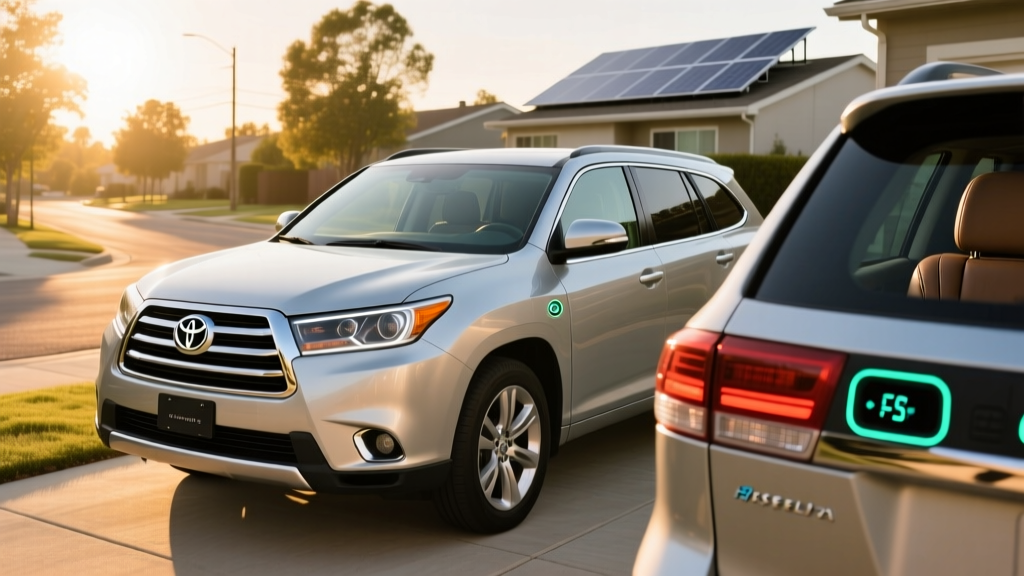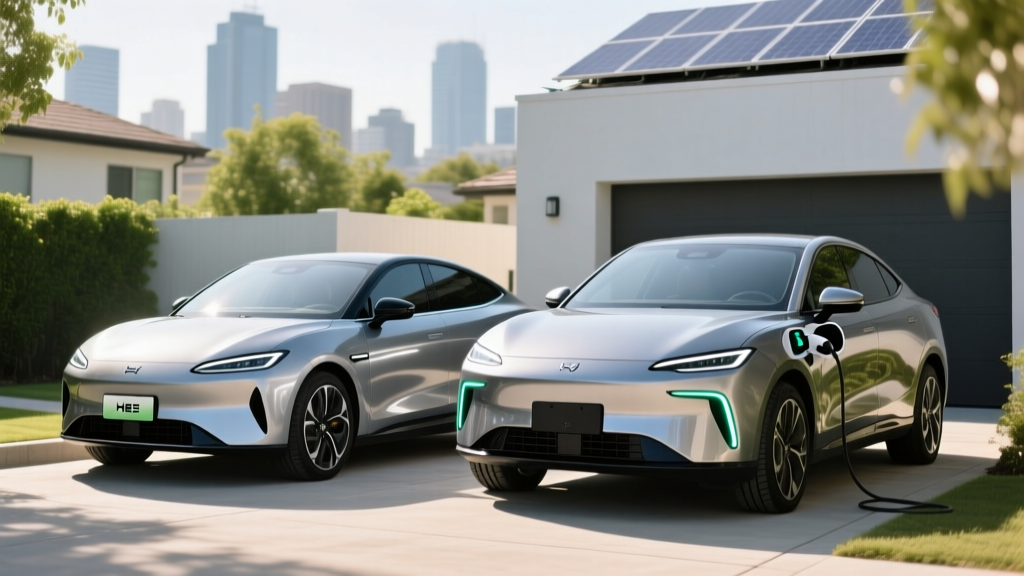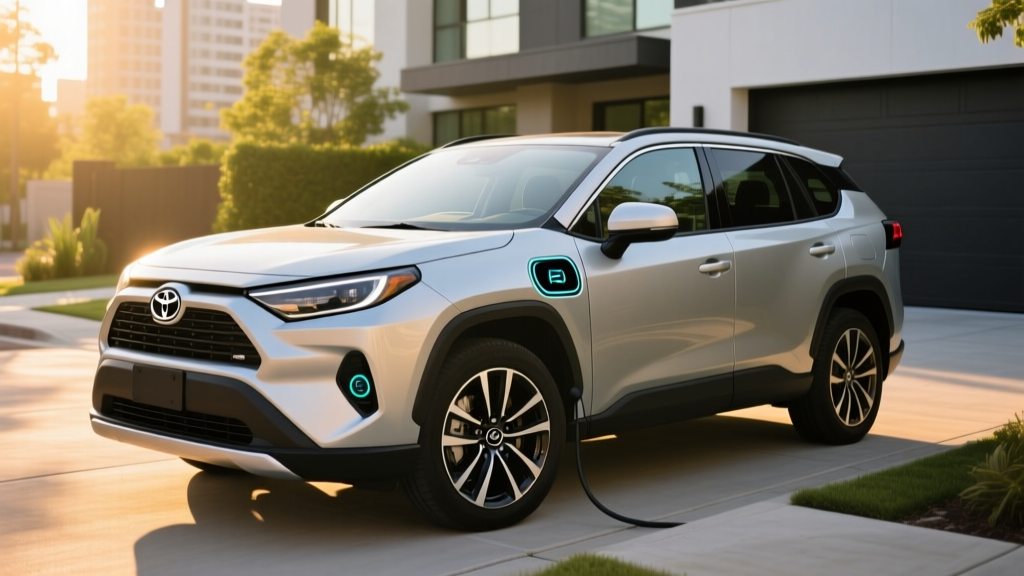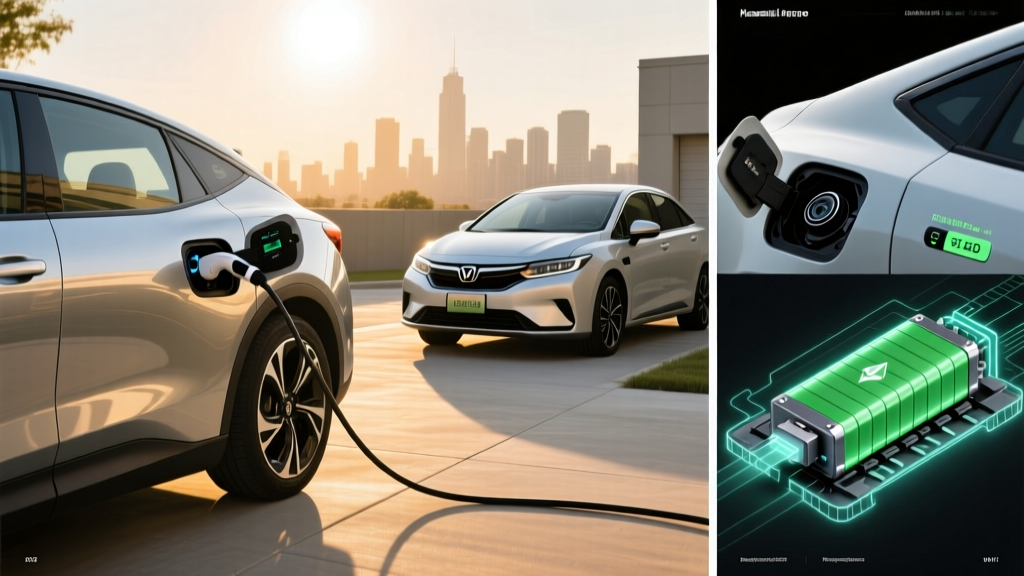
If you've asked yourself "what does a hybrid car mean?" you're not alone. The term gets thrown around alongside plug-in hybrids, mild hybrids, and full EVs — and the distinctions matter when you're spending $30,000+. A hybrid car, at its core, is a vehicle that pairs a gasoline engine with at least one electric motor and a battery pack to improve fuel efficiency, reduce emissions, or both. But that simple definition splinters into very different ownership experiences depending on whether you're looking at a conventional hybrid (HEV) or a plug-in hybrid (PHEV).
This guide cuts through the marketing language with exact EPA figures, battery specs, real-world efficiency data, and current federal tax credit rules so you can decide which electrified powertrain actually fits your driving life.
The Core Definition: What Makes a Car a Hybrid?
A hybrid vehicle uses two energy sources to move: a gasoline internal combustion engine (ICE) and one or more electric motors powered by a battery. The electric motor assists during acceleration, captures energy during braking (regenerative braking), and in some cases can drive the car on electricity alone for short distances. The result is less fuel consumed per mile compared to a gas-only equivalent.
The key technical distinction that confuses most shoppers is between the two main hybrid categories:
Conventional Hybrid (HEV)
- Battery size: Typically 1.0–2.0 kWh
- Charging: Self-charging via the engine and regenerative braking — no plug required
- Electric-only driving: Very limited, usually under 1 mile at low speeds
- Efficiency gain: 30–50% better MPG than a comparable gas-only car
- Examples: Toyota Prius, Honda Accord Hybrid, Toyota RAV4 Hybrid
Plug-In Hybrid (PHEV)
- Battery size: Typically 13–25 kWh (usable)
- Charging: Plugs into a wall outlet or Level 2 charger; some support DC fast charging
- Electric-only driving: 25–50+ miles on battery alone before the engine kicks in
- Efficiency gain: Operates as a full EV for daily commutes, then as a hybrid for longer trips
- Examples: Toyota RAV4 Prime, Jeep Wrangler 4xe, Hyundai Tucson PHEV
Neither type requires you to change how you fuel up for long trips — both have gas tanks and can run on gasoline indefinitely. The difference is whether you can plug in to unlock electric-only range.
How Many MPG Does a Hybrid Get? Real Numbers by Model
Fuel economy is the number-one reason buyers go hybrid. Here's what the EPA rates popular 2026 hybrids at, broken down by city, highway, and combined MPG. Data sourced from fueleconomy.gov.
| Model (2026) | Type | City MPG | Highway MPG | Combined MPG | Electric-Only Range (PHEV) |
|---|---|---|---|---|---|
| Toyota Prius | HEV | 57 | 56 | 57 | N/A |
| Toyota Prius Prime | PHEV | 53 (hybrid mode) | 51 (hybrid mode) | 52 (hybrid mode) | 44 mi |
| Honda Accord Hybrid | HEV | 51 | 44 | 48 | N/A |
| Toyota RAV4 Hybrid | HEV | 41 | 38 | 40 | N/A |
| Toyota RAV4 Prime | PHEV | 40 (hybrid mode) | 36 (hybrid mode) | 38 (hybrid mode) | 42 mi |
| Hyundai Tucson Hybrid | HEV | 38 | 38 | 38 | N/A |
| Hyundai Tucson PHEV | PHEV | 36 (hybrid mode) | 35 (hybrid mode) | 35 (hybrid mode) | 33 mi |
| Ford Escape Hybrid | HEV | 42 | 36 | 39 | N/A |
Real-World MPG vs. EPA Sticker: What to Actually Expect
Here's a counterintuitive reality that surprises first-time hybrid owners: hybrids often exceed their EPA city ratings in real-world stop-and-go driving. That's because city driving produces maximum regenerative braking opportunities, which recharge the small battery and let the electric motor shoulder more of the workload. On the highway, where regenerative braking is minimal and aerodynamic drag dominates, hybrids tend to fall slightly below their EPA highway numbers.
In real-world mixed driving, expect:
- Toyota Prius (HEV): 52–60 MPG city, 48–54 MPG highway
- RAV4 Hybrid: 38–44 MPG city, 34–38 MPG highway
- Honda Accord Hybrid: 48–55 MPG city, 40–44 MPG highway
Cold weather reduces hybrid efficiency by roughly 5–10% due to increased engine idling for cabin heat and reduced battery performance. This is far less severe than the 20–40% range loss full EVs experience in winter, but it's measurable.
PHEV Electric-Only Range: How Far Can You Drive Without Gas?
For PHEV buyers, the electric-only range is the spec that matters most. It determines whether your daily commute can be completed entirely on electricity — turning your PHEV into a de facto EV for weekday driving while preserving a gas tank for road trips.
| 2026 PHEV Model | Battery (Usable kWh) | EPA Electric Range | Total Combined Range | Level 2 Charge Time (0–100%) | DC Fast Charge |
|---|---|---|---|---|---|
| Toyota Prius Prime | 13.6 kWh | 44 mi | ~440 mi | ~4 hours (240V) | No |
| Toyota RAV4 Prime | 18.1 kWh | 42 mi | ~440 mi | ~2.5 hours (240V) | No |
| Jeep Wrangler 4xe | 17.3 kWh | 21 mi | ~370 mi | ~3 hours (240V) | No |
| Hyundai Tucson PHEV | 13.8 kWh | 33 mi | ~400 mi | ~3.5 hours (240V) | No |
| Chrysler Pacifica PHEV | 16.0 kWh | 32 mi | ~430 mi | ~2 hours (240V) | No |
A few things worth noting from this data:
- No mainstream 2026 PHEV supports DC fast charging. All plug-in hybrids charge via Level 1 (120V household outlet) or Level 2 (240V). This is because PHEV batteries are small enough that Level 2 fills them in 2–4 hours — fast enough for overnight or workplace charging. Don't expect 350 kW charging at a highway rest stop.
- Real-world electric range is typically 85–95% of the EPA sticker in moderate weather, and can drop to 70–80% in cold weather (below 32°F) when cabin heating draws from the battery.
- Total combined range (electric + full gas tank) is where PHEVs shine: 400+ miles is common, eliminating range anxiety entirely.
Powertrain Breakdown: Engine + Motor Combined Output
Hybrids aren't just about efficiency — the electric motor adds torque fill that makes many hybrids surprisingly quick. Here's the powertrain math for popular models:
- Toyota Prius: 2.0L 4-cylinder + electric motor = 196 hp combined (AWD variant). 0–60 mph in ~7.0 seconds.
- Toyota Prius Prime: 2.0L 4-cylinder + electric motor = 220 hp combined. 0–60 mph in ~6.6 seconds.
- Toyota RAV4 Prime: 2.5L 4-cylinder + dual electric motors = 302 hp combined. 0–60 mph in ~5.7 seconds. This is the quickest RAV4 Toyota sells.
- Honda Accord Hybrid: 2.0L 4-cylinder + dual-motor system = 204 hp combined. 0–60 mph in ~7.5 seconds.
- Jeep Wrangler 4xe: 2.0L turbo 4-cylinder + electric motor = 375 hp, 470 lb-ft combined. 0–60 mph in ~6.0 seconds.
The electric motor in a hybrid provides instant torque from 0 RPM, which fills in the lag before the gas engine reaches its power band. This is why a RAV4 Prime with 302 hp feels more responsive than a gas-only RAV4 with similar peak horsepower.
Pricing, Tax Credits, and Total Cost of Ownership
Hybrids carry a price premium over their gas-only counterparts — typically $1,500–$4,000 for an HEV and $4,000–$8,000 for a PHEV — due to the added battery, electric motor, and power electronics. Here's where things stand for 2026:
| Model | Base MSRP (2026) | Federal Tax Credit (§30D) | Effective Price After Credit |
|---|---|---|---|
| Toyota Prius (HEV) | $29,445 | $0 | $29,445 |
| Toyota Prius Prime (PHEV) | $34,595 | Up to $3,750* | ~$30,845 |
| Toyota RAV4 Hybrid (HEV) | $33,425 | $0 | $33,425 |
| Toyota RAV4 Prime (PHEV) | $44,985 | Up to $7,500* | ~$37,485 |
| Hyundai Tucson PHEV | $39,990 | Up to $3,750* | ~$36,240 |
| Jeep Wrangler 4xe | $51,790 | Up to $3,750* | ~$48,040 |
*Credit amounts depend on battery sourcing, critical mineral requirements, buyer income caps, and MSRP caps under IRS §30D rules. PHEVs with smaller batteries often qualify for a partial credit ($3,750) rather than the full $7,500. Conventional HEVs do not qualify for the federal new-vehicle EV credit. Consult IRS.gov §30D guidelines or a tax professional for your specific eligibility. Point-of-sale transfer is available for qualifying vehicles in 2026.
Cost-Per-Mile: Hybrid vs. Gas vs. Full EV
At $3.50/gallon gas and 14,000 miles/year:
- Gas-only SUV (28 MPG combined): ~$1,750/year in fuel
- RAV4 Hybrid (40 MPG combined): ~$1,225/year in fuel — saves ~$525/year
- RAV4 Prime (PHEV, 70% of miles on electricity): ~$600–$800/year combined (electricity + gas) — saves ~$950–$1,150/year
- Full EV (Tesla Model Y): ~$500–$650/year in electricity — saves ~$1,100–$1,250/year
The PHEV sweet spot: if you can charge at home and your commute is within the electric-only range, you get near-EV daily costs with zero range anxiety on road trips.
Hybrid Battery Reliability, Warranty, and Replacement Cost
Hybrid Battery Warranty: What's Covered
Federal law mandates that hybrid and EV battery packs carry a minimum warranty of 8 years / 100,000 miles (10 years / 150,000 miles in California and states that follow CARB emissions rules). Most manufacturers meet or exceed this baseline:
- Toyota: 10 years / 150,000 miles on hybrid battery (all 50 states for 2020+ models)
- Honda: 8 years / 100,000 miles (10 years / 150,000 in CARB states)
- Hyundai/Kia: 10 years / 100,000 miles (original owner); 10 years / 100,000 miles in CARB states
- Ford: 8 years / 100,000 miles
How Long Do Hybrid Batteries Actually Last?
This is the top concern for hybrid shoppers, and the data is reassuring. Toyota Prius taxis in New York City and Los Angeles have routinely exceeded 300,000 miles on original hybrid battery packs. The smaller batteries in HEVs (1–2 kWh) experience shallow charge/discharge cycles — they never fully deplete or fully charge, which dramatically reduces wear compared to full EV batteries that cycle through much deeper ranges.
PHEV batteries (13–25 kWh) see deeper cycling, but their larger size means each individual cell works less hard. Real-world data from fleets and high-mileage owners suggests PHEV batteries retain 85–90% capacity after 100,000 miles in most cases.
Battery Replacement Cost: Worst-Case Scenario
If your hybrid battery fails outside warranty:
- HEV (Prius, RAV4 Hybrid): $2,000–$4,000 for a new OEM battery pack; $1,000–$2,500 for a refurbished unit
- PHEV (Prius Prime, RAV4 Prime): $4,000–$8,000 for a new OEM battery pack
These costs have dropped significantly over the past decade, and third-party refurbishers offer affordable alternatives. The likelihood of needing a replacement during typical ownership (8–12 years, under 150,000 miles) remains low based on historical failure rates.
HEV vs. PHEV vs. Full EV: Which Powertrain Fits You?
Choose a Conventional Hybrid (HEV) If:
- You cannot charge at home or work (no plug needed)
- You want maximum MPG with zero behavior change
- Your budget is under $35,000
- You drive 10,000–15,000 miles/year and want to cut fuel costs 25–40%
- You live in an apartment or street-park and lack charging access
Choose a Plug-In Hybrid (PHEV) If:
- You can install a Level 2 charger at home
- Your daily commute is under 40 miles round-trip (within electric range)
- You want EV-like daily costs but need gas flexibility for road trips
- You want to reduce — but not eliminate — gas station visits
- You qualify for a partial or full federal tax credit
Choose a Full EV (BEV) If:
- You can charge at home reliably
- Your daily driving is under 250 miles and you road-trip infrequently
- You want to eliminate gas entirely and minimize maintenance
- You qualify for the full $7,500 federal tax credit
- You want the lowest cost-per-mile and strongest performance
Stick With Gas-Only If:
- You drive very low annual miles (under 5,000) — the hybrid premium won't pay back
- You tow heavy loads regularly where hybrid efficiency gains disappear
- You're buying used on a tight budget under $20,000
Frequently Asked Questions
Do conventional hybrids need to be plugged in?
No. A conventional hybrid (HEV) charges its battery entirely through the gasoline engine and regenerative braking. You never plug it in. You simply fill up at gas stations as you would with any gas car. Only plug-in hybrids (PHEVs) benefit from being plugged into an external power source.
Is a hybrid car the same as an electric car?
No. A hybrid uses both a gas engine and an electric motor, while a full EV (battery electric vehicle, or BEV) runs exclusively on electricity. Hybrids still burn gasoline and produce tailpipe emissions; EVs do not. Hybrids offer a middle ground — better fuel economy than gas cars, without the range and charging considerations of full EVs.
What does a hybrid car mean for maintenance costs?
Hybrids generally cost similar to or slightly less than gas cars to maintain. The regenerative braking system reduces wear on brake pads (many Prius owners report 80,000+ miles on original brake pads). Hybrids still need oil changes, but some models extend intervals due to the engine running less frequently. There's no transmission fluid change on most Toyota hybrids, which use a planetary gearset instead of a traditional transmission. The main long-term variable is the hybrid battery, which is warrantied for 8–10 years.
Can a hybrid run on electricity only?
A conventional hybrid (HEV) can drive on electricity alone for very short distances — typically under 1 mile at low speeds (under 25 mph). A plug-in hybrid (PHEV) can drive 20–50 miles on electricity alone at full highway speeds before the gas engine activates. If electric-only driving is your priority, a PHEV or full EV is the right choice.
Do hybrids qualify for the federal tax credit?
Conventional hybrids (HEVs) do not qualify for the IRS §30D federal clean vehicle tax credit. Only plug-in hybrids (PHEVs) and full EVs are eligible, and the credit amount varies based on battery capacity, critical mineral sourcing, buyer income limits, and MSRP caps. For 2026, qualifying PHEVs may receive between $3,750 and $7,500 depending on compliance with IRS sourcing requirements. Always verify eligibility before purchasing.
What happens when a hybrid battery dies while driving?
If the hybrid battery fails completely, the gasoline engine can still power the vehicle in most designs — you'll lose the electric assist and fuel economy will drop significantly, but you won't be stranded. The car will typically display a warning light and enter a reduced-power "limp" mode. Drive to a dealer or repair shop. In practice, hybrid battery failures are usually gradual (reduced capacity) rather than sudden.
Are hybrids good for highway driving?
Hybrids are less advantageous on the highway than in city driving because regenerative braking — their biggest efficiency advantage — is minimal at sustained speeds. However, modern hybrids like the Prius (57 MPG combined) still beat gas-only equivalents on the highway thanks to Atkinson-cycle engines and aerodynamic optimization. If 90%+ of your driving is highway, the MPG gap between a hybrid and an efficient gas car narrows, but the hybrid still wins.
The Bottom Line: What a Hybrid Car Means for Your Wallet and Your Commute
A hybrid car means spending $1,500–$8,000 more upfront to save $400–$1,200 per year in fuel, depending on whether you choose an HEV or PHEV and how much you drive. It means no behavioral change for HEV owners — just fill up less often — and a modest new habit for PHEV owners: plug in at night, wake up with 30–44 miles of electric range.
The data supports hybrid reliability strongly: 8–10 year battery warranties, proven powertrains with hundreds of thousands of real-world miles, and replacement costs that continue to decline. For buyers who aren't ready for a full EV — whether due to charging access, road-trip habits, or budget — a hybrid is the lowest-risk way to meaningfully reduce fuel costs and emissions in 2026.