What Are Hybrid Cars, Exactly?
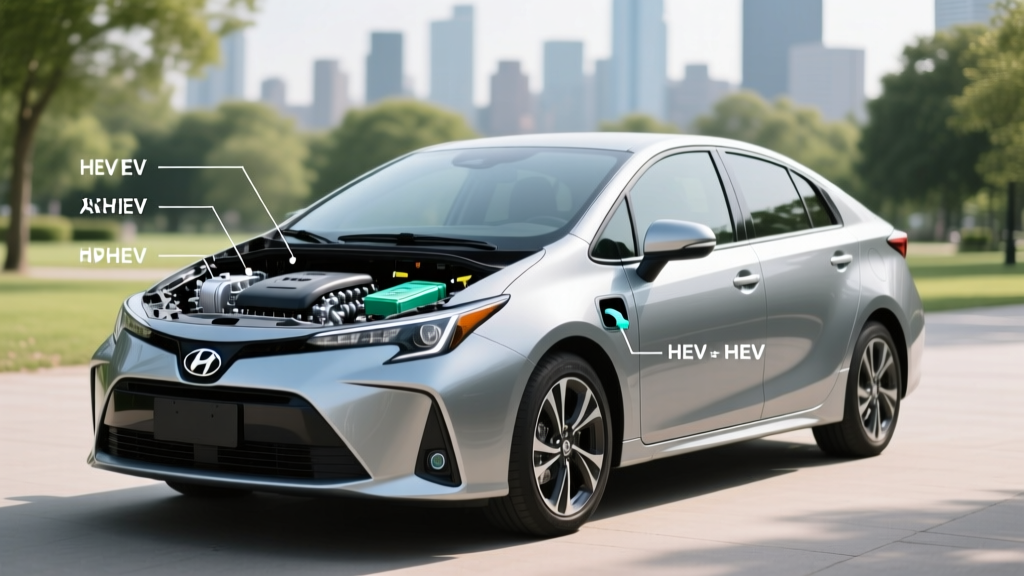
A hybrid car pairs a gasoline engine with one or more electric motors and a small battery pack. The electric motor assists during acceleration, captures energy during braking (regenerative braking), and in some cases can propel the car on electricity alone at low speeds. The result: significantly better fuel economy than a conventional gas car, without the need to plug in — unless you choose a plug-in hybrid (PHEV).
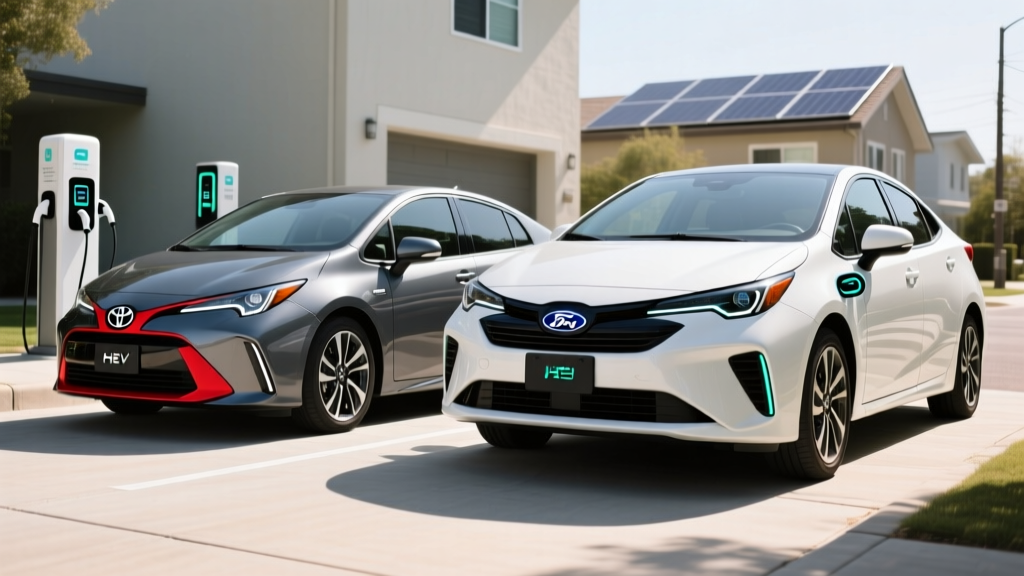
As of the 2026 model year, hybrids fall into two distinct categories, and confusing them is the single most common mistake shoppers make:
Conventional Hybrid (HEV)
- Battery: Small (typically 1.0–2.0 kWh)
- Charging: Self-charging via engine and regen braking — no plug
- Electric-only driving: Very limited, low-speed only (under ~1 mile)
- Fuel economy: 40–57 MPG combined (EPA)
- Examples: Toyota Prius, Honda Accord Hybrid, Hyundai Tucson Hybrid
- Federal tax credit: None (does not qualify under §30D)
Plug-In Hybrid (PHEV)
- Battery: Larger (typically 13–25 kWh usable)
- Charging: Plugs in via Level 1 (120V) or Level 2 (240V); no DC fast charging on most models
- Electric-only driving: 25–45 miles EPA on most 2026 models
- Fuel economy: 70–115 MPGe (electric+gas combined); 35–50 MPG on gas alone after battery depletes
- Examples: Toyota RAV4 Prime, Jeep Wrangler 4xe, Chrysler Pacifica Hybrid
- Federal tax credit: Up to $7,500 under §30D (subject to MSRP, income, and battery-sourcing rules)
If you cannot plug in at home or work, an HEV is the correct choice. If you have access to a standard 120V outlet or a Level 2 charger and want to drive most daily commutes on electricity, a PHEV can effectively function as a short-range EV with a gas-engine safety net.
How Many MPG Does a Hybrid Get?
Fuel economy varies widely by model and body style, but here is a snapshot of popular 2026 hybrids with EPA figures from fueleconomy.gov:
| Model (2026) | Type | City MPG | Highway MPG | Combined MPG | Real-World Note |
|---|---|---|---|---|---|
| Toyota Prius (FWD) | HEV | 57 | 56 | 57 | City often exceeds EPA; highway ~50-53 at 75 mph |
| Toyota Prius (AWD) | HEV | 53 | 54 | 54 | Minimal AWD penalty vs FWD |
| Honda Accord Hybrid | HEV | 51 | 44 | 48 | City-strong; highway drops at sustained high speed |
| Hyundai Tucson Hybrid | HEV | 38 | 38 | 38 | SUV weight penalty; real-world ~35-37 combined |
| Toyota RAV4 Prime | PHEV | 94 MPGe (EV+gas) / 38 MPG (gas only) | 42 mi electric-only; 600 mi total range | ||
| Chrysler Pacifica Hybrid | PHEV | 82 MPGe (EV+gas) / 30 MPG (gas only) | 32 mi electric-only; minivan practicality | ||
| Jeep Wrangler 4xe | PHEV | 49 MPGe (EV+gas) / 20 MPG (gas only) | 21 mi electric-only; off-road capability trades efficiency | ||
Real-world MPG vs. EPA: Hybrids consistently beat their EPA city ratings in stop-and-go driving because regenerative braking recovers energy that a gas-only car wastes as heat. Highway driving is the opposite — sustained high speeds favor the engine running at a steady RPM, where conventional cars are already efficient. Expect a Prius to deliver 60+ MPG in urban traffic but closer to 48–52 MPG on a 75-mph interstate run. PHEVs show even larger swings: if you charge daily and drive under 30 miles, you may use almost no gasoline for months.
How Far Can a PHEV Go on Electric Only?
Electric-only range is the headline number for PHEV shoppers. Here is what current 2026 models deliver:
| Model | Battery (kWh usable) | EPA Electric Range | Total Range (EV+Gas) | Level 2 Charge Time | DC Fast Charge |
|---|---|---|---|---|---|
| Toyota RAV4 Prime | 18.1 kWh | 42 miles | ~600 miles | ~2.5 hours (240V, 6.6 kW) | No |
| Chrysler Pacifica Hybrid | 16.0 kWh | 32 miles | ~520 miles | ~2.0 hours (240V, 7.2 kW) | No |
| Jeep Wrangler 4xe | 17.3 kWh | 21 miles | ~370 miles | ~2.5 hours (240V, 7.2 kW) | No |
| BMW X5 xDrive50e | 25.7 kWh | 40 miles | ~460 miles | ~3.5 hours (240V, 7.4 kW) | No |
| Toyota Prius Prime | 13.6 kWh | 44 miles | ~610 miles | ~4.0 hours (240V, 3.5 kW) | No |
Charging reality: Most PHEVs do not support DC fast charging. Their batteries are too small to justify the hardware cost and thermal management complexity. You charge on a standard 120V household outlet (Level 1) overnight — which adds roughly 4–5 miles of range per hour of charging — or install a 240V Level 2 outlet for a full charge in 2–4 hours. For a PHEV with 30–40 miles of range, Level 1 overnight charging is often sufficient if your commute is short.
Real-world electric range caveat: EPA electric-range testing is conservative for PHEVs. Cold weather (below 40°F) can reduce electric-only range by 15–25%, and sustained highway speeds above 65 mph will deplete the battery faster than the EPA cycle suggests. A RAV4 Prime rated at 42 miles may deliver 30–33 electric miles on a cold winter highway commute.
Hybrid Powertrains: How the Engine and Motor Work Together
Modern hybrids use one of three architectures, each with distinct driving characteristics:
Series-parallel (Toyota Hybrid System): The engine and motor(s) can drive the wheels independently or together. An electronically controlled planetary gearset blends power sources seamlessly. This is the dominant architecture and delivers the best overall efficiency. The 2026 Prius produces 194 hp (FWD) or 196 hp (AWD) from a 2.0L four-cylinder plus two motor-generators.
Series hybrid (range-extended): The gasoline engine never drives the wheels directly — it acts solely as a generator to charge the battery or power the electric motor. The BMW i3 REx (discontinued) used this layout. It is less common in 2026 but appears in some commercial vehicles.
Parallel hybrid with disconnect clutch: The electric motor sits between the engine and transmission, and a clutch can disconnect the engine for electric-only driving. The Hyundai Tucson Hybrid uses a 1.6L turbo four-cylinder (178 hp) paired with a 64-hp electric motor through a 6-speed automatic for a combined 226 hp. This setup feels more like a conventional car and is common in hybridized SUVs.
PHEV powertrains scale up the electric motor and battery. The RAV4 Prime, for instance, pairs a 2.5L four-cylinder with front and rear electric motors for a combined 302 hp and standard AWD — making it the quickest RAV4 in the lineup at 5.7 seconds 0–60 mph.
Battery Warranty, Lifespan, and Replacement Cost
Hybrid battery warranty standard (2026): Federal emissions regulations effectively mandate that hybrid and PHEV batteries carry a minimum warranty of 8 years / 100,000 miles (10 years / 150,000 miles in California and states adopting CARB standards). Many manufacturers extend this to 10 years / 150,000 miles nationwide.
What the warranty covers: Battery capacity loss below a defined threshold (typically 60–70% of original capacity) or complete failure. Normal gradual degradation that still keeps the battery above the threshold is not covered.
How long do hybrid batteries actually last? Real-world data from fleet operators and owner surveys shows that modern nickel-metal hydride (NiMH) and lithium-ion (Li-ion) hybrid batteries routinely last 150,000–200,000+ miles before significant degradation. Toyota Prius taxis have logged 300,000+ miles on original batteries. PHEV batteries, being lithium-ion and subject to deeper daily cycling, may show more measurable degradation over 10–12 years, but failures before 100,000 miles remain uncommon.
Replacement cost if out of warranty:
- HEV (Prius, Accord Hybrid): $2,000–$4,000 for a new OEM battery pack; $1,000–$2,000 for a refurbished unit
- PHEV (RAV4 Prime, Wrangler 4xe): $5,000–$8,000 for a new OEM battery pack, given the larger capacity
These costs have declined steadily as battery manufacturing scales and third-party refurbishers enter the market. For context, a conventional automatic transmission replacement on a gas car costs $3,500–$6,000 — a comparable powertrain risk that hybrid owners avoid entirely since most hybrids use simpler CVTs or e-CVTs with no traditional transmission fluid or torque converter.
Pricing and Tax Credit Eligibility
Hybrid pricing in 2026 spans a wide range depending on body style and brand:
| Model | Starting MSRP | Type | Federal §30D Credit |
|---|---|---|---|
| Toyota Prius LE | $29,445 | HEV | Not eligible |
| Toyota Prius Prime SE | $34,045 | PHEV | Up to $7,500* |
| Honda Accord Hybrid Sport | $34,295 | HEV | Not eligible |
| Toyota RAV4 Prime SE | $44,985 | PHEV | Up to $7,500* |
| Chrysler Pacifica Hybrid | $51,490 | PHEV | Up to $7,500* |
| BMW X5 xDrive50e | $72,575 | PHEV | Up to $7,500* |
*Federal §30D tax credit rules for PHEVs (2026): Not every PHEV buyer qualifies for the full $7,500. The IRS enforces multiple requirements simultaneously:
- MSRP caps: Vans, SUVs, and pickups must have an MSRP at or below $80,000; sedans and other vehicles at or below $55,000
- Buyer income caps: Modified AGI must not exceed $150,000 (single), $225,000 (head of household), or $300,000 (married filing jointly)
- Battery sourcing: A percentage of critical minerals and battery components must be sourced from the U.S. or free-trade-agreement countries — this requirement tightens annually and disqualifies some models
- Point-of-sale transfer: As of 2024, buyers can transfer the credit to the dealer for an immediate price reduction at purchase rather than waiting to claim it on their tax return
- HEVs are not eligible: Conventional hybrids without plug-in capability do not qualify under §30D
State incentives may also apply. California, Colorado, and several other states offer additional rebates or tax credits for PHEVs. Check your state's energy office or the Alternative Fuels Data Center for current state-level programs, as these change frequently.
Hybrid vs. PHEV vs. Full EV: Which Fits You?
Choose a conventional hybrid (HEV) if:
- You cannot charge at home or work (no garage, apartment living, no workplace chargers)
- You want maximum simplicity — no plug, no new habits, just better MPG
- Your budget is under $35,000 and you want the lowest total cost of ownership
- You drive 15,000+ miles/year and want proven long-term reliability
Choose a plug-in hybrid (PHEV) if:
- You can charge at home (even a standard 120V outlet works for PHEV batteries)
- Your daily round-trip commute is under 40 miles — you could drive months between fill-ups
- You want EV-like daily driving but need gas-engine range for road trips or towing
- You qualify for the §30D credit, which can bring a PHEV's effective price close to an HEV
Choose a full battery-electric vehicle (BEV) if:
- You have reliable home Level 2 charging (240V)
- Your daily driving is under 250 miles and you take road trips infrequently (or plan around DC fast charging)
- You want zero tailpipe emissions, zero oil changes, and the lowest per-mile fuel cost
- You are ready to learn charging-network logistics and preconditioning for road trips
The honest middle ground: A PHEV is the lowest-risk entry into electrified driving. If your charging situation changes or you move to an apartment, you still have a highly efficient hybrid. If a full EV feels like too large a leap in 2026 — particularly if you live in an area with sparse DC fast-charging infrastructure — a PHEV eliminates range anxiety entirely while still cutting your gasoline consumption by 50–80% on typical commutes.
Pros and Cons of Hybrid Ownership
Pros
- 30–60% better fuel economy than equivalent gas-only models
- No charging infrastructure needed (HEV); minimal charging needed (PHEV)
- Proven long-term reliability — Toyota's hybrid system has 25+ years of fleet data
- Lower brake wear from regenerative braking (pads often last 80,000+ miles)
- No range anxiety — gas stations everywhere
- PHEVs qualify for federal tax credit; HEVs have lower upfront cost
- Strong resale value, especially Toyota and Honda hybrids
Cons
- HEVs do not qualify for federal purchase incentives
- Higher upfront cost vs. gas-only equivalent ($1,500–$4,000 premium)
- PHEVs carry weight penalty from dual powertrains — less efficient on long highway-only trips
- PHEV electric range insufficient for drivers with long commutes who cannot charge mid-day
- Some hybrid models have reduced cargo space due to battery placement
- PHEV maintenance requires both engine service AND high-voltage system awareness
- Fewer model choices than gas or full EV — popular hybrids often have long dealer waitlists
Frequently Asked Questions
Do hybrid cars need to be plugged in?
Conventional hybrids (HEVs) do not plug in at all. They generate electricity internally through the gasoline engine and regenerative braking. Plug-in hybrids (PHEVs) can and should be plugged in to take advantage of their electric-only range, but they will still operate as a regular hybrid on gasoline if you never plug them in — you simply lose the efficiency and cost benefits of electric driving.
How long do hybrid batteries last before replacement?
Based on two decades of real-world data, most hybrid batteries last 150,000–200,000 miles or 12–15 years before degradation becomes noticeable enough to affect fuel economy. Federal warranty requirements mandate coverage for at least 8 years / 100,000 miles (10/150,000 in CARB states). Out-of-warranty replacement costs $2,000–$4,000 for an HEV and $5,000–$8,000 for a PHEV, though refurbished packs cost significantly less.
Is a hybrid more reliable than a gas car?
Hybrid-specific components (battery, motor-generators, power electronics) have proven remarkably durable. The concern shifts to whether the gasoline engine and conventional components are reliable — which varies by manufacturer. Toyota and Honda hybrids consistently rank at the top of long-term reliability surveys. The e-CVT transmission used in most Toyota hybrids has fewer moving parts than a conventional automatic and is essentially bulletproof in practice.
Does a hybrid save money compared to a gas car?
At $3.50/gallon gasoline and 15,000 miles/year, a 50-MPG hybrid saves roughly $1,050/year in fuel costs compared to a 28-MPG gas car. Over a 5-year ownership period, that is $5,250 in fuel savings — typically enough to offset the $1,500–$3,000 hybrid price premium. For a PHEV charged on residential electricity at $0.14/kWh, the savings are even larger: electricity costs roughly $0.04–$0.05 per mile vs. $0.12–$0.14 per mile for a gas car.
Are hybrids being phased out in favor of full EVs?
Not in the near term. Toyota, Honda, Hyundai, and others are expanding hybrid lineups through 2028 and beyond. Automakers recognize that hybrids serve buyers who cannot charge at home and that PHEVs are a practical bridge for buyers not yet ready for a full EV. Several manufacturers have actually delayed EV targets and increased hybrid investment based on 2024–2025 market demand signals.