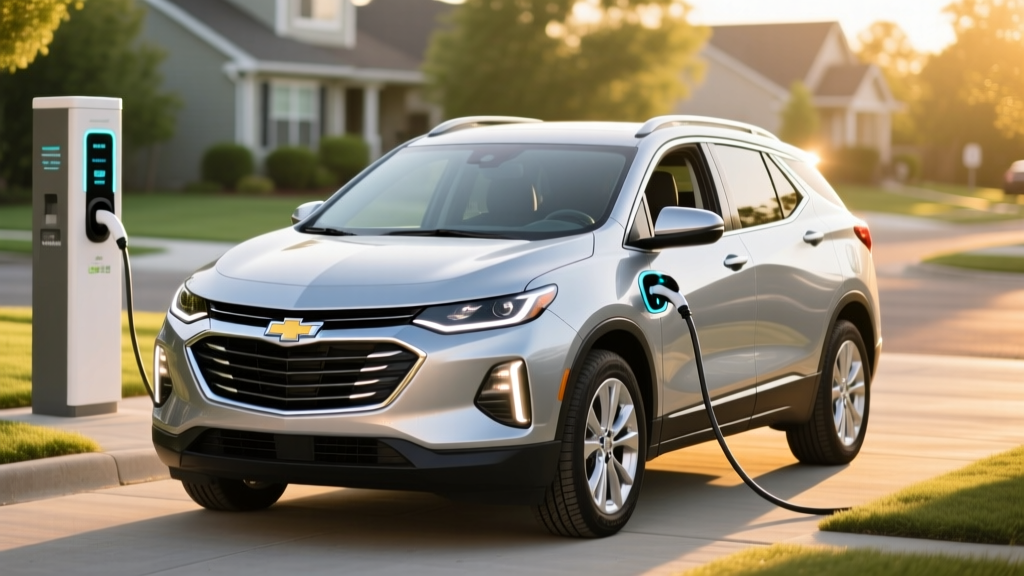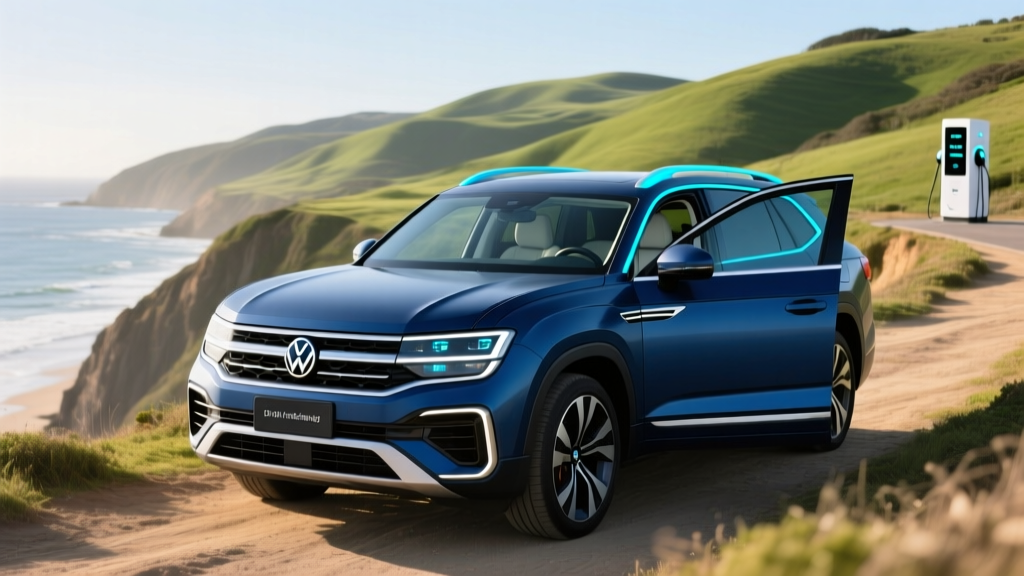
Three-row SUVs rarely get praised for efficiency, but Volkswagen is betting the 2026 VW Atlas Hybrid can shift that narrative. After years of offering the Atlas exclusively with turbocharged gasoline powertrains, VW has introduced a plug-in hybrid variant that pairs a turbocharged four-cylinder with an electric motor and a midsize battery pack. The result is a family hauler that can handle school runs on electric power alone while still offering 400+ miles of total range for road trips.
But does the math actually work for buyers cross-shopping the Toyota Grand Highlander Hybrid, the Kia Sorento PHEV, or a full battery-electric SUV? This guide breaks down the real numbers — EPA ratings, real-world expectations, charging logistics, warranty coverage, and tax-credit eligibility — so you can decide whether the Atlas Hybrid earns a spot in your driveway.
HEV vs. PHEV: What VW Is (and Isn't) Offering
Before we get into specs, a critical distinction: the 2026 Atlas Hybrid is a plug-in hybrid electric vehicle (PHEV), not a conventional self-charging hybrid (HEV). That distinction matters for your daily routine and your wallet.
| Feature | Conventional Hybrid (HEV) | Plug-In Hybrid (PHEV) |
|---|---|---|
| Plug in to charge? | No — regenerates internally | Yes — plug in for full electric range |
| Electric-only driving | Limited (1-2 mi at low speed) | 30-40+ mi at highway speeds |
| Battery size | 1-2 kWh | 13-20+ kWh usable |
| Federal tax credit | None (§30D requires plug-in) | Up to $7,500 (rules apply) |
| Best for | No home charging access | Home charging + short commutes |
Volkswagen does not currently offer a conventional HEV version of the Atlas in the U.S. market. If you want Atlas hybrid efficiency without plugging in, you'd need to look at competitors like the Toyota Grand Highlander Hybrid (HEV, EPA 36 combined MPG) or the Hyundai Santa Fe Hybrid. The Atlas Hybrid is strictly a PHEV play.
Powertrain Specs: Engine, Motor, and Combined Output
| Specification | 2026 VW Atlas Hybrid (PHEV) |
|---|---|
| Gas Engine | 2.0L turbocharged I4 (EA888 evo4) |
| Engine Output | ~268 hp / 295 lb-ft torque |
| Electric Motor | Integrated into transmission, ~114 hp |
| Combined System Output | ~362 hp / 369 lb-ft (est.) |
| Transmission | 6-speed DSG automatic |
| Drivetrain | 4MOTION AWD standard |
| Battery (Usable) | ~18.0 kWh (NMC chemistry) |
| 0-60 mph | ~6.8 seconds (est.) |
VW's PHEV architecture uses a larger turbo four rather than the smaller engines found in some rival PHEVs. The combined output of roughly 362 horsepower puts the Atlas Hybrid well ahead of the outgoing gas-only Atlas V6 (276 hp) and competitive with the Kia Sorento PHEV (261 hp combined). The electric motor fills in low-end torque, which is where you feel it most — pulling away from stoplights and merging onto highways.
Fuel Economy: EPA Ratings and Real-World MPG
For a PHEV, fuel economy is a two-part story: electric efficiency when the battery is charged, and hybrid MPG once the battery is depleted.
| Metric | EPA Estimate | Real-World Expectation |
|---|---|---|
| Electric-only range | ~33 miles | 28-35 mi (weather/load dependent) |
| MPGe (electric + gas) | ~77 MPGe combined | Varies heavily by charging habits |
| Gas-only city MPG | ~28 MPG | 27-30 MPG (hybrids often beat EPA in city) |
| Gas-only highway MPG | ~26 MPG | 24-27 MPG (heavy SUV, aero penalty) |
| Gas-only combined MPG | ~27 MPG | 25-28 MPG |
| Total combined range | ~440 miles | 400-450 mi depending on conditions |
Real-world range note: Expect the 33-mile electric-only estimate to drop to roughly 25-28 miles in winter conditions (below 35°F) due to cabin heating demands and reduced battery efficiency. Summer highway driving at 75+ mph may also shave 3-5 miles off the EV range. If your commute is under 25 miles round-trip and you charge nightly, you may go weeks without the engine starting.
Once the battery depletes, the Atlas Hybrid operates as a conventional hybrid, using regenerative braking and engine start-stop to achieve around 27 MPG combined. That's a meaningful improvement over the gas-only Atlas (EPA 21-22 combined depending on trim), but it trails the Toyota Grand Highlander Hybrid's 36 combined MPG — because Toyota's HEV system is optimized purely for fuel economy, not electric-only driving.
According to fueleconomy.gov, the Atlas Hybrid's charge-depleting efficiency places it mid-pack among three-row PHEV SUVs.
Charging: Times, Connectors, and the DC Fast-Charge Question
Charging the Atlas Hybrid's ~18 kWh battery is straightforward, but there's an important limitation to understand.
| Charging Level | Power (kW) | 0-100% Time | Notes |
|---|---|---|---|
| Level 1 (120V household) | ~1.4 kW | ~13 hours | Overnight top-up only |
| Level 2 (240V home/public) | ~7.2 kW | ~2.5 hours | Recommended for daily use |
| DC Fast Charge | Not available | N/A | No CCS/NACS DC inlet |
The Atlas Hybrid does not support DC fast charging. This is typical for PHEVs in this class — the Sorento PHEV and Toyota RAV4 Prime also lack DC fast-charge capability. With a relatively small 18 kWh battery, Level 2 charging at 7.2 kW refills the pack in about 2.5 hours, which is sufficient for overnight home charging and mid-day top-ups if you have a Level 2 charger at work.
If you rely on public charging, you'll be limited to Level 2 stations (common at workplaces, shopping centers, and parking garages). Plan for roughly 2-3 hours to fully replenish — not a quick gas-station-style stop.
Pricing, Trims, and Federal Tax Credit Eligibility
The 2026 Atlas Hybrid is positioned as a premium offering within the Atlas lineup. Based on VW's announced pricing structure:
| Trim | MSRP (est.) | Key Features |
|---|---|---|
| SE w/ Technology | ~$52,000 | 20" wheels, IQ.DRIVE, panoramic roof |
| SEL | ~$56,500 | Leather, nav, ventilated front seats |
| SEL Premium | ~$61,000 | Harman Kardon audio, 360° camera, tow pkg |
Does the Atlas Hybrid Qualify for the Federal Tax Credit?
Under IRS §30D rules for 2026, the Atlas Hybrid may qualify for up to $7,500 in federal clean vehicle credits, but eligibility depends on several factors that change annually:
- MSRP cap: SUVs must be under $80,000 — all Atlas Hybrid trims clear this.
- Buyer income cap: AGI must not exceed $150,000 (single) / $300,000 (joint). Check your modified AGI.
- Battery sourcing: Critical minerals and battery components must meet escalating domestic-content thresholds. VW has not publicly confirmed full §30D compliance for the Atlas Hybrid battery supply chain.
- Point-of-sale transfer: If eligible, you can apply the credit as a down-payment reduction at the dealer rather than waiting for tax filing.
Bottom line: Do not assume the full $7,500 credit applies. Verify the specific VIN's eligibility on fueleconomy.gov before signing paperwork, and consult a tax professional for your personal situation.
Battery Longevity, Warranty, and Replacement Costs
Hybrid and PHEV battery anxiety is the single most common concern we hear from buyers. Here's what the data shows for VW's PHEV platform:
| Coverage | Terms |
|---|---|
| High-voltage battery warranty | 8 years / 100,000 miles (10 yr / 150,000 mi in CARB states) |
| Capacity retention threshold | Below 70% of original capacity triggers warranty replacement |
| Powertrain warranty | 4 years / 50,000 miles |
| Bumper-to-bumper | 4 years / 50,000 miles |
| Estimated out-of-warranty replacement | $8,000 - $12,000 (based on comparable VW PHEV packs) |
PHEV batteries experience less stress than full EV batteries because they operate in a narrower state-of-charge window (roughly 15%-85% in daily use) and the pack is smaller, meaning fewer cells and lower total replacement cost. Real-world degradation data from VW's earlier PHEV models (Golf GTE, Passat GTE sold in Europe) suggests roughly 8-12% capacity loss over 8 years under normal use — well within the warranty threshold.
For context, a Toyota Grand Highlander Hybrid's battery warranty is 10 years / 150,000 miles nationwide, which is more generous than VW's base 8-year coverage. If you live in a CARB state (California, New York, Washington, and 14 others), VW extends the battery warranty to match that 10/150k standard.
Atlas Hybrid vs. the Alternatives: Which Powertrain Fits You?
Choose the Atlas Hybrid PHEV If:
- You have home Level 2 charging and a commute under 30 miles
- You want electric daily driving but need 400+ mile road-trip range
- You value VW's driving dynamics, interior quality, and IQ.DRIVE ADAS suite
- You may qualify for the $7,500 federal credit, narrowing the price gap
- You want 362 hp in a three-row SUV without going full EV
Consider an Alternative If:
- No home charging: A conventional HEV (Grand Highlander Hybrid, 36 MPG) makes more sense — you'll never use the Atlas Hybrid's electric range without plugging in
- Budget is tight: The Atlas Hybrid starts ~$52K; the gas Atlas starts ~$40K, and the Sorento PHEV starts ~$52K with more standard features
- Max efficiency is the goal: A full EV like the Kia EV9 (EPA 304 mi, ~3.0 mi/kWh) eliminates gas entirely if you can charge at home
- You need DC fast charging: No PHEV in this class offers it; only full BEVs do
Quick decision framework:
- Home charging + short commute + road trips → Atlas Hybrid PHEV is ideal
- No home charging + want better MPG → Toyota Grand Highlander Hybrid (HEV)
- Home charging + rarely drive 300+ miles → Full EV (Kia EV9, Tesla Model X)
- Lowest upfront cost, no charging hassle → Gas-only Atlas or Grand Highlander
Real-World Ownership: What to Expect in Year One
Based on ownership patterns from similar PHEV SUVs, here's a realistic first-year outlook for the Atlas Hybrid:
If you charge nightly at home (Level 2): Expect to use roughly 150-200 gallons of gasoline in a year of mixed driving (12,000 miles), compared to ~550 gallons in the gas-only Atlas. At $3.50/gallon, that's a fuel savings of roughly $1,050-$1,400 annually, partially offset by electricity costs (~$300-$400/year at $0.15/kWh).
If you rarely charge: You'll operate in hybrid mode most of the time at ~27 MPG combined, using roughly 440 gallons/year. You'll still save vs. the gas Atlas, but you're leaving the PHEV's biggest advantage on the table — and paying a premium for battery capacity you're not using.
Insurance: PHEVs typically carry a 5-12% insurance premium over their gas counterparts due to higher repair costs and vehicle MSRP. Budget an extra $150-$250/year depending on your carrier and state.
Maintenance: PHEVs have lower brake wear (regenerative braking) and less engine runtime, which can extend oil-change intervals. VW recommends oil changes every 10,000 miles or 12 months, but the engine may accumulate fewer miles than the odometer shows if you drive mostly on electric.
Frequently Asked Questions
How many MPG does the VW Atlas Hybrid get?
The 2026 Atlas Hybrid achieves an EPA-estimated 27 MPG combined (28 city / 26 highway) when operating in hybrid mode after the battery is depleted. When factoring in electric-only driving, it earns approximately 77 MPGe combined. Real-world city driving often exceeds the EPA city figure thanks to regenerative braking, while sustained highway driving at 75+ mph may fall 1-2 MPG short.
How far can the Atlas Hybrid go on electric power alone?
The EPA estimates approximately 33 miles of electric-only range. In real-world conditions, expect 28-35 miles depending on temperature, terrain, and speed. Cold weather (below 35°F) reduces this to roughly 25-28 miles due to battery chemistry limitations and cabin heating demands. Once the battery depletes, the gasoline engine starts seamlessly and the SUV operates as a conventional hybrid.
Does the VW Atlas Hybrid qualify for the $7,500 federal tax credit?
It may, but eligibility is not guaranteed. Under IRS §30D rules, the vehicle must meet battery-sourcing and critical-minerals requirements, and the buyer must fall under income caps ($150K single / $300K joint). The Atlas Hybrid's MSRP clears the $80,000 SUV cap. Always verify VIN-specific eligibility on fueleconomy.gov and consult a tax professional before relying on the credit in your purchase decision.
Is the Atlas Hybrid reliable, and what does battery replacement cost?
VW's PHEV powertrain builds on the proven EA888 engine family, which has a strong reliability track record in its fourth generation. The high-voltage battery is warrantied for 8 years / 100,000 miles (10 years / 150,000 miles in CARB states), with replacement triggered if capacity drops below 70%. Out-of-warranty replacement is estimated at $8,000-$12,000 based on comparable VW PHEV packs. Historical data from VW's European PHEV models shows modest degradation of 8-12% over 8 years under normal use.
Should I get the Atlas Hybrid, a conventional hybrid, or a full EV?
If you have home charging access, a daily commute under 30 miles, and regularly take road trips exceeding 300 miles, the Atlas Hybrid PHEV is the sweet spot — electric commuting with no range anxiety. If you lack home charging, a conventional hybrid (like the Grand Highlander Hybrid at 36 MPG) is simpler and cheaper. If you rarely drive more than 250 miles between charges and want zero gasoline, a full EV like the Kia EV9 eliminates fuel costs entirely and has fewer moving parts to maintain.
Can the Atlas Hybrid tow, and does the PHEV system affect towing capacity?
The Atlas Hybrid is expected to offer a maximum towing capacity of approximately 5,000 pounds when equipped with the factory tow package (standard on SEL Premium, available on lower trims). Towing significantly reduces electric-only range — expect a 40-60% reduction when pulling a loaded trailer — and will lower hybrid-mode MPG to roughly 20-22 combined.