Quick Verdict: What the XC60 Mild Hybrid Actually Is
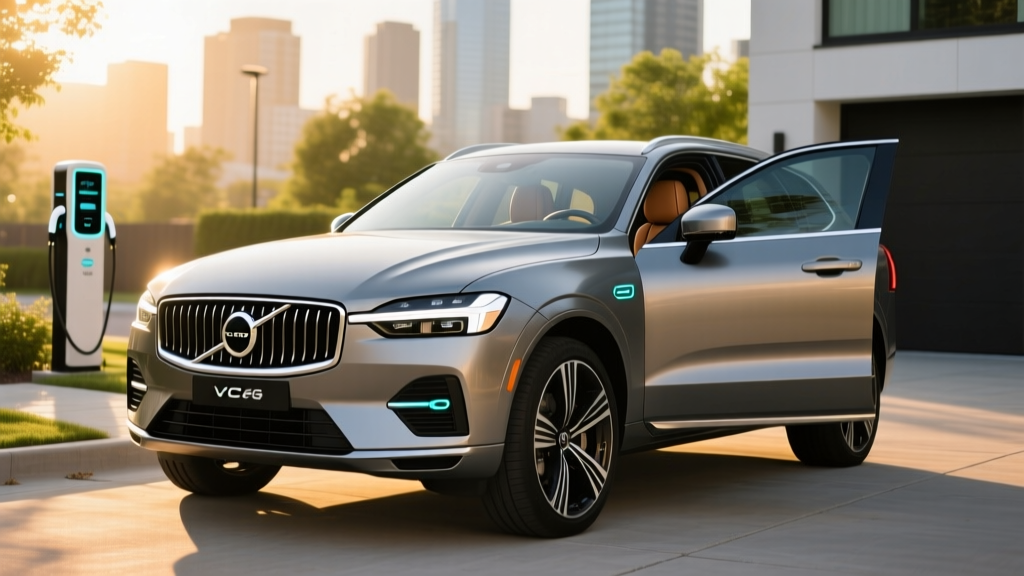
The 2026 Volvo XC60 mild hybrid occupies a specific niche: it's a luxury compact SUV that uses a 48-volt electrical system and an integrated starter-generator (ISG) to smooth out stop-start behavior, recover small amounts of braking energy, and provide a modest torque fill during acceleration. It is not a conventional hybrid (HEV) like the Toyota RAV4 Hybrid, and it is not a plug-in hybrid (PHEV) like the XC60 Recharge. You cannot plug it in, and it cannot drive on electric power alone.
For buyers who want the refinement of Volvo's turbocharged four-cylinder without stepping into full electrification — and who don't have reliable access to a home charger — the XC60 B5 mild hybrid delivers a credible 26 MPG combined with premium-crossover comfort. But if maximizing fuel economy or accessing electric-only driving is your priority, you'll need to look at the XC60 Recharge PHEV or a competitor's full hybrid.
HEV vs. PHEV vs. Mild Hybrid: Where the XC60 B5 Fits
Volvo sells two distinct XC60 powertrains in the US market, and the terminology matters for your wallet and your daily routine:
| Attribute | XC60 B5 (Mild Hybrid) | XC60 Recharge (PHEV) |
|---|---|---|
| Powertrain type | 48V mild hybrid (MHEV) | Plug-in hybrid (PHEV) |
| Plug-in charging? | No — gas only | Yes — Level 1/Level 2 AC |
| Electric-only driving? | No | Yes — up to 35 miles EPA |
| Combined horsepower | 247 hp | 455 hp |
| EPA combined MPG / MPGe | 26 MPG | 28 MPG gas / 63 MPGe combined |
| Battery capacity | ~0.5 kWh (48V system) | 18.8 kWh (traction battery) |
| Base MSRP (2026) | $49,950 | $62,950 |
| Federal tax credit (§30D) | Not eligible | Up to $7,500 (eligibility varies) |
The B5's 48-volt system is an efficiency assist, not an alternative powertrain. It recovers kinetic energy during deceleration into a small lithium-ion battery under the cargo floor, then deploys that energy to power the ISG during restarts and initial acceleration. The result is a smoother stop-start experience and roughly a 5–10% fuel-economy improvement over a non-hybrid equivalent. The Recharge, by contrast, carries a large 18.8 kWh traction battery and a rear-axle electric motor, enabling genuine electric-only commuting.
Fuel Economy: EPA Ratings and Real-World MPG
| Drivetrain | City MPG | Highway MPG | Combined MPG |
|---|---|---|---|
| FWD (Core / Plus) | 26 | 33 | 28 |
| AWD (all trims) | 23 | 30 | 26 |
Source: EPA fueleconomy.gov
Most XC60 B5 buyers opt for all-wheel drive, which drops the combined rating to 26 MPG. In real-world driving, mild hybrids tend to perform close to their EPA city estimates because the ISG assists most during low-speed, stop-and-go conditions. Highway driving at sustained speeds relies almost entirely on the turbocharged engine, so expect real-world highway figures near 28–29 MPG for AWD models in favorable conditions.
Real-world fuel economy expectations (AWD):
- City commuting with frequent stops: 24–26 MPG (mild-hybrid assist shines here)
- Mixed suburban driving: 25–27 MPG
- Highway cruising at 70–75 mph: 27–29 MPG
- Cold weather (below 30°F): expect 10–15% reduction, roughly 22–24 MPG combined
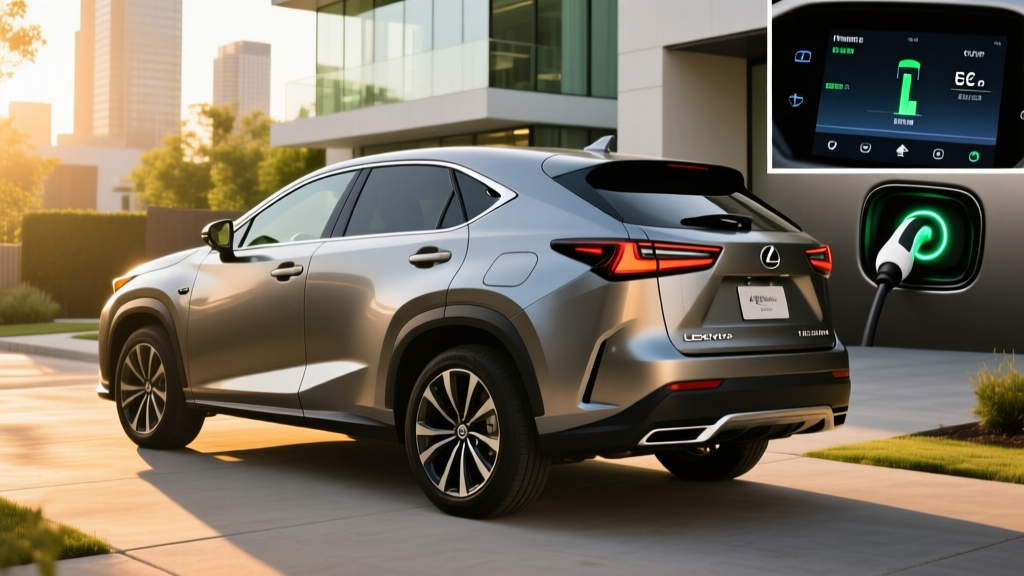
For context, the BMW X3 xDrive30 (non-hybrid) rates at 25 MPG combined, and the Audi Q5 45 TFSI rates at 25 MPG combined. The XC60 B5 AWD's 26 MPG combined is competitive within the German-Swedish luxury compact set, though it trails the Lexus NX 350h (conventional hybrid, 39 MPG combined) by a wide margin. If fuel economy is your top priority in this segment, the NX 350h or the XC60 Recharge are meaningfully more efficient.
Powertrain: B5 Engine, 48V System, and Performance
| Specification | Detail |
|---|---|
| Engine | 2.0L turbocharged inline-4 |
| Engine output | 247 hp @ 5,500 rpm / 258 lb-ft torque @ 1,800 rpm |
| 48V ISG contribution | ~13 hp torque fill during acceleration |
| Combined system output | 247 hp (net) |
| Transmission | 8-speed automatic (Geartronic) |
| Drivetrain | FWD standard; AWD optional (standard on most trims) |
| 0–60 mph (AWD) | 6.5 seconds |
| Towing capacity | 3,500 lbs (braked, AWD) |
The B5 powertrain pairs Volvo's well-proven 2.0-liter turbo four with a belt-driven integrated starter-generator on the 48-volt circuit. The ISG doesn't add power in the way a full hybrid's electric motor does — its contribution is measured in single-digit horsepower applied briefly during initial acceleration. What you notice in practice is not a surge of electric torque but rather the absence of traditional turbo lag and a noticeably smoother engine restart at stoplights.
The 8-speed automatic handles gear changes competently, and the AWD system uses a conventional mechanical rear differential (unlike the Recharge, which uses an electric rear axle). Acceleration to 60 mph in 6.5 seconds is adequate for highway merging and passing, though it trails the XC60 Recharge's 4.5-second sprint and the BMW X3 M40i's urgency.
Pricing, Trims, and Tax Credit Eligibility
The 2026 Volvo XC60 B5 mild hybrid is available in three trim levels:
| Trim | MSRP | Key Features |
|---|---|---|
| Core (AWD) | $49,950 | 9" touchscreen, Google built-in, panoramic roof, Pilot Assist |
| Plus (AWD) | $53,750 | Harman Kardon audio, 360° camera, wireless phone charging, head-up display |
| Ultra (AWD) | $58,350 | Nappa leather, ventilated front seats, Bowers & Wilkins audio, air suspension |
Destination charge adds approximately $1,295. Fully loaded Ultra models with premium packages can approach $65,000.
Federal Tax Credit: Not Eligible
The XC60 B5 mild hybrid does not qualify for the IRS §30D Clean Vehicle Credit. Under current IRS guidelines, only plug-in electric vehicles (BEVs) and plug-in hybrids (PHEVs) with sufficient battery capacity are eligible. Mild hybrids with 48-volt systems do not meet the minimum 4 kWh battery threshold.
If the federal tax credit is a deciding factor in your purchase, the XC60 Recharge T8 eAWD PHEV may qualify for up to $7,500 under §30D, subject to MSRP caps (vans/SUVs/trucks: $80,000), buyer income limits ($150,000 single / $300,000 joint AGI), and battery component/critical mineral sourcing requirements. Consult a tax professional and verify current-year eligibility on irs.gov before relying on credit estimates.
Battery Warranty, Reliability, and Replacement Cost
Volvo XC60 B5 — Hybrid Component Warranty
- 48V battery and ISG: 8 years / 100,000 miles (hybrid/emission component warranty)
- Powertrain warranty: 4 years / 50,000 miles
- Bumper-to-bumper: 4 years / 50,000 miles
- Complimentary maintenance: 3 years / 36,000 miles
The 48-volt lithium-ion battery in the B5 is small (roughly 0.5 kWh) and operates under relatively mild charge-discharge stress compared to a full hybrid or PHEV traction battery. Failure rates for 48V systems across the industry have been low, and the battery is covered under Volvo's hybrid-component warranty for 8 years or 100,000 miles — whichever comes first.
If the 48V battery does require replacement outside of warranty, expect a parts cost in the range of $800–$1,500, with labor adding $200–$400. This is significantly less expensive than a full-hybrid or PHEV traction battery replacement. The ISG unit, if it fails, is a costlier repair ($2,000–$3,500 installed), but failures are uncommon.
Volvo's overall reliability ratings have been middling in recent Consumer Reports and J.D. Power assessments, with infotainment software (now Google-based) and minor electrical gremlins being the most common complaints rather than powertrain issues. The B5's turbocharged engine and 8-speed automatic are proven hardware with a large service history.
Who Should Choose the XC60 Mild Hybrid (and Who Shouldn't)
Choose the XC60 B5 mild hybrid if:
- You want a luxury compact SUV with slightly better fuel economy than non-hybrid rivals
- You cannot install a home charger and don't want to rely on public charging infrastructure
- You value Volvo's safety tech, interior design, and Google-based infotainment
- Your budget is $50,000–$58,000 and you don't want the Recharge's $13,000 price premium
- You drive mostly city and suburban miles where the ISG assist is most effective
Look elsewhere if:
- You want electric-only commuting — consider the XC60 Recharge PHEV (35 mi electric) or a full BEV
- Maximum fuel economy is the priority — the Lexus NX 350h delivers 39 MPG combined as a conventional hybrid
- You want the federal tax credit — only PHEVs and BEVs qualify under §30D
- You want sporty driving dynamics — the BMW X3 or Porsche Macan are more engaging to drive
Pros and Cons
Pros
- Smooth stop-start and low-speed refinement from 48V ISG
- Competitive 26 MPG combined (AWD) for the luxury compact segment
- Premium interior with Google built-in, strong safety suite (Pilot Assist)
- 3,500-lb towing capacity (AWD)
- No charging infrastructure required
Cons
- No electric-only driving capability
- No federal tax credit eligibility
- Fuel economy trails full hybrids like the Lexus NX 350h by 13+ MPG
- Pricey when optioned; Ultra trim approaches Recharge territory
- Middling reliability reputation for Volvo's electronics
Frequently Asked Questions
How many MPG does the Volvo XC60 mild hybrid get?
The 2026 XC60 B5 AWD rates at 23 city / 30 highway / 26 combined MPG per the EPA. FWD models rate slightly higher at 28 combined. Real-world results vary: expect 25–27 MPG in mixed driving and up to 29 MPG on the highway in favorable conditions.
Can I plug in the XC60 mild hybrid?
No. The B5 is a mild hybrid (MHEV) with a 48-volt system that charges solely through regenerative braking and the engine's alternator function. There is no plug, no charging port, and no electric-only driving mode. If you want plug-in capability, look at the XC60 Recharge T8 PHEV.
What's the difference between the XC60 B5 and the XC60 Recharge?
The B5 is a mild hybrid with 247 hp, no plug, and 26 MPG combined. The Recharge is a plug-in hybrid with 455 hp, an 18.8 kWh battery providing 35 miles of electric-only range, and eligibility for the federal tax credit. The Recharge starts at $62,950 — roughly $13,000 more than the B5.
Is the 48V mild hybrid system reliable?
48V mild-hybrid systems have proven reliable across the industry. The battery is small, operates under low stress, and is covered by Volvo's 8-year/100,000-mile hybrid component warranty. Replacement cost ($800–$1,500 parts) is modest compared to full-hybrid or PHEV batteries.
Does the XC60 mild hybrid qualify for any tax credit?
No. The IRS §30D Clean Vehicle Credit requires plug-in capability and a minimum battery capacity that mild hybrids do not meet. Some states may offer rebates for hybrid vehicles broadly — check your state's energy office or AFDC state incentive database for local programs.
How does the XC60 B5 compare to a full EV?
A full EV like the Tesla Model Y or BMW iX eliminates gasoline entirely, offers lower per-mile fuel costs, and qualifies for the federal tax credit. However, EVs require home or reliable public charging access and carry higher upfront costs. The XC60 B5 is a pragmatic choice for buyers who want incremental efficiency gains without changing their fueling habits.