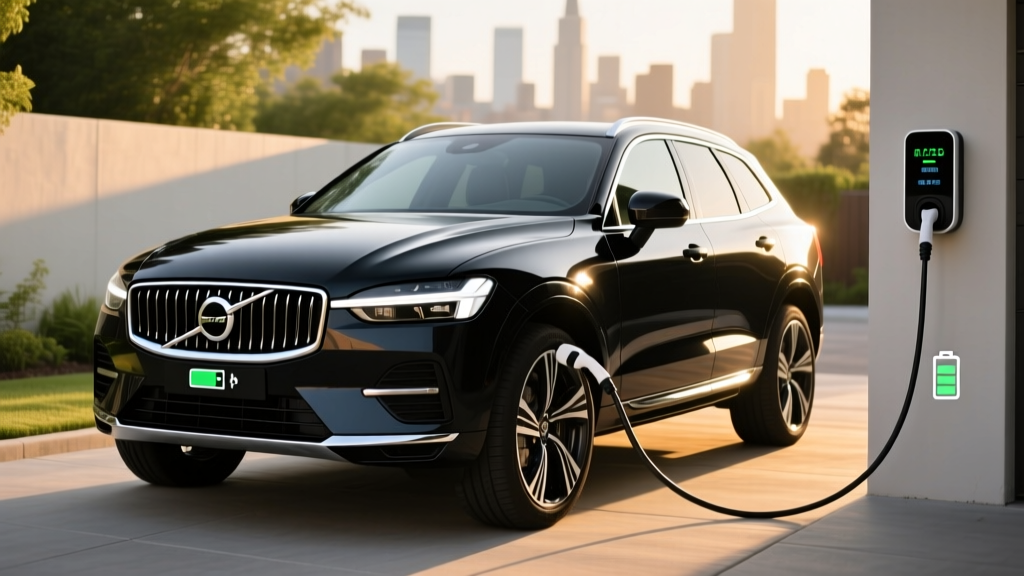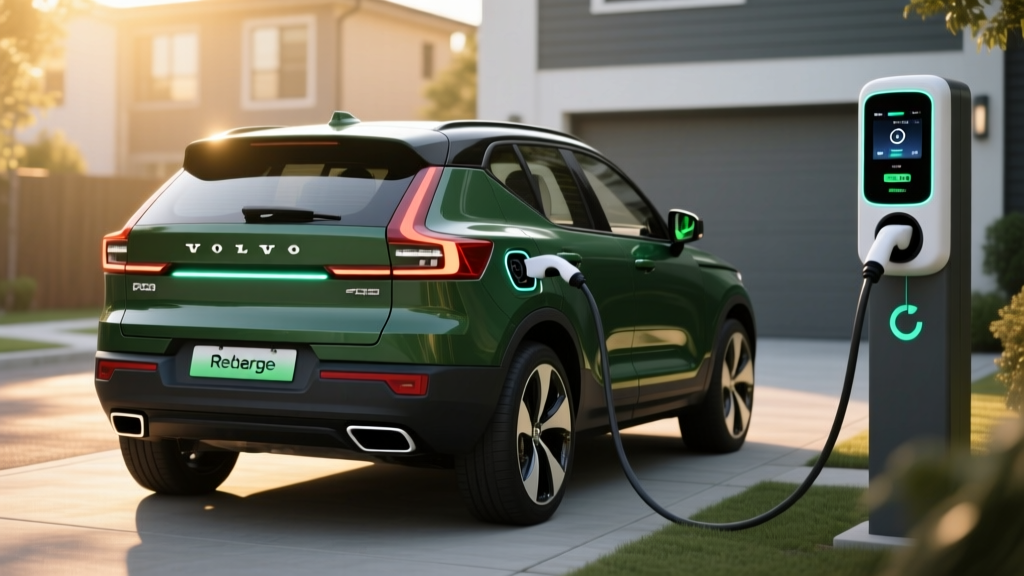
The Volvo XC40 plug-in hybrid—officially badged as the XC40 Recharge Plug-In Hybrid—occupies a deliberate middle ground in Volvo's electrified lineup. It isn't a full battery-electric vehicle (that's the EX40, formerly C40 Recharge), and it isn't a conventional hybrid you simply fill with gas and forget. It's a plug-in hybrid electric vehicle (PHEV) designed for drivers who want electric-only commuting during the week and a gasoline engine for weekend road trips, without committing to a charging-dependent lifestyle.
For 2026, Volvo continues to refine the XC40 PHEV with its T8 powertrain architecture, pairing a turbocharged four-cylinder engine with a rear-axle electric motor. The result is a compact luxury crossover that delivers meaningful electric-only range for daily driving, competitive fuel economy when the engine kicks in, and the safety-focused, minimalist interior Volvo is known for. But is it the right electrified vehicle for your situation? This guide breaks down every spec that matters.
XC40 Recharge PHEV: Key Specifications at a Glance
| Specification | Value |
|---|---|
| EPA Electric-Only Range | 32 miles |
| Total Combined Range (EV + Gas) | ~440 miles |
| EPA Combined MPGe (Electric + Gas) | 63 MPGe |
| EPA Combined MPG (Gas Only, Battery Depleted) | 30 MPG |
| Battery Capacity (Gross / Usable) | 18.8 kWh / ~14.9 kWh |
| Battery Chemistry | NMC (Nickel Manganese Cobalt) |
| Combined System Horsepower | 262 hp |
| Engine | 1.5L Turbocharged 3-Cylinder + Rear Electric Motor |
| Drivetrain | AWD (eAWD — engine drives front, motor drives rear) |
| 0–60 mph | 6.8 seconds |
| Level 2 Charge Time (0–100%) | ~5 hours (3.7 kW onboard charger) |
| DC Fast Charging | Not supported |
| Starting MSRP (Core Trim) | $42,550 |
| Federal §30D Tax Credit Eligibility | Up to $3,750 (subject to sourcing/income rules) |
| Battery Warranty | 8 years / 100,000 miles |
HEV vs. PHEV: Why the XC40 Plug-In Hybrid Is Different From a Regular Hybrid
A common source of confusion among electrified-vehicle shoppers is the difference between a conventional hybrid (HEV) and a plug-in hybrid (PHEV). The XC40 Recharge is strictly a PHEV—Volvo does not offer a non-plug-in HEV version of the XC40 in the US market. Here's why the distinction matters:
HEV vs. PHEV — Quick Comparison
| Feature | Conventional Hybrid (HEV) | Plug-In Hybrid (PHEV) |
|---|---|---|
| Plug In to Charge? | No — charges via regenerative braking & engine | Yes — plugs into Level 1 or Level 2 charger |
| Battery Size | Small (1–2 kWh) | Larger (14–20+ kWh usable) |
| Electric-Only Range | 0–2 miles at low speed | 20–45 miles at highway speeds |
| Gas Engine Role | Primary propulsion, assisted by motor | Backup for longer trips; EV mode for daily driving |
| Tax Credit Eligibility | No federal credit | Up to $3,750–$7,500 under §30D (varies) |
| Best For | Drivers who cannot charge at home | Drivers with home/work charging and short commutes |
The XC40 PHEV's 18.8 kWh battery (approximately 14.9 kWh usable) is what enables its 32-mile electric-only range. A conventional hybrid's battery is roughly 1/10th that size—enough to assist the engine and recapture braking energy, but not enough to drive meaningful distances on electricity alone. If you can plug in at home or work, the PHEV lets you complete most weekday commutes without burning a drop of gasoline. If you can't plug in, you're essentially carrying around dead battery weight and paying a premium for capacity you never use—in which case a conventional hybrid (like the Toyota RAV4 Hybrid) may be a smarter buy.
Fuel Economy: EPA Ratings and Real-World MPG
The EPA rates the 2026 XC40 Recharge PHEV at 63 MPGe combined when operating in blended electric-and-gas mode. MPGe (miles per gallon equivalent) converts electricity consumption into a gasoline-equivalent figure so you can compare across vehicle types. Once the battery is depleted and the vehicle operates solely on its gasoline engine, the rating drops to 30 MPG combined.
| Mode | City | Highway | Combined |
|---|---|---|---|
| Blended (EV + Gas, full battery) | — | — | 63 MPGe |
| Gas Only (battery depleted) | 28 MPG | 32 MPG | 30 MPG |
Real-world expectations: Plug-in hybrids often exceed their EPA city ratings in stop-and-go traffic because regenerative braking recaptures energy that would otherwise be wasted as heat. In mixed suburban driving with a full charge, owners commonly report 70+ MPGe on shorter commutes. However, on sustained highway trips at 75+ mph with a depleted battery, expect fuel economy closer to 27–29 MPG—aerodynamic drag and the vehicle's 4,400-lb curb weight work against efficiency at higher speeds. Cold weather (below 30°F) can reduce electric-only range by 20–30%, meaning your 32-mile EPA electric range may shrink to 22–26 miles in winter conditions.
Source: fueleconomy.gov — 2026 Volvo XC40 Recharge
Electric-Only Range and Charging: What 32 Miles Actually Means
The EPA-rated 32 miles of electric-only range is the headline figure, but real-world results depend heavily on driving conditions. In mild weather (50–75°F) at suburban speeds (30–45 mph), you can realistically extract 30–34 miles before the gasoline engine engages. On a 70-mph highway commute with climate control running, expect 25–28 miles. In freezing temperatures with the heater blasting, plan for 20–25 miles.
EPA sticker: 32 miles electric-only.
Real-world suburban (mild weather): ~30–34 miles.
Real-world highway (70 mph): ~25–28 miles.
Cold weather (below 30°F): ~20–25 miles.
Total combined range (full tank + full battery): ~440 miles.
Charging logistics: The XC40 PHEV uses a J1772 connector for AC charging and has a 3.7 kW onboard charger. This means:
- Level 1 (120V household outlet): ~1.4 kW delivery, adding roughly 5–6 miles of range per hour. A full charge from empty takes approximately 12–13 hours.
- Level 2 (240V home or public charger): ~3.7 kW delivery (limited by the car's onboard charger, not the station). A full 0–100% charge takes about 5 hours.
- DC fast charging: Not supported. The XC40 PHEV cannot use CCS or NACS DC fast chargers. This is typical for PHEVs—the battery is small enough that Level 2 charging is sufficient for overnight replenishment.
For most PHEV owners, a standard 120V outlet is adequate if the vehicle sits parked for 10+ hours overnight. However, a Level 2 home charger (typically a 240V / 32A circuit) provides faster top-ups and is recommended if you make multiple short trips throughout the day and want to recharge between drives. Installation of a dedicated 240V circuit by a licensed electrician typically runs $500–$1,500 depending on panel proximity and local permit requirements.
Powertrain and Performance: 262 Horsepower With a Purpose
The XC40 Recharge PHEV uses Volvo's T8 eAWD powertrain, which combines:
- Front axle: 1.5-liter turbocharged 3-cylinder gasoline engine producing 181 hp and 195 lb-ft of torque
- Rear axle: Permanent-magnet electric motor producing 107 hp and 177 lb-ft of torque
- Combined system output: 262 hp (not a simple sum—engine and motor peak outputs occur at different RPMs)
The result is a 0–60 mph time of 6.8 seconds, which is brisk for a compact luxury crossover and noticeably quicker than the gasoline-only XC40 B5 (7.1 seconds). The eAWD system provides genuine all-wheel-drive traction: the engine powers the front wheels, the motor powers the rear, and there is no mechanical driveshaft connecting the two axles. This architecture also means the XC40 PHEV can operate in pure rear-wheel-drive electric mode for maximum efficiency during low-load cruising.
Three drive modes let you manage the powertrain:
- Pure: Electric-only driving (up to ~75 mph), maximizing range.
- Hybrid: The default mode—intelligently blends engine and motor based on speed, load, and battery state.
- Power: Full combined output for maximum acceleration.
An additional Hold function lets you preserve battery charge for later use (useful if you're driving on the highway and want to save electric range for city driving at your destination), and a Charge mode uses the gasoline engine to actively recharge the battery—though this significantly reduces fuel economy while active.
Pricing, Trims, and Tax Credit Eligibility
The 2026 XC40 Recharge Plug-In Hybrid starts at $42,550 MSRP for the Core trim. Volvo offers two additional trims:
- Core: $42,550 — Includes panoramic sunroof, 9-inch touchscreen with Google Built-in, wireless Apple CarPlay, heated front seats, power liftgate, and Volvo's full suite of Pilot Assist driver-assistance features.
- Plus: ~$46,050 — Adds Harman Kardon audio, 360° surround camera, heated rear seats, and additional interior trim upgrades.
- Ultimate: ~$49,550 — Adds head-up display, Pilot Assist with Navi (map-based speed adjustment), and premium leather upholstery.
Federal tax credit: Under IRS §30D rules, the XC40 Recharge PHEV may qualify for up to $3,750 in federal tax credits, contingent on battery component and critical-mineral sourcing requirements that are subject to annual updates. The credit is subject to buyer income caps ($150,000 single / $300,000 joint MAGI) and can now be transferred to the dealer as a point-of-sale discount under current-year rules. The vehicle's MSRP must not exceed the $80,000 SUV cap, which all XC40 trims clear comfortably.
Always verify current-year eligibility directly with the IRS Clean Vehicle Credits page before purchasing, as battery-sourcing requirements have narrowed the list of qualifying vehicles significantly since the Inflation Reduction Act took effect.
- ✓ Vehicle MSRP under $80,000 SUV cap
- ✓ Buyer MAGI under $150K single / $300K joint
- ⚠ Battery critical-mineral sourcing — verify current-year qualification at irs.gov
- ⚠ Battery component assembly — verify current-year qualification at irs.gov
- ✓ Point-of-sale transfer available (reduces purchase price directly)
- ✓ Vehicle must be new, purchased for personal use, primarily driven in the US
Battery Longevity, Warranty, and Replacement Cost
Real-world degradation: PHEV batteries experience more charge cycles than full EV batteries because the smaller battery is cycled through deeper discharge/recharge events more frequently. However, NMC chemistry in modern Volvo PHEV packs has proven durable in field data. Most XC40 T8 owners report 5–8% capacity loss over the first 3–4 years, well within the 70% warranty threshold. The battery management system (BMS) maintains a buffer—roughly 3.9 kWh of the 18.8 kWh gross capacity is reserved and inaccessible to the driver—which reduces stress on the cells and slows degradation.
Out-of-warranty replacement cost: If the battery requires replacement after the warranty expires, expect a cost in the range of $8,000–$12,000 for the pack plus labor, based on current Volvo PHEV battery pricing. This is significantly less than a full EV battery replacement (often $15,000–$25,000) because the PHEV pack is much smaller. However, it's a meaningful expense that buyers planning to keep the vehicle past 150,000 miles should budget for.
General reliability: Volvo's T8 powertrain has been in production since 2015 across multiple models (XC90, S60, XC60, XC40), giving it a long track record. The primary reliability concerns reported by owners involve the infotainment system (Google Built-in can occasionally lag) and minor electrical gremlins rather than powertrain or battery failures. The gasoline 1.5L 3-cylinder engine is less proven than Volvo's older 2.0L 4-cylinder but has shown no systemic failure patterns through the 2025 model year.
XC40 PHEV vs. Full EV vs. Gasoline: Which Should You Choose?
Choose the XC40 PHEV If:
- Your daily commute is under 30 miles round-trip
- You have access to Level 1 or Level 2 charging at home
- You take road trips 4+ times per year and want gas-engine flexibility
- You want AWD without the range compromise of a full EV in cold climates
- You're not ready to depend entirely on public charging infrastructure
Choose a Full EV (EX40 / Tesla Model Y) If:
- You can install a Level 2 home charger reliably
- Your daily driving rarely exceeds 200 miles
- You want to eliminate oil changes, spark plugs, and exhaust maintenance entirely
- You want access to the full $7,500 federal tax credit (varies by model)
- You prioritize lowest per-mile fuel cost (~$0.04/mi on electricity vs. ~$0.12/mi on gas)
Choose a Gas Car (or Conventional Hybrid) If:
- You cannot charge at home or work (apartment, street parking)
- Your budget is under $35,000
- You drive very high annual mileage (25,000+ mi/yr) on highways
- You want the lowest upfront purchase price with no charging logistics
The XC40 PHEV's strongest use case is the charge-at-home commuter with weekend road-trip needs. If 80% of your driving is under 30 miles and you can plug in overnight, you'll burn gasoline only on longer trips—potentially using 5–8 tanks per year instead of 30+. But if you can't plug in regularly, the PHEV premium over a conventional hybrid or gas car isn't justified by the fuel savings.
Pros and Cons: Honest Assessment
Pros
- 32 miles EV range covers most daily commutes
- 262 hp eAWD is genuinely quick and confident in snow
- Can road-trip without charging anxiety (~440 mi total range)
- Volvo's safety suite (Pilot Assist, run-off-road protection) is standard
- 8-year/100k-mile battery warranty provides long-term peace of mind
- Eligible for up to $3,750 federal tax credit (verify sourcing rules)
Cons
- No DC fast charging — irrelevant for PHEV use case, but limits flexibility
- 3.7 kW onboard charger is slow compared to rivals (Toyota RAV4 Prime: 6.6 kW)
- $42,550 starting price is steep for a compact crossover
- Real-world electric range drops significantly in cold weather
- Cargo space reduced vs. gas XC40 due to battery placement (17.6 cu ft vs. 20.7 cu ft)
- Google Built-in infotainment can be sluggish and requires data subscription after trial
Frequently Asked Questions
How many MPG does the Volvo XC40 plug-in hybrid get?
The EPA rates the 2026 XC40 Recharge PHEV at 63 MPGe combined (blended electric and gas operation) and 30 MPG combined when running on gasoline alone after the battery is depleted. In real-world suburban driving with regular charging, many owners effectively operate at 50–80+ MPG equivalent because most miles are covered on electricity.
How far can the XC40 plug-in hybrid go on electric only?
The EPA rates it at 32 miles of electric-only range. In real-world mild-weather suburban driving, expect 30–34 miles. Highway driving at 70+ mph reduces this to 25–28 miles, and cold weather (below 30°F) can drop it to 20–25 miles. The gasoline engine seamlessly engages when the battery depletes, so there is no range-anxiety scenario.
Does the Volvo XC40 plug-in hybrid qualify for a tax credit?
Under current IRS §30D rules, the XC40 Recharge PHEV may qualify for up to $3,750 in federal tax credits, depending on battery-sourcing compliance, buyer income limits ($150K single / $300K joint MAGI), and point-of-sale transfer election. Always verify current eligibility at irs.gov before purchasing, as sourcing requirements change annually.
Is the XC40 plug-in hybrid reliable?
Volvo's T8 PHEV powertrain has been in production since 2015 and has accumulated a strong reliability record across multiple model lines. The high-voltage battery is warrantied for 8 years/100,000 miles with a 70% capacity retention guarantee. Most reported issues involve infotainment software rather than powertrain components. Out-of-warranty battery replacement is estimated at $8,000–$12,000.
Do I need to plug in the XC40 PHEV, or does it charge itself?
You can drive it without ever plugging in—it will function like a conventional hybrid using regenerative braking and the gasoline engine. However, you'll forfeit the 32-mile electric-only range and the fuel-cost savings that justify the PHEV premium. To get the full benefit, plug in nightly using a standard 120V outlet or a 240V Level 2 charger.
Hybrid vs. PHEV vs. full EV — which fits me?
Choose a conventional hybrid (HEV) if you cannot charge at home. Choose a PHEV like the XC40 Recharge if you have home charging and want electric commuting with gas-engine road-trip flexibility. Choose a full EV if you want the lowest operating cost, zero tailpipe emissions, and can rely on home + public charging for all your driving needs.