Quick Verdict: The Volvo XC40 Mild Hybrid in 2026
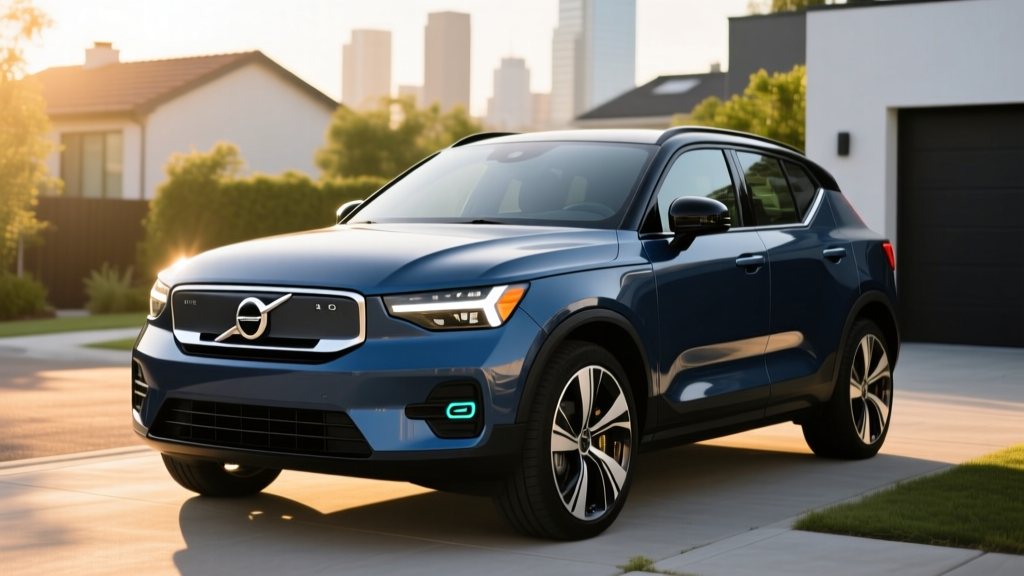
The 2026 Volvo XC40 mild hybrid (badged B5 AWD) is not a plug-in vehicle and not a full hybrid in the Toyota Prius sense. It's a turbocharged 2.0-liter four-cylinder paired with a 48-volt belt-driven integrated starter-generator (BISG) and a small lithium-ion buffer battery. The system delivers 247 horsepower, seamless stop-start, and modest regenerative braking — but it cannot drive on electric power alone, and you never plug it in.
If you want a premium compact SUV with better fuel economy than a pure gas car, no charging hassle, and Volvo's safety suite, the XC40 B5 mild hybrid delivers. If you want meaningful electric-only commuting or eligibility for the federal EV tax credit, you'll need to look at the XC40 Recharge (PHEV) or the EX40 (full EV) instead.
Mild Hybrid (HEV) vs Plug-In Hybrid (PHEV) vs Full EV — What's the Difference?
| Feature | Mild Hybrid (XC40 B5) | PHEV (XC40 Recharge T8) | Full EV (EX40) |
|---|---|---|---|
| Plugs in? | No | Yes | Yes |
| Electric-only driving | No (assist only) | ~35–40 miles | ~250+ miles |
| Battery size | ~0.5 kWh (48V buffer) | ~18.8 kWh usable | ~78–82 kWh usable |
| Federal tax credit (§30D) | No | No (MSRP/source) | Up to $7,500* |
| Home charging needed | No | Recommended (Level 2) | Essential (Level 2) |
* Federal §30D credit eligibility depends on buyer income, MSRP caps, battery sourcing, and point-of-sale transfer. Always verify current rules at irs.gov.
Fuel Economy: EPA MPG and Real-World Numbers
The 2026 Volvo XC40 B5 AWD mild hybrid carries EPA ratings of 23 MPG city / 30 MPG highway / 26 MPG combined. These numbers are typical for a turbocharged all-wheel-drive compact luxury SUV — they beat the equivalent pure-gas BMW X3 xDrive30i and Audi Q5 45 TFSI by roughly 1–2 MPG combined, thanks to the 48-volt system's regenerative braking and smoother stop-start operation.
| Metric | EPA Rating | Real-World Expectation |
|---|---|---|
| City | 23 MPG | 22–25 MPG |
| Highway | 30 MPG | 28–31 MPG |
| Combined | 26 MPG | 24–27 MPG |
| Annual fuel cost (15k mi, $3.50/gal) | ~$2,019 | ~$1,940–$2,190 |
Real-world note: Mild hybrids tend to match or slightly exceed EPA city estimates because regenerative braking recovers energy in stop-and-go traffic. Highway driving at 75+ MPH, however, often drops 1–3 MPG below the sticker. Cold weather (below 30°F) can reduce combined economy by 5–10% due to increased engine load and cabin heating demands. According to fueleconomy.gov, the 2025/2026 XC40 B5 AWD sits at 26 MPG combined — your results will vary with driving style, terrain, and climate.
Powertrain Specs: 247 HP with 48-Volt Assist
The XC40 B5's powertrain pairs a turbocharged 2.0-liter inline-four engine (247 hp, 258 lb-ft of torque) with a 48-volt belt-driven integrated starter-generator that contributes roughly 13 hp of assist during acceleration and recovers energy during braking. The system feeds a small lithium-ion battery (approximately 0.5 kWh) mounted under the cargo floor.
| Specification | 2026 Volvo XC40 B5 AWD |
|---|---|
| Engine | 2.0L turbocharged I4 |
| Hybrid system | 48V BISG (mild hybrid) |
| Combined horsepower | 247 hp |
| Torque | 258 lb-ft |
| Transmission | 8-speed automatic |
| Drivetrain | AWD |
| 0–60 MPH | ~6.2 seconds |
| EPA combined MPG | 26 MPG |
| Fuel tank | 14.2 gallons |
| Total range | ~369 miles |
| Cargo volume | 20.7 cu ft (rear seats up) |
| Towing capacity | 3,500 lbs |
The 48-volt system's primary benefits are not raw power — it's refinement. Engine stop-start is nearly imperceptible, acceleration from a stop feels smoother because the BISG fills the turbo lag gap, and the engine can shut off briefly during coasting at higher speeds to save fuel. You won't notice electric propulsion; you'll notice the absence of typical gas-car clunkiness.
Pricing, Trims, and Tax Credit Eligibility
The 2026 Volvo XC40 B5 mild hybrid starts at approximately $41,800 (Core trim, including destination). The Plus trim adds roughly $3,000, and the Ultimate trim pushes the MSRP to around $47,500 before options.
Tax credit reality: The XC40 B5 mild hybrid does not qualify for the federal §30D clean vehicle tax credit. That credit applies only to plug-in electric vehicles (PHEVs and BEVs) meeting specific battery sourcing, MSRP, and buyer income requirements. Mild hybrids, which cannot be plugged in and have batteries far below the §30D capacity threshold, are excluded entirely. Some states offer small rebates for any hybrid purchase — check your local DMV or energy office — but there is no federal incentive for this powertrain.
If tax credit eligibility is a priority, the full-electric Volvo EX40 (starting ~$53,500) may qualify for up to $7,500 under current §30D rules, subject to income caps ($150k single / $300k joint), MSRP limits ($80k for SUVs), and critical-mineral/battery-component sourcing requirements. Always confirm eligibility at irs.gov and consult a tax professional before purchasing.
Reliability, Battery Warranty, and Long-Term Costs
Volvo's 48-volt mild hybrid system has been in production since the 2020 model year across the 60- and 90-series lines, and the XC40 adopted it for 2022. The system is mechanically simpler than a full hybrid (no high-voltage traction motor, no large battery pack), which generally means fewer failure points.
Warranty Coverage
- New vehicle warranty: 4 years / 50,000 miles
- Powertrain warranty: 4 years / 50,000 miles
- 48V hybrid battery: Covered under powertrain warranty (4 yr / 50k mi); some states mandate extended hybrid component coverage to 8 yr / 100k mi under CARB rules
- Complimentary maintenance: 3 years / 36,000 miles (Volvo's standard program)
Battery replacement cost: The 48-volt lithium-ion buffer battery in the XC40 B5 is relatively small (~0.5 kWh) and inexpensive compared to a full hybrid or EV traction battery. Dealer replacement typically runs $800–$1,500 including labor — a fraction of the $5,000–$20,000+ that full hybrid or EV battery replacements can cost. The BISG unit itself, if it fails outside warranty, runs approximately $1,200–$2,000 to replace.
Long-term reliability data from Consumer Reports and J.D. Power places Volvo in the mid-pack among luxury brands. The B5 powertrain has been largely trouble-free in owner surveys, with isolated reports of 48-volt system software glitches resolved via over-the-air updates. The XC40 earned the IIHS Top Safety Pick+ designation in recent model years — check current ratings at iihs.org.
XC40 Mild Hybrid vs XC40 Recharge PHEV vs EX40 EV
Volvo offers three electrification paths in the XC40 family. Here's how they stack up for different buyers:
Choose the B5 Mild Hybrid If:
- You want a premium compact SUV with no charging hassle
- You drive 12,000–15,000 miles/year and want 26 MPG combined
- You don't have access to home or workplace charging
- You want the lowest purchase price in the XC40 lineup (~$41,800)
- You value smooth stop-start and slight fuel savings over electric driving
Choose the XC40 Recharge PHEV If:
- You have home Level 2 charging and a commute under 35 miles
- You want electric-only daily driving with gas-engine flexibility for road trips
- You want 455 hp combined (T8 powertrain) and ~35–40 miles of EV range
- You're willing to pay ~$55,000+ starting MSRP
Choose the EX40 Full EV If:
- You have reliable home charging (Level 2 strongly recommended)
- You want 250+ miles of range, zero tailpipe emissions, and minimal maintenance
- You may qualify for the §30D federal tax credit (up to $7,500)
- You want the lowest per-mile fuel cost (~$0.04–$0.06/mi on home electricity)
- You're willing to pay ~$53,500+ starting MSRP
5-Year Ownership Cost Comparison
To put the mild hybrid's economics in context, here's a 5-year / 75,000-mile cost estimate comparing the XC40 B5 mild hybrid against a conventional gas compact luxury SUV baseline (BMW X3 xDrive30i, ~25 MPG combined) and the full-electric EX40:
| Cost Category | XC40 B5 Mild Hybrid | Gas SUV Baseline (25 MPG) | EX40 Full EV |
|---|---|---|---|
| Purchase price (base MSRP) | $41,800 | $47,000 | $53,500 |
| Federal tax credit | $0 | $0 | Up to $7,500* |
| Fuel / energy (75k mi) | ~$10,096 | ~$10,500 | ~$3,375 |
| Maintenance (5 yr) | ~$2,800 | ~$3,500 | ~$1,500 |
| Estimated insurance (5 yr) | ~$9,500 | ~$9,000 | ~$10,500 |
| 5-Year Total (approx.) | ~$64,196 | ~$70,000 | ~$61,375 |
* Tax credit eligibility varies. Fuel cost assumes $3.50/gal gasoline and $0.14/kWh home electricity. Insurance estimates are national averages; your rate will vary. Depreciation not included.
The mild hybrid saves roughly $5,800 over a gas-only competitor over five years, primarily from slightly better fuel economy and included maintenance. The full EV, with the tax credit applied, undercuts both by $3,000–$9,000 thanks to dramatically lower energy and maintenance costs — but requires home charging access and a higher upfront investment.
Who Should Buy the XC40 Mild Hybrid?
The 2026 Volvo XC40 B5 mild hybrid is the right choice for a specific buyer profile:
- Apartment dwellers and street parkers who cannot install a home charger and don't want to rely on public charging infrastructure.
- Luxury compact SUV shoppers who prioritize interior quality, safety tech, and brand prestige over maximum fuel savings.
- Drivers transitioning from gas cars who want a smoother, slightly more efficient drive without changing their refueling habits.
- Road-trip-heavy drivers who cover 15,000+ miles per year with frequent long highway stretches where EV range and charging logistics add friction.
It is not the right choice if you have home charging, a short commute, and want to maximize both fuel savings and environmental benefit. In that scenario, the XC40 Recharge PHEV or EX40 full EV will serve you better — and may come with a tax credit that narrows the price gap considerably.
Frequently Asked Questions
How many MPG does the Volvo XC40 mild hybrid get?
The 2026 XC40 B5 AWD mild hybrid is EPA-rated at 23 MPG city, 30 MPG highway, and 26 MPG combined. Real-world results typically range from 24–27 MPG combined depending on driving conditions, with city driving sometimes exceeding the EPA estimate thanks to regenerative braking.
Can the XC40 mild hybrid drive on electric power alone?
No. The 48-volt mild hybrid system assists the gasoline engine during acceleration and recovers energy during braking, but it cannot propel the vehicle on electric power alone. There is no electric-only mode and no EV range figure. If you want electric-only driving, you need the XC40 Recharge plug-in hybrid (T8) or the EX40 full EV.
Does the Volvo XC40 mild hybrid qualify for any tax credit?
No. The federal §30D clean vehicle credit applies only to plug-in electric vehicles (PHEVs and BEVs) that meet battery capacity, sourcing, MSRP, and buyer income requirements. Mild hybrids with 48-volt systems do not qualify. Check irs.gov for current rules.
Is the XC40 mild hybrid reliable, and what does a battery replacement cost?
The 48-volt system has proven reliable since its 2020 introduction across Volvo's lineup. The small lithium-ion buffer battery (~0.5 kWh) costs approximately $800–$1,500 to replace — far less than a full hybrid or EV battery. Volvo covers it under the 4-year/50,000-mile powertrain warranty, with extended coverage in CARB states.
What's the difference between the XC40 mild hybrid and the XC40 Recharge?
The mild hybrid (B5) cannot plug in and has no electric-only range — it simply assists the gas engine for slightly better fuel economy and smoother operation. The XC40 Recharge (PHEV, T8 powertrain) plugs in, offers approximately 35–40 miles of electric-only range, produces 455 combined horsepower, and starts around $55,000. They share the same body and interior but serve very different use cases.
How does the XC40 mild hybrid compare to a conventional gas SUV?
Against the BMW X3 xDrive30i (25 MPG combined) and Audi Q5 45 TFSI (25 MPG combined), the XC40 B5's 26 MPG combined is a modest improvement. The real advantage is refinement: the 48-volt system eliminates the harsh stop-start shudder common in non-hybrid turbo engines and provides smoother low-speed acceleration. Fuel savings alone (~$400 over 5 years vs. a 25-MPG competitor) won't justify the purchase — buy it for the driving experience and Volvo's safety tech.