The Volvo XC40 Hybrid: What You're Actually Buying
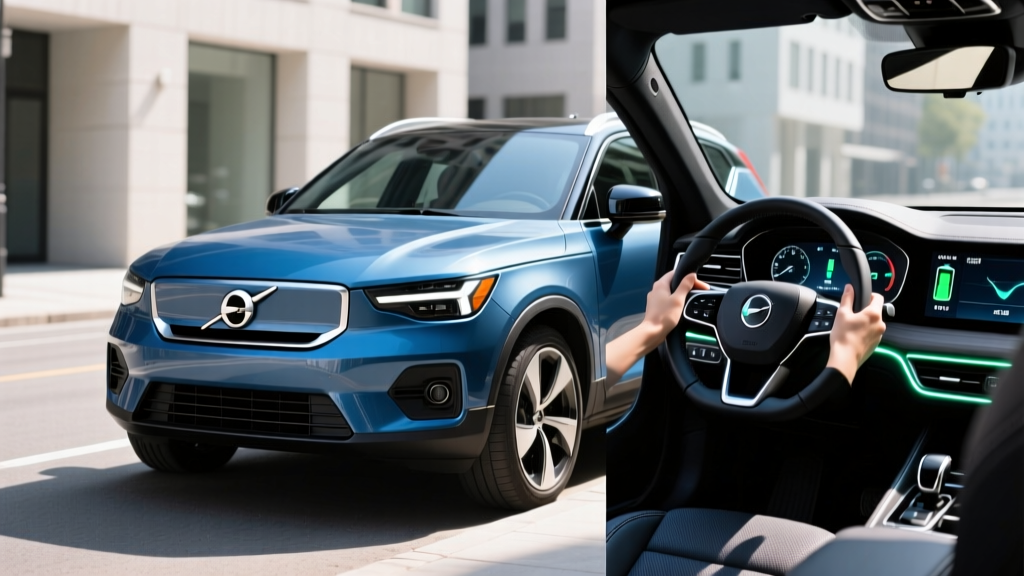
If you're searching for an XC40 hybrid, you're looking at the Volvo XC40 Recharge Plug-In Hybrid — a compact luxury crossover that pairs a turbocharged gas engine with a battery and electric motor for short electric-only commutes and long-distance flexibility. For 2026, Volvo continues the Recharge PHEV alongside the fully electric EX40 (the former XC40 Recharge EV), giving buyers two distinct electrified paths in the same body style.
The XC40 Recharge PHEV is not a conventional hybrid you simply fill with gas and forget. It's a plug-in hybrid (PHEV), meaning it has a larger battery you charge from a wall outlet or Level 2 charger to unlock its electric-only range. Plug it in nightly, and many owners can cover most weekday commuting without burning a drop of gasoline. Skip the plug, and it operates as a heavier, less efficient gas car. Understanding this distinction is essential before you sign the paperwork.
HEV vs. PHEV — What's the Difference?
Conventional Hybrid (HEV): Small battery (1–2 kWh), recharged only by regenerative braking and the engine. No plug. Toyota RAV4 Hybrid is a classic example. You get better MPG but zero electric-only driving.
Plug-In Hybrid (PHEV): Larger battery (14–20+ kWh), charges via plug. Offers 20–40+ miles of electric-only range before the gas engine engages. The Volvo XC40 Recharge is a PHEV. If you can charge at home, a PHEV bridges the gap between a gas car and a full EV.
EPA Fuel Economy and Real-World MPG
The 2026 Volvo XC40 Recharge PHEV carries an EPA rating of 30 MPG combined when operating as a hybrid (battery depleted). On electric power alone, it earns an EPA-estimated 55 MPGe combined. Here's the full breakdown from fueleconomy.gov:
| Mode | City | Highway | Combined |
|---|---|---|---|
| Gas-only (charge-depleted) | 28 MPG | 32 MPG | 30 MPG |
| Electric-only | 58 MPGe | 52 MPGe | 55 MPGe |
Real-World MPG: What Owners Actually See
Plug-in hybrids are uniquely sensitive to driver behavior. If you charge daily and commute under 30 miles, your effective fuel consumption could be near zero on weekdays — you might visit a gas station once a month. Owner-reported data on Fuelly clusters around 50–80 MPGe effective for drivers who charge regularly, with gas-only highway road trips returning 28–31 MPG at 70–75 mph. In cold weather (below 30°F), expect electric-only range to drop 20–30% due to cabin heating demands and reduced battery efficiency. The gas engine will kick in sooner, and charge-depleted MPG may dip to 26–28 MPG in stop-and-go winter driving.
Electric-Only Range and Total Range
XC40 Recharge PHEV Range Summary
EPA electric-only range: 32 miles
Real-world electric range (mild weather, city): 28–34 miles
Real-world electric range (highway or cold): 20–25 miles
Total combined range (electric + 12.6-gal tank): ~410 miles
The XC40 Recharge PHEV uses a 14.9 kWh usable lithium-ion battery pack (18.8 kWh gross). That 32-mile electric envelope covers the average American one-way commute (roughly 16 miles per the U.S. Census Bureau), meaning a nightly charge could eliminate most weekday gasoline use. On longer trips, the 2.0-liter turbo engine takes over seamlessly — you'll never be stranded searching for a charger.
Powertrain, Performance, and Charging Specs
| Specification | 2026 Volvo XC40 Recharge PHEV |
|---|---|
| Powertrain | 2.0L turbo I4 + rear electric motor (AWD) |
| Combined horsepower | 455 hp |
| Combined torque | 523 lb-ft |
| 0–60 mph | 4.5 seconds |
| Battery (usable / gross) | 14.9 kWh / 18.8 kWh (NMC) |
| EPA electric range | 32 miles |
| Level 1 charging (120V, 1.4 kW) | ~10.5 hours (0–100%) |
| Level 2 charging (240V, 3.6 kW) | ~4 hours (0–100%) |
| DC fast charging | Not available |
| Fuel tank | 12.6 gallons (premium recommended) |
| Towing capacity | 3,500 lbs |
| Cargo volume | 20.7 cu ft (rear seats up) / 47.2 cu ft (folded) |
Charging the XC40 Recharge PHEV at Home
The XC40 Recharge PHEV charges exclusively via its J1772 AC port — there is no DC fast charging capability, which is typical for plug-in hybrids in this class. At a standard 120V household outlet (Level 1), a full charge takes roughly 10–11 hours. Install a 240V Level 2 home charger at 3.6 kW, and you'll go from empty to full in about 4 hours — easily replenishing the battery overnight.
Because the battery is relatively small, you don't need an expensive 48-amp hardwired charger. A basic 16-amp Level 2 unit (like the Emporia Vue or ChargePoint Home Flex configured to 16A) is sufficient and keeps installation costs lower. A typical Level 2 home install runs $500–$1,500 depending on whether your electrical panel needs an upgrade — consult a licensed electrician for a site-specific quote.
Pricing, Trims, and Tax Credit Eligibility
For 2026, the Volvo XC40 Recharge PHEV starts at approximately $44,950 (Core trim, plus destination). The Plus trim climbs to roughly $48,500, and the Ultimate trim reaches about $52,000. Volvo frequently includes the Plus trim's most desirable features (panoramic roof, Harman Kardon audio, 360-degree camera) as standard on higher trims.
Does the XC40 Hybrid Qualify for a Federal Tax Credit?
Under current IRS §30D Clean Vehicle Credit rules, the XC40 Recharge PHEV may qualify for up to $7,500, but eligibility is not guaranteed and depends on several factors:
- MSRP cap: The vehicle must have an MSRP at or below $80,000 for SUVs — the XC40 PHEV clears this easily.
- Buyer income cap: Modified adjusted gross income must not exceed $150,000 (single), $225,000 (head of household), or $300,000 (joint).
- Battery sourcing: The vehicle must meet critical mineral and battery component requirements that phase in progressively. Volvo's supply chain compliance varies by model year — verify the specific VIN on the IRS clean vehicle report before purchasing.
- Point-of-sale transfer: Eligible buyers can now transfer the credit to the dealer at purchase, reducing the out-of-pocket price immediately rather than waiting for a tax refund.
Important: Tax credit rules change frequently. Always verify eligibility for your specific vehicle and tax situation with a qualified tax professional and the IRS clean vehicle tool. State incentives (such as California's CVRP, Colorado's innovative motor vehicle credit, or New York's Drive Clean Rebate) may stack on top — check your state's energy office for current programs.
Battery Warranty, Reliability, and Replacement Costs
Volvo PHEV Battery Warranty
High-voltage battery: 8 years / 100,000 miles (whichever comes first)
Capacity retention threshold: Volvo warrants the battery will retain at least 70% of original capacity during the warranty period.
Powertrain warranty: 4 years / 50,000 miles
Basic vehicle warranty: 4 years / 50,000 miles
How Reliable Is the XC40 Hybrid?
Volvo's PHEV powertrain (internally called T8 / Recharge) has been in production since 2016 across the 60- and 90-series lines, giving it a long track record. The XC40 Recharge PHEV uses the same fundamental architecture. Common owner-reported issues center on software glitches in the infotainment system (Google Built-in) and occasional 12V battery drain — not the high-voltage traction battery.
The NMC lithium-ion pack is liquid-cooled and managed by Volvo's thermal system, which limits degradation. Most PHEV batteries in the Volvo T8 family have shown 5–10% capacity loss over 5 years in moderate climates — well within the 70% warranty threshold. If you live in extreme heat (Arizona, Texas) and park outdoors, expect slightly faster degradation.
Battery Replacement Cost
Out-of-warranty replacement for the XC40 Recharge PHEV battery pack is estimated at $8,000–$12,000 including parts and labor at a Volvo dealer. However, given the 8-year/100,000-mile warranty and the relatively mild degradation observed in T8-family packs, most owners will never face this cost. The battery is also modular — individual cell modules can sometimes be replaced rather than the entire pack, reducing expense.
XC40 Hybrid vs. Full EV vs. Gas: Which Should You Choose?
Choose the XC40 Recharge PHEV if:
- You can charge at home (Level 1 or Level 2) every night
- Your daily commute is under 30 miles round-trip
- You take regular road trips exceeding 200 miles and don't want to plan around chargers
- You want electric commuting without range anxiety in rural or cold-weather areas
Choose a Full EV (like the Volvo EX40) if:
- You have reliable home charging and your trips rarely exceed 250 miles
- You want zero tailpipe emissions and minimal maintenance (no oil changes, no spark plugs)
- You want the lowest per-mile fuel cost — electricity at $0.14/kWh costs roughly $0.04/mile vs. $0.16/mile for gas at $3.50/gal and 30 MPG
Choose a Gas XC40 (B5 Mild Hybrid) if:
- You cannot charge at home (apartment, street parking, no garage)
- Your budget is tighter — the gas XC40 B5 starts around $40,000
- You drive very low annual miles where fuel savings won't offset a higher purchase price
Pros and Cons of the XC40 Recharge PHEV
Pros
- 455 hp makes it the quickest compact luxury PHEV crossover in its class
- 32-mile electric range covers most daily commutes
- Standard AWD with 3,500-lb towing capacity
- No range anxiety — gas engine covers long trips
- Google Built-in infotainment with native navigation
- Premium Scandinavian interior with sustainable materials
Cons
- No DC fast charging — Level 2 only
- Electric range drops significantly in cold weather or highway driving
- Charge-depleted MPG (30 combined) is unremarkable for the class
- Premium fuel recommended increases operating cost
- Cargo space reduced vs. gas XC40 (battery eats into under-floor storage)
- Infotainment can lag; some owners report software bugs
Frequently Asked Questions
How many MPG does the Volvo XC40 hybrid get?
The 2026 XC40 Recharge PHEV is EPA-rated at 30 MPG combined (28 city / 32 highway) when running on gasoline with a depleted battery. On electric power, it achieves 55 MPGe combined. Real-world results depend heavily on how often you charge — daily chargers may use almost no gasoline on weekdays, while those who never plug in will see 28–31 MPG.
How far can the XC40 Recharge go on electric only?
The EPA rates the XC40 Recharge PHEV at 32 miles of electric-only range. In mild weather with city driving, you may see 30–34 miles. On the highway at 70+ mph or in freezing temperatures, expect 20–25 miles before the gas engine engages.
Does the XC40 hybrid qualify for a tax credit?
The XC40 Recharge PHEV may qualify for the federal §30D Clean Vehicle Credit of up to $7,500, subject to buyer income limits, battery sourcing requirements, and MSRP caps. Always verify your specific VIN on the IRS clean vehicle tool and consult a tax professional. Some states offer additional rebates for PHEVs.
Is the XC40 hybrid reliable, and what does battery replacement cost?
Volvo's T8/Recharge PHEV powertrain has been in production since 2016 with generally positive long-term results. The high-voltage battery is warranted for 8 years/100,000 miles at 70% capacity retention. Out-of-warranty replacement costs roughly $8,000–$12,000, though most owners will never need it given typical degradation rates of 5–10% over five years.
Can the XC40 Recharge PHEV DC fast charge?
No. The XC40 Recharge PHEV supports only AC charging — Level 1 (120V, ~10.5 hours for a full charge) and Level 2 (240V, ~4 hours). This is standard for most plug-in hybrids. If you need DC fast charging, consider the fully electric Volvo EX40, which supports up to 200 kW DC.
Hybrid vs. PHEV vs. EV — which is right for me?
If you can charge at home and commute under 30 miles daily but also take long road trips, the XC40 Recharge PHEV is the sweet spot. If you never want to buy gas and can charge at home, a full EV (EX40) offers lower running costs. If you can't charge at home at all, a conventional hybrid (like the Toyota RAV4 Hybrid) is simpler — no plug needed, just better MPG.