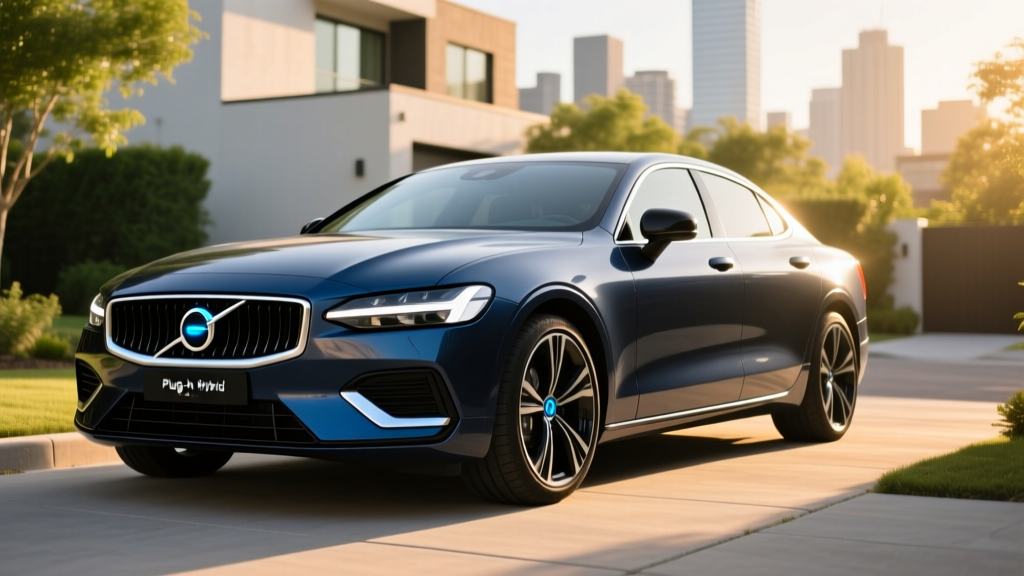
The 2024 Volvo S60 Recharge T8 AWD represents Volvo's commitment to plug-in hybrid (PHEV) technology in a compact luxury sedan segment dominated by pure gasoline and mild-hybrid rivals. With 41 miles of electric-only range and 455 combined horsepower, it targets buyers who want daily EV commuting without surrendering the flexibility of a gasoline engine for longer trips. But does the math work in 2026, as federal tax credit rules tighten and fully electric alternatives proliferate? This guide breaks down every spec that matters.
Quick Verdict: Who the S60 Recharge Is For
Choose the S60 Recharge PHEV if: You have home Level 2 charging, commute under 40 miles round-trip, want luxury sedan refinement, and take road trips where charging infrastructure remains uncertain.
Consider a full BEV instead if: Your commute exceeds 41 miles, you want zero gasoline maintenance, or you prioritize maximum federal tax credits ($7,500 for qualifying EVs vs. limited PHEV credits).
Stick with a conventional HEV or gas car if: You lack any home charging access — a PHEV without plugging in is just a heavy, expensive hybrid.
HEV vs. PHEV: Understanding the S60 Recharge's Place
| Feature | Conventional Hybrid (HEV) | Plug-In Hybrid (PHEV) | Battery Electric (BEV) |
|---|---|---|---|
| Plugs in? | No — regenerative braking only | Yes — Level 1 or Level 2 | Yes — Level 1, 2, or DC fast |
| Electric-only range | 0–2 miles at low speed | 20–50 miles typical | 200–400+ miles |
| Battery size | 1–2 kWh | 10–20 kWh | 60–100+ kWh |
| Gas engine? | Yes (primary) | Yes (backup + boost) | No |
| Federal tax credit | None (§30D requires plug-in) | Up to $7,500 (battery-size dependent) | Up to $7,500 (if eligible) |
The 2024 Volvo S60 Recharge is firmly a PHEV. Its 18.8 kWh (gross) lithium-ion battery pack enables genuine electric-only driving, and it must be plugged in to realize its efficiency and cost advantages. Unlike a conventional hybrid such as the Toyota Camry Hybrid — which charges its small battery solely through regenerative braking and engine power — the S60 Recharge benefits enormously from overnight Level 2 charging at home.
Electric-Only Range and Total Range
EPA Electric-Only Range: 41 miles (combined city/highway)
Real-World Expectation: 32–38 miles in mixed driving; as low as 25–28 miles in freezing temperatures with cabin heat running; up to 40+ miles in mild city driving under 45 mph.
Total Combined Range (Electric + Gasoline): Approximately 460–510 miles with a full 15.9-gallon tank and full battery.
The 41-mile EPA rating is competitive among luxury PHEV sedans. In practice, the S60 Recharge's electric range holds up well in city driving where regenerative braking recaptures energy frequently. Highway driving at 70+ mph depletes the battery faster — expect closer to 30–33 miles of electric range on the interstate before the 2.0-liter turbocharged engine engages.
Cold weather is the significant variable. Lithium-ion batteries lose efficiency below freezing, and running the cabin heater draws heavily from the pack. In sub-30°F conditions, plan for 25–30 miles of usable electric range. Volvo's heat pump system (standard on the Recharge) mitigates this somewhat compared to resistive heating, but physics still applies.
Fuel Economy: EPA MPG and MPGe Breakdown
| Mode | City | Highway | Combined |
|---|---|---|---|
| Charge-Sustaining (gasoline only, battery depleted) | 30 MPG | 33 MPG | 31 MPG |
| Combined (electric + gas, EPA weighted) | 30 MPG / 74 MPGe | ||
MPGe explained: MPGe (miles per gallon equivalent) converts electricity consumption into a gasoline-equivalent figure for comparison. The S60 Recharge's 74 MPGe means that when operating in blended electric/gas mode, it uses energy at a rate equivalent to 74 MPG. This figure only holds while the battery has charge — once depleted, you're at the 31 MPG combined gasoline figure.
Real-world MPG note: PHEVs reward disciplined charging. Owners who plug in nightly and commute within the 41-mile electric window may go weeks without burning gasoline. According to fueleconomy.gov, the S60 Recharge consumes approximately 33 kWh per 100 miles in electric mode — translating to roughly $1.15–$1.50 per full charge at the national average residential electricity rate of $0.16/kWh. That's approximately $0.03–$0.04 per mile electric, versus $0.12–$0.15 per mile on gasoline at $3.50/gallon.
If you never plug in, the S60 Recharge operates as a 31 MPG combined luxury AWD sedan — respectable, but no better than many conventional hybrids that cost far less. The plug-in advantage only materializes with regular charging.
Powertrain, Battery, and Charging Specs
| Specification | 2024 Volvo S60 Recharge T8 AWD |
|---|---|
| Engine | 2.0L turbocharged + supercharged 4-cylinder |
| Electric Motor | 143 hp rear-axle motor |
| Combined Output | 455 hp / 523 lb-ft torque |
| 0–60 mph | 4.3 seconds |
| Drivetrain | AWD (engine drives front, motor drives rear) |
| Battery (Gross / Usable) | 18.8 kWh gross / ~14.9 kWh usable |
| Battery Chemistry | NMC (Nickel Manganese Cobalt) |
| Onboard Charger | 3.7 kW (Level 2 AC) |
| DC Fast Charging | Not supported |
| Level 1 (120V) Charge Time | ~8 hours (0–100%) |
| Level 2 (240V, 3.7 kW) Charge Time | ~5 hours (0–100%) |
| Transmission | 8-speed automatic |
| Fuel Tank | 15.9 gallons (premium required) |
The S60 Recharge's powertrain is genuinely quick. The combination of a twin-charged (turbo + supercharger) 2.0-liter engine making 312 hp at the front axle and a 143 hp electric motor at the rear produces 455 combined horsepower and all-wheel-drive traction. The 4.3-second 0–60 time puts it in sports-sedan territory, rivaling the BMW M340i xDrive.
Charging limitations to know: The 3.7 kW onboard charger is the S60 Recharge's most significant PHEV drawback. At this rate, a full charge takes roughly 5 hours on Level 2 — adequate for overnight replenishment but slow for mid-day top-ups. There is no DC fast charging capability, which is typical for PHEVs (their smaller batteries don't justify the added cost and weight of DC hardware). A standard 120V household outlet will replenish the pack in about 8 hours, which works for overnight charging but leaves little margin if you arrive home with a depleted battery late in the evening.
For context, competing PHEVs like the Toyota RAV4 Prime offer 6.6 kW onboard chargers that halve Level 2 charge times. Volvo's 3.7 kW cap means you should plan charging around your schedule rather than expecting quick top-ups.
Pricing, Trims, and Federal Tax Credit Eligibility
The 2024 Volvo S60 Recharge T8 AWD started at a base MSRP of approximately $53,795 (including destination), available in Core, Plus, and Ultimate trim levels. The Ultimate trim, with upgraded interior materials, a Harman Kardon audio system, and advanced driver-assistance features, pushed pricing above $62,000.
Federal tax credit (§30D): Under current IRS rules, the S60 Recharge's eligibility for the full $7,500 Clean Vehicle Credit is constrained by several factors:
- Battery sourcing requirements: The §30D credit now requires that a percentage of critical minerals and battery components are sourced from the U.S. or free-trade-agreement countries. Volvo's NMC battery supply chain has faced scrutiny under these rules, potentially reducing the credit to $3,750 or eliminating it entirely depending on the specific production batch and model year.
- MSRP cap: Sedans must have an MSRP at or below $55,000 to qualify. The S60 Recharge Core trim at $53,795 clears this threshold, but Plus and Ultimate trims exceed it and are ineligible.
- Buyer income cap: Modified adjusted gross income must not exceed $150,000 (single), $225,000 (head of household), or $300,000 (joint).
- Point-of-sale transfer: Eligible buyers can transfer the credit to the dealer at purchase, reducing the purchase price directly rather than waiting for a tax refund.
Bottom line: Only the base Core trim potentially qualifies, and even then, battery-sourcing compliance must be verified at the time of purchase via the IRS's clean vehicle portal. Consult a tax professional before relying on this credit — rules have tightened significantly since the Inflation Reduction Act's implementation.
Reliability, Battery Warranty, and Replacement Costs
Hybrid/PHEV Battery Warranty: 8 years / 100,000 miles (whichever comes first) — covers defects and capacity loss below a specified threshold (typically 70% state of health).
Powertrain Warranty: 4 years / 50,000 miles
Estimated Out-of-Warranty Battery Replacement: $8,000–$12,000 (based on current Volvo PHEV pack pricing and labor)
Volvo's PHEV powertrain has accumulated several years of real-world data since the T8 debuted in the mid-2010s. The 18.8 kWh NMC pack is liquid-cooled, which significantly improves longevity compared to passively cooled packs. NMC chemistry typically retains 85–90% capacity after 100,000 miles in moderate climates, though frequent DC-level stress (not applicable here, given no DC charging) and extreme heat accelerate degradation.
According to IIHS, the 2024 S60 earned top safety marks, and Volvo's overall brand reliability has improved since the early SPA-platform growing pains of 2016–2018. That said, Volvo's infotainment system (Google Built-in on Android Automotive OS) has drawn mixed owner feedback for occasional software glitches — a reliability concern that's electronic rather than mechanical.
The $8,000–$12,000 out-of-warranty battery replacement estimate is based on current dealer parts pricing and should decrease as third-party refurbishment options mature. For most original owners who sell or trade within the 8-year warranty window, this cost is largely theoretical.
Real-World Ownership: What Daily Life Looks Like
A typical S60 Recharge owner with home Level 2 charging and a 30-mile round-trip commute can expect to drive 80–90% of their miles on electricity. At $0.16/kWh and 33 kWh/100 mi consumption, that's roughly $4.80 per 100 miles in electricity versus $12–$15 per 100 miles on premium gasoline at $3.50/gallon and 31 MPG.
Over 15,000 annual miles with 85% electric driving, annual energy costs land around $900–$1,100 — compared to $1,800–$2,200 for a gasoline-only equivalent. The savings are meaningful but not transformative, especially weighed against the S60 Recharge's premium purchase price.
Charging routine: Most owners plug in upon arriving home (taking 10 seconds) and wake to a full battery. The 3.7 kW charger means you should arrive home by early evening to guarantee a full charge by morning if the battery is fully depleted. A dedicated 240V Level 2 home charger (32A circuit, ~$500–$800 equipment + $800–$2,000 electrician installation) is strongly recommended over relying on a 120V outlet.
Maintenance: The gasoline engine sees minimal use in electric-heavy driving, which extends oil change intervals in practice (follow Volvo's scheduled maintenance regardless). Brake pad life is significantly extended thanks to regenerative braking — many PHEV owners report original brake pads at 80,000+ miles.
Pros and Cons
Pros
- 41 miles of electric range covers most daily commutes
- 455 hp with AWD — genuinely quick and confident in all weather
- Luxury interior quality with Google Built-in infotainment
- Excellent IIHS safety ratings and Volvo's standard Pilot Assist (Level 2 ADAS)
- No range anxiety — gasoline backup for road trips
- Premium Harman Kardon audio available
Cons
- 3.7 kW onboard charger is slow for a 2024 PHEV
- No DC fast charging capability
- MSRP cap limits federal tax credit to base Core trim only
- Battery sourcing rules may further reduce or eliminate credit
- Premium gasoline required — adds to operating cost when engine runs
- Smaller trunk than non-hybrid S60 due to battery packaging
- Infotainment glitches reported by some owners
How Does It Compare? S60 Recharge vs. Alternatives
| Spec | 2024 Volvo S60 Recharge | 2024 BMW 330e xDrive | 2024 Lexus ES 300h |
|---|---|---|---|
| Type | PHEV | PHEV | HEV (conventional hybrid) |
| Electric Range | 41 mi | 22 mi | 0 mi (no plug-in) |
| Combined MPG (gas) | 31 MPG | 28 MPG | 44 MPG |
| Combined HP | 455 hp | 288 hp | 215 hp |
| 0–60 mph | 4.3 sec | 5.6 sec | 8.1 sec |
| Battery | 18.8 kWh NMC | 12.0 kWh | 1.6 kWh NiMH |
| Base MSRP | $53,795 | $46,895 | $43,490 |
| AWD | Standard | Standard (xDrive) | Not available |
The S60 Recharge dominates on power and electric range but commands a significant price premium. The BMW 330e offers a lower entry price and adequate electric range for shorter commutes, while the Lexus ES 300h delivers superior fuel economy as a conventional hybrid — no plug required — at a far lower cost, though without any electric-only driving capability.
Frequently Asked Questions
How many MPG does the 2024 Volvo S60 plug-in hybrid get?
The S60 Recharge T8 AWD achieves an EPA-rated 30 city / 33 highway / 31 combined MPG when operating on gasoline alone (battery depleted). When factoring in electric driving, the EPA rates it at 74 MPGe combined. Real-world fuel economy depends heavily on charging habits — owners who plug in daily and commute within 41 miles may use very little gasoline.
How far can the S60 Recharge go on electric only?
The EPA rates the S60 Recharge at 41 miles of electric-only range. In real-world driving, expect 32–38 miles in mixed conditions, with highway driving and cold weather reducing that to 25–33 miles. Mild city driving can approach or match the EPA figure.
Does the 2024 Volvo S60 Recharge qualify for a federal tax credit?
Potentially, but with significant restrictions. Only the base Core trim (MSRP under the $55,000 sedan cap) is eligible, and battery critical-mineral and component sourcing requirements under §30D may reduce the credit from $7,500 to $3,750 or eliminate it. Buyer income caps also apply. Always verify eligibility on the IRS clean vehicle portal before purchase.
Is the S60 Recharge reliable, and what does battery replacement cost?
Volvo's PHEV powertrain has proven generally reliable since the T8's introduction, with the liquid-cooled NMC battery showing modest degradation in real-world use. The battery is warranted for 8 years/100,000 miles. Out-of-warranty replacement is estimated at $8,000–$12,000, though this cost is expected to decline as the refurbishment market matures.
Can the S60 Recharge DC fast charge?
No. The S60 Recharge supports Level 1 (120V, ~8 hours) and Level 2 (240V at 3.7 kW, ~5 hours) AC charging only. There is no DC fast charging port. This is standard for PHEVs — the 18.8 kWh battery is small enough that overnight AC charging is considered sufficient.
Hybrid vs. PHEV vs. EV — which should I choose?
If you have home charging and a commute under 41 miles, the S60 Recharge PHEV offers the best of both worlds — daily electric driving with gasoline backup for road trips. If your commute exceeds 41 miles or you want zero gasoline costs and maintenance, a full BEV like the BMW i4 or Tesla Model 3 is a better fit. If you lack home charging entirely, a conventional hybrid (HEV) like the Lexus ES 300h is the pragmatic choice — no plug required, with strong MPG.
What happens if I never plug in the S60 Recharge?
You'll get 31 MPG combined as a heavy luxury AWD sedan — respectable but no better than a conventional hybrid that costs $10,000–$15,000 less. The PHEV premium only pays off through regular plugging in. Without it, you're carrying 400+ pounds of battery and electric motor hardware you never use.
Sources: fueleconomy.gov, IRS §30D Clean Vehicle Credits, IIHS 2024 Volvo S60 Safety Ratings