Volkswagen's hybrid strategy in the US market has been anything but straightforward. After discontinuing the Golf GTE and never bringing the Passat GTE stateside in earlier generations, VW re-entered the plug-in hybrid space with updated models built on newer platforms. For 2026, the brand offers hybrid powertrains primarily in the Tiguan eHybrid (PHEV SUV) and select global-market models that may expand availability. This guide breaks down every number that matters — EPA MPG, electric-only range, battery capacity, charging times, powertrain output, warranty coverage, and tax credit eligibility — so you can decide whether a hybrid Volkswagen fits your garage.
Hybrid Volkswagen Models Available in 2026
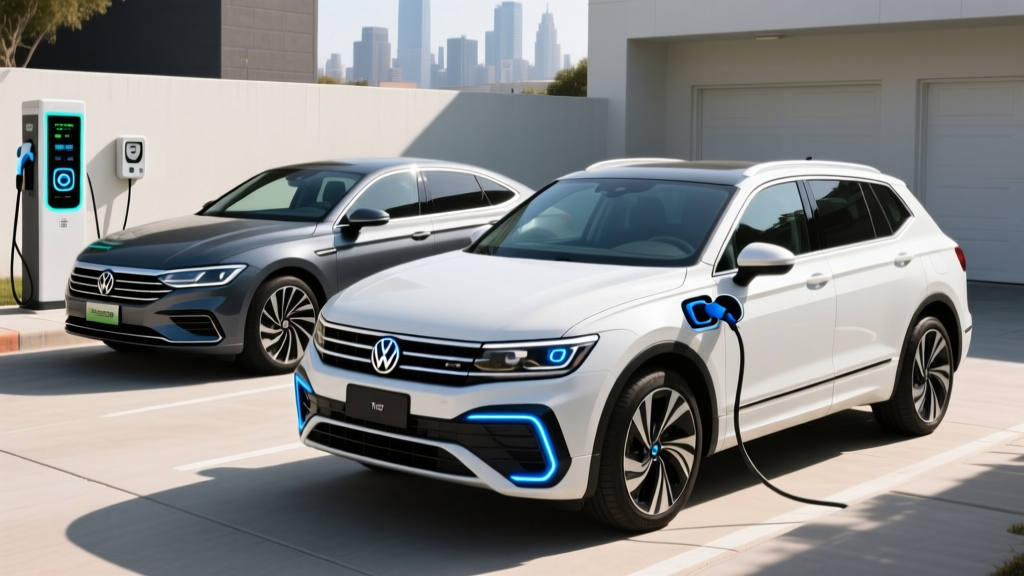
As of the 2026 model year, Volkswagen's US hybrid lineup centers on the Tiguan eHybrid, a compact crossover plug-in hybrid. VW has also signaled broader PHEV expansion across its lineup, including potential Passat and Arteon variants in other markets. Here is what buyers need to know about the current US-available offering:
| Specification | 2026 VW Tiguan eHybrid |
|---|---|
| Powertrain Type | Plug-in Hybrid (PHEV) |
| Engine | 1.4L Turbocharged I-4 + Electric Motor |
| Combined System Output | 245 hp / 295 lb-ft torque |
| Battery (Usable) | 13.0 kWh (NMC chemistry) |
| EPA Electric-Only Range | ~33 miles (estimated, pending final EPA certification) |
| EPA Combined MPG (Hybrid Mode) | ~35 MPG combined (estimated) |
| 0–60 mph | ~7.5 seconds |
| Level 2 Charge Time (100%) | ~3 hours 45 min at 3.6 kW |
| DC Fast Charging | Not available |
| Base MSRP | ~$39,990 (estimated) |
| Powertrain Warranty | 4 yr / 50,000 mi |
| Hybrid Battery Warranty | 8 yr / 100,000 mi (federal mandate) |
Note: Some 2026 specs are preliminary estimates based on VW's global PHEV platform data. Final EPA certifications and US pricing will be confirmed closer to on-sale dates. Check Volkswagen's official site for updates.
HEV vs PHEV: Which Hybrid Volkswagen Is Which?
This distinction is critical because Volkswagen has historically used both conventional hybrid (HEV) and plug-in hybrid (PHEV) architectures in different markets, and confusing them leads to wrong expectations about charging, range, and cost.
Conventional Hybrid (HEV)
- How it works: A small battery (typically 1–2 kWh) is charged by regenerative braking and the gas engine. You never plug it in.
- Electric-only driving: Minimal — usually under 1 mile at low speeds.
- Advantage: Simplicity, lower upfront cost, no charging infrastructure needed.
- VW availability: VW has not offered a conventional HEV in the US market recently. Most VW hybrids globally are PHEVs.
Plug-in Hybrid (PHEV)
- How it works: A larger battery (13–25+ kWh) can be charged from a wall outlet or charger. The car drives on electricity alone for a meaningful distance before the gas engine engages.
- Electric-only driving: 30–50+ miles depending on model and battery size.
- Advantage: Daily commuting on electricity with gas-engine backup for road trips.
- VW availability: The Tiguan eHybrid is VW's primary US PHEV offering for 2026.
If you see a Volkswagen marketed as "eHybrid," it is a PHEV — it has a plug and a meaningful electric-only range. VW does not currently sell a conventional self-charging hybrid in the United States.
Fuel Economy: EPA MPG and Real-World Expectations
Plug-in hybrids have two fuel economy figures that matter: MPGe (miles per gallon equivalent, when running primarily on electricity) and charge-sustaining MPG (what you get after the battery depletes and the gas engine does all the work).
| Metric | 2026 Tiguan eHybrid (Est.) | What It Means |
|---|---|---|
| EPA Combined MPGe (EV mode) | ~80 MPGe | Efficiency when driving on battery + some gas blending |
| EPA City MPG (gas only) | ~33 MPG | After battery is depleted, city driving |
| EPA Highway MPG (gas only) | ~36 MPG | After battery is depleted, highway driving |
| EPA Combined MPG (gas only) | ~35 MPG | Blended city/highway once battery is empty |
| Total Combined Range | ~470 miles | Electric range + full gas tank range |
Real-World MPG vs EPA: PHEVs are unique because real-world fuel consumption depends entirely on how often you charge. If your commute is under 30 miles and you charge nightly, you may use almost zero gasoline for months. If you never charge, expect ~33–36 MPG as a conventional hybrid — respectable for a compact SUV but not class-leading. Cold weather reduces electric-only range by 20–30%, meaning more gas engine usage in winter. Highway driving at 75+ mph also reduces electric range significantly versus the EPA city-heavy test cycle.
Electric-Only Range, Battery, and Charging
The Tiguan eHybrid's 13.0 kWh usable battery (NMC lithium-ion chemistry) delivers an estimated 33 miles of electric-only range. That is enough for most daily commutes and errands without burning a drop of gas — provided you plug in.
Charging options and times:
| Charging Level | Power (kW) | Time (0–100%) | Notes |
|---|---|---|---|
| Level 1 (120V household outlet) | ~1.4 kW | ~9–10 hours | Overnight top-up works for light daily use |
| Level 2 (240V home/public charger) | 3.6 kW | ~3 hours 45 min | Recommended for daily full charges |
| DC Fast Charging | N/A | N/A | Not supported on this PHEV |
Most PHEVs, including VW's eHybrid lineup, do not support DC fast charging. The onboard charger maxes out at 3.6 kW (some global variants at 7.2 kW), which is adequate for overnight Level 2 charging but means you will not see meaningful gains at public fast-charging stations. This is a deliberate engineering trade-off: adding DC fast-charge hardware increases weight, cost, and packaging complexity on a vehicle with a relatively small battery.
Preconditioning tip: The Tiguan eHybrid supports scheduled departure preconditioning via the VW app. Setting a departure time while plugged in warms or cools the cabin using grid power rather than battery energy, preserving your electric-only range for actual driving — especially valuable in winter.
Powertrain Deep Dive: Engine, Motor, and Performance
The 2026 Tiguan eHybrid pairs a 1.4-liter turbocharged inline-four gasoline engine (producing roughly 150 hp on its own) with an electric motor integrated into the transmission housing (approximately 115 hp). Combined system output reaches 245 hp and 295 lb-ft of torque, routed through a 6-speed DSG automatic to the front wheels.
The electric motor provides instant torque from a standstill, which makes the Tiguan eHybrid feel noticeably quicker off the line than its gas-only counterpart despite the added weight of the battery pack. The 0–60 mph time of approximately 7.5 seconds puts it in line with competitors like the Toyota RAV4 Prime (5.7 seconds — quicker due to AWD and a larger battery) and the Hyundai Tucson PHEV (7.1 seconds).
Driving modes: VW offers selectable modes including E-Mode (electric-only), Hybrid Auto (system decides), Battery Hold (reserves charge for later), and Battery Charge (engine charges the battery while driving — useful before entering a zero-emission zone or for saving electric range for city driving at your destination).
Pricing, Tax Credits, and Ownership Costs
The 2026 Tiguan eHybrid is expected to start around $39,990 before destination charges, with higher trims potentially reaching $45,000+. This positions it in the middle of the compact PHEV SUV segment.
Federal Tax Credit Eligibility (§30D)
Under current IRS §30D Clean Vehicle Credit rules, PHEVs can qualify for up to $7,500 — but eligibility depends on meeting all of these requirements:
- Battery capacity: Must be at least 7 kWh (Tiguan eHybrid qualifies at 13.0 kWh gross)
- MSRP cap: SUVs must be under $80,000 (Tiguan qualifies)
- Buyer income cap: AGI must not exceed $150,000 (single) / $300,000 (joint) / $225,000 (head of household)
- Critical minerals requirement: Battery minerals must meet increasing US/FTA-sourced thresholds — this is where many PHEVs face uncertainty
- Battery component sourcing: Components must be manufactured or assembled in North America at specified percentages
- Point-of-sale transfer: Eligible buyers can transfer the credit to the dealer at purchase for an immediate price reduction
Bottom line: Consult a tax professional and check the fueleconomy.gov tax credit lookup for the specific VIN before assuming eligibility. Sourcing rules tighten annually, and a model that qualifies in early 2026 may not qualify later if supply chains shift.
5-Year Ownership Cost Estimate
Assuming 15,000 miles/year, 60% electric-mode driving, electricity at $0.14/kWh, and gasoline at $3.50/gallon:
- Annual fuel cost: ~$900–$1,200 (varies heavily with charging habits)
- Comparable gas-only SUV: ~$2,000–$2,400/year at 28 MPG combined
- Annual fuel savings: ~$800–$1,500 vs a gas-only compact SUV
- Insurance: Typically 5–15% higher than gas-only equivalents due to repair costs
- Maintenance: Lower than gas-only (less engine runtime = fewer oil changes, less brake wear from regen)
Reliability and Battery Warranty
Hybrid/PHEV Battery Warranty: Federal law mandates that hybrid and PHEV batteries carry a minimum warranty of 8 years / 100,000 miles (10 years / 150,000 miles in CARB states including California, New York, Massachusetts, and others). Volkswagen complies with this mandate. The warranty covers battery capacity loss below a specified threshold (typically 60–70% of original capacity) and defects.
Long-term reliability outlook: Volkswagen's PHEV powertrain is relatively new to the US market, so long-term US-specific reliability data is limited. However, VW's 1.4L TSI engine has been in global use for over a decade, and the DSG transmission is a mature design. The primary reliability concerns for PHEVs are:
- Battery degradation: NMC batteries in PHEVs typically retain 85–90% capacity after 5 years / 75,000 miles based on industry averages. PHEV batteries experience less stress than full EV batteries because the engine provides backup, so range loss is less consequential.
- Battery replacement cost: If out of warranty, a PHEV battery replacement typically costs $4,000–$8,000 depending on the model. This is significantly less than a full EV battery because the pack is smaller.
- Complexity: PHEVs have both a full electric drivetrain AND a full gasoline drivetrain. More components means more potential failure points compared to either a pure EV or a conventional gas car. Regular maintenance of both systems is essential.
VW's overall brand reliability has improved in recent IIHS safety testing and consumer surveys, though it still trails Toyota and Honda in long-term dependability rankings. For buyers prioritizing maximum reliability above all else, the Toyota RAV4 Prime remains the benchmark PHEV.
Hybrid vs PHEV vs Full EV: Which Volkswagen Fits You?
Choose the VW Tiguan eHybrid (PHEV) if:
- Your daily commute is under 35 miles round-trip and you can charge at home
- You take road trips of 200+ miles several times per year and want zero range anxiety
- You do not have reliable access to public DC fast chargers on your common routes
- You want electric driving for errands but gas flexibility for weekend adventures
- You are not ready to commit to a full EV but want to reduce gas consumption significantly
Choose a full EV (like the VW ID.4) instead if:
- You can install a Level 2 charger at home and your daily driving is under 250 miles
- You want zero gasoline expenses, zero oil changes, and minimal drivetrain maintenance
- You drive in a city or state with strong public charging infrastructure
- You want maximum federal tax credit eligibility (full EVs often qualify more easily than PHEVs under current sourcing rules)
- You prefer one-pedal driving and instant electric torque at all speeds
Choose a gas-only vehicle instead if:
- You cannot charge at home or at work (PHEV ownership without charging is just a heavier, more expensive hybrid)
- Your budget is tight and the PHEV price premium ($5,000–$8,000 over gas-only) does not pay back in fuel savings within your ownership timeframe
- You drive primarily long highway routes where PHEV electric range provides minimal benefit
Pros and Cons: The Hybrid Volkswagen Verdict
Pros
- 33-mile electric range covers most daily commutes gas-free
- Strong combined system output (245 hp) for confident merging
- No range anxiety — gas engine provides 470+ total miles
- Level 2 home charging is simple and relatively inexpensive to install
- 8-year/100,000-mile battery warranty provides peace of mind
- Lower fuel and maintenance costs vs gas-only SUV when charged regularly
Cons
- No DC fast charging — public charging options are limited to slow Level 2
- Higher purchase price than gas-only Tiguan (~$5,000–$7,000 premium)
- Federal tax credit eligibility uncertain due to battery sourcing rules
- Less electric range than RAV4 Prime (42 mi) or Tucson PHEV (33 mi comparable)
- Two powertrains to maintain — more complexity than pure EV or gas car
- No conventional HEV option from VW for buyers who cannot plug in
Frequently Asked Questions
How many MPG does the hybrid Volkswagen Tiguan get?
The 2026 Tiguan eHybrid is estimated to achieve approximately 35 MPG combined (33 city / 36 highway) when operating in charge-sustaining hybrid mode after the battery is depleted. When factoring in electric-only driving, the combined MPGe rating is approximately 80 MPGe. Your actual fuel consumption depends heavily on how often you charge — frequent charging dramatically reduces gasoline use.
How far can the Volkswagen Tiguan eHybrid go on electric only?
The estimated EPA electric-only range is approximately 33 miles. In real-world conditions, expect 25–30 miles in cold weather or at highway speeds, and up to 35+ miles in mild weather during city driving where regenerative braking recovers more energy.
Does the hybrid Volkswagen qualify for a federal tax credit?
The Tiguan eHybrid may qualify for up to $7,500 under the IRS §30D Clean Vehicle Credit, but eligibility depends on battery critical-mineral sourcing, buyer income limits, and MSRP caps. As of early 2026, many PHEVs face uncertainty under the tightening sourcing requirements. Always verify eligibility at fueleconomy.gov for the specific VIN and consult a tax professional before purchasing.
Is the Volkswagen hybrid reliable and what does battery replacement cost?
VW's PHEV powertrain uses proven components (1.4L TSI engine, DSG transmission) but long-term US reliability data is limited. The hybrid battery is warranted for 8 years / 100,000 miles. Out-of-warranty battery replacement is estimated at $4,000–$8,000. PHEV batteries generally degrade less than full EV batteries because the gas engine serves as a backup, reducing the consequences of capacity loss.
Should I buy a hybrid Volkswagen or a full EV?
If you can charge at home, drive under 35 miles daily, and take occasional long road trips, the Tiguan eHybrid PHEV offers an excellent balance of electric commuting and gas-powered flexibility. If your daily driving is predictable, you have reliable home charging, and you want minimal maintenance, a full EV like the VW ID.4 is the better long-term choice. If you cannot charge at home at all, neither a PHEV nor an EV is ideal — consider a conventional hybrid from Toyota or Honda instead.
Does the Volkswagen hybrid need to be plugged in?
Yes — the Tiguan eHybrid is a plug-in hybrid (PHEV), which means you must plug it in to access its electric-only range. If you never plug it in, it operates as a conventional hybrid using the gas engine and regenerative braking, achieving ~35 MPG. However, you would be paying a premium for a battery you never use, which defeats the purpose of buying a PHEV.