Shoppers asking whether Volkswagen sells a hybrid SUV in the United States face a frustrating answer: as of the 2026 model year, VW does not offer a conventional hybrid (HEV) or plug-in hybrid (PHEV) SUV in the U.S. market. The Tiguan, Atlas, and Atlas Cross Sport are sold exclusively with gasoline powertrains. However, Volkswagen sells the Tiguan eHybrid (also badged as the GTE in some markets) in Europe and other regions, and the automaker has signaled that a plug-in hybrid SUV could join the U.S. lineup in the near future.
This guide covers what Volkswagen's hybrid SUV technology looks like today, what U.S. buyers can realistically expect, and how VW's hybrid offerings compare to segment rivals like the Toyota RAV4 Prime, Hyundai Tucson PHEV, and Ford Escape PHEV. If you're set on a VW badge and need electrification, we'll also outline your best alternatives.
Volkswagen's Hybrid SUV Lineup: What Exists in 2026
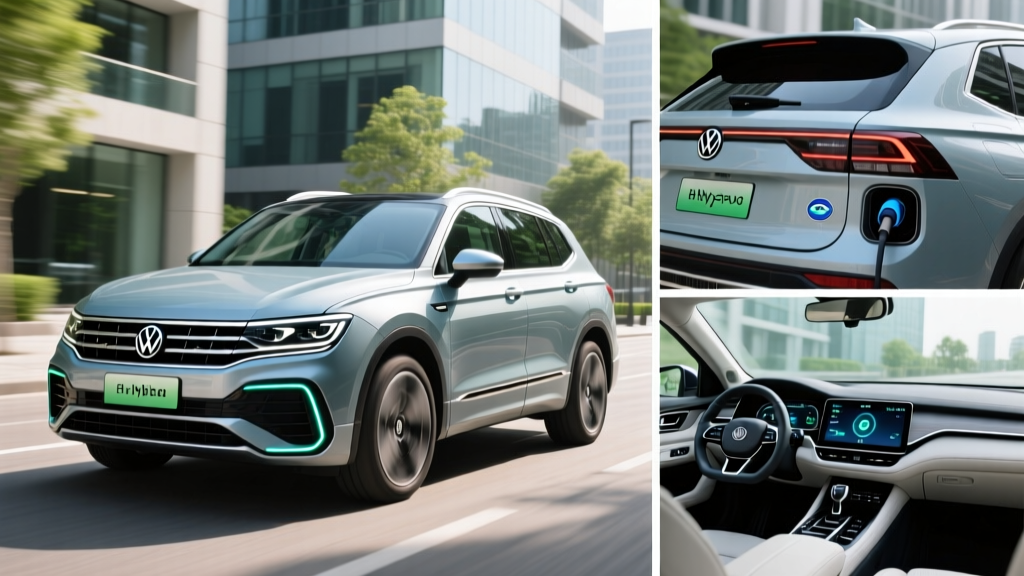
Volkswagen's global hybrid SUV strategy centers on the Tiguan eHybrid, a plug-in hybrid version of the compact Tiguan SUV. The current-generation Tiguan eHybrid pairs a 1.5-liter turbocharged four-cylinder engine with an electric motor integrated into the DSG automatic transmission. Combined output reaches approximately 245 horsepower and 295 lb-ft of torque.
The eHybrid uses a 19.7 kWh (gross) lithium-ion battery pack, of which roughly 17.9 kWh is usable. This translates to a WLTP-rated electric-only range of up to 62 miles (approximately 100 km). On the stricter U.S. EPA testing cycle, that figure would likely land between 32 and 36 miles of electric-only driving based on comparable PHEVs in this segment.
HEV vs. PHEV: What Volkswagen Offers
| Feature | Conventional Hybrid (HEV) | Plug-In Hybrid (PHEV) |
|---|---|---|
| Plugs in to charge? | No — regenerative braking only | Yes — Level 1 or Level 2 |
| Electric-only range | Less than 1 mile at low speed | 20–40+ miles typical |
| Battery size | 1–2 kWh | 13–20+ kWh |
| Federal tax credit | None | Up to $7,500 (if eligible) |
| VW U.S. availability (2026) | Not offered | Not offered (expected future) |
Volkswagen does not currently sell either type of hybrid SUV in the United States. The Tiguan eHybrid is a PHEV available in European and select global markets.
2026 Tiguan eHybrid Specifications
For buyers evaluating VW's hybrid SUV technology — whether considering a future U.S. launch, a gray-market import, or simply comparing specs against rivals — here are the detailed figures for the current Tiguan eHybrid:
| Specification | Value |
|---|---|
| Powertrain | 1.5L turbo I4 + electric motor (PHEV) |
| Combined horsepower | 245 hp |
| Combined torque | 295 lb-ft |
| Battery (gross / usable) | 19.7 kWh / ~17.9 kWh |
| Battery chemistry | NMC (nickel manganese cobalt) |
| Electric-only range (WLTP) | Up to 62 mi (100 km) |
| Estimated EPA electric range | ~32–36 mi |
| Fuel economy (est. EPA combined) | ~80 MPGe (charge-sustaining ~33 MPG) |
| AC charging (Level 2) | 3.6 kW onboard charger |
| Level 2 charge time (0–100%) | ~5 hours |
| DC fast charging | Not available |
| Transmission | 6-speed DSG automatic |
| Drivetrain | Front-wheel drive |
| 0–60 mph (est.) | ~7.5 seconds |
| Starting price (Europe) | ~€47,000 (~$51,000 USD) |
Fuel Economy: How Many MPG Does the Tiguan eHybrid Get?
PHEV fuel economy is measured two ways: MPGe (miles-per-gallon-equivalent, when running on electricity) and charge-sustaining MPG (when the battery is depleted and the gas engine does all the work).
Based on the Tiguan eHybrid's WLTP efficiency figures and comparable U.S.-market PHEVs, here are estimated EPA-equivalent numbers:
| Driving Mode | City | Highway | Combined |
|---|---|---|---|
| Electric + Gas (MPGe) | ~85 MPGe | ~76 MPGe | ~80 MPGe |
| Gas Only (charge-sustaining MPG) | ~35 MPG | ~31 MPG | ~33 MPG |
Real-world expectation: PHEVs typically exceed their EPA city MPG because regenerative braking recaptures more energy in stop-and-go traffic. Owners who charge nightly and commute under 30 miles may use almost no gasoline for weeks. However, on long highway trips with a depleted battery, expect the charge-sustaining figure of roughly 31–33 MPG — competitive with the gas-only Tiguan's ~26 MPG combined but not class-leading against the Toyota RAV4 Prime's 38 MPG combined in gas-only mode.
Electric-Only Range and Charging
The Tiguan eHybrid's estimated 32–36 miles of EPA-rated electric-only range covers most daily commutes. According to fueleconomy.gov data, the average American drives roughly 37 miles per day — meaning the eHybrid could handle many drivers' daily needs on electricity alone.
Charging specifics:
- Level 1 (120V household outlet): ~1.4 kW — full charge in approximately 12–14 hours
- Level 2 (240V home or public): 3.6 kW maximum — full charge in approximately 5 hours
- DC fast charging: Not supported. This is a common limitation among compact PHEVs; the Toyota RAV4 Prime also lacks DC fast charging, while the Hyundai Tucson PHEV similarly tops out at Level 2.
Battery Warranty and Longevity
Volkswagen provides an 8-year / 100,000-mile high-voltage battery warranty on its PHEV models in markets where the Tiguan eHybrid is sold. This is consistent with U.S. industry norms — federal regulations require a minimum 8-year/100,000-mile warranty on hybrid and EV battery packs for emissions compliance.
Replacement cost estimate: If the battery pack needs replacement outside of warranty, expect a cost between $6,000 and $9,000 including parts and labor, based on comparable PHEV battery replacement pricing. However, PHEV batteries are smaller and less stressed than full EV packs, and most owners report minimal degradation over the warranty period.
U.S. Tax Credit Eligibility
Because the Tiguan eHybrid is not currently sold in the United States, it does not qualify for the IRS §30D federal clean vehicle tax credit. Only vehicles purchased new from a U.S. dealer and meeting specific requirements are eligible.
If Volkswagen were to introduce the Tiguan eHybrid in the U.S., eligibility would depend on:
- MSRP cap: SUVs must be priced at or below $80,000
- Buyer income limits: AGI of $150,000 (single) / $300,000 (joint)
- Battery sourcing: Critical minerals and battery components must meet phased-in North American sourcing thresholds (these tighten annually through 2029)
- Final assembly: Must occur in North America
- Point-of-sale transfer: Buyers can transfer the credit to the dealer for an upfront price reduction
Given that the Tiguan is assembled in Puebla, Mexico (for U.S.-spec models), a future PHEV variant could qualify — but battery component sourcing rules remain a significant hurdle. Always verify current-year rules with a tax professional before relying on credit eligibility.
How the Tiguan eHybrid Compares to Rivals
Since U.S. buyers cannot currently purchase the Tiguan eHybrid, here is how its specifications stack up against PHEV SUVs you can buy in 2026:
| Spec | VW Tiguan eHybrid (est.) | Toyota RAV4 Prime | Hyundai Tucson PHEV | Ford Escape PHEV |
|---|---|---|---|---|
| Combined HP | 245 hp | 302 hp | 261 hp | 210 hp |
| Battery (usable) | ~17.9 kWh | 14.9 kWh | 13.8 kWh | 14.4 kWh |
| EPA electric range | ~32–36 mi | 42 mi | 33 mi | 37 mi |
| Gas-only MPG (combined) | ~33 MPG | 38 MPG | 35 MPG | 40 MPG |
| AWD available | No (FWD) | Yes (standard) | Yes (standard) | No (FWD) |
| DC fast charge | No | No | No (7.2 kW L2) | No |
| Starting MSRP (est.) | ~$45,000* | $44,615 | $39,135 | $40,500 |
*Estimated U.S. pricing if introduced; European MSRP is approximately €47,000.
Key takeaways: The RAV4 Prime leads in power and electric range, while the Escape PHEV offers the best gas-only fuel economy. The Tucson PHEV undercuts on price. The Tiguan eHybrid's larger battery gives it competitive electric range but it lacks AWD — a notable gap in this segment.
Hybrid vs. PHEV vs. Full EV: Which Is Right for You?
If you're considering a Volkswagen electrified SUV, here's a practical decision framework:
Choose a PHEV if:
- You can charge at home (Level 1 or 2) but lack reliable public DC fast charging nearby
- Your daily commute is under 35 miles round-trip
- You take regular road trips and don't want to plan around charging stops
- You want lower running costs without full EV commitment
Choose a Full EV if:
- You have home Level 2 charging and your daily driving is under 250 miles
- You want zero tailpipe emissions and the lowest per-mile fuel cost
- You want to access the full $7,500 federal tax credit (if eligible)
- Consider the VW ID.4 (EPA range up to 291 mi, starting ~$39,735)
Choose a Gas SUV if:
- You cannot charge at home or at work
- You drive primarily long highway routes where PHEV/EV advantages diminish
- Upfront cost is the primary concern
- The gas Tiguan starts around $29,495 and delivers ~26 MPG combined
Reliability and Ownership Costs
Volkswagen's recent reliability record has been mixed, with the brand scoring below average in Consumer Reports reliability surveys. However, PHEV powertrains add complexity (dual power sources, high-voltage systems, regenerative braking integration) that can introduce additional maintenance points compared to a pure gas or pure electric vehicle.
What to budget for:
- Battery: Covered under 8-year/100,000-mile warranty; $6,000–$9,000 out-of-warranty replacement
- Engine maintenance: Standard oil changes, spark plugs, and turbo-related service still apply to the 1.5L engine
- Brake wear: Significantly reduced thanks to regenerative braking — expect pad life of 60,000+ miles
- Insurance: PHEVs typically carry 5–10% higher premiums than gas equivalents due to repair complexity
Frequently Asked Questions
Does Volkswagen currently sell a hybrid SUV in the U.S.?
No. As of the 2026 model year, Volkswagen does not offer a hybrid (HEV) or plug-in hybrid (PHEV) SUV in the United States. The Tiguan, Atlas, and Atlas Cross Sport are gasoline-only. The Tiguan eHybrid PHEV is sold in Europe and other markets.
How far can the Tiguan eHybrid drive on electric power alone?
The WLTP-rated range is up to 62 miles (100 km). On the stricter EPA cycle, expect approximately 32–36 miles of electric-only driving — enough for most daily commutes.
Does the Tiguan eHybrid qualify for the $7,500 federal tax credit?
It is not available for purchase in the U.S., so it does not qualify. If VW introduces it stateside, eligibility would depend on MSRP, buyer income, battery sourcing rules, and final assembly location per IRS §30D requirements.
How long will the PHEV battery last?
Volkswagen warranties the high-voltage battery for 8 years or 100,000 miles, whichever comes first. PHEV batteries are smaller and generally experience less stress than full EV packs, with many owners reporting minimal capacity loss over the warranty period.
Can I charge the Tiguan eHybrid at a DC fast charger?
No. The Tiguan eHybrid supports only AC charging: Level 1 (120V) and Level 2 (240V at up to 3.6 kW). A full charge on Level 2 takes approximately 5 hours. This is standard for most compact PHEVs.
What Volkswagen SUV should I buy if I want electrification?
The VW ID.4 is Volkswagen's U.S.-market electric SUV, offering up to 291 miles of EPA range and starting around $39,735. If you need a plug-in hybrid specifically, you'll need to look at competitors like the Toyota RAV4 Prime, Hyundai Tucson PHEV, or Ford Escape PHEV until VW expands its U.S. PHEV lineup.