Quick Verdict: Volkswagen's 2025 Hybrid SUV Lineup
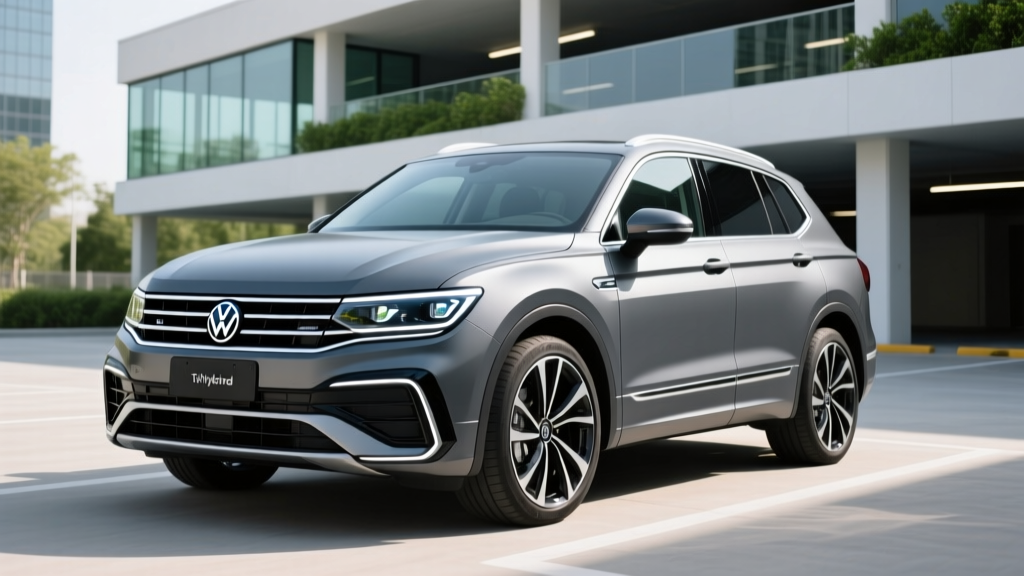
If you are searching for a volkswagen hybrid suv 2025, the primary answer in the U.S. market centers on the redesigned 2025 Volkswagen Tiguan and the plug-in hybrid variant sold in select global markets as the Tiguan eHybrid. Volkswagen's 2025 SUV strategy leans heavily on its upcoming ID. family for full electrification, but the brand continues to offer hybrid-electrified options for buyers who need gasoline flexibility alongside partial electric driving.
This guide breaks down exactly what Volkswagen offers in the hybrid SUV space for 2025, including the Tiguan's mild-hybrid powertrain available in the U.S. and the Tiguan eHybrid PHEV sold in Europe, with full specifications, real-world efficiency data, and ownership economics so you can decide if a VW hybrid SUV fits your garage — or if a competitor or full BEV makes more sense.
HEV vs PHEV: What's the Difference?
Conventional Hybrid (HEV): Uses a small battery (typically 1–2 kWh) charged by regenerative braking and the engine. You never plug it in. It improves MPG, especially in city driving, but cannot drive on electric power alone for meaningful distances.
Plug-in Hybrid (PHEV): Carries a larger battery (13–20+ kWh) that you plug in to charge. It can drive 25–45 miles on electricity alone before the gas engine kicks in, functioning as a regular hybrid afterward. Ideal if you can charge at home and your daily commute is under 40 miles.
2025 Volkswagen Tiguan: U.S. Powertrain and Efficiency
The 2025 Volkswagen Tiguan arrives in the U.S. as a fully redesigned third-generation model built on VW's MQB Evo platform. For the American market, the Tiguan is powered by a 2.0-liter turbocharged four-cylinder engine paired with a mild-hybrid system (a 48-volt belt-driven starter-generator) that provides torque fill and slight efficiency gains but does not enable electric-only driving.
| Specification | Value |
|---|---|
| Powertrain | 2.0L Turbo I4 + 48V Mild Hybrid |
| Combined Horsepower | 201 hp (estimated) |
| Torque | 221 lb-ft |
| Transmission | 8-speed automatic |
| Drivetrain | FWD standard / 4Motion AWD available |
| Battery (48V system) | ~0.5 kWh (mild-hybrid assist only) |
| EPA MPG (FWD, est.) | 25 city / 32 highway / 28 combined |
| EPA MPG (AWD, est.) | 23 city / 30 highway / 26 combined |
| Starting MSRP | ~$32,000 (S trim) |
| Plug-in Required? | No — this is a mild hybrid, not a PHEV |
Note: Final EPA fuel economy figures for the 2025 Tiguan should be confirmed at fueleconomy.gov once published. The estimates above are based on the outgoing generation and VW's published European WLTP data, adjusted for U.S. EPA testing methodology.
Real-World MPG vs. EPA Sticker
Conventional and mild hybrids tend to exceed their EPA city ratings in stop-and-go traffic, where regenerative braking and engine-off coasting provide the most benefit. On the highway, where the engine runs continuously, real-world MPG often lands 1–3 MPG below the EPA highway estimate, especially at speeds above 70 mph or in cold weather.
For the 2025 Tiguan mild hybrid, expect:
- City driving: 26–30 MPG real-world (mild-hybrid assist shines here)
- Highway driving: 28–31 MPG real-world at 65–75 mph
- Cold weather penalty: 2–4 MPG reduction when temperatures drop below 35°F due to richer fuel mixtures and cabin heating load
2025 Volkswagen Tiguan eHybrid (PHEV): European Market Specifications
For buyers in Europe and other global markets, Volkswagen offers the Tiguan eHybrid — a true plug-in hybrid with meaningful electric-only range. While this model is not currently sold in the United States, its specifications reveal what VW's PHEV technology delivers and help set expectations should VW reintroduce a PHEV SUV to the U.S. lineup (the brand previously sold the Tiguan eHybrid stateside for the 2020–2022 model years).
| Specification | Value |
|---|---|
| Powertrain | 1.5L Turbo I4 + Electric Motor |
| Combined System Output | 201 hp (eHybrid) / 268 hp (eHybrid R-Line) |
| Traction Battery | 19.7 kWh (gross) / ~15.5 kWh usable |
| Battery Chemistry | NMC (Nickel Manganese Cobalt) |
| WLTP Electric-Only Range | Up to 62 miles (~45–50 mi EPA equivalent) |
| AC Charging (Level 2) | 7.2 kW onboard charger; ~2.5 hours 0–100% |
| DC Fast Charging | Optional 50 kW DC; 10–80% in ~25 min |
| Combined WLTP Fuel Economy | ~175 MPGe (with charged battery) |
| Charge-Depleted MPG (gas only) | ~38 MPG combined |
| Total Combined Range | ~530 miles (electric + gasoline) |
| 0–60 mph (est.) | 7.5 seconds (201 hp variant) |
Electric-Only Range: Realistic Expectations
The Tiguan eHybrid's WLTP rating of 62 miles overstates what U.S. EPA testing would likely certify (typically 20–25% lower). Expect an EPA-equivalent rating of approximately 45–50 miles of electric-only driving. In real-world conditions:
- Mild weather, city driving: 42–50 miles on a full charge
- Highway at 70 mph: 32–38 miles (electric motors are less efficient at sustained high speed)
- Cold weather (below 30°F): 28–35 miles (cabin heating and battery resistance reduce usable capacity)
This is enough to cover the average American's 37-mile daily round-trip commute entirely on electricity — if you charge at home overnight.
Charging the Tiguan eHybrid: What PHEV Owners Need to Know
A plug-in hybrid's value proposition depends entirely on regular charging. Here is how the Tiguan eHybrid's charging profile breaks down:
| Charge Level | Power | 0–100% Time | Miles Added per Hour |
|---|---|---|---|
| Level 1 (120V household) | 1.4 kW | ~11 hours | ~4 mi/hr |
| Level 2 (240V home/public) | 7.2 kW | ~2.5 hours | ~18 mi/hr |
| DC Fast Charge (optional) | 50 kW | 10–80% in ~25 min | N/A (burst charging) |
For PHEV ownership, a Level 2 home charger is the sweet spot. A 240-volt outlet (NEMA 14-50) or hardwired Level 2 station fully replenishes the battery in roughly 2.5 hours — meaning you can top up during the workday or overnight with ease. Level 1 (standard 120V) works in a pinch but requires 11 hours for a full charge, which is impractical for daily use if you deplete the battery regularly.
The optional 50 kW DC fast charging capability is a standout feature for a PHEV. Most competitors in this segment (Toyota RAV4 Prime, Hyundai Tucson PHEV) lack DC fast charging entirely, limiting them to slower Level 2 replenishment on the road.
Hybrid vs PHEV vs Full EV: Which Volkswagen Fits You?
Volkswagen's 2025 lineup forces a clear decision between three electrification paths. Here is a framework to help you choose:
Choose the Tiguan Mild Hybrid (HEV) If:
- You cannot charge at home or work (no garage, no outlet access)
- You want better fuel economy without changing your refueling habits
- You drive more than 500 miles per week and need maximum range flexibility
- Your budget starts around $32,000
Choose the Tiguan eHybrid (PHEV) If:
- You have reliable access to Level 1 or Level 2 charging at home
- Your daily commute is under 45 miles round-trip
- You regularly take longer road trips where EV charging infrastructure is sparse
- You want to reduce gasoline consumption by 60–80% without range anxiety
Choose a Full EV (VW ID.4) If:
- You can install a Level 2 home charger
- Your daily driving is under 200 miles and you have DC fast charging access for road trips
- You want to eliminate oil changes, spark plugs, and gasoline entirely
- You qualify for the federal §30D tax credit (up to $7,500 for the ID.4)
Pricing, Tax Credits, and Ownership Costs
2025 Tiguan Mild Hybrid Pricing (U.S.)
The 2025 Tiguan starts at approximately $32,000 for the base S trim with FWD, climbing to roughly $40,000 for a fully loaded SEL R-Line with 4Motion AWD. As a mild hybrid, the Tiguan does not qualify for the federal §30D new clean vehicle tax credit, which requires a vehicle to have at least 7 kWh of battery capacity and external charging capability. Mild hybrids fall well below this threshold.
Tiguan eHybrid PHEV Tax Credit Eligibility
Should Volkswagen reintroduce the Tiguan eHybrid to the U.S. market, it would likely qualify for a partial or full §30D federal tax credit (up to $7,500) — provided it meets current battery sourcing and critical minerals requirements under the Inflation Reduction Act. Key eligibility rules for 2025–2026:
- MSRP cap: SUVs must be priced at or below $80,000
- Buyer income cap: AGI must not exceed $150,000 (single) / $300,000 (joint filing)
- Battery sourcing: Increasing percentages of battery components must be manufactured or assembled in North America, and critical minerals must be sourced from the U.S. or free-trade-agreement partners
- Point-of-sale transfer: Eligible buyers can transfer the credit to the dealer for an immediate price reduction at purchase
- Minimum battery capacity: At least 7 kWh (the Tiguan eHybrid's ~19.7 kWh pack clears this easily)
Verify current eligibility at irs.gov before purchasing, as sourcing requirements tighten annually. Consult a tax professional for personal eligibility.
5-Year Cost of Ownership Comparison
| Cost Factor | Tiguan HEV (U.S.) | Tiguan eHybrid PHEV* | VW ID.4 (BEV) |
|---|---|---|---|
| Purchase Price (base) | $32,000 | ~$40,000 | $39,735 |
| Federal Tax Credit | $0 | $3,751–$7,500 | $7,500 |
| Fuel / Electricity (5 yr) | ~$7,500 | ~$3,800 | ~$3,200 |
| Maintenance (5 yr) | ~$3,500 | ~$3,000 | ~$1,800 |
| Insurance (5 yr, avg) | ~$8,500 | ~$9,000 | ~$9,500 |
| Net 5-Year Cost | ~$51,500 | ~$48,300–$52,049 | ~$46,735 |
*PHEV figures are estimates based on European pricing converted and adjusted for U.S. market assumptions. Actual U.S. pricing would differ if VW reintroduces the model. Fuel costs assume $3.40/gal gasoline and $0.16/kWh electricity.
Battery Warranty, Reliability, and Replacement Costs
Volkswagen Hybrid Battery Warranty
Tiguan Mild Hybrid (48V): The 48-volt battery is covered under VW's standard powertrain warranty — 4 years / 50,000 miles. Replacement cost for the small 48V battery is relatively modest: $800–$1,500 including labor.
Tiguan eHybrid (PHEV traction battery): VW covers the high-voltage hybrid battery for 8 years / 100,000 miles (or 10 years / 100,000 miles in states that follow California emissions warranty rules — CA, CO, CT, ME, MD, MA, NJ, NY, OR, RI, VT, WA). The warranty guarantees the battery will retain at least 70% of its original capacity during the coverage period.
Long-Term Reliability and Replacement Cost
Volkswagen's PHEV systems in the Tiguan and Golf GTE have demonstrated solid reliability in European markets, with the 1.5L evo2 turbo engine and electric motor pairing proving durable through 100,000+ mile service intervals. The primary long-term concern for any PHEV is out-of-warranty traction battery replacement.
For a PHEV with a ~15–20 kWh battery pack, expect replacement costs of $5,000–$8,000 (parts and labor) at current pricing. However, modern NMC and LFP batteries routinely retain 85–90% capacity at 100,000 miles when properly maintained — meaning most owners will never need a replacement during typical ownership.
Best practices for maximizing PHEV battery life:
- Avoid routinely charging to 100% unless you need full range the next day (80% daily is gentler on NMC cells)
- Minimize DC fast charging frequency — use Level 2 for daily charging
- Allow the vehicle's thermal management system to precondition the battery in extreme heat or cold
- Don't leave the vehicle sitting at 0% or 100% state of charge for extended periods
How the Tiguan Hybrid Compares to Key Rivals
The 2025 compact SUV hybrid segment is intensely competitive. Here is how the Tiguan stacks up against its most popular rivals:
| Metric | VW Tiguan (HEV) | Toyota RAV4 Hybrid | Toyota RAV4 Prime (PHEV) | Hyundai Tucson Hybrid |
|---|---|---|---|---|
| Type | Mild Hybrid | Full Hybrid | PHEV | Full Hybrid |
| Combined HP | 201 hp | 219 hp | 302 hp | 226 hp |
| EPA Combined MPG | ~28 MPG | 39 MPG | 94 MPGe / 38 MPG | 38 MPG |
| EV-Only Range | N/A | N/A | 42 miles | N/A |
| Battery Capacity | ~0.5 kWh | 1.6 kWh | 18.1 kWh | 1.5 kWh |
| Starting MSRP | ~$32,000 | $33,425 | $44,900 | $38,510 |
| Federal Tax Credit | None | None | $3,751* | None |
*RAV4 Prime credit amount reflects 2025 critical-minerals and battery-component sourcing rules per IRS §30D. Verify before purchase.
Best MPG (Gas-Only)
Toyota RAV4 Hybrid — 39 MPG combined is the class benchmark
Best PHEV Range
Toyota RAV4 Prime — 42 miles EV-only, 302 hp, proven reliability
Lowest Entry Price
VW Tiguan — ~$32,000 starting makes it the most affordable in this group
Who Should Buy a 2025 Volkswagen Hybrid SUV?
The 2025 Volkswagen Tiguan mild hybrid makes sense for a specific buyer: someone who wants a European-driving compact SUV with respectable fuel economy, a refined interior, and a starting price that undercuts most hybrid competitors — but who does not need electric-only driving capability.
If you are specifically seeking a plug-in hybrid Volkswagen SUV in the United States for 2025, the honest answer is that VW does not currently offer one in this market. Your closest alternatives are:
- Toyota RAV4 Prime: 42 miles EV range, 302 hp, $44,900 — the PHEV SUV benchmark
- Hyundai Tucson PHEV: 33 miles EV range, 261 hp, ~$38,725
- Ford Escape PHEV: 37 miles EV range, 210 hp, ~$40,500
- VW ID.4 (full EV): 291 miles EPA range, eligible for $7,500 tax credit, ~$39,735
If VW brings the Tiguan eHybrid back to U.S. showrooms — which remains possible given the redesigned platform supports PHEV architecture — it would compete directly with the RAV4 Prime and Tucson PHEV, offering European driving dynamics and optional DC fast charging as differentiators.
Pros — 2025 Tiguan
- Competitive starting price (~$32,000)
- Refined ride quality and handling (VW hallmark)
- Spacious, well-built interior with updated infotainment
- Mild-hybrid system improves city drivability
- Available 4Motion AWD
- Strong safety ratings (IIHS testing pending for new generation)
Cons — 2025 Tiguan
- No true hybrid (HEV) or PHEV option in the U.S.
- MPG trails Toyota RAV4 Hybrid by ~11 MPG combined
- No federal tax credit eligibility
- VW's recent infotainment software has drawn usability complaints
- Long-term reliability ratings trail Toyota/Honda
Frequently Asked Questions
How many MPG does the 2025 Volkswagen Tiguan hybrid get?
The 2025 Tiguan with its mild-hybrid 2.0L turbo powertrain is estimated at approximately 25 city / 32 highway / 28 combined MPG for the FWD model, and 23/30/26 for 4Motion AWD. These are preliminary estimates — confirm final EPA numbers at fueleconomy.gov. Note that this is a mild hybrid, not a full hybrid like the Toyota RAV4 Hybrid (39 MPG combined).
Does Volkswagen sell a plug-in hybrid SUV in 2025?
In the U.S. market, no. Volkswagen discontinued the Tiguan eHybrid PHEV in the United States after the 2022 model year. The 2025 Tiguan eHybrid is available in Europe with up to ~50 miles of EPA-equivalent electric range, but it is not sold stateside. If you need a PHEV SUV, consider the Toyota RAV4 Prime, Hyundai Tucson PHEV, or Ford Escape PHEV.
Does the 2025 Tiguan qualify for any tax credit?
No. The 2025 Tiguan mild hybrid does not qualify for the federal §30D new clean vehicle tax credit because its battery capacity is far below the 7 kWh minimum and it cannot be plugged in to charge. If you want a Volkswagen eligible for the federal credit, the all-electric ID.4 qualifies for up to $7,500 (subject to income, MSRP, and battery sourcing requirements — see irs.gov).
Is the Volkswagen hybrid battery reliable and what does replacement cost?
VW's 48V mild-hybrid battery in the Tiguan is a small, low-stress component covered under the 4-year/50,000-mile powertrain warranty, with replacement estimated at $800–$1,500. For VW PHEV models (where available), the high-voltage traction battery carries an 8-year/100,000-mile warranty (10 years in CARB states) guaranteeing 70% capacity retention. Out-of-warranty PHEV battery replacement runs $5,000–$8,000, though most modern packs last well beyond 150,000 miles with proper care.
Should I buy the Tiguan mild hybrid or wait for a VW PHEV?
If you need a vehicle now and cannot charge at home, the Tiguan mild hybrid offers a solid compact SUV with modest efficiency gains. If you can charge at home and want meaningful electric driving, you should either look at a competitor PHEV (RAV4 Prime, Tucson PHEV) or consider the fully electric VW ID.4, which offers 291 miles of range and $7,500 in federal tax credits. There is no confirmed timeline for VW reintroducing a PHEV SUV to the U.S. market.
How far can the Tiguan eHybrid go on electric only?
The European-market 2025 Tiguan eHybrid achieves up to 62 miles on the WLTP cycle, which translates to roughly 45–50 miles under the more stringent EPA testing standard. Real-world electric range varies from about 28 miles in cold highway driving to 50 miles in mild-weather city conditions. This model is not currently available in the United States.