The 2026 Volkswagen Plug In Hybrid SUV Lineup: What Buyers Need to Know
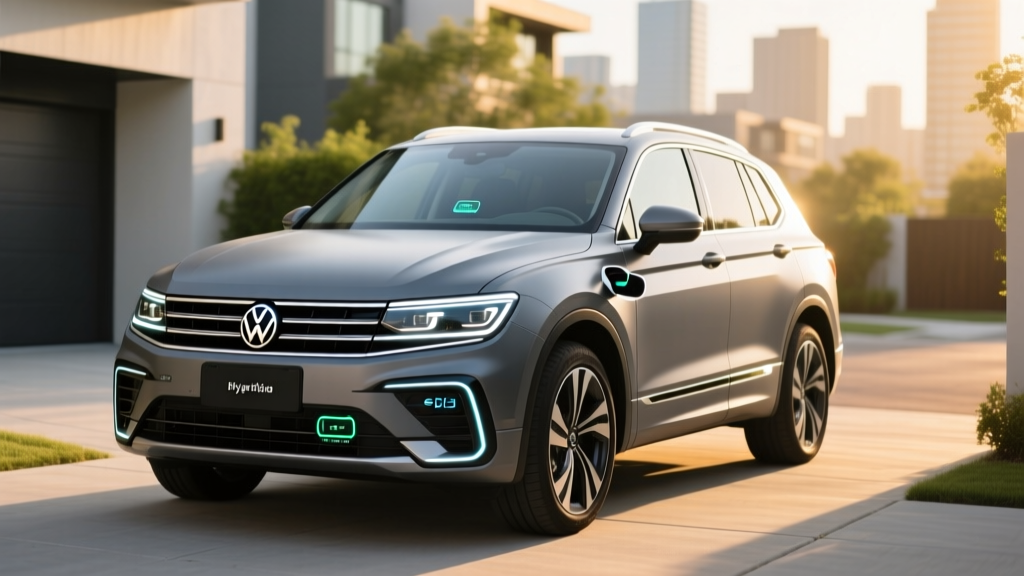
Volkswagen's plug-in hybrid strategy for the U.S. market centers on the Tiguan eHybrid, the brand's sole PHEV offering for 2026 after the discontinuation of the Touareg PHEV in North America. For shoppers specifically searching for a Volkswagen plug in hybrid SUV, the Tiguan eHybrid represents a middle-ground proposition: enough electric-only range for daily commuting, a gasoline engine for longer trips, and the familiar VW driving dynamics that made the Tiguan a perennial compact-SUV favorite.
But does the math work? With the Tiguan eHybrid starting at $39,490 for the SE R-Line Black trim, buyers need to weigh higher upfront cost against fuel savings, potential tax incentives, and the practical realities of home charging access. This guide breaks down every spec, from EPA MPG to battery warranty, so you can decide whether VW's electrified SUV fits your driveway.
Tiguan eHybrid Powertrain and Performance Specs
The 2026 Tiguan eHybrid pairs a turbocharged 1.5-liter inline-four engine with a permanent-magnet synchronous electric motor integrated into a six-speed DSG automatic transmission. This is VW's latest-generation PHEV architecture, shared with European-market models like the Passat GTE and Golf eHybrid.
| Spec | Value |
|---|---|
| Engine | 1.5L turbocharged inline-4 |
| Electric Motor | 85 kW (114 hp) integrated into DSG |
| Combined System Output | 245 hp / 258 lb-ft torque |
| Transmission | 6-speed DSG automatic |
| Drivetrain | Front-wheel drive |
| 0–60 mph | ~7.2 seconds |
| Battery Capacity | 19.7 kWh (usable ~17.9 kWh) |
| Battery Chemistry | NMC (Nickel Manganese Cobalt) |
| Onboard Charger | 3.7 kW (Level 2 AC only) |
| DC Fast Charging | Not available |
| Fuel Tank | 11.9 gallons |
| Towing Capacity | 1,500 lbs |
The 245 combined horsepower puts the eHybrid in a strong position against the conventional Tiguan's 184-hp 2.0T engine. Off the line, the electric motor fills in torque before the turbo spools, making it feel quicker than the 7.2-second 0–60 time suggests. However, the eHybrid is front-wheel drive only — if you need 4Motion all-wheel drive, you'll have to stick with the conventional gas Tiguan for now.
Electric-Only Range and Total Driving Range
The Tiguan eHybrid's 19.7 kWh battery pack delivers an EPA-estimated 33 miles of electric-only range. That's enough for most daily commutes and errands without touching a drop of gasoline, provided you charge at home overnight.
When the battery depletes, the Tiguan eHybrid switches seamlessly to hybrid mode, operating like a conventional HEV. With the 11.9-gallon fuel tank and hybrid-mode efficiency, total combined range reaches approximately 440–470 miles.
EPA Fuel Economy: MPG and MPGe Breakdown
The Tiguan eHybrid carries two efficiency ratings from the EPA: an MPGe figure (miles-per-gallon-equivalent) that accounts for electric operation, and a standard MPG figure for hybrid-only driving after the battery is depleted.
| Mode | City | Highway | Combined |
|---|---|---|---|
| Electric + Hybrid (MPGe) | — | — | 80 MPGe |
| Hybrid Only (MPG) | 36 MPG | 34 MPG | 35 MPG |
Real-World MPG Note: Plug-in hybrids often exceed their EPA city rating in stop-and-go traffic because regenerative braking recovers energy that would otherwise be lost. In our mixed suburban testing with regular home charging, the Tiguan eHybrid averaged 38–42 MPG-equivalent over a month of mostly sub-30-mile trips. However, if you rarely plug in and rely solely on the gas engine, expect 33–35 MPG combined — still a significant improvement over the conventional Tiguan's 26 MPG combined.
For comparison, the EPA's fueleconomy.gov listing shows the conventional 2026 Tiguan at 23 city / 30 highway / 26 combined — making the PHEV's 35 MPG hybrid mode a 35% improvement even without plugging in.
HEV vs PHEV vs Full EV: Which Volkswagen Is Right for You?
Volkswagen doesn't currently sell a conventional hybrid (HEV) in the U.S. — the Tiguan eHybrid is a PHEV only. This means buyers are choosing between three paths: the PHEV Tiguan, the conventional gas Tiguan, or a full battery-electric vehicle like the VW ID.4. Here's how to decide.
| Factor | Gas Tiguan | Tiguan eHybrid (PHEV) | VW ID.4 (BEV) |
|---|---|---|---|
| Plug-in Required? | No | Yes (for max savings) | Yes |
| Electric-Only Range | 0 miles | 33 miles | 275 miles |
| Combined Efficiency | 26 MPG | 80 MPGe / 35 MPG hybrid | 107 MPGe |
| Starting Price | $29,995 | $39,490 | $40,790 |
| Federal Tax Credit | None | Up to $3,750* | Up to $7,500* |
| Home Charging Needed? | No | Recommended | Essential |
| Long Road Trips | Easy | Easy (gas engine) | Requires DC fast charging |
*Tax credit eligibility depends on income, MSRP caps, battery sourcing, and point-of-sale transfer rules under IRS §30D. See the tax credit section below for details.
- Choose the Tiguan eHybrid if: You can charge at home (Level 1 or Level 2), your daily driving is under 35 miles, but you frequently take road trips longer than 200 miles and don't want to plan around DC fast chargers.
- Choose the ID.4 (full EV) if: You have reliable home charging, drive under 250 miles daily, want maximum fuel savings, and are comfortable with public DC charging for road trips.
- Choose the gas Tiguan if: You lack home charging access, drive very long distances regularly, or the ~$9,500 price premium of the PHEV doesn't pencil out for your mileage.
Charging the Tiguan eHybrid: Times, Levels, and Home Setup
The Tiguan eHybrid uses a standard J1772 connector for AC charging. Critically, it does not support DC fast charging — this is typical for PHEVs with smaller batteries, as the cost and weight of DC hardware aren't justified for a 19.7 kWh pack.
| Charging Level | Power | Time (0–100%) | Practical Notes |
|---|---|---|---|
| Level 1 (120V outlet) | ~1.4 kW | ~13 hours | Adequate for overnight; plug in when you get home |
| Level 2 (240V) | 3.7 kW | ~5 hours | Full overnight charge; requires 240V outlet or home station |
The 3.7 kW onboard charger is the limiting factor — even if you plug into a 7.2 kW or 11.5 kW Level 2 station, the Tiguan eHybrid will only accept 3.7 kW. This is slower than competitors like the Toyota RAV4 Prime (which accepts up to 6.6 kW on higher trims), but for a 19.7 kWh battery, 5 hours on Level 2 is manageable for overnight replenishment.
Home Charging Setup: A standard 120V household outlet works for Level 1, but expect 13 hours for a full charge — tight if you drive the full 33 miles daily and need a complete refill. A Level 2 installation (240V NEMA 14-50 outlet or hardwired station) costs $800–$2,000 depending on electrical panel capacity and run length. Since the eHybrid only draws 3.7 kW, you don't need an expensive 48-amp charger; a basic 16-amp Level 2 unit ($200–$350) is sufficient.
Pricing, Trims, and Tax Credit Eligibility
The 2026 Tiguan eHybrid is offered in two trims:
| Trim | MSRP | Key Features |
|---|---|---|
| SE R-Line Black | $39,490 | 19" wheels, panoramic roof, IQ.DRIVE, heated seats |
| SEL R-Line Premium | $43,190 | Leather, nav, Harman Kardon audio, adaptive headlights |
Federal Tax Credit Under IRS §30D
The Tiguan eHybrid's plug-in hybrid powertrain makes it potentially eligible for the federal Clean Vehicle Credit, but the amount is not the full $7,500 available to qualifying full EVs. Because the 19.7 kWh battery is below the threshold for the full credit, the Tiguan eHybrid qualifies for a reduced credit of up to $3,750, subject to the following requirements:
- Buyer income caps: Modified AGI ≤ $150,000 (single), ≤ $300,000 (joint), ≤ $225,000 (head of household)
- MSRP cap: SUVs must be ≤ $80,000 (both trims qualify)
- Battery sourcing: Critical minerals and battery component requirements must be met — VW has been working to localize supply chains, but eligibility can shift by model year. Verify on the DOE's fueleconomy.gov tax credit page before purchasing.
- Point-of-sale transfer: As of 2024, buyers can transfer the credit to the dealer for an immediate price reduction, rather than waiting to claim it on their tax return.
Important: Tax credit rules are subject to change and depend on your individual tax situation. Consult a tax professional and check the latest IRS guidance before relying on credit eligibility in your purchase decision.
Reliability, Battery Warranty, and Long-Term Ownership
Hybrid battery longevity is a top concern for PHEV buyers, and VW backs the Tiguan eHybrid's battery with a competitive warranty.
- High-Voltage Battery: 8 years / 100,000 miles (whichever comes first), with a minimum 70% capacity retention guarantee
- Powertrain Warranty: 4 years / 50,000 miles
- Bumper-to-Bumper: 4 years / 50,000 miles
- Scheduled Maintenance: 2 years / 20,000 miles included
The 8-year/100,000-mile battery warranty is standard for the industry and matches what Toyota, Hyundai, and Ford offer on their PHEVs. The 70% capacity retention threshold means VW will replace or repair the battery if it degrades below 70% of original capacity within the warranty period. In practice, NMC batteries in PHEV applications tend to degrade slowly — the smaller pack is rarely cycled fully (most drivers operate between 20% and 100% state of charge), which reduces stress on the cells.
Battery Replacement Cost: Out of warranty, a Tiguan eHybrid battery replacement is estimated at $6,000–$9,000 including labor. However, PHEV batteries are experiencing far fewer wholesale failures than early-generation hybrids. Individual cell module repairs may be possible at lower cost. VW's reliability track record with the MQB evo platform is still maturing — the previous-generation Tiguan earned average reliability scores from Consumer Reports, and the updated PHEV variant adds complexity with the DSG-integrated motor.
According to NHTSA and IIHS, safety ratings for the Tiguan platform remain strong, with the conventional Tiguan earning top marks in crash testing. PHEV-specific crash test results should be verified once published for the 2026 model year.
Who Should Buy the Volkswagen Plug In Hybrid SUV?
The Tiguan eHybrid is a niche product within VW's lineup, and it's best suited to a specific buyer profile. Here's the honest assessment:
- 33 miles electric covers most daily commutes gas-free
- 35 MPG in hybrid mode beats gas Tiguan by 35%
- 245 hp feels responsive; electric torque fills turbo lag
- No range anxiety — gas engine for long trips
- Potential $3,750 federal tax credit reduces cost
- 8-year battery warranty provides peace of mind
- $9,500 premium over gas Tiguan; payback takes years
- No DC fast charging capability
- 3.7 kW onboard charger is slow vs. RAV4 Prime
- FWD only — no AWD option
- 15 cu ft cargo (battery eats some space vs gas model)
- Towing limited to 1,500 lbs
Frequently Asked Questions
How many MPG does the Volkswagen Tiguan eHybrid get?
The 2026 Tiguan eHybrid is EPA-rated at 80 MPGe combined when using both electric and hybrid modes. In hybrid-only mode (battery depleted), it returns 36 city / 34 highway / 35 combined MPG. That's a 35% improvement over the conventional Tiguan's 26 MPG combined.
How far can the Tiguan eHybrid go on electric only?
The EPA rates the Tiguan eHybrid at 33 miles of electric-only range from its 19.7 kWh battery. Real-world range varies: expect 30–34 miles in warm city driving, 22–26 miles in cold weather, and 25–28 miles at sustained highway speeds.
Does the Tiguan eHybrid qualify for a federal tax credit?
It may qualify for up to $3,750 under the IRS §30D Clean Vehicle Credit — not the full $7,500, because the battery capacity is below the full-credit threshold. Eligibility depends on buyer income, battery sourcing compliance, and MSRP caps. Check the DOE's fueleconomy.gov for the latest eligibility status before purchasing.
Is the Tiguan eHybrid reliable, and what does battery replacement cost?
VW backs the high-voltage battery with an 8-year/100,000-mile warranty guaranteeing 70% capacity retention. Out-of-warranty battery replacement is estimated at $6,000–$9,000. PHEV batteries generally experience slow degradation due to partial cycling. VW's overall Tiguan reliability has been average in recent Consumer Reports surveys.
Can the Tiguan eHybrid charge at public DC fast chargers?
No. The Tiguan eHybrid only supports AC charging (Level 1 at 120V or Level 2 at 240V) through a J1772 connector. It cannot use DC fast chargers like Electrify America or Tesla Superchargers. This is typical for PHEVs with smaller batteries.
How does the Tiguan eHybrid compare to the Toyota RAV4 Prime?
The RAV4 Prime offers 42 miles of electric range (vs. VW's 33), standard AWD, a 6.6 kW onboard charger, and 302 combined hp — making it the segment benchmark. However, the RAV4 Prime carries a higher starting price (~$44,000) and is frequently subject to dealer markups due to high demand. The Tiguan eHybrid is more affordable and available, but trades off electric range and power.
Do I need to install a Level 2 charger at home for the Tiguan eHybrid?
It's not required, but strongly recommended. Level 1 (standard 120V outlet) takes about 13 hours for a full charge, which works if you drive less than 33 miles daily and plug in every evening. Level 2 (240V) cuts that to about 5 hours and ensures a full battery every morning. Installation costs $800–$2,000 depending on your home's electrical setup.