What Are Volkswagen's LDV Hybrid Offerings?
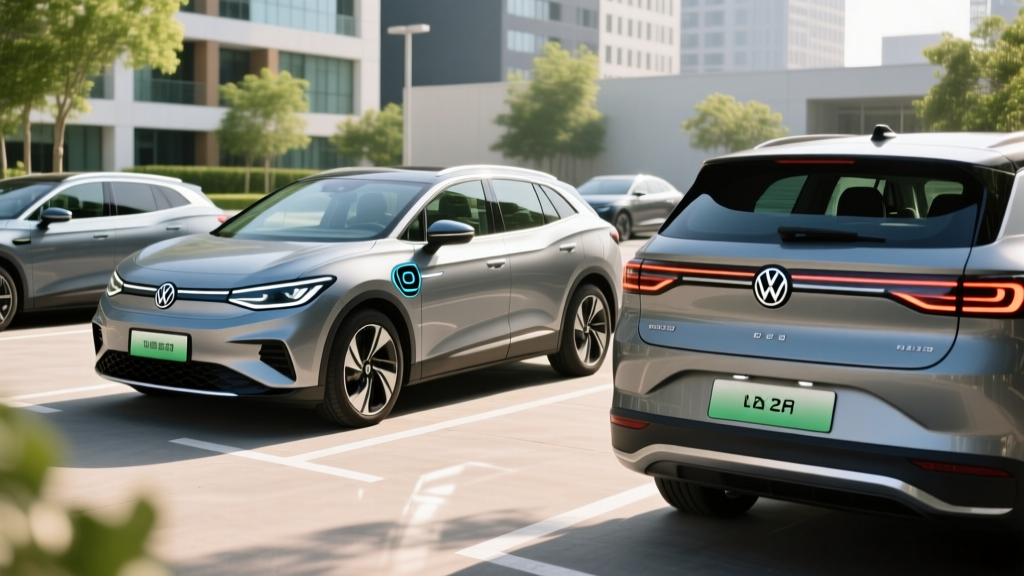
Volkswagen Commercial Vehicles — sometimes abbreviated as VW LDV (Light Duty Vehicles) in legacy markets — fields a focused lineup of electrified vans for 2025. Unlike the passenger ID.4 or ID. Buzz (which is fully electric), VW's commercial van range leans heavily on plug-in hybrid (PHEV) powertrains to balance zero-emission urban driving with long-haul diesel range. The two models most relevant to buyers searching for Volkswagen LDV hybrid options are the Multivan eHybrid (a premium passenger/cargo van) and the Caddy eHybrid (a compact commercial van). Neither is a conventional self-charging hybrid (HEV); both require plug-in charging to unlock their electric-only range.
If you're evaluating these vans, the key decision is whether your daily route fits within the electric-only envelope (typically 30–40 miles) or whether you need the diesel engine for longer hauls. Below, we break down exact specs, real-world efficiency, pricing, and whether any tax credits apply.
HEV vs PHEV: Which Volkswagen Vans Qualify?
Conventional Hybrid (HEV)
No plug required. A small battery (typically 1–2 kWh) recovers energy during braking and assists the engine. VW does not currently offer a conventional hybrid in its LDV/commercial van range for 2025. If you want a self-charging hybrid van, you'll need to look at competitors like the Toyota Proace or Ford Transit Custom mild-hybrid variants.
Plug-In Hybrid (PHEV)
Requires plug-in charging. A larger battery (10–20 kWh) provides genuine electric-only driving range before the combustion engine engages. Both the Multivan eHybrid and Caddy eHybrid fall into this category. You can charge from a standard household outlet (Level 1), a home Level 2 wallbox, or public AC chargers. Neither supports DC fast charging.
Volkswagen Multivan eHybrid (2025): Full Specs
The Multivan eHybrid is VW's flagship electrified people-mover, built on the MQB evo platform. It pairs a 1.4-liter turbocharged four-cylinder engine with an electric motor integrated into the DSG transmission.
| Specification | 2025 Multivan eHybrid |
|---|---|
| Powertrain | 1.4L TSI turbo + electric motor (6-speed DSG) |
| Combined Output | 218 hp (160 kW) |
| Battery (usable) | 10.4 kWh (NMC lithium-ion) |
| Electric-Only Range (WLTP) | ~31 mi (50 km) |
| Estimated EPA Electric Range | ~26–28 mi |
| Total Combined Range | ~400 mi (with full tank + full charge) |
| AC Charging (Level 2) | 3.6 kW onboard charger; ~3.5 hours 0–100% |
| DC Fast Charging | Not supported |
| 0–62 mph | ~9.0 seconds |
| Fuel Economy (WLTP combined) | ~176 MPGe (with charge) / ~36 MPG (charge-depleted) |
| Starting MSRP (Europe) | ~€57,000 (~$62,000 USD equivalent) |
| US Availability | Not sold in the United States |
Battery Warranty
Volkswagen covers the Multivan eHybrid's high-voltage battery for 8 years or 100,000 miles (whichever comes first), with a capacity retention threshold of 70%. If the battery degrades below 70% of its original capacity within the warranty period, VW will repair or replace it. This is consistent with industry standards for PHEV batteries. A full out-of-warranty replacement is estimated at $4,500–$7,000 depending on labor and market.
Volkswagen Caddy eHybrid (2025): Compact PHEV Van
The Caddy is VW's smaller commercial van, competing with the Ford Transit Connect and Mercedes Citan. The eHybrid variant uses a 1.4L TSI engine paired with an electric motor, sharing much of its powertrain architecture with the Multivan but in a lighter, more compact package.
| Specification | 2025 Caddy eHybrid |
|---|---|
| Powertrain | 1.4L TSI turbo + electric motor (6-speed DSG) |
| Combined Output | ~150 hp (110 kW) system |
| Battery (usable) | ~10.4 kWh (NMC lithium-ion) |
| Electric-Only Range (WLTP) | ~34 mi (55 km) |
| Estimated EPA Electric Range | ~28–30 mi |
| Total Combined Range | ~380 mi |
| AC Charging (Level 2) | 3.6 kW; ~3.5 hours 0–100% |
| DC Fast Charging | Not supported |
| Fuel Economy (WLTP combined) | ~180 MPGe (charged) / ~38 MPG (depleted) |
| Starting MSRP (Europe) | ~€38,000 (~$41,000 USD equivalent) |
| US Availability | Not sold in the United States |
Real-World MPG: What to Actually Expect
PHEV fuel economy is notoriously difficult to summarize because it depends entirely on how often you charge. Here's a practical framework:
- Charge daily, drive under 30 miles: You'll use almost no fuel. Expect 100+ MPGe in mixed driving, with the engine rarely engaging.
- Charge occasionally, mixed driving: Expect 40–60 MPGe on days you start with a full battery, dropping to ~36–38 MPG once the battery is depleted.
- Never charge: The van operates as a heavy conventional hybrid. Expect 30–35 MPG combined — still better than a pure diesel variant, but you're carrying dead battery weight.
In real-world testing by European outlets, the Multivan eHybrid achieves roughly 34–37 MPG on the highway in charge-depleted mode, slightly below the WLTP estimate. City driving in charge-depleted mode can reach 38–40 MPG thanks to regenerative braking — a common PHEV trait where city efficiency exceeds highway.
Pricing, Tax Credits, and US Availability
Here's the critical caveat for North American buyers: neither the Multivan eHybrid nor the Caddy eHybrid is sold in the United States for 2025. Volkswagen Commercial Vehicles does not currently import these models to the US market. The closest VW electrified vehicle available in the US is the ID. Buzz, which is a fully electric minivan (not a hybrid).
For buyers in the UK, Australia, or European markets where these vans are sold:
- Multivan eHybrid: Starting ~€57,000 / ~£52,000. Eligible for various national PHEV incentives (e.g., UK Benefit-in-Kind tax advantages for company van drivers).
- Caddy eHybrid: Starting ~€38,000 / ~£34,000. Qualifies for commercial fleet emissions incentives in many EU nations.
For US buyers, the federal §30D Clean Vehicle Credit does not apply to these vans because they are not sold in the US. If VW were to import them, the Multivan's MSRP would likely exceed the $80,000 van cap, and the Caddy might qualify — but battery sourcing and critical mineral requirements under current IRS rules would need to be verified.
Reliability and Battery Longevity
Volkswagen's 1.4 TSI + electric motor PHEV powertrain has been in production since the Passat GTE era (~2015) and has accumulated significant real-world mileage data. Key reliability points:
- Engine: The EA211 1.4 TSI is one of VW's most widely used engines. With regular maintenance (oil every 10,000 miles, timing chain inspection at 80,000+ miles), it's proven durable.
- DSG transmission: The 6-speed DQ400e (designed for hybrid applications) has a strong track record. Mechatronic unit failures are rare but expensive (~$2,500) if they occur outside warranty.
- High-voltage battery: NMC chemistry in VW's PHEV batteries shows typical degradation of 8–12% over 5 years based on fleet data. The 8-year/100,000-mile warranty with a 70% retention floor provides solid protection.
- Battery replacement cost: Out of warranty, a full HV battery replacement runs $4,500–$7,000. Module-level repair (replacing individual cells) may be available for $1,500–$3,000 through specialist shops.
For fleet operators, VW offers extended warranty packages that can push coverage to 10 years / 150,000 miles in some markets.
Who Should Choose a VW LDV Hybrid vs. EV or Gas?
Choose the Multivan/Caddy eHybrid If:
- Your daily route is under 30 miles and you can charge at home or the depot overnight
- You need occasional long-distance capability (300+ miles) without charging stops
- You operate in a low-emission zone that requires zero-emission capability for city entry
- You want a van that can double as a family vehicle (Multivan) with 7 seats
Choose a Full EV (Like the ID. Buzz) If:
- You drive under 200 miles daily and have reliable charging access
- You want to eliminate oil changes, spark plugs, and exhaust system maintenance
- You're in a market where the ID. Buzz is available (US, Europe)
- Total cost of ownership matters more than upfront price
Quick Decision Framework
Go PHEV (Multivan/Caddy eHybrid) if: your daily miles < electric range AND you need 2–3 long trips per month over 200 miles.
Go full EV (ID. Buzz or ABT e-Transporter) if: your daily miles < 200 AND you charge at home AND you want lowest per-mile cost.
Go diesel (conventional Multivan/Caddy TDI) if: you drive 100+ miles daily with no charging access AND your routes are mostly highway.
Frequently Asked Questions
How many MPG does the Volkswagen Multivan eHybrid get?
With a full charge, the Multivan eHybrid achieves approximately 176 MPGe (WLTP combined). Once the battery is depleted and the vehicle operates on its 1.4L TSI engine alone, expect 34–38 MPG combined depending on load and driving style. Real-world highway driving in charge-depleted mode yields around 34 MPG.
How far can the Caddy eHybrid go on electric only?
The Caddy eHybrid's WLTP-rated electric range is approximately 34 miles (55 km). In real-world conditions — with cargo load, climate control, and highway speeds — expect 26–30 miles of usable electric range before the engine engages. This is sufficient for most urban delivery routes.
Hybrid vs PHEV vs EV — which VW van fits me?
VW doesn't offer a conventional hybrid (HEV) van — only PHEV (Multivan eHybrid, Caddy eHybrid) and full EV (ID. Buzz, ABT e-Transporter). Choose PHEV if you need electric city driving plus long-range diesel capability. Choose EV if you charge at home and drive under 200 miles daily. If you can't charge and drive long distances, a conventional TDI diesel remains the pragmatic choice.
Is the Multivan eHybrid reliable, and what does a battery replacement cost?
The 1.4 TSI PHEV powertrain has been in VW's lineup since ~2015 and is considered reliable with standard maintenance. The high-voltage battery is warrantied for 8 years/100,000 miles at 70% capacity retention. Out-of-warranty replacement costs approximately $4,500–$7,000. Fleet data suggests 8–12% degradation over 5 years, meaning most owners will never need a replacement during typical ownership.
Does the Multivan eHybrid qualify for any tax credit in the US?
No. The Multivan eHybrid is not sold in the United States, so it does not qualify for the federal §30D Clean Vehicle Credit. US buyers looking for an electrified VW van should consider the ID. Buzz (full EV), which may qualify for up to $7,500 in federal credits depending on battery sourcing, buyer income, and MSRP requirements — verify current eligibility on the IRS website or with a tax professional.
Can I DC fast charge the Multivan or Caddy eHybrid?
No. Neither VW PHEV van supports DC fast charging. They are limited to AC charging at 3.6 kW (Level 2), which takes approximately 3.5 hours for a full 0–100% charge. This is typical for PHEVs — their smaller batteries are designed for overnight home charging, not highway fast-charging stops.
What's the towing capacity of the Multivan eHybrid?
The 2025 Multivan eHybrid is rated to tow up to 2,000 kg (~4,400 lbs) with a braked trailer, consistent with its diesel siblings. However, towing significantly reduces electric-only range (expect a 30–40% reduction) and increases charge-depleted fuel consumption to roughly 28–30 MPG.