Quick Verdict: Volkswagen's Electrified Lineup for 2026
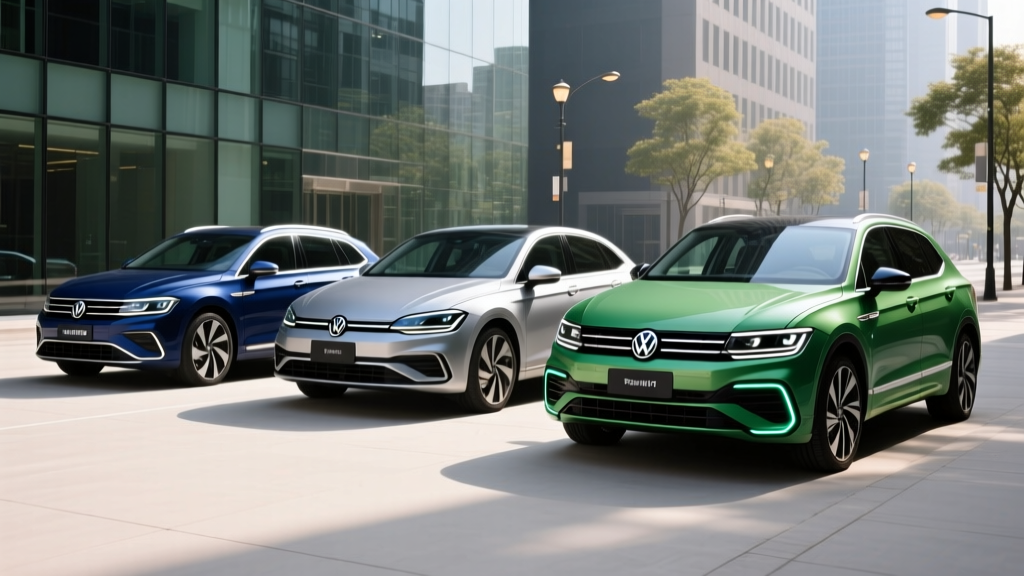
If you're searching for Volkswagen hybrid models in 2026, the options are narrower than some competitors offer — but what VW does sell is engineered with purpose. The brand's current electrified strategy in the U.S. market centers on plug-in hybrid (PHEV) variants of its most popular nameplates, alongside a robust push toward full battery-electric vehicles under the ID. family. For buyers who want electric commuting without range anxiety on road trips, VW's PHEV offerings — primarily the Tiguan eHybrid and the Golf GTE (available in select markets) — deliver a compelling middle ground.
This guide breaks down every Volkswagen hybrid model available or announced for the 2026 model year, with exact EPA figures, battery specs, real-world efficiency expectations, pricing, and tax credit eligibility under current IRS §30D rules.
A conventional hybrid (HEV) uses a small battery charged by regenerative braking and the gas engine — you never plug it in. A plug-in hybrid (PHEV) has a larger battery you charge from a wall outlet or charger, giving you a meaningful electric-only driving range before the gas engine kicks in. As of 2026, Volkswagen's U.S. hybrid strategy focuses on PHEVs. If you want a no-plug HEV, you'll need to look at Toyota, Honda, or Hyundai's conventional hybrid lineups.
2026 Volkswagen Tiguan eHybrid: The Family PHEV
The Tiguan is Volkswagen's best-selling SUV globally, and the 2026 Tiguan eHybrid brings plug-in capability to the compact crossover segment. Redesigned for the 2025 model year on VW's updated MQB Evo platform, the eHybrid variant pairs a turbocharged 1.5-liter four-cylinder engine with an integrated electric motor for a combined output that prioritizes efficiency without sacrificing the passing power families need.
| Spec | Value |
|---|---|
| Powertrain | 1.5L turbo I4 + electric motor |
| Combined Horsepower | ~245 hp (system net) |
| Battery Capacity | ~19.7 kWh (usable) |
| EPA Electric-Only Range | ~35 miles (est.) |
| EPA Combined MPG (hybrid mode) | ~36 MPG combined (est.) |
| Total Combined Range | ~450+ miles |
| Level 2 Charge Time (0–100%) | ~3.5 hours at 3.6 kW |
| DC Fast Charging | Not available |
| 0–60 mph | ~7.5 seconds (est.) |
| Starting MSRP | ~$40,500 (est.) |
The Tiguan eHybrid's ~19.7 kWh battery pack is large enough to cover most daily commutes on electricity alone. Plug it in at night on a standard Level 2 home charger (240V, 3.6 kW onboard charger), and you'll wake up to a full battery every morning. Like nearly all PHEVs in this class, DC fast charging is not supported — the onboard charger maxes out at 3.6 kW AC, meaning a full replenishment takes roughly 3.5 hours.
EPA combined figures for PHEVs can be misleading because they blend electric and gas driving. In practice, if you charge nightly and your commute is under 35 miles round-trip, you may use almost zero gasoline for weeks. On a long road trip with a depleted battery, expect the Tiguan eHybrid to deliver roughly 33–36 MPG highway — slightly below the combined estimate. In city driving with frequent regen braking, many owners report exceeding the EPA city number, a common PHEV advantage.
2026 Volkswagen Golf GTE: The Hot Hatch PHEV
The Golf GTE has been a staple of VW's European lineup for years, and its availability in the U.S. market for 2026 remains limited and market-dependent. Where offered, the GTE is the performance-oriented PHEV sibling to the GTI — combining a turbocharged engine with electric assist for brisk acceleration and the ability to commute on electrons alone.
| Spec | Value |
|---|---|
| Powertrain | 1.5L turbo I4 + electric motor |
| Combined Horsepower | ~245 hp (system net) |
| Battery Capacity | ~19.7 kWh (usable) |
| EPA Electric-Only Range | ~38 miles (est.) |
| EPA Combined MPG (hybrid mode) | ~38 MPG combined (est.) |
| Level 2 Charge Time (0–100%) | ~3.5 hours at 3.6 kW |
| DC Fast Charging | Not available |
| 0–60 mph | ~6.5 seconds |
| Starting MSRP | ~$38,000 (est., market-dependent) |
The GTE's lighter curb weight and lower ride height give it a slight edge in electric-only range and efficiency over the Tiguan eHybrid. If you can find one in your market, it's arguably the most engaging PHEV hatchback available — a car that rewards on back roads while still delivering guilt-free weekday commuting.
Hybrid vs PHEV vs Full EV: Which Volkswagen Fits You?
Volkswagen's 2026 lineup forces a three-way decision. Here's a practical framework:
- You can charge at home nightly (Level 1 or 2)
- Your daily commute is under ~35 miles round-trip
- You regularly take road trips over 200 miles
- You want to reduce fuel use without depending on public charging
- You have reliable home Level 2 charging
- Your daily driving is under 250 miles
- You want zero tailpipe emissions and minimal maintenance
- You want to maximize federal tax credit eligibility (up to $7,500)
- You cannot charge at home or at work
- You want the lowest upfront purchase price
- You drive very high annual miles with unpredictable routes
- You want a no-plug hybrid — VW doesn't sell one; look at Toyota RAV4 Hybrid
Volkswagen has made a strategic decision to skip conventional (non-plug-in) hybrids in the U.S. market, betting instead on PHEVs for the bridge to full electrification. If a no-plug HEV is what you need, VW doesn't currently offer one stateside — you'll find that technology from Toyota, Honda, and Hyundai.
Pricing, Trims, and Federal Tax Credit Eligibility
Here's where Volkswagen hybrid buyers need to pay close attention. Under the current IRS §30D federal tax credit rules, PHEVs can qualify for up to $7,500 — but only if they meet strict battery sourcing, critical minerals, MSRP, and buyer income requirements.
- Battery capacity: Must be ≥ 7 kWh — VW PHEVs qualify (19.7 kWh)
- MSRP cap: SUVs/vans/pickups ≤ $80,000; sedans/hatchbacks ≤ $55,000
- Buyer income cap: AGI ≤ $150K (single) / $300K (joint)
- Battery sourcing: Must meet critical minerals + battery component thresholds (phased requirements tighten annually through 2029)
- Point-of-sale transfer: Eligible buyers can apply the credit at purchase, reducing the drive-off price immediately
- FEOC restriction: Vehicles with battery components from a "foreign entity of concern" are disqualified
Eligibility varies by specific trim, build date, and battery supply chain. Always verify current status at fueleconomy.gov and consult a tax professional before relying on the credit.
The Tiguan eHybrid's estimated ~$40,500 starting price falls comfortably under the $80,000 SUV MSRP cap. Whether it qualifies for the full $7,500 depends entirely on where its battery cells and critical minerals are sourced — a detail that can change mid-model-year as VW shifts suppliers. The Golf GTE, if classified as a car (not SUV), faces the tighter $55,000 MSRP cap, which its estimated ~$38,000 price also clears.
Charging Your VW PHEV: What You Need at Home
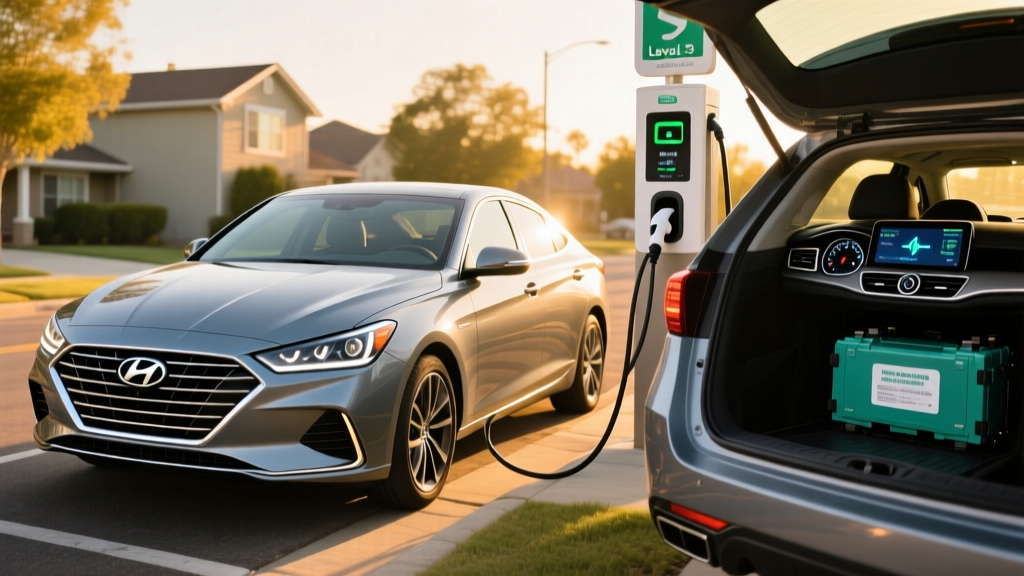
One advantage of PHEVs over full EVs: the charging infrastructure bar is much lower. You do not need a dedicated 48-amp Level 2 circuit to make a VW PHEV work.
| Level | Power (kW) | 0–100% Time | Equipment Needed |
|---|---|---|---|
| Level 1 (120V household) | ~1.4 kW | ~12–14 hours | Standard outlet (included cable) |
| Level 2 (240V) | 3.6 kW (onboard max) | ~3.5 hours | Level 2 EVSE, 20A+ circuit |
| DC Fast Charge | N/A | N/A | Not supported on VW PHEVs |
For most PHEV owners, a standard 120V outlet (Level 1) is sufficient. Plug in when you get home, and 12–14 hours later the ~19.7 kWh battery is full — more than enough for overnight replenishment. If you want faster top-ups or already have a Level 2 charger installed for another EV, the VW PHEV will accept up to 3.6 kW, filling in about 3.5 hours.
Key distinction: kW (kilowatts) measures the rate of energy flow — how fast you're charging. kWh (kilowatt-hours) measures total energy stored — the battery's capacity. A 3.6 kW charger delivering power for 3.5 hours puts roughly 12.6 kWh into the battery (minus charging losses).
Battery Longevity, Warranty, and Replacement Costs
Hybrid and PHEV battery longevity is the single most common concern among first-time electrified vehicle buyers. Here's what Volkswagen provides:
Volkswagen covers the high-voltage battery pack for 8 years or 100,000 miles (whichever comes first), consistent with the federal mandate for emissions-related components. In states that follow California Air Resources Board (CARB) standards — including California, New York, Massachusetts, and others — coverage may extend to 10 years or 150,000 miles. The warranty guarantees the battery will retain a minimum percentage of its original capacity (typically 70%) during the coverage period.
In real-world terms, PHEV battery degradation tends to be modest. Because the battery is relatively small and the vehicle's thermal management system keeps it within a safe operating window, most PHEV packs lose 10–15% of their original capacity over the first 8–10 years. That means a Tiguan eHybrid that originally delivered 35 miles of electric range might deliver 28–31 miles after a decade — still functional, just slightly reduced.
If a replacement is needed out of warranty, expect a PHEV battery pack to cost between $4,000 and $7,000 including labor, depending on the model and dealer. This is significantly less than a full EV battery replacement (which can run $10,000–$20,000+) because the PHEV pack is much smaller.
Reliability: What the Data Shows
Volkswagen's overall reliability ratings have been middling in recent years according to sources like Consumer Reports and J.D. Power. However, the PHEV powertrain components — particularly the electric motor and battery — have fewer moving parts than a conventional transmission and tend to be durable. The 1.5L turbo engine in VW's PHEVs is a proven design shared across the VW Group (Audi, Skoda, SEAT), which means parts availability and technician familiarity are strong.
The main reliability watch items for any PHEV are:
- Clutch actuator / powertrain coupling: The mechanism that blends electric and gas power can develop wear over high mileage
- Onboard charger: The 3.6 kW AC charger is an electronic component that can fail, though this is uncommon within warranty
- Thermal management system: Coolant loops that keep the battery at optimal temperature require periodic maintenance
For peace of mind, VW's certified pre-owned program extends powertrain coverage and is worth considering if buying a used Volkswagen hybrid model.
Pros and Cons of Volkswagen Hybrid Models
✅ Pros
- 35+ miles of electric-only range covers most commutes
- No range anxiety — gas engine for long trips
- Level 1 (120V) charging is sufficient overnight
- Strong build quality and refined interior
- Potential §30D tax credit eligibility (up to $7,500)
- Regenerative braking extends brake life
- Quiet, smooth electric driving in EV mode
❌ Cons
- No conventional (non-plug) hybrid option from VW
- No DC fast charging — limits public charging utility
- Limited model selection (Tiguan + GTE only)
- Higher MSRP than gas-only Tiguan
- Tax credit eligibility depends on sourcing rules that change
- Cargo space slightly reduced vs. gas model (battery placement)
- 3.6 kW onboard charger is slow vs. some competitors
Frequently Asked Questions
How many MPG does the Volkswagen Tiguan eHybrid get?
When the battery is depleted and you're driving in hybrid mode, expect roughly 33–36 MPG combined, with slightly better figures in city driving thanks to regenerative braking. When you factor in electric-only miles from nightly charging, your effective "MPG" can be far higher — some owners report using only a few gallons per month on short commutes.
How far can VW PHEVs go on electric only?
The 2026 Tiguan eHybrid delivers an estimated 35 miles of EPA-rated electric-only range. The Golf GTE, being lighter, manages roughly 38 miles. In cold weather (below 30°F), expect a 15–25% reduction in electric range due to battery chemistry and cabin heating demands.
Do Volkswagen hybrid models need to be plugged in?
VW's current U.S. hybrids are all plug-in hybrids (PHEVs). You don't have to plug them in — the gas engine and regenerative braking will keep the battery minimally charged — but you'll miss the entire point of the PHEV if you don't. Without plugging in, a PHEV operates as a heavy, less-efficient conventional hybrid.
Does the Tiguan eHybrid qualify for the $7,500 federal tax credit?
It may qualify for up to $7,500 under IRS §30D, but eligibility depends on your income (≤ $300K joint / ≤ $150K single), the vehicle's MSRP (must be ≤ $80,000 for SUVs), and whether the battery meets critical minerals and component sourcing thresholds. These sourcing rules tighten each year. Verify current eligibility at fueleconomy.gov and consult a tax professional.
What is the battery replacement cost for a VW PHEV?
Out-of-warranty high-voltage battery replacement for a Volkswagen PHEV typically runs $4,000–$7,000 including labor. However, most PHEV batteries last well beyond the 8-year/100,000-mile warranty period with only modest degradation (10–15% capacity loss). Complete failure within the first decade is rare.
Should I buy a VW PHEV or a full EV like the ID.4?
If you can charge at home and your daily driving is under 250 miles, the ID.4 (full EV) offers lower running costs, less maintenance, and a stronger federal tax credit case. If you take frequent road trips, lack reliable charging access, or want one vehicle that does everything without planning, the Tiguan eHybrid is the pragmatic choice. PHEVs are ideal bridge vehicles for buyers not yet ready to commit to full electric.
Does Volkswagen sell any conventional (non-plug-in) hybrids?
Not in the U.S. market as of 2026. Volkswagen has skipped the conventional HEV segment domestically, focusing on PHEVs and full EVs. If you want a no-plug hybrid SUV, the Toyota RAV4 Hybrid (39 MPG combined) or Honda CR-V Hybrid (40 MPG combined) are the segment leaders.