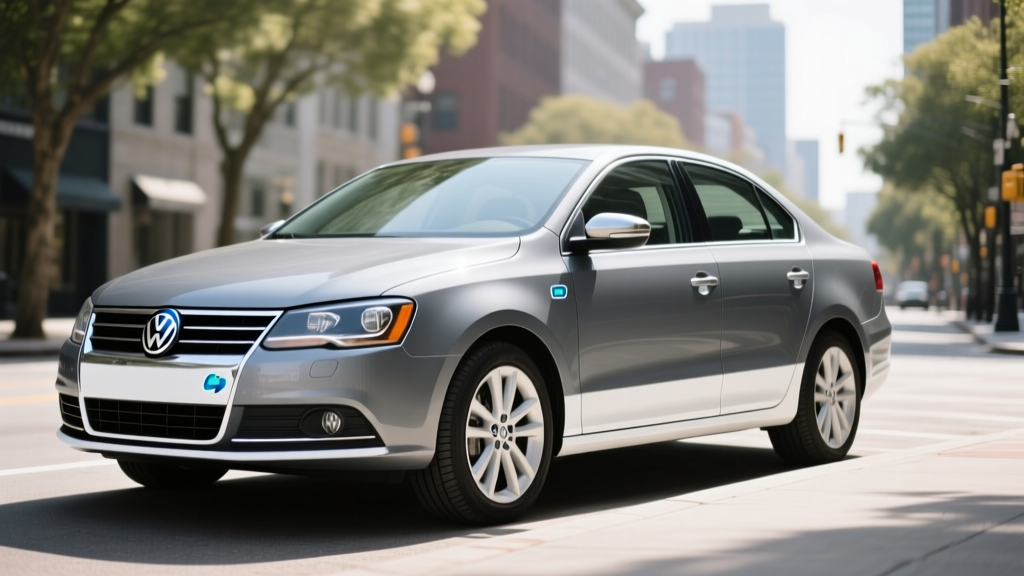
The 2013 Volkswagen Jetta Hybrid was VW's first serious entry into the compact hybrid sedan segment, pairing a turbocharged 1.4-liter engine with an electric motor to chase Toyota Prius-level efficiency in a more conventional package. Over a decade later, it remains a fixture on the used-car market for budget-conscious commuters. But with aging nickel-metal hydride and lithium-ion battery packs, discontinued production, and zero federal tax credit eligibility, is the 2013 Jetta Hybrid still a smart buy in 2026?
This guide covers every number that matters — EPA fuel economy, real-world MPG, powertrain specs, battery warranty status, replacement costs, and how this conventional hybrid (HEV) stacks up against modern PHEVs and full EVs for today's buyers.
HEV vs PHEV: What the 2013 Jetta Hybrid Actually Is
Before evaluating the car, it's critical to classify it correctly. The 2013 Volkswagen Jetta Hybrid is a conventional hybrid electric vehicle (HEV) — not a plug-in hybrid (PHEV) and not a battery electric vehicle (BEV).
| Feature | HEV (2013 Jetta Hybrid) | PHEV (e.g., Toyota Prius Prime) | BEV (e.g., Tesla Model 3) |
|---|---|---|---|
| Plug-in charging required? | No — charges via regenerative braking and engine | Yes — plug in for electric-only range | Yes — plug in for all driving |
| Electric-only range | Less than 1 mile at low speed | 25–44 miles typical | 250–400+ miles |
| Battery size | 1.1 kWh (nominal) | 8.8–13.6 kWh | 50–100 kWh |
| Federal tax credit (§30D) | Not eligible | Up to $7,500 (if eligible) | Up to $7,500 (if eligible) |
| Used EV credit (§25E) | Not eligible | Up to $4,000 (if eligible) | Up to $4,000 (if eligible) |
This distinction matters because many used-car shoppers see "hybrid" and assume they can plug it in. The 2013 Jetta Hybrid has no charge port. You fuel it exclusively at the gas pump, and the small battery recharges through regenerative braking and the gasoline engine.
EPA Fuel Economy and Real-World MPG
The headline number for the 2013 Jetta Hybrid is strong for its era. Here's the official breakdown from fueleconomy.gov:
| Driving Condition | EPA MPG |
|---|---|
| City | 42 MPG |
| Highway | 48 MPG |
| Combined | 45 MPG |
Unlike most conventional cars, the Jetta Hybrid actually achieves higher MPG on the highway than in the city. This is somewhat unusual for hybrids, which typically shine in stop-and-go traffic where regenerative braking recaptures the most energy. The Jetta Hybrid's turbocharged 1.4L engine is relatively efficient at steady-state cruising, and the 7-speed DSG transmission keeps RPMs low on the highway.
Real-World MPG: What Owners Actually Report
Based on aggregated owner data from Fuelly and long-term testing from the era, real-world fuel economy for the 2013 Jetta Hybrid clusters around 39–43 MPG combined in mixed driving. City-heavy commuters with lots of stop-and-go can see 44+ MPG, while aggressive highway driving at 75–80 mph can drop the number to the mid-30s.
In cold weather (below 30°F), expect a 5–10% reduction in fuel economy due to longer engine warm-up cycles, increased accessory load (heater, defroster), and reduced regenerative braking efficiency on cold battery cells. This is a smaller penalty than a full EV experiences in cold weather, but it's real.
Powertrain Specs: Engine, Motor, and Combined Output
| Specification | Detail |
|---|---|
| Engine | 1.4L turbocharged inline-4 (EA211 family) |
| Engine output | 150 hp / 184 lb-ft torque |
| Electric motor | 27 hp (20 kW), integrated between engine and transmission |
| Combined system output | 170 hp / 184 lb-ft torque |
| Transmission | 7-speed DSG dual-clutch automatic |
| 0–60 mph | ~8.5 seconds |
| Battery type | Lithium-ion (1.1 kWh nominal, ~0.6 kWh usable) |
| Battery location | Behind rear seat, intrudes slightly into trunk |
| Drivetrain | Front-wheel drive |
| Curb weight | ~3,330 lbs |
The powertrain is the 2013 Jetta Hybrid's most interesting feature. Unlike the Toyota Prius, which uses a continuously variable transmission (CVT) with a planetary gearset, VW paired its hybrid system with a 7-speed DSG. This gives the Jetta Hybrid a more direct, gear-driven feel — no rubber-band sensation under acceleration. The trade-off is that the DSG can be occasionally jerky at low-speed transitions between electric and gas power.
The 27-hp electric motor primarily assists during launch and fills in torque gaps during DSG shifts. It can propel the car on electric-only power at speeds up to about 44 mph, but only for very short distances (under one mile) on a fully charged battery. Think of it as a torque-fill assist, not a true EV mode.
Battery Lifespan, Warranty, and Replacement Cost
Original hybrid battery warranty: 8 years / 100,000 miles (10 years / 150,000 miles in CARB states including CA, CT, ME, MA, NJ, NY, OR, RI, VT, WA)
Current status (2026): All 2013 models are now outside the standard 8-year warranty window. Only vehicles registered in CARB states with under 150,000 miles may still have residual coverage, and even that window closed in 2023 for most.
The 2013 Jetta Hybrid's lithium-ion battery pack is compact — just 1.1 kWh nominal — and was engineered for shallow charge/discharge cycles rather than deep cycling. This is a key longevity advantage: because the battery management system (BMS) keeps the state of charge in a narrow middle band (roughly 30–70% SoC), the cells experience far less stress than a BEV battery that's regularly charged to 100%.
Real-World Battery Degradation
Owner reports and mechanic surveys suggest that 2013 Jetta Hybrid batteries are holding up reasonably well at the 10–13 year mark. Most units show 10–20% capacity loss, which in a 1.1 kWh pack translates to slightly less aggressive electric assist and marginally lower MPG — not a catastrophic failure. Complete battery failures are uncommon but not unheard of, typically triggered by individual cell imbalance or cooling system issues.
Battery Replacement Cost
If the hybrid battery does fail out of warranty, here's what to expect:
- New OEM battery from VW dealer: $2,500–$3,800 (parts + labor)
- Refurbished/remanufactured battery: $1,200–$2,000
- Individual cell module replacement: $400–$900 (if only 1–2 modules are bad — requires a shop with hybrid battery diagnostic capability)
Given that a clean 2013 Jetta Hybrid trades for roughly $5,000–$8,500 on the used market in 2026, a full OEM battery replacement can consume a significant chunk of the car's value. Budget for a refurbished unit or cell-level repair as the more financially rational option.
Used Pricing and Tax Credit Eligibility
The 2013 Jetta Hybrid was originally sold in two trims:
- SE: MSRP ~$25,790 (when new)
- SEL Premium: MSRP ~$28,590 (when new)
In 2026, used examples typically sell for $5,000–$8,500 depending on mileage, condition, and trim. Low-mileage SEL Premium models with documented battery health checks command the top of that range.
Tax Credit Reality
The 2013 Jetta Hybrid does not qualify for any current federal tax credit:
- §30D New Clean Vehicle Credit: Not applicable — this is a used vehicle, and the credit was never available for conventional HEVs regardless.
- §25E Used Clean Vehicle Credit: This credit (up to $4,000 or 30% of sale price) applies only to used BEVs and PHEVs with a minimum 4 kWh battery. The Jetta Hybrid's 1.1 kWh pack and HEV classification make it ineligible.
- State incentives: A handful of states offered hybrid rebates in 2013, but nearly all have expired or been redirected to PHEVs and BEVs. Check your state's current incentive database for any remaining programs.
Reliability and Common Issues
The 2013 Jetta Hybrid carries a mixed reliability reputation. The hybrid powertrain itself — the battery, electric motor, and power electronics — has proven more durable than skeptics expected. The weak points are largely the conventional VW components:
Pros
- 45 MPG combined EPA is excellent for a turbocharged sedan
- DSG transmission feels more engaging than a Prius CVT
- 170 hp combined output provides confident highway merging
- Quiet, solid ride quality typical of VW
- Hybrid battery proving long-lived with proper thermal management
- Spacious trunk for a compact hybrid (13.2 cu ft, slightly reduced by battery)
Cons
- DSG can be jerky at low-speed hybrid transitions
- Battery placement reduces trunk space and eliminates pass-through
- VW's DSG mechatronic unit is a known failure point ($1,500–$3,000 repair)
- Water pump and thermostat housing failures common on EA211 engine
- No plug-in capability — entirely gas-dependent
- Infotainment and interior materials feel dated by 2026 standards
- No federal tax credit available
The DSG mechatronic unit (the electrohydraulic brain of the dual-clutch transmission) deserves special attention. Failures are not epidemic, but they are documented across VW's DSG-equipped vehicles from this era. Symptoms include harsh shifts, failure to engage Drive, and flashing gear indicators. Diagnosis and replacement run $1,500–$3,000 at a specialist shop.
2013 Jetta Hybrid vs Modern Alternatives
If you're cross-shopping the 2013 Jetta Hybrid, you're likely also considering modern used hybrids, PHEVs, and entry-level EVs. Here's how it stacks up:
| Vehicle | Type | EPA MPG / MPGe | Used Price Range (2026) | Tax Credit Eligible? |
|---|---|---|---|---|
| 2013 VW Jetta Hybrid | HEV | 45 MPG combined | $5,000–$8,500 | No |
| 2017–2020 Toyota Prius | HEV | 52–56 MPG combined | $12,000–$18,000 | No |
| 2019–2022 Toyota Prius Prime | PHEV | 54 MPG + 25 mi EV | $18,000–$25,000 | §25E possible |
| 2018–2021 Hyundai Ioniq PHEV | PHEV | 52 MPG + 29 mi EV | $15,000–$22,000 | §25E possible |
| 2019–2021 Chevy Bolt EV | BEV | 259 mi range / 118 MPGe | $12,000–$18,000 | §25E up to $4,000 |
The 2013 Jetta Hybrid's primary advantage is entry price. At $5,000–$8,500, it's one of the cheapest ways to get into a 40+ MPG vehicle. The trade-off is age, no plug-in option, and the risk of DSG-related repairs.
Who Should Buy the 2013 Jetta Hybrid — and Who Shouldn't
Choose the 2013 Jetta Hybrid if:
- Your budget is under $9,000 and you need maximum MPG per dollar
- You commute in mixed city/highway driving and want 40+ MPG without plugging in
- You live in an apartment or lack access to home charging (making a PHEV or BEV impractical)
- You prefer a traditional driving feel over the CVT drone of a Prius
- You have access to a VW-aware independent mechanic for DSG and turbo maintenance
Look elsewhere if:
- You can stretch to $15,000+ for a newer Prius or Ioniq with better reliability records
- You have home charging access and could benefit from a PHEV's electric-only commute
- You want any federal tax credit (look at used BEVs or PHEVs eligible for §25E)
- You drive mostly highway miles at 75+ mph (the efficiency advantage narrows)
- You want modern safety tech (automatic emergency braking, lane-keeping) — not available on the 2013 Jetta
Frequently Asked Questions
How many MPG does the 2013 Volkswagen Jetta Hybrid get?
The EPA rates the 2013 Jetta Hybrid at 42 MPG city, 48 MPG highway, and 45 MPG combined. Real-world owners typically report 39–43 MPG combined, with city-heavy driving occasionally reaching 44+ MPG and aggressive highway driving dropping to the mid-30s.
Can the 2013 Jetta Hybrid drive on electric power only?
Technically yes, but only at very low speeds (under 44 mph) and for less than one mile. The 1.1 kWh battery and 27-hp motor are designed for torque assist, not meaningful electric-only driving. This is a conventional HEV, not a plug-in hybrid.
Is the 2013 Jetta Hybrid reliable?
The hybrid-specific components (battery, motor, power electronics) have proven durable. The main reliability concerns are the DSG mechatronic unit, water pump, and thermostat housing — all conventional VW issues. A pre-purchase inspection by a VW specialist is strongly recommended before buying.
What does a replacement hybrid battery cost?
A new OEM battery from a VW dealer runs $2,500–$3,800 installed. Refurbished units cost $1,200–$2,000, and individual cell module replacements (if only part of the pack is degraded) can be as low as $400–$900 at a hybrid specialist shop.
Does the 2013 Jetta Hybrid qualify for any tax credit?
No. As a conventional HEV, the 2013 Jetta Hybrid is not eligible for the federal §30D new vehicle credit or the §25E used clean vehicle credit. Both programs require a minimum 4 kWh battery and plug-in capability (PHEV or BEV). Some state-level hybrid incentives that existed in 2013 have since expired.
Should I buy this or a used Prius instead?
If your budget is strictly under $9,000, the Jetta Hybrid offers strong MPG for the price. If you can spend $12,000–$18,000, a 2017–2020 Toyota Prius delivers better MPG (52–56 combined), superior reliability history, and lower long-term maintenance risk. The Prius CVT also avoids the DSG mechatronic failure mode entirely.