If you're not ready to go fully electric but want to cut fuel costs, a hybrid is the logical middle ground. But the term "hybrid" now covers two fundamentally different powertrains: the conventional hybrid electric vehicle (HEV), which you never plug in, and the plug-in hybrid electric vehicle (PHEV), which gives you a usable battery-only range before the gas engine kicks in. Choosing between these types of hybrid cars — or deciding whether to leap straight to a battery-electric vehicle (BEV) — comes down to your daily mileage, charging access, and budget.
This guide breaks down exactly how each hybrid type works, what you'll actually spend on fuel, what federal incentives apply in 2026, and which powertrain fits your driving life.
What Are the Main Types of Hybrid Cars?
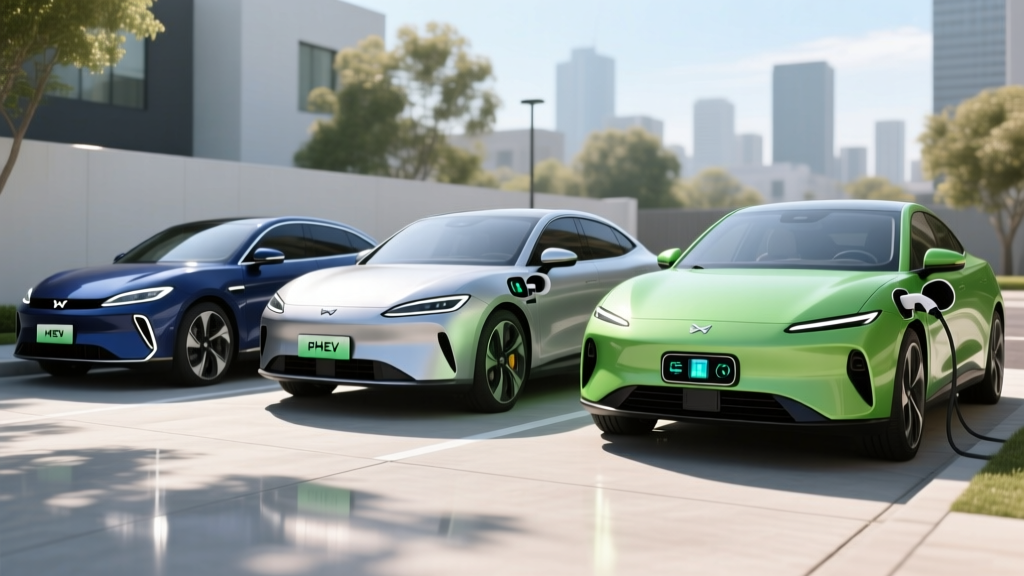
There are three electrified powertrains shoppers encounter on dealer lots today. Understanding the mechanical difference is the first step to picking the right one.
HEV vs PHEV vs BEV at a Glance
| Feature | HEV (Conventional Hybrid) | PHEV (Plug-In Hybrid) | BEV (Battery Electric) |
|---|---|---|---|
| Plugs in? | No | Yes (Level 1/2) | Yes (Level 1/2/DC) |
| Battery size | 0.5–2.0 kWh | 13–25 kWh (usable) | 50–120 kWh |
| Electric-only range | ~1 mi at low speed | 25–50 mi (EPA) | 220–400+ mi |
| Gas engine? | Yes (primary) | Yes (backup) | No |
| Federal tax credit (§30D) | No | Up to $7,500 (if eligible) | Up to $7,500 (if eligible) |
| Fuel cost per mile (avg) | ~$0.10–$0.13 | ~$0.04–$0.12 (varies) | ~$0.03–$0.06 |
Conventional Hybrids (HEV): How They Work and What They Deliver
A conventional hybrid pairs a gasoline engine with a small electric motor and a compact battery pack (typically 0.5–2.0 kWh). The battery charges through regenerative braking and the engine — you never plug it in. The electric motor assists during acceleration, allows engine-off coasting, and enables brief low-speed electric-only movement, but the gas engine remains the primary power source at all times.
Real-World Example: 2026 Toyota Prius (HEV)
The current-generation Prius remains the benchmark HEV. Here's what the numbers look like:
| Metric | Prius LE FWD | Prius XLE AWD |
|---|---|---|
| EPA City MPG | 57 | 53 |
| EPA Highway MPG | 56 | 54 |
| EPA Combined MPG | 57 | 54 |
| Combined HP | 196 | 196 |
| 0–60 mph | 7.2 sec | 7.0 sec |
| Base MSRP | $29,445 | $33,445 |
Source: fueleconomy.gov
Real-world MPG note: Hybrids often exceed their EPA city rating in stop-and-go traffic because regenerative braking recaptures energy that a gas car wastes as heat. On the highway, where regen opportunities are fewer, expect numbers closer to — or slightly below — the EPA highway sticker. In mixed suburban driving, many Prius owners report 55–60 MPG without trying.
Plug-In Hybrids (PHEV): Electric Commute, Gas Road Trip
A PHEV carries a significantly larger battery (typically 13–25 kWh usable) and a more powerful electric motor, giving it a genuine electric-only driving range of 25 to 50 miles before the gasoline engine starts. Once the battery is depleted, the car operates as a conventional hybrid. You can plug in at home (Level 1 or Level 2) to recharge the battery, but you never have to — the gas engine covers you on longer trips.
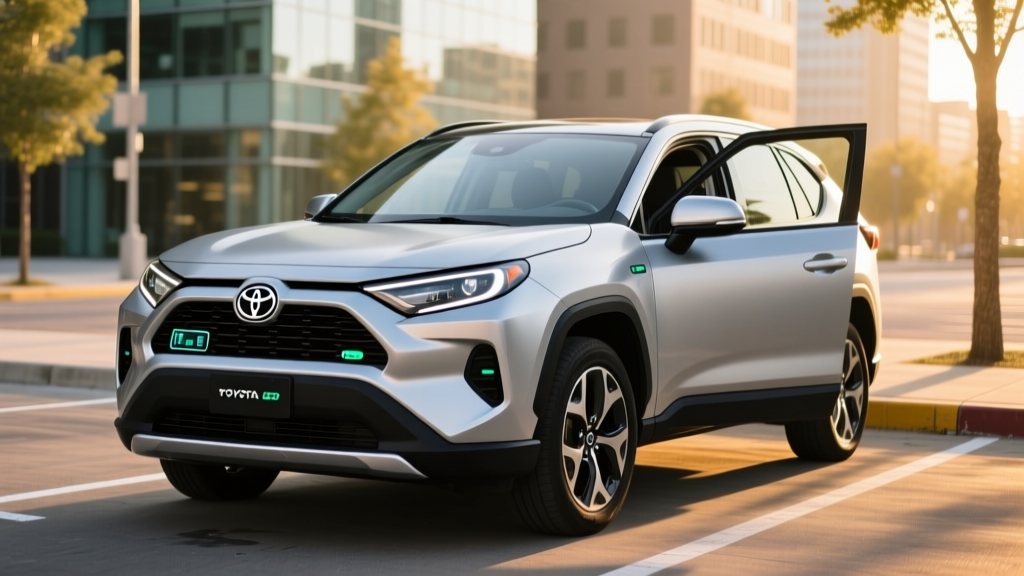
Real-World Example: 2026 Toyota RAV4 Prime (PHEV)
| Specification | RAV4 Prime SE | RAV4 Prime XSE |
|---|---|---|
| Battery (usable) | 18.1 kWh (NMC) | 18.1 kWh (NMC) |
| EPA Electric-Only Range | 42 mi | 42 mi |
| Total Combined Range | ~600 mi | ~600 mi |
| MPGe (electric mode) | 94 MPGe | 94 MPGe |
| Gas-Only MPG (combined) | 38 | 38 |
| Combined HP | 302 | 302 |
| 0–60 mph | 5.7 sec | 5.7 sec |
| Level 2 Charge Time (0–100%) | ~2.5 hr (6.6 kW) | ~2.5 hr (6.6 kW) |
| DC Fast Charging? | No | No |
| Base MSRP | $46,325 | $49,850 |
Source: fueleconomy.gov
Electric-only range reality check: The EPA's 42-mile figure assumes moderate temperatures and mixed driving. In winter (below 35°F), expect that range to drop to roughly 30–35 miles due to cabin heating demands and reduced battery efficiency. Highway-speed electric driving at 70+ mph will also consume the battery faster than the EPA test cycle suggests.
DC fast charging: Most PHEVs, including the RAV4 Prime, do not support DC fast charging. You charge at home on a 120V outlet (Level 1, ~4 mph of range added) or a 240V Level 2 charger. The battery is small enough that overnight Level 1 charging often suffices.
Other Hybrid Variants Worth Knowing
Beyond the standard HEV and PHEV, two additional hybrid architectures appear in 2026 showrooms:
Mild Hybrid (MHEV)
A 48-volt system that provides a small torque boost and enables smoother stop-start, but cannot propel the car on electric power alone. Examples include certain trims of the Ram 1500 and Mercedes-Benz models. Fuel savings are modest — typically 1–2 MPG over a conventional gas powertrain.
Extended-Range EV (EREV)
The gas engine never drives the wheels — it acts solely as a generator to recharge the battery. The wheels are always driven electrically. The BMW iX5 (if available in your market) and the upcoming Ram 1500 REV with range extender follow this architecture. EREVs blur the line between PHEV and BEV, offering 50+ miles of pure electric range with the security of an onboard generator.
Tax Credits, Pricing, and Ownership Costs
Not all hybrids qualify for federal incentives. Here's how the rules break down under the current IRS §30D framework:
§30D Federal Tax Credit Rules (2026)
- HEV (conventional hybrid): Does NOT qualify. The credit applies only to plug-in vehicles with ≥7 kWh battery capacity.
- PHEV: May qualify for up to $7,500 if all criteria are met.
- BEV: May qualify for up to $7,500 if all criteria are met.
PHEV eligibility checklist:
- Battery capacity ≥ 7 kWh (most PHEVs meet this)
- Vehicle MSRP: ≤ $55,000 (sedans/wagons) or ≤ $80,000 (SUVs/trucks/vans)
- Buyer income: ≤ $150,000 (single), $225,000 (head of household), $300,000 (joint)
- Battery components and critical minerals must meet phased-in domestic sourcing thresholds
- Vehicle must undergo final assembly in North America
- Credit can be transferred to the dealer at point of sale for an upfront price reduction
Always verify current eligibility on irs.gov — sourcing requirements tighten annually and specific model eligibility changes.
Total cost of ownership comparison (5-year estimate, 15,000 mi/yr):
| Cost Factor | HEV (Prius) | PHEV (RAV4 Prime) | Gas (RAV4 LE AWD) |
|---|---|---|---|
| Purchase Price (base) | $29,445 | $46,325 | $32,575 |
| Tax Credit Applied | $0 | Up to $7,500* | $0 |
| 5-Yr Fuel Cost | ~$5,800 | ~$4,200† | $10,500 |
| 5-Yr Maintenance | ~$2,400 | ~$2,200 | ~$3,000 |
| Net 5-Yr Cost (est.) | ~$37,645 | ~$45,225 | ~$46,075 |
*Assumes full §30D eligibility. †Assumes ~80% of driving done on electricity at $0.14/kWh. Gas at $3.50/gal. Your numbers will vary. Source: fueleconomy.gov calculator.
Battery Longevity, Warranty, and Replacement Costs
Battery durability is the number-one concern for hybrid buyers. Here's what the data shows:
Hybrid Battery Warranty & Lifespan
| Brand | Warranty | Expected Lifespan | Replacement Cost (out of warranty) |
|---|---|---|---|
| Toyota (HEV) | 10 yr / 150,000 mi | 15–20 years / 200k+ mi | $2,000–$4,000 |
| Toyota (PHEV) | 10 yr / 150,000 mi | 12–18 years | $5,000–$8,000 |
| Hyundai/Kia (HEV/PHEV) | 10 yr / 100,000 mi | 12–18 years | $3,000–$6,000 |
| Ford (PHEV) | 8 yr / 100,000 mi | 10–15 years | $5,000–$7,000 |
Why hybrid batteries last so long: HEV battery packs are small and rarely cycled deeply — they typically operate between 40% and 80% state of charge, which is the gentlest zone for lithium-ion chemistry. PHEV batteries see deeper cycles but are still buffered by the manufacturer (you never use 100% of the cells). Toyota's track record is particularly strong: Prius taxis routinely surpass 300,000 miles on the original battery pack.
What triggers replacement: The warranty covers the battery if it drops below roughly 60–70% of original capacity (varies by brand). Out-of-pocket replacement is uncommon within the first 15 years for most owners. Third-party refurbishment services now offer rebuilt hybrid batteries for $1,000–$2,500, further reducing long-term risk.
Reliability: How Do Hybrids Compare?
Hybrids consistently rank among the most reliable vehicles in long-term surveys. According to Consumer Reports' 2025 Annual Auto Reliability data, Toyota and Lexus hybrids dominate their segments, with the Prius and RAV4 Hybrid frequently earning top scores. The hybrid powertrain itself is simpler than a conventional automatic transmission — there's no torque converter, no multi-speed gearbox in most designs (Toyota uses a planetary gearset called e-CVT), and regenerative braking extends the life of friction brake pads to 80,000–100,000+ miles.
The main reliability risk isn't the hybrid system — it's the complexity of modern infotainment and electronics that affect all new cars regardless of powertrain.
Decision Framework: Which Hybrid Type Fits You?
✅ Choose an HEV If...
- You don't have access to home or workplace charging
- You want maximum simplicity — no plug, no new habits
- Your budget is under $35,000
- You drive mostly in the city (where regen braking shines)
- You want proven, decade-long reliability with minimal risk
✅ Choose a PHEV If...
- You can charge at home (even a standard 120V outlet works)
- Your daily commute is under 40 miles round-trip
- You take occasional road trips and don't want range anxiety
- You want to drive mostly electric now but aren't ready for full BEV
- You qualify for the §30D tax credit (offsetting the higher MSRP)
✅ Choose a BEV If...
- You have reliable Level 2 home charging
- Your daily driving is under 250 miles
- You want the lowest per-mile fuel and maintenance cost
- You want to eliminate gasoline entirely
- DC fast-charging infrastructure exists along your common routes
Frequently Asked Questions
How many MPG does a hybrid get compared to a gas car?
Conventional hybrids typically deliver 45–57 MPG combined, roughly 50–100% better than a comparable gas-only vehicle. The 2026 Toyota Prius achieves an EPA-estimated 57 MPG combined, while a similar gas-powered compact sedan averages 28–32 MPG combined. In city driving, hybrids have an even larger advantage because regenerative braking recovers energy that gas cars waste.
How far can a PHEV go on electric only?
Current PHEVs offer between 25 and 50 miles of EPA-rated electric-only range. The RAV4 Prime delivers 42 miles, the Hyundai Tucson PHEV offers 33 miles, and the Jeep Wrangler 4xe provides 21 miles. Real-world range drops 15–25% in cold weather (below 35°F) or at sustained highway speeds above 70 mph.
Do conventional hybrids need to be plugged in?
No. A conventional HEV charges its battery entirely through regenerative braking and the gasoline engine. You fuel it like any other gas car and never need a charger or outlet. Only PHEVs and BEVs require plug-in charging.
Is a hybrid battery expensive to replace?
Out-of-warranty hybrid battery replacement typically costs $2,000–$4,000 for an HEV and $5,000–$8,000 for a PHEV. However, most hybrid batteries last 15–20 years, and many owners never face this expense. Federal law mandates that hybrid batteries carry a warranty of at least 8 years/80,000 miles (10 years/150,000 miles in California-emissions states), covering capacity loss below the manufacturer's threshold.
Does a hybrid qualify for a tax credit?
Conventional hybrids (HEVs) do not qualify for the federal §30D clean vehicle credit — it applies only to plug-in vehicles. PHEVs may qualify for up to $7,500, subject to MSRP caps ($55,000 for cars, $80,000 for SUVs/trucks), buyer income limits, battery sourcing requirements, and North American final assembly. Always check the latest eligibility details at irs.gov before purchasing.
What is MPGe and how do I read it for a PHEV?
MPGe (miles per gallon equivalent) measures how far a vehicle travels on the amount of electricity equal to one gallon of gasoline (33.7 kWh). The RAV4 Prime's 94 MPGe means it's quite efficient in electric mode. However, MPGe only applies when you're driving on battery power — once the gas engine starts, you switch to standard MPG (38 combined for the RAV4 Prime). For daily cost calculations, focus on your electric-mode miles and local electricity rate.
Hybrid vs PHEV vs EV — which is right for me?
If you lack home charging, an HEV is the safest choice — zero lifestyle change, strong fuel savings. If you can charge at home and your commute is under 40 miles, a PHEV lets you drive electric daily while keeping gas flexibility for road trips. If you have Level 2 home charging, drive under 250 miles daily, and want the lowest operating cost, a BEV is the long-term winner. The "right" answer depends on your charging access, daily mileage, and trip patterns — not on which technology is newest.