The Hybrid Landscape in 2026: More Choices Than Ever
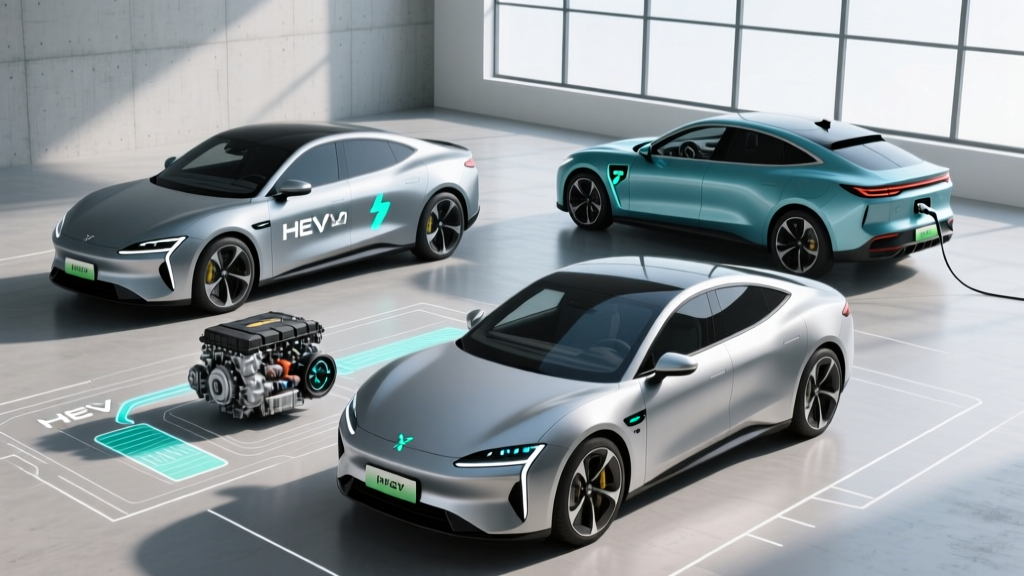
Walk into any dealership today and you'll encounter at least three different hybrid powertrains — sometimes on the same model. The term "hybrid" no longer means just one thing. Automakers now deploy mild-hybrid assist, full parallel hybrids, plug-in hybrids with 30-50 miles of electric range, and extended-range electric vehicles that use an engine purely as a generator. Each architecture delivers a fundamentally different ownership experience.
This guide breaks down every type of hybrid engine available to U.S. buyers in 2026, with exact EPA fuel economy figures, battery capacities, charging requirements, pricing, and federal tax credit eligibility. Whether you're trying to eliminate range anxiety, maximize city MPG, or find a bridge to full electrification, the right hybrid type depends on your driving pattern — not marketing claims.
Mild Hybrid (MHEV): The Invisible Assistant
A mild-hybrid system pairs a small 48-volt electric motor-generator with a conventional internal combustion engine. The electric motor cannot propel the vehicle on its own — it assists during acceleration, enables smoother stop-start, and recovers energy during braking. Think of it as a more sophisticated alternator that shaves 5-10% off fuel consumption without any change in driver behavior.
You'll find MHEV systems in vehicles like the 2026 Ram 1500 with the 3.0L Hurricane inline-six turbo (which uses a 48V eTorque system) and several European luxury models from Audi, BMW, and Mercedes-Benz. The battery is typically under 1 kWh — small enough to package without sacrificing cargo space.
- Battery capacity: 0.5–1.0 kWh (48V system)
- Electric-only driving: No
- Plug-in charging: No
- Fuel economy benefit: ~5–10% improvement over non-hybrid equivalent
- Federal tax credit: Not eligible
Mild hybrids exist because they're cheap to engineer and add minimal weight. If you see a vehicle labeled "hybrid" with only a 1-2 MPG improvement over its gas sibling, it's likely a MHEV. There's nothing wrong with that — the stop-start refinement alone is worthwhile — but don't expect Prius-level efficiency.
Full Hybrid (HEV): The Self-Charging Workhorse
The full hybrid — often called a "conventional hybrid" or "self-charging hybrid" — is the architecture Toyota perfected with the Prius. A larger battery (typically 1.0–2.0 kWh) and more powerful electric motor work in parallel or series with the gas engine. The vehicle can drive short distances on electric power alone at low speeds, but the battery recharges exclusively through regenerative braking and the engine. You never plug it in.
This is the most popular hybrid type in America for good reason: it requires zero behavioral change while delivering dramatic fuel economy gains, especially in city driving where regenerative braking and electric-only low-speed operation shine.
| Model | City MPG | Highway MPG | Combined MPG | Battery | Combined HP |
|---|---|---|---|---|---|
| Toyota Prius LE | 57 | 56 | 57 | 1.0 kWh NiMH | 196 |
| Toyota Camry Hybrid LE | 53 | 50 | 52 | 1.0 kWh NiMH | 225 |
| Honda CR-V Hybrid Sport-L | 43 | 36 | 40 | 1.1 kWh Li-ion | 204 |
| Hyundai Tucson Hybrid Limited | 38 | 38 | 38 | 1.5 kWh Li-ion | 232 |
| Ford Maverick Hybrid | 42 | 33 | 38 | 1.1 kWh Li-ion | 191 |
HEV Pricing and Tax Credits
Conventional hybrids do not qualify for the federal §30D new clean vehicle tax credit — that credit is reserved for plug-in vehicles with batteries ≥7 kWh that meet sourcing, MSRP, and income requirements. However, HEVs cost only $1,000-$3,000 more than their gas equivalents, and the fuel savings typically pay back that premium within 2-4 years for drivers covering 12,000+ miles annually.
A 2026 Toyota Prius LE starts at approximately $29,445 MSRP. A Camry Hybrid LE begins around $30,495. These prices place them well within reach of budget-conscious buyers who want efficiency without plug-in infrastructure.
Plug-In Hybrid (PHEV): The Best of Both Worlds
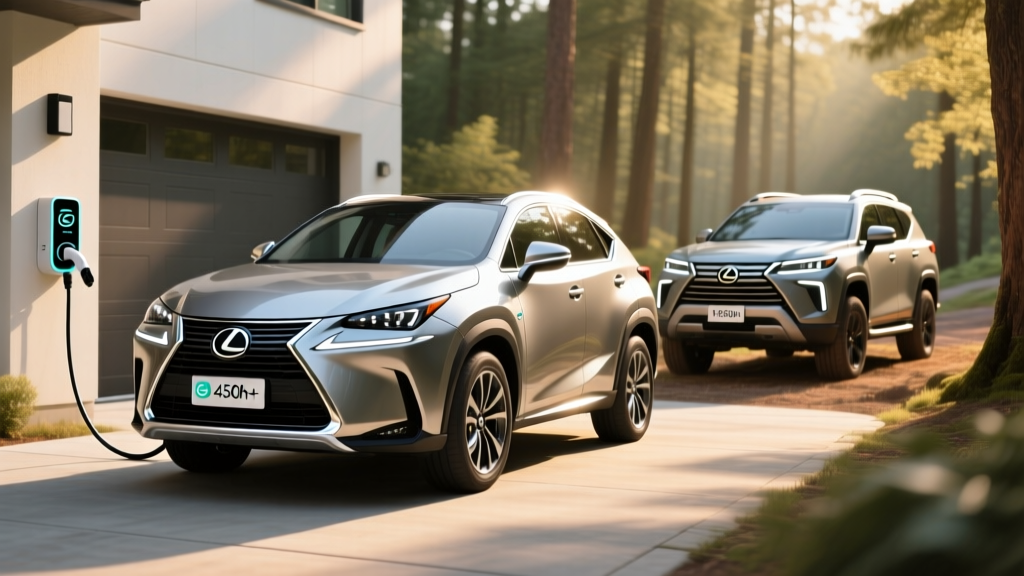
A plug-in hybrid electric vehicle carries a significantly larger battery — typically 12–25 kWh usable — and a more powerful electric motor capable of sustained highway-speed electric driving. You charge it from a wall outlet or Level 2 charger, and it delivers 25–50 miles of pure electric range before the gas engine seamlessly engages. Once the battery depletes, it operates as a conventional hybrid.
The PHEV is the ideal solution for drivers who want daily electric commuting but need the freedom for 400+ mile road trips without charging-infrastructure anxiety. Charge at home overnight, drive to work on electrons, and the gas engine covers everything else.
| Model | EV Range (mi) | Battery (kWh usable) | Combined MPG (gas) | Combined HP | Base MSRP |
|---|---|---|---|---|---|
| Toyota RAV4 Prime SE | 42 | 18.1 | 38 | 302 | $45,450 |
| Toyota Prius Prime SE | 44 | 13.6 | 52 | 220 | $34,070 |
| Chrysler Pacifica Hybrid | 32 | 16.0 | 30 | 260 | $51,095 |
| Hyundai Tucson PHEV Limited | 33 | 13.8 | 35 | 261 | $40,825 |
| Jeep Wrangler 4xe | 22 | 17.3 | 20 | 375 | $52,695 |
PHEV Charging: What You Need to Know
Most PHEVs charge via a standard 120V household outlet (Level 1) in 5-12 hours, easily covering overnight replenishment. Level 2 (240V) charging cuts this to 2-4 hours. Critically, most PHEVs do not support DC fast charging — the battery is too small to justify the hardware cost and thermal management complexity. The notable exceptions include some European models and the Mitsubishi Outlander PHEV, which supports DC fast charging at up to 22 kW (still far slower than a BEV's 150+ kW capability).
If you lack access to home or workplace charging, a PHEV's electric range becomes irrelevant — you'll operate it as a heavy, less-efficient HEV. Verify your charging situation before paying the PHEV premium.
PHEV Federal Tax Credit Eligibility
Under current IRS §30D rules, qualifying PHEVs can receive up to $7,500 in federal tax credits (or a point-of-sale rebate as of 2024+), but eligibility depends on several factors that change frequently:
- Battery capacity: Must be ≥7 kWh (most PHEVs meet this)
- MSRP caps: SUVs/vans/pickups ≤$80,000; sedans ≤$55,000
- Buyer income caps: $150K single / $225K head of household / $300K joint filers
- Battery component & critical mineral sourcing: Must meet escalating domestic-content thresholds — many PHEVs from Asian and European automakers have lost partial or full credit eligibility as these requirements tightened through 2025-2026
- Final assembly: Must occur in North America
Always verify current eligibility on IRS.gov before purchasing. The fueleconomy.gov tax credit tool also provides model-specific guidance. The RAV4 Prime and Prius Prime, assembled in Japan, have faced credit limitations under the final-assembly requirement — a crucial factor in your total cost calculation.
Extended-Range Electric Vehicle (EREV): The Series Hybrid
An EREV is technically a hybrid, but it drives like an EV 100% of the time. The gas engine never turns the wheels — it serves only as a generator to recharge the battery when it depletes. The electric motor provides all propulsion, delivering smooth, instant-torque acceleration identical to a battery-electric vehicle.
The most prominent 2026 EREV is the BMW iX5 Hydrogen (in limited markets) and several Chinese-market models from BYD and Li Auto. In the U.S., EREV options remain limited, though the architecture is gaining traction among automakers seeking to deliver EV driving dynamics without range anxiety. The Mazda MX-30 R-EV (available in select markets) uses a rotary engine as a range extender with approximately 53 miles of electric range from a 17.8 kWh battery.
EREVs appeal to drivers who want the EV experience — one-pedal driving, silent operation, zero torque lag — but who regularly exceed 250+ miles in a single trip or lack reliable fast-charging infrastructure along their routes.
Hybrid Engine Types Side by Side: Which Architecture Fits You?
Choose HEV If:
- You cannot install a home charger (apartment, street parking)
- You want maximum MPG with zero behavioral change
- Your budget is under $35,000
- You drive 12,000-20,000 miles/year in mixed conditions
- You prioritize proven reliability and low maintenance costs
Choose PHEV If:
- You have home Level 2 charging and a ≤40-mile commute
- You want daily electric driving plus road-trip flexibility
- You qualify for the §30D tax credit on your chosen model
- You're not ready to rely on public charging infrastructure
- You want to "test drive" the EV lifestyle before committing to a BEV
Choose MHEV If:
- You're buying a truck or luxury vehicle where MHEV is the only hybrid option
- You want marginal efficiency gains without cost premium
- Smoother stop-start is your primary goal
Choose BEV (Full EV) If:
- You have reliable home charging and your daily driving is under 250 miles
- You want zero tailpipe emissions and minimal maintenance
- You want the lowest per-mile fuel cost (~$0.04/mile on home electricity vs $0.12/mile for hybrid gas)
- You're ready to plan road trips around DC fast-charging networks
Battery Longevity, Warranty, and Replacement Costs
Hybrid battery anxiety remains the top concern for first-time hybrid buyers. Here's what the data shows after two decades of real-world hybrid operation:
- Minimum coverage: 8 years / 100,000 miles (required by EPA/CARB for emissions-related components)
- CARB states: 10 years / 150,000 miles in California and states adopting California emissions standards
- Toyota: 10 years / 150,000 miles nationwide on all 2020+ hybrid batteries
- Hyundai/Kia: 10 years / 100,000 miles (lifetime in some model years for original owners)
- Honda: 8 years / 100,000 miles (10/150K in CARB states)
- Capacity threshold: Warranty typically triggers if battery falls below 60-70% of original capacity
Real-World Battery Lifespan
Toyota Prius taxis routinely exceed 300,000 miles on the original hybrid battery. NiMH batteries (used in most Toyota HEVs) degrade more gracefully than early lithium-ion packs, often retaining 80%+ capacity after 150,000 miles. PHEV lithium-ion batteries experience more measurable degradation because they cycle through deeper discharge ranges daily.
If your hybrid battery fails outside warranty, replacement costs range from approximately $2,000-$4,000 for a conventional HEV (Prius, Camry Hybrid) to $5,000-$9,000 for a PHEV battery pack. Third-party refurbished and aftermarket hybrid batteries are increasingly available at 40-60% below OEM pricing, making out-of-warranty replacement more affordable than many buyers fear.
Hybrid Reliability Track Record
Hybrids consistently rank among the most reliable vehicle categories in Consumer Reports and J.D. Power dependability studies. The planetary gearset in Toyota's Hybrid Synergy Drive has no clutches, belts, or friction bands to wear — it's one of the most durable transmissions ever engineered. Regenerative braking also reduces wear on friction brake pads, with many hybrid owners reporting original brake pads at 80,000+ miles.
The primary reliability risk in older hybrids is the battery cooling fan (a $200-$400 repair) and inverter coolant pump — both far less costly than the engine or transmission failures common in conventional vehicles at similar mileage.
Total Cost of Ownership: Hybrid vs PHEV vs Gas vs BEV
| Cost Factor | Gas (30 MPG) | HEV (50 MPG) | PHEV (35 mi EV) | BEV (300 mi) |
|---|---|---|---|---|
| Fuel / Electricity | $7,000 | $4,200 | $2,800 | $2,400 |
| Maintenance | $3,500 | $2,800 | $2,600 | $1,500 |
| Purchase Premium (vs gas) | $0 | +$2,000 | +$6,000 | +$8,000 |
| Tax Credit | $0 | $0 | $0–$7,500* | $0–$7,500* |
| Net 5-Year Cost Delta | Baseline | Saves ~$500 | Saves ~$2,100–$6,100 | Saves ~$3,100–$9,100 |
*Tax credit assumes full §30D eligibility. Gas priced at $3.50/gal; electricity at $0.16/kWh. PHEV assumes 70% of miles driven on electricity. Actual results vary significantly by driving pattern, local fuel/electricity prices, and credit eligibility.
Frequently Asked Questions
Do conventional hybrids need to be plugged in?
No. A full hybrid (HEV) like the Toyota Prius or Honda CR-V Hybrid charges its battery exclusively through regenerative braking and the gas engine. You fuel it like any other car. Only plug-in hybrids (PHEVs) require or benefit from external charging.
How many MPG does a typical hybrid get?
Compact and midsize HEVs deliver 38-57 MPG combined per EPA estimates, with city MPG often higher than highway due to regenerative braking. The 2026 Toyota Prius LE leads at 57 MPG combined. SUV hybrids like the CR-V Hybrid achieve 38-40 MPG combined. Real-world city driving often exceeds EPA estimates by 3-5 MPG, while sustained highway driving at 75+ mph may fall 3-5 MPG short.
How far can a PHEV drive on electric power alone?
Current PHEVs offer 22–50 miles of EPA-rated electric-only range. The Prius Prime leads at 44 miles; the RAV4 Prime delivers 42 miles. In real-world conditions, expect 80-100% of rated range in mild weather and 60-80% in freezing temperatures when cabin heating draws from the battery. Highway-speed electric driving (70+ mph) also reduces range versus the EPA test cycle.
Is a hybrid more reliable than a gas car?
Data from Consumer Reports and J.D. Power consistently shows hybrids matching or exceeding conventional vehicle reliability. Toyota's hybrid system, with its planetary gearset and absence of traditional transmission wear components, is among the most durable powertrains in production. The main long-term cost risk — the hybrid battery — is covered for 8-10 years / 100,000-150,000 miles and frequently lasts well beyond warranty.
Does any hybrid qualify for a federal tax credit?
Conventional hybrids (HEVs) do not qualify for the §30D federal tax credit. Qualifying PHEVs may receive up to $7,500, but eligibility depends on battery sourcing requirements, MSRP caps ($55K sedans / $80K SUVs), buyer income limits, and North American final assembly. Many popular PHEVs from Toyota and Hyundai (assembled overseas) have limited or no credit eligibility under current rules. Always check IRS.gov for the latest qualified vehicle list before purchasing.
What is the hybrid battery replacement cost?
HEV battery replacement runs $2,000-$4,000 at a dealership; PHEV replacement ranges from $5,000-$9,000 depending on battery size. Refurbished and aftermarket options can reduce this by 40-60%. However, widespread data shows most hybrid batteries outlast 150,000-200,000 miles — many original Prius batteries are still in service at 250,000+ miles. Battery failure before 100,000 miles is uncommon and covered under warranty.
Should I buy a hybrid or just go full EV?
Choose a BEV if you have reliable home charging, your daily driving stays under 250 miles, and you're comfortable planning road trips around DC fast-charging networks. Choose a PHEV if you want electric commuting but take frequent long trips through areas with sparse charging. Choose an HEV if you lack home charging access or want maximum simplicity. The "right" answer depends entirely on your charging access, driving patterns, and budget — not on which technology is "better" in the abstract.