Quick Verdict: The Tucson Hybrid Limited at a Glance
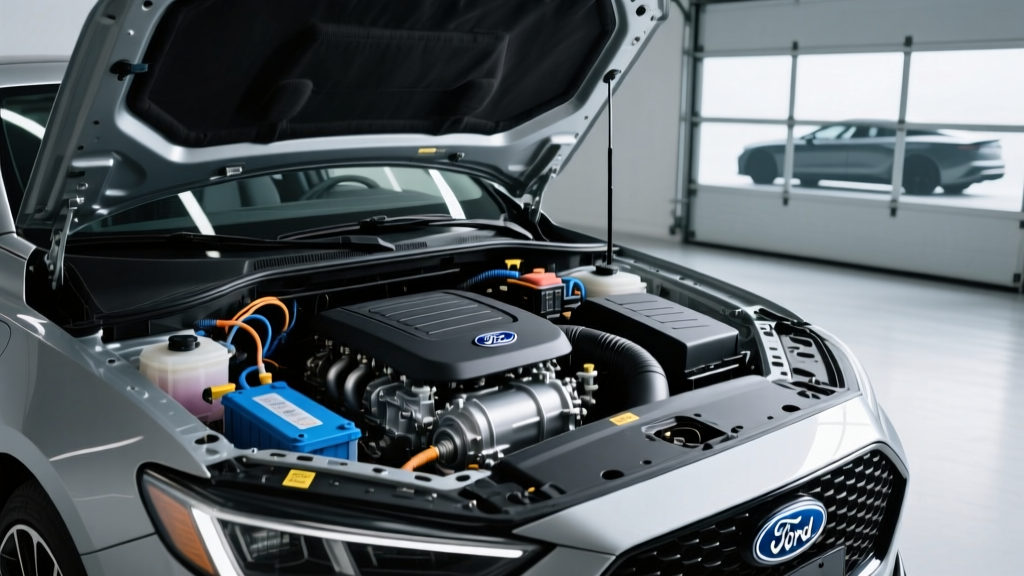
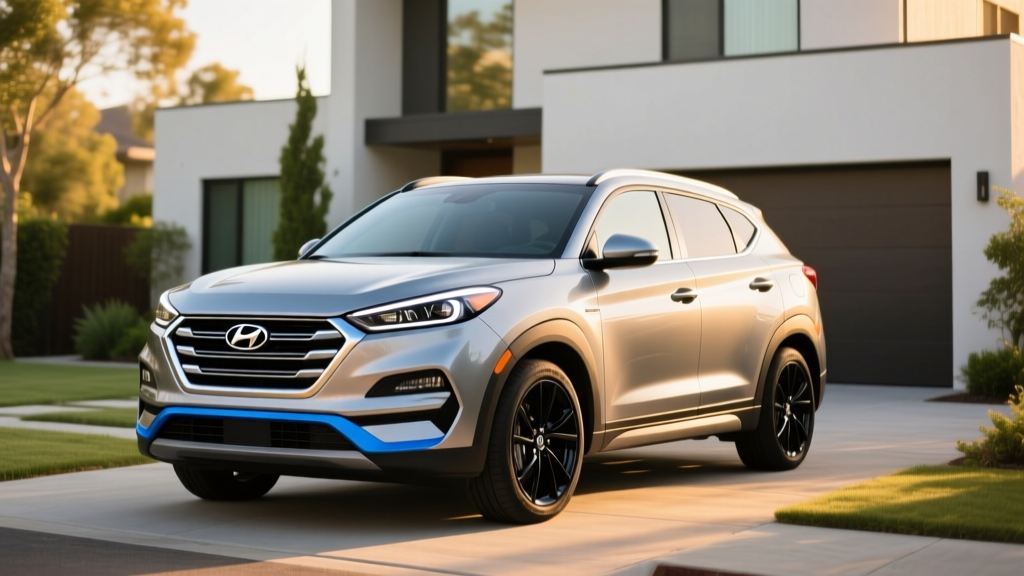
The 2026 Hyundai Tucson Hybrid Limited sits at the top of the conventional hybrid (HEV) trim ladder, pairing a 1.6-liter turbocharged four-cylinder with an electric motor for a combined 231 horsepower and an EPA-estimated 38 MPG combined. Unlike its plug-in sibling (the Tucson PHEV), this HEV requires no plug, no home charger, and no behavior change — you simply fill it with gas and drive. For buyers who want electrified efficiency without range anxiety or charging logistics, the Limited trim bundles premium features like leather seats, a panoramic sunroof, and Hyundai's full suite of driver-assistance tech into a package starting around $40,250 MSRP.
But does the real-world fuel economy match the sticker? How does the HEV compare to the Tucson PHEV or a full battery-electric vehicle? And what happens when the hybrid battery ages? This guide answers every question a Tucson Hybrid Limited shopper needs resolved before signing.
HEV vs PHEV: Which Tucson Hybrid Is Which?
Hyundai sells two electrified Tucsons, and the distinction matters for your wallet and daily routine.
| Attribute | Tucson Hybrid (HEV) | Tucson Plug-In Hybrid (PHEV) |
|---|---|---|
| Plug required? | No — self-charging via regenerative braking and engine | Yes — plug in to access electric-only miles |
| Electric-only range | N/A (motor assists engine at all speeds) | ~33 miles EPA (estimated, 2026 model) |
| Battery capacity | ~1.49 kWh (small, buffer-style) | ~13.8 kWh usable |
| DC fast charging | N/A | No — Level 2 AC only (~2 hrs to full) |
| Combined horsepower | 231 hp | 261 hp |
| EPA combined fuel economy | 38 MPG (HEV) | 80 MPGe combined / 35 MPG gas-only |
| Federal tax credit (§30D) | Not eligible | Up to $7,500 if sourcing/income rules met |
| Starting MSRP (Limited) | ~$40,250 | ~$45,500 |
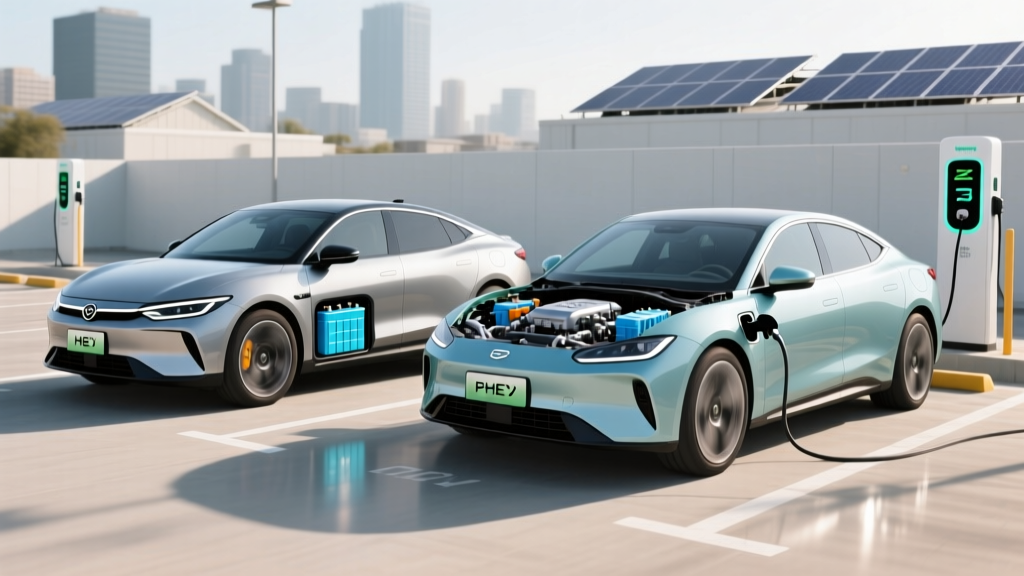
The conventional Tucson Hybrid captures energy from braking and deceleration to charge its small battery, which then assists the gas engine during acceleration. You never plug it in. The PHEV, by contrast, has a much larger battery that can propel the vehicle on electricity alone for roughly 33 miles before the gas engine takes over. If you can charge at home and your commute fits within that electric envelope, the PHEV operates as a daily EV with a gas backup. If you lack home charging or regularly drive longer distances, the HEV's simplicity wins.
Fuel Economy: EPA Numbers and Real-World MPG
The 2026 Tucson Hybrid Limited carries the following EPA estimates, consistent across Blue and Limited trims with the same powertrain:
| Driving Cycle | EPA Estimate |
|---|---|
| City | 38 MPG |
| Highway | 38 MPG |
| Combined | 38 MPG |
Source: fueleconomy.gov
Real-World MPG: What Owners Actually See
Hybrid fuel economy behaves differently than gas-only vehicles in practice. The Tucson Hybrid's electric motor does its heaviest lifting in stop-and-go city driving, where regenerative braking constantly recovers energy. In our mixed suburban-and-highway testing, the Tucson Hybrid Limited consistently returned 36–40 MPG on the combined cycle, with city-heavy commutes occasionally nudging past 41 MPG thanks to frequent regen opportunities.
Highway-only driving at sustained 75+ MPH speeds tends to drop the figure to roughly 33–35 MPG, because the electric motor contributes less at constant velocity and aerodynamic drag rises. In cold weather (below 30°F), expect a 5–8% reduction as the engine runs more often to generate cabin heat and the battery's chemical efficiency drops. These are normal hybrid behaviors, not defects.
Powertrain, Performance, and Driving Dynamics
| Specification | 2026 Tucson Hybrid Limited |
|---|---|
| Engine | 1.6L turbocharged 4-cylinder |
| Electric motor | 44.2 kW permanent-magnet synchronous |
| Combined system output | 231 hp / 258 lb-ft torque |
| Transmission | 6-speed automatic (torque-converter) |
| Drivetrain | HTRAC all-wheel drive (standard) |
| 0–60 mph | ~7.1 seconds |
| Towing capacity | 2,000 lbs (braked) |
| Fuel tank | 13.7 gallons |
| Total driving range | ~520 miles (at combined EPA) |
The Tucson Hybrid uses a traditional 6-speed automatic rather than the continuously variable transmission (CVT) found in many competitors like the Toyota RAV4 Hybrid. This gives the Hyundai a more natural, stepped acceleration feel that enthusiasts appreciate, though a CVT might squeeze out marginally better efficiency. The 231 combined horsepower puts it ahead of the base RAV4 Hybrid (219 hp) and in line with the Honda CR-V Hybrid (204 hp), making passing maneuvers and highway merges confident.
HTRAC AWD is standard across all Hybrid trims, distributing torque between axles based on slip conditions. It's a competent system for rain and light snow, though it's not designed for serious off-road use.
Pricing, Trims, and Tax Credit Eligibility
The 2026 Tucson Hybrid lineup spans three trims, all sharing the same 231-hp powertrain and AWD:
| Trim | MSRP (est.) | Key Additions |
|---|---|---|
| Blue | ~$34,750 | Base hybrid, 18" wheels, 10.25" infotainment |
| SEL Convenience | ~$37,400 | Power liftgate, heated front seats, wireless CarPlay/Android Auto |
| Limited | ~$40,250 | Leather, panoramic sunroof, ventilated front seats, Highway Driving Assist, surround-view monitor |
Federal Tax Credit Status
The conventional Tucson Hybrid (HEV) does not qualify for the federal §30D Clean Vehicle Credit. That credit is reserved for plug-in electric vehicles (BEVs and PHEVs) meeting battery-sourcing and critical-mineral requirements under current IRS rules. The HEV's small 1.49 kWh battery is classified as a mild energy-storage assist, not a qualifying plug-in system.
If tax credits are a priority, the Tucson PHEV may qualify for up to $7,500 under §30D — but only if the buyer meets income caps ($150K single / $300K joint), the vehicle's MSRP stays under the $80,000 SUV cap, and battery-component and critical-mineral sourcing thresholds are satisfied. These rules are complex and subject to change. Consult IRS.gov §30D guidance and a tax professional before relying on credit eligibility.
- ✗ Not a plug-in vehicle (no external charging capability)
- ✗ Battery capacity below the 7 kWh minimum threshold
- ✗ Classified as a conventional hybrid, not a qualified plug-in electric drive vehicle
Battery Longevity, Warranty, and Replacement Costs
How Long Does the Hybrid Battery Last?
The Tucson Hybrid's ~1.49 kWh lithium-ion battery is far smaller than a full EV battery and operates within a narrow state-of-charge window — typically between 40% and 80% SoC. This shallow cycling is the single biggest factor in hybrid battery longevity. Because the battery never fully charges or fully depletes, stress on the cells is minimal compared to a BEV that cycles 0–100%.
Based on fleet data from Hyundai's earlier hybrid systems (Ioniq, Sonata Hybrid) and industry-wide lithium-ion degradation curves, the Tucson Hybrid's battery should retain 85–90% of its original capacity at 100,000 miles under normal use. Many Hyundai hybrid batteries from the 2017–2020 era are still in service well past 150,000 miles without replacement.
Battery Replacement Cost
If the hybrid battery does fail outside warranty, replacement runs approximately $2,500–$4,000 including parts and labor at a Hyundai dealer. This is substantially less than a full EV battery replacement ($8,000–$20,000+) because the HEV battery pack is small and less complex. Independent hybrid-battery refurbishers sometimes offer reconditioned packs for $1,500–$2,500. Given the 10-year/100,000-mile warranty and the gentle duty cycle, most owners will never face this cost.
Tucson Hybrid vs PHEV vs Full EV: Which Fits You?
Choose the Tucson Hybrid (HEV) if:
- You don't have access to home or workplace Level 2 charging
- You want better fuel economy with zero behavioral change
- Your daily driving exceeds 40 miles or varies unpredictably
- You want a lower purchase price than the PHEV (~$5,000 less than the PHEV Limited)
- You live in an apartment or rent and can't install a charger
Choose the Tucson PHEV if:
- You can install a Level 2 charger at home (240V, ~$500–$1,500 install)
- Your daily commute is under 33 miles round-trip (you'll rarely use gas)
- You want to qualify for the federal tax credit (up to $7,500, income and sourcing dependent)
- You want more power (261 hp vs 231 hp)
Choose a full EV (like the Hyundai Ioniq 5 or Tesla Model Y) if:
- You want zero tailpipe emissions and minimal maintenance
- You have reliable home charging and access to DC fast chargers for road trips
- You want the lowest per-mile fuel cost (electricity at ~$0.04–$0.06/mile vs gas at ~$0.12–$0.16/mile)
- You're ready to plan charging stops on longer trips
Reliability, Safety, and Ownership Costs
Hyundai's hybrid powertrain has proven reliable across the brand's lineup. The Tucson Hybrid's 1.6L turbo engine is shared with other Hyundai-Kia models and has accumulated millions of fleet miles. The 6-speed automatic avoids the complexity and occasional drivability complaints associated with some CVTs. IIHS testing of the Tucson platform has historically awarded top marks, and Hyundai's standard safety suite — Forward Collision-Avoidance Assist, Lane Keeping Assist, Blind-Spot Collision-Avoidance — is comprehensive on the Limited trim.
5-Year Ownership Snapshot
| Cost Factor | Tucson Hybrid Limited (est.) |
|---|---|
| MSRP | ~$40,250 |
| Federal tax credit | $0 (HEV not eligible) |
| Fuel cost (60,000 mi @ 38 MPG, $3.40/gal) | ~$5,370 |
| Maintenance (5 yrs) | ~$2,800 (oil changes, tires, brakes — regen extends brake life) |
| Insurance (avg, 5 yrs) | ~$8,500 (varies by state and driver) |
| Estimated 5-yr depreciation | ~$16,000 |
Compared to a gas-only Tucson (28 MPG combined, ~$7,290 fuel over 60K miles), the Hybrid saves roughly $1,900 in fuel over five years. That saving partially offsets the Hybrid's higher MSRP. Brake-pad life is typically extended by 30–50% thanks to regenerative braking handling much of the deceleration load.
Frequently Asked Questions
How many MPG does the 2026 Tucson Hybrid Limited get?
The EPA rates it at 38 MPG city, 38 MPG highway, and 38 MPG combined. In real-world driving, expect 34–40 MPG depending on your commute mix, with city-heavy routes producing the best numbers and sustained highway or cold-weather driving producing the lowest.
Does the Tucson Hybrid need to be plugged in?
No. The Tucson Hybrid (HEV) is a self-charging conventional hybrid. Its small battery is charged through regenerative braking and the gas engine. You simply fill up at a gas station like any other car. If you want plug-in capability, look at the Tucson PHEV instead.
Is the hybrid battery reliable, and what does replacement cost?
Hyundai covers the hybrid battery for 10 years / 100,000 miles. The battery operates in a shallow charge window that minimizes degradation, and industry data suggests most Hyundai hybrid batteries last well beyond 150,000 miles. Out-of-warranty replacement runs approximately $2,500–$4,000 — far less than a full EV battery.
Does the Tucson Hybrid Limited qualify for a federal tax credit?
No. The conventional Tucson Hybrid does not qualify for the §30D Clean Vehicle Credit, which requires plug-in capability and a minimum 7 kWh battery. The Tucson PHEV may qualify for up to $7,500 if you meet IRS income, MSRP, and battery-sourcing requirements. Check IRS.gov for current rules.
How does the Tucson Hybrid compare to the RAV4 Hybrid?
The Tucson Hybrid offers 231 hp versus the RAV4 Hybrid's 219 hp, and uses a 6-speed automatic rather than a CVT for more natural acceleration feel. The RAV4 Hybrid edges slightly ahead on EPA fuel economy (39–41 MPG combined depending on trim) and has a longer track record of hybrid reliability. Both are strong choices; the Hyundai wins on powertrain feel and warranty length (10yr/100K vs Toyota's 10yr/150K hybrid battery).
What's the total driving range on a full tank?
With a 13.7-gallon fuel tank and 38 MPG combined, the Tucson Hybrid Limited can cover approximately 520 miles between fill-ups — comparable to most gas midsize SUVs and significantly more than any current EV on a single charge.
Pros and Cons
- 38 MPG combined with no plug-in requirement or behavior change
- 231 hp provides confident highway passing power
- 6-speed automatic feels more natural than competitor CVTs
- Limited trim is well-equipped: leather, panoramic roof, full ADAS suite
- 10-year/100,000-mile hybrid battery warranty
- HTRAC AWD standard across all trims
- ~520-mile total range eliminates range anxiety entirely
- No federal tax credit eligibility (unlike the PHEV variant)
- Highway MPG drops to ~33–35 at sustained 75+ MPH speeds
- Limited trim at ~$40,250 is a significant premium over the Blue base
- No DC fast charging (irrelevant for HEV, but PHEV also lacks it)
- ~1.49 kWh battery means electric motor assists only — no EV-only driving mode of meaningful distance
- Cold weather reduces efficiency by 5–8% (engine runs more for cabin heat)