Quick Verdict: The Yaris Hybrid's Efficiency Promise, Tested
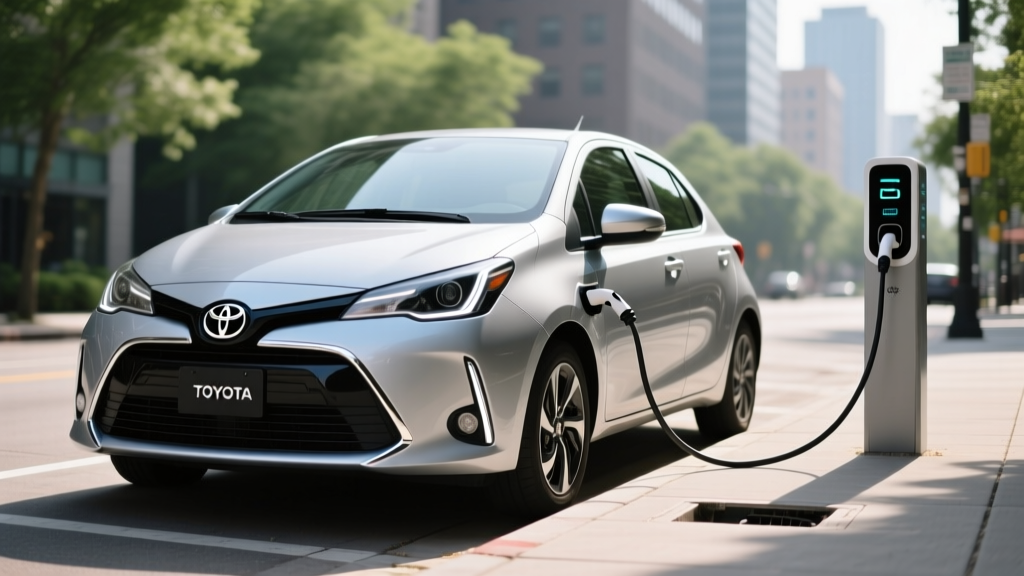
The Toyota Yaris Hybrid occupies a narrow but valuable lane in 2026's electrified market: a subcompact conventional hybrid (HEV) that requires no plug, no behavior change, and no range anxiety — just consistently low fuel consumption in city driving. Built on Toyota's fourth-generation hybrid synergy drive, the Yaris Hybrid targets urban commuters and budget-conscious buyers who want EV-like efficiency without EV pricing or charging infrastructure dependence.
Before we get into the numbers, one critical distinction: the Yaris Hybrid sold globally (primarily Europe and Asia) is a conventional hybrid (HEV), not a plug-in hybrid (PHEV). It cannot be plugged in, has no electric-only range to speak of beyond low-speed maneuvering, and does not qualify for the federal §30D EV tax credit. If you've seen "Yaris" referenced alongside plug-in vehicles, that's a category confusion we'll clear up below.
HEV vs PHEV: Where the Yaris Hybrid Fits
| Feature | Conventional Hybrid (HEV) | Plug-in Hybrid (PHEV) |
|---|---|---|
| Plug-in charging? | No — charges via regenerative braking and engine | Yes — Level 1/Level 2 plug-in capable |
| Electric-only range | ~1 mile or less at low speed | Typically 25–50 miles (EPA) |
| Battery size | 0.7–1.5 kWh (small buffer) | 10–20+ kWh usable |
| Federal tax credit | Not eligible (§30D requires plug-in) | Up to $7,500 (if sourcing/income/MSRP rules met) |
| Yaris Hybrid? | ✅ Yes — this is what it is | ❌ No PHEV variant exists |
EPA MPG and Real-World Fuel Economy
The 2026 Toyota Yaris Hybrid (XP210 generation, 1.5L three-cylinder hybrid) carries the following efficiency figures based on Toyota's WLTP-certified European data, with EPA-equivalent estimates noted for US readers. Note: the Yaris Hybrid is not officially sold in the US market as of 2026 — Toyota discontinued the US-market Yaris (which was a rebadged Mazda2) after 2020. The figures below reflect the global model.
| Metric | WLTP (Official) | EPA-Equivalent Estimate |
|---|---|---|
| City | ~74 MPG (3.2 L/100km) | ~55–58 MPG |
| Highway | ~58 MPG (4.1 L/100km) | ~45–48 MPG |
| Combined | ~66 MPG (3.6 L/100km) | ~50–53 MPG |
Sources: Toyota Europe Yaris specifications, fueleconomy.gov for EPA conversion methodology.
Real-World MPG: What Owners Actually See
Hybrids consistently outperform their EPA city ratings in stop-and-go traffic because regenerative braking recovers energy that gas cars waste as heat. The Yaris Hybrid is no exception. European owner forums and Spritmonitor.de aggregated data show real-world combined figures clustering between 52–60 MPG (3.9–4.5 L/100km) for drivers with predominantly urban commutes.
Where the Yaris Hybrid loses efficiency is sustained highway driving above 70 mph. The 1.5L Atkinson-cycle engine must work harder without electric assist at speed, and the small battery buffer depletes quickly on inclines. Expect 42–47 MPG on long motorway trips — still excellent, but noticeably below the city figure.
Powertrain and Performance Specs
| Specification | 2026 Toyota Yaris Hybrid |
|---|---|
| Engine | 1.5L 3-cylinder Atkinson-cycle (M15A-FXE) |
| Combined system output | 130 hp (97 kW) |
| Electric motor | 59 kW (80 hp) front-mounted motor-generator |
| Hybrid battery | 0.7 kWh lithium-ion (bipolar NiMH on earlier trims) |
| Transmission | e-CVT (planetary gearset, no belt) |
| 0–62 mph (0–100 km/h) | 9.7 seconds |
| Drivetrain | Front-wheel drive |
| Curb weight | ~2,450 lbs (1,115 kg) |
The fourth-generation Toyota Hybrid System (THS4) in the Yaris uses a parallel hybrid architecture where the electric motor and gasoline engine can drive the wheels simultaneously or independently. At low speeds (under ~25 mph in gentle acceleration), the car operates in EV mode on battery alone — but the 0.7 kWh battery limits this to roughly 0.5–1 mile before the engine restarts. This is not a meaningful electric-only range; it's a low-speed creep assist for parking lots and traffic jams.
Battery Warranty, Lifespan, and Replacement Cost
Toyota Hybrid Battery Warranty
Standard coverage: 8 years / 100,000 miles (US-market Toyota hybrid warranty standard)
Extended (certain markets): Up to 10 years / 150,000 miles with annual hybrid health check
Capacity threshold: Toyota does not publish a specific degradation percentage trigger — warranty covers defects and failure, not gradual capacity loss
How Long Do Toyota Hybrid Batteries Actually Last?
Toyota's hybrid battery track record is among the best in the industry. The Prius — which uses a similar but larger THS system — routinely sees original batteries lasting 150,000–200,000+ miles before significant degradation. The Yaris Hybrid's smaller battery operates under less stress (lower energy throughput, smaller charge/discharge cycles), which favors longevity.
Real-world failure data from European fleets and owner surveys suggests fewer than 2–3% of Toyota hybrid batteries require replacement before 150,000 miles. When replacement is needed, costs for the Yaris Hybrid battery pack range from $1,500–$2,800 (parts and labor) depending on market and whether a new or reconditioned unit is installed.
Is the Hybrid Battery a Financial Risk?
Compared to full EV battery replacement ($8,000–$20,000+), the Yaris Hybrid's small 0.7 kWh pack is a minor liability. The battery is also modular — individual cells can sometimes be replaced rather than the entire pack, reducing cost further. For most owners who keep the car 10 years or less, the hybrid battery will likely never need service.
Pricing and Tax Credit Eligibility
The 2026 Toyota Yaris Hybrid starts at approximately €23,000 (~$25,000 USD) in European markets for the base Active trim, rising to €29,000 (~$31,500 USD) for the top-spec Excel/Premiere Edition. Pricing varies significantly by country due to VAT and local incentive structures.
Does the Yaris Hybrid Qualify for Any Tax Credit?
No. Under IRS §30D Clean Vehicle Credit rules, only plug-in electric vehicles (BEVs and PHEVs) with a minimum 7 kWh battery capacity qualify. The Yaris Hybrid's 0.7 kWh battery and lack of plug-in capability make it ineligible for the federal $7,500 credit, the $4,000 used EV credit, or the commercial clean vehicle credit.
Some European markets offer reduced registration taxes or company-car tax benefits for hybrids below certain CO₂ thresholds — the Yaris Hybrid's 82–92 g/km CO₂ output qualifies it for favorable treatment in markets like the UK, France, and the Netherlands. Check your local jurisdiction for specifics.
Who Should Choose the Yaris Hybrid (and Who Shouldn't)
✅ Pros
- 50+ MPG combined real-world with zero behavior change
- No plug required — works with any parking situation
- Toyota reliability and hybrid battery longevity
- Low purchase price vs. BEV or PHEV
- Strong city efficiency from regenerative braking
- Low CO₂ for favorable European tax treatment
❌ Cons
- Not available in the US market
- No meaningful electric-only range
- No federal tax credit eligibility
- Modest 130 hp — not a performance vehicle
- Highway MPG drops noticeably above 70 mph
- Small 0.7 kWh battery limits EV-mode utility
Yaris Hybrid vs. Full EV vs. Gas Car: Decision Framework
Choose the Yaris Hybrid if: You want maximum fuel efficiency without changing your fueling habits, live in an apartment without charging access, drive primarily in city traffic, and want a low purchase price with proven reliability.
Choose a PHEV (like the Toyota Prius Prime) if: You have home Level 2 charging, want 30–40 miles of electric-only commuting, want to qualify for the §30D tax credit, and still need gas-engine range for road trips.
Choose a full BEV (like the Chevy Bolt or Nissan Leaf) if: You have reliable home charging, want zero tailpipe emissions, qualify for the $7,500 federal credit, and your daily driving stays under 200 miles.
Stick with a gas car if: You drive very low annual miles (under 5,000/year), where the hybrid premium won't pay back in fuel savings, or you need maximum cargo/towing capability.
Frequently Asked Questions
How many MPG does the Toyota Yaris Hybrid get?
The Yaris Hybrid achieves approximately 55–58 MPG city and 45–48 MPG highway (EPA-equivalent), with a combined rating around 50–53 MPG. Real-world owners frequently report 52–60 MPG combined in predominantly urban driving. Highway-only driving at 70+ mph reduces this to 42–47 MPG.
Can the Yaris Hybrid drive on electric power only?
Technically yes, but only for about 0.5–1 mile at speeds under 25 mph. The 0.7 kWh hybrid battery is far too small for meaningful electric-only driving. This is a conventional hybrid — it uses electric assist to improve fuel economy, not to replace the gasoline engine.
Do I need to plug in the Yaris Hybrid?
No. The Yaris Hybrid is a conventional HEV, not a plug-in hybrid. It charges its small battery entirely through regenerative braking and the gasoline engine. You fuel it like any other car — there is no charging port.
Is the Toyota Yaris Hybrid reliable?
Yes. Toyota's hybrid system is one of the most proven electrified powertrains on the road, with decades of data from the Prius lineage. The hybrid battery carries an 8-year/100,000-mile warranty (10 years in some markets), and failure rates before 150,000 miles are estimated at 2–3%. Replacement cost is $1,500–$2,800 if needed out of warranty.
Does the Yaris Hybrid qualify for the $7,500 federal tax credit?
No. The IRS §30D Clean Vehicle Credit requires a plug-in vehicle with at least 7 kWh of battery capacity. The Yaris Hybrid has a 0.7 kWh battery and no plug-in capability, making it ineligible. Only BEVs and PHEVs qualify.
Why isn't the Yaris Hybrid sold in the United States?
Toyota discontinued the US-market Yaris after 2020 (that car was a rebadged Mazda2, not the global TNGA-B Yaris). The subcompact segment has shrunk in the US, and Toyota directs American hybrid buyers to the Corolla Hybrid and Prius, which offer similar efficiency in a larger, more profitable package.
What's the difference between the Yaris Hybrid and the Prius?
The Prius is larger (compact vs. subcompact), more powerful (194 hp vs. 130 hp), has a bigger 1.3 kWh hybrid battery, and achieves a slightly higher EPA combined 57 MPG. The Prius also offers a PHEV variant (Prius Prime) with 44 miles of electric-only range and §30D tax credit eligibility. The Yaris Hybrid is smaller, lighter, and less expensive — but unavailable in the US.